The PTO Policy That Broke Your December (And How to Fix It Before Next Year)
Last December, half your team vanished. The other half couldn't take leave because someone had to keep the lights on. Your finance team got blindsided by termination payouts in Germany that they thought were capped. And your works council in France just sent another strongly worded letter about employee wellbeing. Sound familiar?
Here's the reality: the choice between use-it-or-lose-it and carryover isn't binary. It's a spectrum of policy designs, each with distinct financial, operational, and compliance implications that vary dramatically by jurisdiction. A policy that works perfectly in Texas can expose you to significant liability in Berlin.
The right structure for where you are depends on your workforce distribution, your risk tolerance, and whether you can actually prove employees had a genuine opportunity to take their leave. That last point matters more than most HR leaders realise, particularly when operating across European jurisdictions where forfeiture enforceability hinges on employer enablement practices.
What Your CFO Needs to Know (Before the Audit)
That employee earning £60,000 with 10 unused days? They're carrying £2,300-£2,700 on your books. When they resign, that becomes a real cheque you have to write. Multiply that by 50 people, and you've got a quarter-million pound surprise.
When 75 of your 500 employees roll over 8 days each, you're looking at 600 days of leave that could hit at any moment. That's like having 2-3 people permanently out of the office, except you don't know who or when.
In the United Kingdom, employees must be paid in lieu of any accrued but untaken statutory holiday on termination, converting unused statutory leave into cash cost at exit regardless of internal policy.
Under EU working time case law applied across many EEA jurisdictions, statutory paid annual leave generally cannot be lost automatically if the employer did not provide a real opportunity to take it.
California, Colorado, Nebraska, and Montana do not allow use-it-or-lose-it PTO policies, requiring employers to permit carryover or payout of accrued time.
A mid-market business with 800 employees and an average daily salary cost of €250 carries about €200,000 of gross salary exposure for each 1 day of unused leave per employee on average.
What Is a Use-It-or-Lose-It PTO Policy?
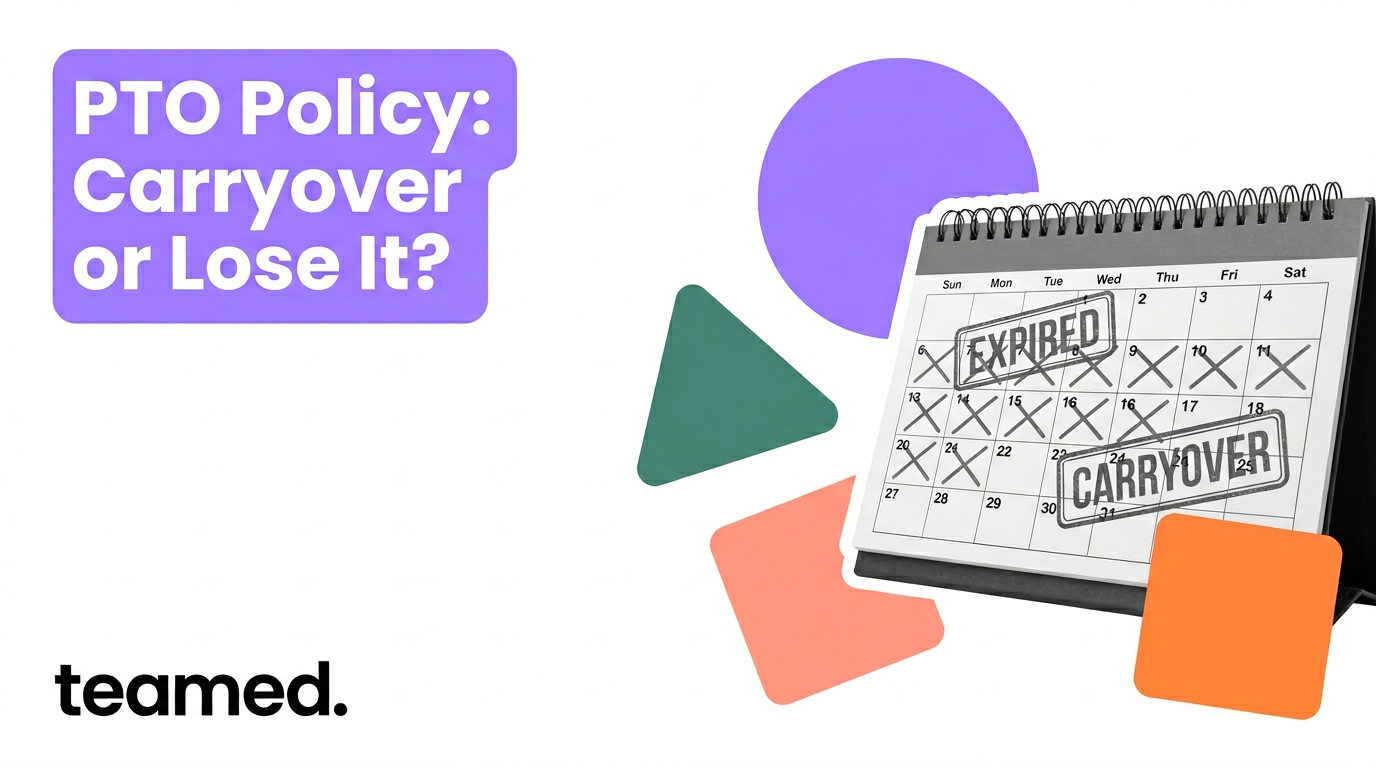
A use-it-or-lose-it PTO policy is a time-off policy design that requires employees to use accrued vacation by a defined deadline or forfeit the unused balance. The primary purpose is preventing large accrual liabilities and encouraging regular breaks throughout the year.
Use-it-or-lose-it sounds perfect on paper. No growing balances to track. No December ghost town when everyone burns their leave at once. No surprise five-figure payouts when your top performer quits.
But the simplicity is deceptive. Forfeiture clauses are only enforceable where local law permits them and where employer processes provide a genuine opportunity to take leave. That second condition trips up more companies than the first.
Why Do Companies Implement Use-It-or-Lose-It Policies?
The financial logic is compelling. Use-it-or-lose-it policies eliminate the need to carry over unused vacation time and track growing liabilities on the balance sheet. HR leaders on Reddit frequently describe this as the primary driver, noting that "some states consider PTO to be earned wages" that create ongoing accounting obligations.
Operationally, these policies force more predictable absence patterns. When employees know they'll lose unused days, they're more likely to schedule time off throughout the year rather than hoarding it for a hypothetical future need that never materialises.
The challenge emerges when you operate across multiple jurisdictions. A policy that legally eliminates liability in one location may create compliance exposure in another.
What Is a PTO Carryover Policy?
A PTO carryover policy allows employees to transfer unused accrued vacation into a future period, usually with caps, expiry windows, or partial rollover to control cost and staffing risk. The structure acknowledges that workload realities sometimes prevent employees from taking all their leave within a single year.
Carryover policies come in several variations. Some allow unlimited rollover with no expiry. Others cap the number of days that can transfer, typically at 40-80 hours. Many add expiry windows requiring carried-over time to be used within the first quarter or first half of the following year.
The financial trade-off is explicit. You accept higher potential liability in exchange for employee flexibility and reduced end-of-year operational disruption. The question is whether that trade-off makes sense for your specific workforce distribution and risk profile.
How Does Carryover Affect Financial Liability?
PTO accrual liability is an accounting obligation representing the employer's expected cost to pay for earned-but-unused vacation. This liability typically appears as an accrued expense where payout or payment-in-lieu is legally required or customary at termination.
A carryover policy differs from use-it-or-lose-it in accounting exposure because higher permitted balances typically increase accrued leave provisions where payout is required. The liability grows as employees accumulate unused days across multiple years.
A carryover cap is a policy limit that sets the maximum number of days or hours an employee may roll into the next leave year. This mechanism bounds balance growth while still giving employees flexibility. A policy that reduces average unused vacation by 3 days per employee across 1,000 employees reduces potential absence inventory by about 3,000 days, improving scheduling predictability even when cash payout is not triggered.
Which States Do Not Allow Use-It-or-Lose-It PTO Policies?
California, Colorado, Nebraska, and Montana explicitly prohibit use-it-or-lose-it PTO policies. In these states, employers must allow employees to carry over some accrued time, though caps on maximum accrual are generally permitted.
California treats accrued vacation as earned wages that cannot be forfeited under any circumstances. Colorado requires payout of all accrued vacation at termination. Nebraska and Montana have similar protections preventing forfeiture of earned time off.
The practical implication for multi-state employers is significant. You cannot implement a single national policy that includes forfeiture language. Instead, you need state-specific addenda that comply with local requirements while maintaining as much consistency as possible across your workforce.
How Should Multi-Jurisdiction Employers Structure PTO Policies?
Choose a country-specific addendum over a single global rule when you employ in multiple European jurisdictions, because statutory leave, payout requirements, and forfeiture enforceability vary materially by country.
In Germany, statutory minimum leave under the Federal Vacation Act is 20 days for a 5-day week, and statutory leave generally carries over until 31 March of the following year when carryover is justified by operational reasons or employee circumstances. In France, the standard paid leave entitlement is 2.5 working days per month of actual work, with carryover and timing commonly governed by company agreements.
In the Netherlands, statutory annual leave entitlement is at least 4 times weekly working hours, and statutory leave typically expires 6 months after the end of the leave year unless the employee could not reasonably take it. This makes employer enablement and record-keeping critical for compliance.
Teamed's advisory method for cross-border HR policy design typically separates "policy intent" from "local execution" because the same headline rule can produce opposite legal outcomes across EU and UK markets. A use-it-or-lose-it policy that's perfectly enforceable in one jurisdiction may be completely unenforceable in another.
How Do Use-It-or-Lose-It and Carryover Policies Compare?
A use-it-or-lose-it policy differs from carryover in liability timing because it is designed to reduce accumulated balances by a deadline, while carryover intentionally permits balance retention into a future period. The financial implications flow directly from this structural difference.
A use-it-or-lose-it policy differs from carryover in operational risk because it can create a predictable end-of-year absence surge. When everyone rushes to use remaining days before the deadline, you get concentrated absence in the same weeks across teams. Carryover tends to distribute leave more evenly when paired with an expiry window.
A use-it-or-lose-it policy differs from carryover in employee relations impact because forfeiture is often perceived as loss of earned value. Capped carryover is more often perceived as fairness for workloads that prevent timely leave. This perception difference affects retention and engagement, particularly among high performers who may feel penalised for their dedication.
What Are the Compliance Differences Between These Approaches?
A use-it-or-lose-it policy differs from carryover in compliance complexity for Europe and the UK because forfeiture language is more likely to be challenged where employees were not enabled to take leave. Carryover generally reduces forfeiture disputes but can raise payout exposure at termination.
Most competitor content lacks an enforceability checklist for forfeiture in Europe. The critical elements include written reminders to employees about remaining leave balances, manager escalation when employees haven't scheduled time off, and documented scheduling options that demonstrate the employer provided genuine opportunity to take leave.
Teamed's compliance playbooks for multi-country employment typically recommend a written "opportunity to take leave" workflow before any forfeiture language is relied on. This includes manager prompts, reminders, and documented scheduling attempts because enforceability in parts of Europe depends on proof that leave could realistically be taken.
What Key Factors Should You Consider When Choosing a PTO Policy?
Your decision comes down to four questions: What can you afford to pay out? Can you handle everyone being off in December? Will your best people quit over lost days? And what does the law actually let you do where you operate?
Choose a use-it-or-lose-it policy when your jurisdiction permits forfeiture and you can operationally prove employees had a genuine opportunity to take leave. This includes advance notice, reasonable scheduling options, and manager accountability for ensuring their teams actually use their time.
Choose carryover with a hard cap when your CFO needs predictable liability limits but HR wants to avoid end-of-year absence spikes. Caps bound balance growth while still giving employees flexibility to manage their time across project cycles.
Choose carryover with an expiry window when you want to encourage actual rest rather than stockpiling. A short runway of three to six months drives usage without creating a permanent accrual bank that grows indefinitely.
How Do You Calculate the Financial Impact of Each Approach?
Your CFO wants numbers, not theory. Here's the math we use in board packs: take annual salary, divide by 260 working days, multiply by unused days. That's your per-person exposure. Now add 20-30% for employer costs in most European markets.
Calculate daily salary cost by dividing annual salary by working days, typically 260 for a standard five-day week. Multiply by average unused days per employee, then multiply by headcount. This gives you gross salary exposure before employer social contributions, which can add 15-30% depending on jurisdiction.
For a 500-employee company with average salaries of £50,000 and average unused balances of 5 days, the calculation yields approximately £480,000 in direct salary exposure. Add employer national insurance contributions in the UK, and you're looking at closer to £550,000 in total liability.
The question becomes whether the operational and employee relations benefits of carryover justify that liability, or whether the compliance complexity of forfeiture enforcement makes it impractical regardless of the financial appeal.
How Can You Encourage PTO Usage Without Creating Financial Risk?
The real goal isn't choosing between use-it-or-lose-it and carryover. It's designing a system that encourages actual rest while managing liability and compliance. Several mechanisms can achieve this regardless of your base policy structure.
Minimum quarterly leave targets ensure employees take time throughout the year rather than accumulating unused days. Mandatory minimum usage requirements, such as requiring at least 10 days taken by September, distribute absence more evenly across the calendar.
Manager accountability metrics make supervisors responsible for their team's leave utilisation. When managers are measured on whether their teams actually take time off, the cultural pressure to skip vacation diminishes significantly.
Teamed's operational benchmarking for multi-country workforces typically flags year-end "PTO cliffs" as a recurring absence-planning failure mode when carryover is set to zero without staggered deadlines. The solution is building in intermediate checkpoints rather than a single year-end deadline.
What Anti-Hoarding Mechanisms Work Best?
Most content fails to address operational risk controls like anti-hoarding mechanisms that encourage usage without creating year-end leave cliffs. The most effective approaches combine policy design with active management intervention.
Partial carryover rules allow employees to carry a limited number of days while forfeiting the remainder. For example, carrying 5 days while forfeiting anything beyond that threshold. This reduces perceived unfairness while still limiting liability growth.
Expiry windows on carried-over time create urgency without the harshness of complete forfeiture. Allowing carried days to be used only within the first quarter of the following year encourages prompt usage while acknowledging that year-end workloads sometimes prevent timely leave.
Choose a no-carryover rule only when you can support it with workload planning and enforced scheduling. Otherwise, you risk burnout and concentrated absence around deadlines, which defeats the purpose of encouraging rest.
How Should Global Employers Approach PTO Policy Design?
In Teamed's cross-border policy reviews for Europe and UK mid-market employers, the highest practical PTO risk is not the accrual method but inconsistent local addenda. One global policy rarely aligns with every country's termination payout and leave-taking requirements.
Most guidance ignores cross-border policy architecture for multi-entity or EOR workforces, where a single global PTO rule usually requires country addenda to align with local payout, carryover windows, and statutory tracking. The complexity multiplies with each additional jurisdiction.
The graduation model becomes relevant here. As companies grow their international presence, they often start with EOR arrangements that handle local compliance automatically, then transition to owned entities where they must manage these policies directly. A single advisory relationship that spans both stages prevents the policy fragmentation that creates compliance gaps.
Teamed's GEMO approach treats PTO as both a compliance obligation and a cost-control lever because leave design affects payroll processing, statutory tracking, termination calculations, and auditability across multiple jurisdictions. The right structure for where you are depends on understanding how these elements interact in each market.
Making the Right Decision for Your Organisation
The choice between use-it-or-lose-it and carryover ultimately depends on your specific circumstances. Your jurisdictional footprint, your workforce distribution, your risk tolerance, and your operational capacity to document employee enablement all factor into the decision.
For companies operating primarily in US states that permit forfeiture, use-it-or-lose-it can work well with proper implementation. For companies with significant European presence, some form of carryover is likely necessary regardless of preference, with the focus shifting to cap design and expiry windows.
The honest answer is often more nuanced than either extreme. A hybrid approach with capped carryover, expiry windows, and active usage encouragement typically outperforms pure forfeiture or unlimited rollover. The key is designing the specific parameters for your situation rather than copying a template that worked for a different company in different jurisdictions.
If you're tired of December chaos and surprise termination payouts, talk to an expert who's actually implemented PTO policies that work across Europe and the UK. We'll review your current mess, show you what's possible, and help you build something that keeps both your CFO and your works council happy.