{}
Get the full picture before you hire globally. Salaries, taxes, contributions, the lot. → Try our free calculator

UK Statutory vs Occupational Sick Pay Explained 2026

Compliance
This article is for informational purposes only and does not constitute legal, tax, or compliance advice. Always consult a qualified professional before acting on any information provided.

UK sick pay: what you actually owe vs what you should offer

Your UK employee calls in sick on Monday. By Friday, your payroll provider needs an answer: are you paying statutory minimum or something more? Here's what catches international employers off guard: you have a choice, but once it's in the contract, you're locked in.

SSP is the legal minimum. Occupational sick pay is everything above that. Here's why it matters: SSP pays £123.25 per week, which won't cover most people's rent. But promise full pay during sickness without thinking it through, and you've just written a blank cheque you can't cancel. I've seen companies lose candidates over SSP-only policies. I've also seen CFOs discover their 'standard' contract promised six months of full sick pay.

April 2026 brings new SSP rules. No more waiting days. Different calculation method. If you're reading guidance written before these changes, you're getting the wrong answer. And that matters when you're writing employment contracts today that will still be in force when the rules change.

What changes in April 2026 (and what doesn't)

From April 2026, UK SSP starts from day one. No more three-day wait before payments kick in.

From April 2026, UK SSP is calculated as 80% of Average Weekly Earnings (AWE) subject to a weekly cap of £123.25 per week.

UK SSP can be paid for up to 28 weeks for a single period of sickness entitlement.

At the April 2026 cap, the maximum SSP cost for a full 28-week entitlement is £3,451.00 per employee per sickness episode.

Occupational sick pay isn't required by law. But once you promise it in a contract, you can't just take it back. Changing it means consultation, risk of claims, and potentially needing employee agreement. Think before you promise.

A full-pay occupational sick pay promise of £1,000 per week for 4 weeks costs £4,000 in gross salary, which is £3,507 more than paying capped SSP only for the same period.

What is Statutory Sick Pay and how does it work from April 2026?

SSP is what UK law says you must pay when employees can't work due to illness. From April 2026, all eligible employees receive SSP regardless of earnings. No exceptions, no workarounds.

Three things change in April 2026. SSP starts immediately, not after three days. You calculate it as 80% of average weekly earnings instead of a flat rate. But there's a cap at £123.25 per week, so higher earners still get the same maximum.

For an employee with AWE of £500 per week, 80% would be £400, but the cap reduces actual SSP to £123.25. The break-point where the cap starts to bite is approximately £154.06 per week in earnings. Below that threshold, employees receive the full 80% of their AWE. Above it, the cap increasingly compresses their statutory entitlement.

From April 2026, payroll triggers SSP from day one. No more tracking waiting days. Your payroll provider needs to calculate 80% of earnings, then check if it exceeds the cap. Get this configured wrong and you'll either underpay (compliance risk) or overpay (unnecessary cost).

What is occupational sick pay and why do employers offer it?

Occupational sick pay is the extra you choose to pay above SSP. It's not required by law, but what you write in the contract becomes your obligation. You decide the amount and duration.

Here's the reality: £123.25 per week is about 16% of median full-time earnings. Your employee still has full rent to pay, but now on a fraction of their income. They'll remember who helped when they were vulnerable. So will their colleagues. And yes, candidates ask recruiters about sick pay policies.

Enhanced sick pay typically works in steps. Full pay for four weeks, then half pay for four weeks, then SSP only. This gives employees breathing room when they first fall ill, but protects you from indefinite full-pay obligations. It's a middle ground that actually works.

Whatever sick pay you put in the contract becomes a promise you can't easily break. Want to reduce it later? That's a consultation process with legal risk. I've seen companies inherit generous sick pay terms from their EOR's standard contract, then discover they can't change them without risking constructive dismissal claims. Check what you're signing.

How does SSP differ from company sick pay in practice?

SSP is the law. Occupational sick pay is your choice. The differences that actually matter:

The amount paid is the most obvious difference. SSP is capped at £123.25 per week from April 2026, while occupational sick pay is commonly expressed as a percentage of normal salary and may be uncapped up to full pay depending on policy. For higher earners, this gap is substantial.

Duration works differently too. SSP is limited to a maximum of 28 weeks per entitlement, while occupational schemes can be shorter or longer and often end by switching the employee to SSP-only after the enhanced period. Some employers offer just two weeks of enhanced pay before reverting to statutory minimums.

You pay for all of it. SSP comes out of your pocket. Occupational sick pay is extra money on top. The government doesn't reimburse any of it anymore.

Eligibility can also differ. SSP has statutory eligibility criteria around earnings and employment status. Occupational schemes often add service requirements, meaning new employees might receive SSP only until they've completed a qualifying period.

Do employers have to pay more than SSP?

No. You must pay SSP, but anything above that is your choice. The law sets the floor, not the ceiling.

But here's what the law doesn't tell you: good candidates have options. When they ask about sick pay and hear 'statutory only', they hear 'we do the minimum'. In our experience with mid-market employers, those competing for senior developers, finance leads, or ops managers usually offer at least some enhanced sick pay. Even two weeks of full pay signals you're not just ticking compliance boxes.

Go with SSP-only if you're hiring for high-turnover roles where cost control matters more than retention. But if you're hiring specialists who'd take months to replace, enhanced sick pay can help keep them. It's the difference between an employee returning grateful versus returning resentful, or not returning at all.

What is a typical occupational sick pay policy in the UK?

We often see mid-market companies use a step-down approach: full pay briefly, then partial pay, then SSP. It can help employees through short illnesses without creating open-ended liability for long-term absence.

A typical policy might work like this. During the first four weeks of absence, the employee receives full normal pay. For weeks five through eight, they receive half pay. From week nine onwards, they receive SSP only until the 28-week statutory maximum. Some employers tie these durations to length of service, offering more generous terms to longer-tenured staff.

Public sector and larger corporate employers often provide more generous terms. NHS sick pay, for example, offers up to six months at full pay and six months at half pay for employees with five or more years of service. Private sector mid-market companies rarely match this, but they do typically exceed the statutory minimum.

Many employers link sick pay to tenure. SSP-only during probation, then enhanced terms after six months or a year. It can help manage the risk of new hires taking extended sick leave, though you'll need to handle the employee relations carefully. Nobody likes feeling like a second-class employee.

Why do the 2026 SSP reforms matter for international employers?

Even with the April 2026 increases that will extend eligibility to up to 1.3 million employees, SSP stays low. What the law requires and what UK employees expect are two different numbers. Know both before you write your contracts.

Day-one payments mean less admin tracking waiting days. But they also mean every single sick day costs you money. Those one or two-day absences that used to cost nothing? Now they're on your payroll.

The new calculation adds complexity. Calculate 80% of average weekly earnings, then check against the £123.25 cap. Anyone earning over £154 per week hits the cap, so the percentage calculation becomes pointless for most professional salaries. Your payroll system needs to handle both calculations correctly.

Much of what you'll find online still describes the old rules: flat-rate SSP after three waiting days. But you're writing contracts now that will still be in force when the new rules hit. Get the terms wrong today, and you're stuck with them in 2026.

How should international employers design UK sick pay policies?

Before you promise anything in writing, understand what your UK competitors offer. Not because you need to match them exactly, but because you need to know where you stand. Promise too much and you're locked into costs you can't sustain. Promise too little and you'll lose good people to companies that show they care.

Start by understanding what your UK competitors offer. In professional services, technology, and financial services, some form of enhanced sick pay is standard. In retail, hospitality, and lower-wage sectors, SSP-only policies are more common. Your sector and the seniority of roles you're hiring for should inform your approach.

Step-down sick pay can work well because 87% of sickness absences are 3 weeks or less. Pay properly for the first few weeks when employees need it most, then reduce to manage your exposure on long-term cases. It can show you care without writing blank cheques.

If you're using an EOR for UK hires, check their standard contract carefully. They're the legal employer signing the contract, but you're paying the bill. I've seen companies discover their EOR's template promised four weeks of full sick pay. Once it's signed, that's your obligation, not theirs.

How do EOR providers handle occupational sick pay?

When you hire through an EOR in the UK, the employment contract sits between the EOR entity and your worker. The sick pay terms in that contract determine what the employee receives. This creates a question of who decides what those terms should be.

Some EORs lock you into their standard benefits. Others let you choose. The difference? One size fits nobody, and you might end up funding promises that don't match your budget or your market. Ask before you sign.

We can help you understand what UK employees actually expect before you commit to contract terms. Sometimes that means different sick pay for different roles. Your senior developer might expect full pay for illness. Your customer service team might not. One contract template for everyone rarely works.

Acquisitions create sick pay headaches. The company you bought offers six weeks of full pay. Your existing UK team gets SSP only. Now you have employees doing the same job with wildly different benefits. You can level up (expensive), level down (risky), or run two policies forever (complex). None are perfect. Choose deliberately.

What should you include in a UK sick pay policy?

Apply sick pay rules consistently or risk discrimination claims. Treat someone differently during pregnancy-related sickness or disability absence, and you're in tribunal territory. Write down your policy. Follow it. Every time.

Your policy should specify the sick pay rates at each stage of absence, including when enhanced pay ends and SSP begins. It should state any service requirements for enhanced benefits. It should explain the evidence requirements, typically self-certification for short absences and fit notes for longer ones.

Your sick pay policy needs to work with your absence management process. When do managers hold return-to-work meetings? When do you refer to occupational health? How do you handle someone taking every Monday off? Document it now, before you need it. Having a clear process can protect you if you eventually need to manage someone out.

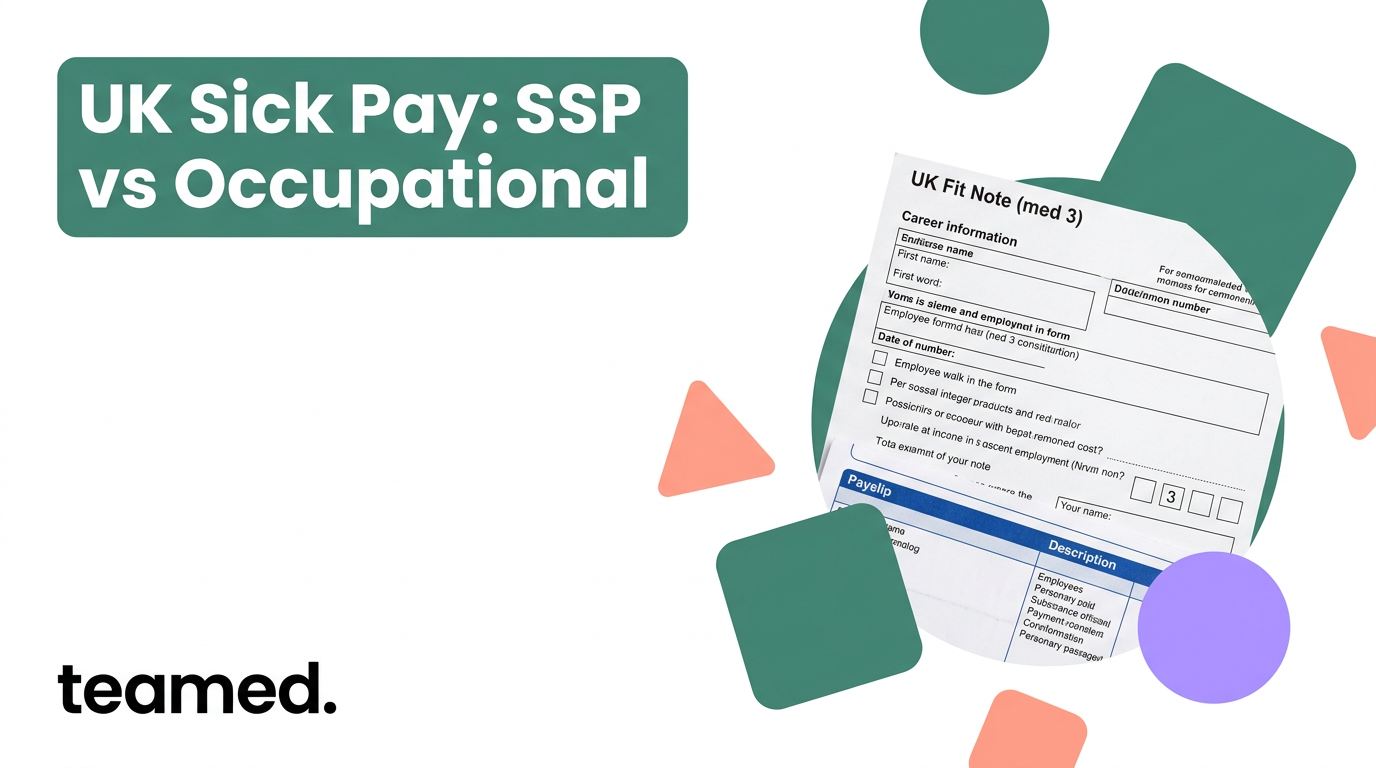
A fit note, formally called a Statement of Fitness for Work, is a medical certificate used in the UK to evidence illness-related absence beyond an initial self-certification period. Employers should document the evidence standard in their sick pay policy to ensure consistent application across all employees.

Decide what you're willing to promise, then write it down properly

The law says £123.25 per week from April 2026. Everything else is your choice. But that choice affects who'll work for you, whether they'll stay, and what happens to your payroll when flu season hits.

Don't just accept your EOR's standard terms. Don't copy what others do without understanding why. I've seen both approaches backfire. One client discovered their 'standard' contract promised six months at full pay. Another lost three senior hires because they offered statutory only while competitors offered four weeks.

We can help mid-market companies understand UK sick pay expectations and design policies that can attract the talent you need without promises you'll regret. If you're entering the UK market or reviewing terms before the 2026 changes, talk to an expert. We'll review your contracts, explain your options, and help you avoid the expensive mistakes we've seen others make.
UK sick pay: what you actually owe vs what you should offer

Your UK employee calls in sick on Monday. By Friday, your payroll provider needs an answer: are you paying statutory minimum or something more? Here's what catches international employers off guard: you have a choice, but once it's in the contract, you're locked in.

SSP is the legal minimum. Occupational sick pay is everything above that. Here's why it matters: SSP pays £123.25 per week, which won't cover most people's rent. But promise full pay during sickness without thinking it through, and you've just written a blank cheque you can't cancel. I've seen companies lose candidates over SSP-only policies. I've also seen CFOs discover their 'standard' contract promised six months of full sick pay.

April 2026 brings new SSP rules. No more waiting days. Different calculation method. If you're reading guidance written before these changes, you're getting the wrong answer. And that matters when you're writing employment contracts today that will still be in force when the rules change.

What changes in April 2026 (and what doesn't)

From April 2026, UK SSP starts from day one. No more three-day wait before payments kick in.

From April 2026, UK SSP is calculated as 80% of Average Weekly Earnings (AWE) subject to a weekly cap of £123.25 per week.

UK SSP can be paid for up to 28 weeks for a single period of sickness entitlement.

At the April 2026 cap, the maximum SSP cost for a full 28-week entitlement is £3,451.00 per employee per sickness episode.

Occupational sick pay isn't required by law. But once you promise it in a contract, you can't just take it back. Changing it means consultation, risk of claims, and potentially needing employee agreement. Think before you promise.

A full-pay occupational sick pay promise of £1,000 per week for 4 weeks costs £4,000 in gross salary, which is £3,507 more than paying capped SSP only for the same period.

What is Statutory Sick Pay and how does it work from April 2026?

SSP is what UK law says you must pay when employees can't work due to illness. From April 2026, all eligible employees receive SSP regardless of earnings. No exceptions, no workarounds.

Three things change in April 2026. SSP starts immediately, not after three days. You calculate it as 80% of average weekly earnings instead of a flat rate. But there's a cap at £123.25 per week, so higher earners still get the same maximum.

For an employee with AWE of £500 per week, 80% would be £400, but the cap reduces actual SSP to £123.25. The break-point where the cap starts to bite is approximately £154.06 per week in earnings. Below that threshold, employees receive the full 80% of their AWE. Above it, the cap increasingly compresses their statutory entitlement.

From April 2026, payroll triggers SSP from day one. No more tracking waiting days. Your payroll provider needs to calculate 80% of earnings, then check if it exceeds the cap. Get this configured wrong and you'll either underpay (compliance risk) or overpay (unnecessary cost).

What is occupational sick pay and why do employers offer it?

Occupational sick pay is the extra you choose to pay above SSP. It's not required by law, but what you write in the contract becomes your obligation. You decide the amount and duration.

Here's the reality: £123.25 per week is about 16% of median full-time earnings. Your employee still has full rent to pay, but now on a fraction of their income. They'll remember who helped when they were vulnerable. So will their colleagues. And yes, candidates ask recruiters about sick pay policies.

Enhanced sick pay typically works in steps. Full pay for four weeks, then half pay for four weeks, then SSP only. This gives employees breathing room when they first fall ill, but protects you from indefinite full-pay obligations. It's a middle ground that actually works.

Whatever sick pay you put in the contract becomes a promise you can't easily break. Want to reduce it later? That's a consultation process with legal risk. I've seen companies inherit generous sick pay terms from their EOR's standard contract, then discover they can't change them without risking constructive dismissal claims. Check what you're signing.

How does SSP differ from company sick pay in practice?

SSP is the law. Occupational sick pay is your choice. The differences that actually matter:

The amount paid is the most obvious difference. SSP is capped at £123.25 per week from April 2026, while occupational sick pay is commonly expressed as a percentage of normal salary and may be uncapped up to full pay depending on policy. For higher earners, this gap is substantial.

Duration works differently too. SSP is limited to a maximum of 28 weeks per entitlement, while occupational schemes can be shorter or longer and often end by switching the employee to SSP-only after the enhanced period. Some employers offer just two weeks of enhanced pay before reverting to statutory minimums.

You pay for all of it. SSP comes out of your pocket. Occupational sick pay is extra money on top. The government doesn't reimburse any of it anymore.

Eligibility can also differ. SSP has statutory eligibility criteria around earnings and employment status. Occupational schemes often add service requirements, meaning new employees might receive SSP only until they've completed a qualifying period.

Do employers have to pay more than SSP?

No. You must pay SSP, but anything above that is your choice. The law sets the floor, not the ceiling.

But here's what the law doesn't tell you: good candidates have options. When they ask about sick pay and hear 'statutory only', they hear 'we do the minimum'. In our experience with mid-market employers, those competing for senior developers, finance leads, or ops managers usually offer at least some enhanced sick pay. Even two weeks of full pay signals you're not just ticking compliance boxes.

Go with SSP-only if you're hiring for high-turnover roles where cost control matters more than retention. But if you're hiring specialists who'd take months to replace, enhanced sick pay can help keep them. It's the difference between an employee returning grateful versus returning resentful, or not returning at all.

What is a typical occupational sick pay policy in the UK?

We often see mid-market companies use a step-down approach: full pay briefly, then partial pay, then SSP. It can help employees through short illnesses without creating open-ended liability for long-term absence.

A typical policy might work like this. During the first four weeks of absence, the employee receives full normal pay. For weeks five through eight, they receive half pay. From week nine onwards, they receive SSP only until the 28-week statutory maximum. Some employers tie these durations to length of service, offering more generous terms to longer-tenured staff.

Public sector and larger corporate employers often provide more generous terms. NHS sick pay, for example, offers up to six months at full pay and six months at half pay for employees with five or more years of service. Private sector mid-market companies rarely match this, but they do typically exceed the statutory minimum.

Many employers link sick pay to tenure. SSP-only during probation, then enhanced terms after six months or a year. It can help manage the risk of new hires taking extended sick leave, though you'll need to handle the employee relations carefully. Nobody likes feeling like a second-class employee.

Why do the 2026 SSP reforms matter for international employers?

Even with the April 2026 increases that will extend eligibility to up to 1.3 million employees, SSP stays low. What the law requires and what UK employees expect are two different numbers. Know both before you write your contracts.

Day-one payments mean less admin tracking waiting days. But they also mean every single sick day costs you money. Those one or two-day absences that used to cost nothing? Now they're on your payroll.

The new calculation adds complexity. Calculate 80% of average weekly earnings, then check against the £123.25 cap. Anyone earning over £154 per week hits the cap, so the percentage calculation becomes pointless for most professional salaries. Your payroll system needs to handle both calculations correctly.

Much of what you'll find online still describes the old rules: flat-rate SSP after three waiting days. But you're writing contracts now that will still be in force when the new rules hit. Get the terms wrong today, and you're stuck with them in 2026.

How should international employers design UK sick pay policies?

Before you promise anything in writing, understand what your UK competitors offer. Not because you need to match them exactly, but because you need to know where you stand. Promise too much and you're locked into costs you can't sustain. Promise too little and you'll lose good people to companies that show they care.

Start by understanding what your UK competitors offer. In professional services, technology, and financial services, some form of enhanced sick pay is standard. In retail, hospitality, and lower-wage sectors, SSP-only policies are more common. Your sector and the seniority of roles you're hiring for should inform your approach.

Step-down sick pay can work well because 87% of sickness absences are 3 weeks or less. Pay properly for the first few weeks when employees need it most, then reduce to manage your exposure on long-term cases. It can show you care without writing blank cheques.

If you're using an EOR for UK hires, check their standard contract carefully. They're the legal employer signing the contract, but you're paying the bill. I've seen companies discover their EOR's template promised four weeks of full sick pay. Once it's signed, that's your obligation, not theirs.

How do EOR providers handle occupational sick pay?

When you hire through an EOR in the UK, the employment contract sits between the EOR entity and your worker. The sick pay terms in that contract determine what the employee receives. This creates a question of who decides what those terms should be.

Some EORs lock you into their standard benefits. Others let you choose. The difference? One size fits nobody, and you might end up funding promises that don't match your budget or your market. Ask before you sign.

We can help you understand what UK employees actually expect before you commit to contract terms. Sometimes that means different sick pay for different roles. Your senior developer might expect full pay for illness. Your customer service team might not. One contract template for everyone rarely works.

Acquisitions create sick pay headaches. The company you bought offers six weeks of full pay. Your existing UK team gets SSP only. Now you have employees doing the same job with wildly different benefits. You can level up (expensive), level down (risky), or run two policies forever (complex). None are perfect. Choose deliberately.

What should you include in a UK sick pay policy?

Apply sick pay rules consistently or risk discrimination claims. Treat someone differently during pregnancy-related sickness or disability absence, and you're in tribunal territory. Write down your policy. Follow it. Every time.

Your policy should specify the sick pay rates at each stage of absence, including when enhanced pay ends and SSP begins. It should state any service requirements for enhanced benefits. It should explain the evidence requirements, typically self-certification for short absences and fit notes for longer ones.

Your sick pay policy needs to work with your absence management process. When do managers hold return-to-work meetings? When do you refer to occupational health? How do you handle someone taking every Monday off? Document it now, before you need it. Having a clear process can protect you if you eventually need to manage someone out.

A fit note, formally called a Statement of Fitness for Work, is a medical certificate used in the UK to evidence illness-related absence beyond an initial self-certification period. Employers should document the evidence standard in their sick pay policy to ensure consistent application across all employees.

Decide what you're willing to promise, then write it down properly

The law says £123.25 per week from April 2026. Everything else is your choice. But that choice affects who'll work for you, whether they'll stay, and what happens to your payroll when flu season hits.

Don't just accept your EOR's standard terms. Don't copy what others do without understanding why. I've seen both approaches backfire. One client discovered their 'standard' contract promised six months at full pay. Another lost three senior hires because they offered statutory only while competitors offered four weeks.

We can help mid-market companies understand UK sick pay expectations and design policies that can attract the talent you need without promises you'll regret. If you're entering the UK market or reviewing terms before the 2026 changes, talk to an expert. We'll review your contracts, explain your options, and help you avoid the expensive mistakes we've seen others make.

TABLE OF CONTENTS

Take a look
at the latest articles