{}
Get the full picture before you hire globally. Salaries, taxes, contributions, the lot. → Try our free calculator

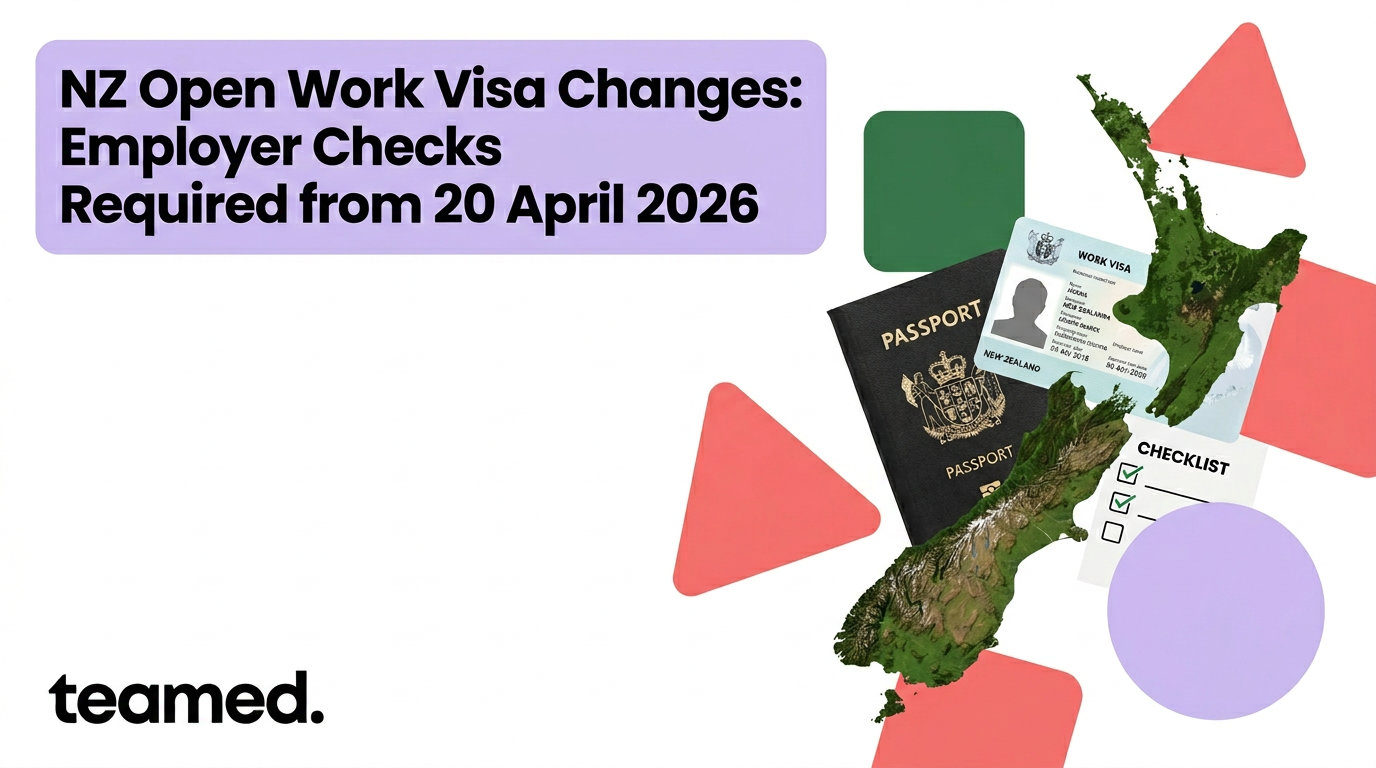
NZ Open Work Visa: 20 April 2026 Changes Employers Must Check

Compliance
This article is for informational purposes only and does not constitute legal, tax, or compliance advice. Always consult a qualified professional before acting on any information provided.

What changed in New Zealand's open work visa conditions on 20 April 2026?

Immigration New Zealand tightened open work visa conditions on 20 April 2026. Employers sponsoring or employing open work visa holders must now ensure visa conditions match approved work categories, update compliance procedures, and review current workforce against the new eligibility criteria. Failure to verify visa compliance can trigger loss of accredited employer status or prohibition on hiring migrants. The check is best completed this week before Friday.

If you employ anyone in New Zealand on an open work visa, this change affects you immediately. The rules took effect on Monday, and your existing employment arrangements may already be out of compliance without any change to job titles, duties, or reporting lines. This is not a future-dated policy announcement. This is a same-week compliance trigger.

For mid-market companies managing New Zealand hires through an Employer of Record arrangement, the question is straightforward: has your EOR provider confirmed they've completed the compliance check? If you haven't heard from them, that's a red flag worth investigating before the week closes.

What changed on 20 April, and what didn't

Effective 20 April 2026. Already in force, no transition period.

Open work visas now fall into one of two buckets. Some still allow any work, including self-employment and side projects. Others are now employer-only, meaning any freelance work, secondment, or consulting gig on the side puts the visa (and your accreditation) at risk.

Immigration New Zealand can suspend or revoke your accreditation if it decides you've slipped on your obligations as an employer. That's not a theoretical lever. They do use it, having already revoked accreditation for 1,316 employers and suspended another 845 as of March 2026.

You already know what a right-to-work check covers. The catch here is that the conditions on the visa, not just the expiry date, are what's moved.

In practice, you've got about a week. NZ payroll runs weekly or fortnightly, and onboarding and work-authorisation checks sit on the same cadence. Miss a cycle and the mess compounds.

Lose accreditation and you can't hire migrants. Offers get pulled, start dates slip, and the teams you promised your board would be fully staffed by Q3 stay half-built.

Who is affected by the April 2026 open work visa changes?

Every New Zealand employer of open work visa holders is affected by these changes. This includes companies employing staff directly through a New Zealand entity and companies using EOR arrangements where the EOR is the legal employer. The compliance obligation sits with whoever holds the employment relationship.

The changes apply to current visa holders from 20 April 2026. There is no grandfathering. If someone held an open work visa on 19 April, their employment conditions may have changed on 20 April without any notification to the employer. The visa conditions printed on the original grant may no longer reflect the current legal position.

For mid-market companies with NZ workforce, this creates an immediate audit requirement. You need to know which employees hold open work visas, what conditions now apply to those visas, and whether current employment terms align with the new conditions.

What do employers need to check this week?

There are three things to work through in order: who's affected, what their visa now allows, and whether their current role and contract fit inside those rules.

Start by identifying every employee in New Zealand who holds an open work visa. This includes anyone employed through an EOR arrangement where the EOR is the legal employer. Your HR records should show visa type and expiry date, but you need to verify current conditions against Immigration New Zealand's records.

Next, verify which of the two new employment conditions applies to each visa holder. Some open work visas now allow any work including self-employment. Others require work for an employer only. The distinction matters for job descriptions, secondment arrangements, and any side work your employees might undertake.

Finally, check that employment terms match visa conditions. Job descriptions, working locations, and role categories need to align with what the visa permits. If someone's visa now restricts them to employed work only, any contractor or consulting arrangements would create compliance exposure.

What are the employer accreditation risks?

Employer accreditation in New Zealand is an Immigration New Zealand-administered status that permits an employer to access specific migrant hiring pathways. Non-compliance with open work visa conditions can trigger accreditation consequences that extend far beyond the individual employee.

Loss of accredited employer status means you cannot sponsor new migrant workers. For companies with active hiring pipelines in New Zealand, this creates immediate operational risk. Projects dependent on incoming talent face delays. Revenue commitments tied to team expansion become uncertain.

The accreditation framework also includes prohibition on hiring migrants as a potential consequence. This is not a temporary pause. Rebuilding accredited employer status after a compliance failure requires demonstrating sustained good-employer practices over an extended period.

Teamed's analysis of immigration compliance patterns across APAC markets shows that same-week compliance triggers create disproportionate risk for mid-market companies. Larger enterprises typically have dedicated immigration teams who monitor regulatory changes in real time. Smaller companies often have simple enough structures that compliance is straightforward. Mid-market companies fall into the gap: complex enough to have exposure, but not resourced enough to catch every regulatory shift.

How does this affect EOR hires in New Zealand?

When you employ someone in New Zealand through an Employer of Record, the EOR is the legal employer. This means the EOR holds the compliance obligation for right-to-work checks, visa condition verification, and employment term alignment.

But here's what most people miss: the client company still carries reputational and operational risk. If your EOR provider fails to complete the compliance check and an employee is found working outside their visa conditions, the immediate legal exposure sits with the EOR. The project delivery risk, the relationship damage, and the scramble to find replacement talent all sit with you.

An EOR differs from direct employment because the EOR holds payroll and employment compliance liability, while direct employment places compliance obligations directly on your business. In practical terms, this means you should be asking your EOR provider a specific question this week: have you completed the open work visa condition review for all New Zealand employees, and can you confirm each employee's visa conditions align with their current role?

If your EOR provider hasn't proactively reached out about this change, that tells you something about their compliance monitoring capability. Teamed assigns named jurisdiction specialists within 48 hours for exactly these situations, because immigration compliance triggers don't wait for scheduled account reviews.

What about existing visa holders?

The new conditions apply to existing visa holders from 20 April 2026. This is the critical point that most guidance overlooks.

An employee who was compliant on 19 April may be non-compliant on 21 April without any change to their job, their manager, or their working location. The visa conditions changed around them. The employment relationship stayed the same, but the legal framework shifted.

Existing employment conditions may need amendment. If someone's visa now includes restrictions that weren't present before, employment contracts, job descriptions, or working arrangements may need updating. This is not a theoretical concern. It's a practical requirement that affects payroll processing, onboarding documentation, and internal mobility decisions.

For companies with employees on open work visas who also do occasional consulting work, freelance projects, or side businesses, the new condition categories matter immediately. A visa that previously allowed any work may now restrict the holder to employed work only.

What enforcement should employers expect?

Immigration New Zealand is expected to publish follow-on guidance over the next two weeks. The enforcement posture will become clearer as INZ communicates implementation priorities.

What we know from previous immigration compliance changes is that INZ typically focuses initial enforcement on employers who demonstrate pattern non-compliance rather than isolated errors. A single employee with misaligned visa conditions is a problem. A systematic failure to verify visa conditions across your workforce is a much larger problem.

The practical implication: completing your compliance check this week demonstrates good-faith effort to align with the new requirements. Waiting for enforcement guidance before acting creates unnecessary exposure, especially considering INZ targets 16% of employers annually for post-accreditation checks.

For mid-market companies, the CFO-relevant framing is straightforward. Loss of employer accreditation creates hiring freezes, project delivery delays, and remediation costs. The cost of a same-week compliance check is trivial compared to the cost of accreditation consequences.

What should employers do this week?

There are four things to get moving in parallel: list your affected people, get written confirmation from your EOR, have counsel look at anything borderline, and tell the employees what's happening.

For the workforce audit, identify every employee in New Zealand holding an open work visa. Pull visa documentation from HR records. Cross-reference against Immigration New Zealand's VisaView system to verify current conditions. Flag any employees whose visa conditions have changed under the new framework.

For EOR provider verification, contact your EOR provider directly. Ask for confirmation that they've completed the open work visa condition review. Request documentation showing which employees are affected and what actions they've taken. If your EOR provider can't provide this confirmation, escalate immediately.

For the legal review, have employment counsel review job descriptions, employment contracts, and working arrangements for any employees whose visa conditions have changed. Pay particular attention to secondment language, consulting arrangements, and any provisions that might conflict with employer-only work restrictions.

For employee communications, prepare messaging for affected employees. They need to understand what's changed, what it means for their employment, and what actions (if any) they need to take. Clear communication reduces anxiety and demonstrates good-employer practices.

Why are NZ work visa rules changing?

New Zealand's visa reform reflects broader immigration policy shifts across APAC markets. Governments are tightening employment condition requirements to ensure visa holders work within authorised categories and employers maintain accurate records.

The specific changes to open work visa conditions aim to clarify employment flexibility. Previously, open work visas allowed broad employment flexibility without clear condition categories. The new framework creates two distinct condition types, making it easier for employers to verify what work a visa holder can undertake.

For mid-market companies expanding into New Zealand, this change reinforces the importance of immigration compliance as a core HR function. The right structure for where you are means understanding not just employment law, but immigration requirements that affect your ability to hire and retain international talent.

If you use an EOR: what to ask for by Friday

If your NZ team sits under an EOR and you haven't seen written confirmation that the new visa conditions have been checked against every employee, this needs to be done before the week closes.

The practical reality is that most EOR providers operate on monthly or quarterly review cycles. Same-week compliance triggers fall outside normal operating rhythms. Your provider may be aware of the change but hasn't yet actioned the review for your specific employees.

Teamed operates EOR coverage in 187+ countries and treats immigration compliance triggers as priority items requiring immediate specialist attention. When regulatory changes take effect without advance notice, the difference between a provider who monitors in real time and one who catches changes in scheduled reviews becomes operationally significant.

For mid-market companies where the decision is too important to get wrong, the right structure for where you are includes having an EOR provider who proactively surfaces compliance triggers rather than waiting for you to ask. Thinking ahead is the service.

If you're not sure where you stand in New Zealand this week, talk to an expert. A named NZ specialist will walk through your people with you, confirm what's been checked, and tell you honestly where any gaps are.
What changed in New Zealand's open work visa conditions on 20 April 2026?

Immigration New Zealand tightened open work visa conditions on 20 April 2026. Employers sponsoring or employing open work visa holders must now ensure visa conditions match approved work categories, update compliance procedures, and review current workforce against the new eligibility criteria. Failure to verify visa compliance can trigger loss of accredited employer status or prohibition on hiring migrants. The check is best completed this week before Friday.

If you employ anyone in New Zealand on an open work visa, this change affects you immediately. The rules took effect on Monday, and your existing employment arrangements may already be out of compliance without any change to job titles, duties, or reporting lines. This is not a future-dated policy announcement. This is a same-week compliance trigger.

For mid-market companies managing New Zealand hires through an Employer of Record arrangement, the question is straightforward: has your EOR provider confirmed they've completed the compliance check? If you haven't heard from them, that's a red flag worth investigating before the week closes.

What changed on 20 April, and what didn't

Effective 20 April 2026. Already in force, no transition period.

Open work visas now fall into one of two buckets. Some still allow any work, including self-employment and side projects. Others are now employer-only, meaning any freelance work, secondment, or consulting gig on the side puts the visa (and your accreditation) at risk.

Immigration New Zealand can suspend or revoke your accreditation if it decides you've slipped on your obligations as an employer. That's not a theoretical lever. They do use it, having already revoked accreditation for 1,316 employers and suspended another 845 as of March 2026.

You already know what a right-to-work check covers. The catch here is that the conditions on the visa, not just the expiry date, are what's moved.

In practice, you've got about a week. NZ payroll runs weekly or fortnightly, and onboarding and work-authorisation checks sit on the same cadence. Miss a cycle and the mess compounds.

Lose accreditation and you can't hire migrants. Offers get pulled, start dates slip, and the teams you promised your board would be fully staffed by Q3 stay half-built.

Who is affected by the April 2026 open work visa changes?

Every New Zealand employer of open work visa holders is affected by these changes. This includes companies employing staff directly through a New Zealand entity and companies using EOR arrangements where the EOR is the legal employer. The compliance obligation sits with whoever holds the employment relationship.

The changes apply to current visa holders from 20 April 2026. There is no grandfathering. If someone held an open work visa on 19 April, their employment conditions may have changed on 20 April without any notification to the employer. The visa conditions printed on the original grant may no longer reflect the current legal position.

For mid-market companies with NZ workforce, this creates an immediate audit requirement. You need to know which employees hold open work visas, what conditions now apply to those visas, and whether current employment terms align with the new conditions.

What do employers need to check this week?

There are three things to work through in order: who's affected, what their visa now allows, and whether their current role and contract fit inside those rules.

Start by identifying every employee in New Zealand who holds an open work visa. This includes anyone employed through an EOR arrangement where the EOR is the legal employer. Your HR records should show visa type and expiry date, but you need to verify current conditions against Immigration New Zealand's records.

Next, verify which of the two new employment conditions applies to each visa holder. Some open work visas now allow any work including self-employment. Others require work for an employer only. The distinction matters for job descriptions, secondment arrangements, and any side work your employees might undertake.

Finally, check that employment terms match visa conditions. Job descriptions, working locations, and role categories need to align with what the visa permits. If someone's visa now restricts them to employed work only, any contractor or consulting arrangements would create compliance exposure.

What are the employer accreditation risks?

Employer accreditation in New Zealand is an Immigration New Zealand-administered status that permits an employer to access specific migrant hiring pathways. Non-compliance with open work visa conditions can trigger accreditation consequences that extend far beyond the individual employee.

Loss of accredited employer status means you cannot sponsor new migrant workers. For companies with active hiring pipelines in New Zealand, this creates immediate operational risk. Projects dependent on incoming talent face delays. Revenue commitments tied to team expansion become uncertain.

The accreditation framework also includes prohibition on hiring migrants as a potential consequence. This is not a temporary pause. Rebuilding accredited employer status after a compliance failure requires demonstrating sustained good-employer practices over an extended period.

Teamed's analysis of immigration compliance patterns across APAC markets shows that same-week compliance triggers create disproportionate risk for mid-market companies. Larger enterprises typically have dedicated immigration teams who monitor regulatory changes in real time. Smaller companies often have simple enough structures that compliance is straightforward. Mid-market companies fall into the gap: complex enough to have exposure, but not resourced enough to catch every regulatory shift.

How does this affect EOR hires in New Zealand?

When you employ someone in New Zealand through an Employer of Record, the EOR is the legal employer. This means the EOR holds the compliance obligation for right-to-work checks, visa condition verification, and employment term alignment.

But here's what most people miss: the client company still carries reputational and operational risk. If your EOR provider fails to complete the compliance check and an employee is found working outside their visa conditions, the immediate legal exposure sits with the EOR. The project delivery risk, the relationship damage, and the scramble to find replacement talent all sit with you.

An EOR differs from direct employment because the EOR holds payroll and employment compliance liability, while direct employment places compliance obligations directly on your business. In practical terms, this means you should be asking your EOR provider a specific question this week: have you completed the open work visa condition review for all New Zealand employees, and can you confirm each employee's visa conditions align with their current role?

If your EOR provider hasn't proactively reached out about this change, that tells you something about their compliance monitoring capability. Teamed assigns named jurisdiction specialists within 48 hours for exactly these situations, because immigration compliance triggers don't wait for scheduled account reviews.

What about existing visa holders?

The new conditions apply to existing visa holders from 20 April 2026. This is the critical point that most guidance overlooks.

An employee who was compliant on 19 April may be non-compliant on 21 April without any change to their job, their manager, or their working location. The visa conditions changed around them. The employment relationship stayed the same, but the legal framework shifted.

Existing employment conditions may need amendment. If someone's visa now includes restrictions that weren't present before, employment contracts, job descriptions, or working arrangements may need updating. This is not a theoretical concern. It's a practical requirement that affects payroll processing, onboarding documentation, and internal mobility decisions.

For companies with employees on open work visas who also do occasional consulting work, freelance projects, or side businesses, the new condition categories matter immediately. A visa that previously allowed any work may now restrict the holder to employed work only.

What enforcement should employers expect?

Immigration New Zealand is expected to publish follow-on guidance over the next two weeks. The enforcement posture will become clearer as INZ communicates implementation priorities.

What we know from previous immigration compliance changes is that INZ typically focuses initial enforcement on employers who demonstrate pattern non-compliance rather than isolated errors. A single employee with misaligned visa conditions is a problem. A systematic failure to verify visa conditions across your workforce is a much larger problem.

The practical implication: completing your compliance check this week demonstrates good-faith effort to align with the new requirements. Waiting for enforcement guidance before acting creates unnecessary exposure, especially considering INZ targets 16% of employers annually for post-accreditation checks.

For mid-market companies, the CFO-relevant framing is straightforward. Loss of employer accreditation creates hiring freezes, project delivery delays, and remediation costs. The cost of a same-week compliance check is trivial compared to the cost of accreditation consequences.

What should employers do this week?

There are four things to get moving in parallel: list your affected people, get written confirmation from your EOR, have counsel look at anything borderline, and tell the employees what's happening.

For the workforce audit, identify every employee in New Zealand holding an open work visa. Pull visa documentation from HR records. Cross-reference against Immigration New Zealand's VisaView system to verify current conditions. Flag any employees whose visa conditions have changed under the new framework.

For EOR provider verification, contact your EOR provider directly. Ask for confirmation that they've completed the open work visa condition review. Request documentation showing which employees are affected and what actions they've taken. If your EOR provider can't provide this confirmation, escalate immediately.

For the legal review, have employment counsel review job descriptions, employment contracts, and working arrangements for any employees whose visa conditions have changed. Pay particular attention to secondment language, consulting arrangements, and any provisions that might conflict with employer-only work restrictions.

For employee communications, prepare messaging for affected employees. They need to understand what's changed, what it means for their employment, and what actions (if any) they need to take. Clear communication reduces anxiety and demonstrates good-employer practices.

Why are NZ work visa rules changing?

New Zealand's visa reform reflects broader immigration policy shifts across APAC markets. Governments are tightening employment condition requirements to ensure visa holders work within authorised categories and employers maintain accurate records.

The specific changes to open work visa conditions aim to clarify employment flexibility. Previously, open work visas allowed broad employment flexibility without clear condition categories. The new framework creates two distinct condition types, making it easier for employers to verify what work a visa holder can undertake.

For mid-market companies expanding into New Zealand, this change reinforces the importance of immigration compliance as a core HR function. The right structure for where you are means understanding not just employment law, but immigration requirements that affect your ability to hire and retain international talent.

If you use an EOR: what to ask for by Friday

If your NZ team sits under an EOR and you haven't seen written confirmation that the new visa conditions have been checked against every employee, this needs to be done before the week closes.

The practical reality is that most EOR providers operate on monthly or quarterly review cycles. Same-week compliance triggers fall outside normal operating rhythms. Your provider may be aware of the change but hasn't yet actioned the review for your specific employees.

Teamed operates EOR coverage in 187+ countries and treats immigration compliance triggers as priority items requiring immediate specialist attention. When regulatory changes take effect without advance notice, the difference between a provider who monitors in real time and one who catches changes in scheduled reviews becomes operationally significant.

For mid-market companies where the decision is too important to get wrong, the right structure for where you are includes having an EOR provider who proactively surfaces compliance triggers rather than waiting for you to ask. Thinking ahead is the service.

If you're not sure where you stand in New Zealand this week, talk to an expert. A named NZ specialist will walk through your people with you, confirm what's been checked, and tell you honestly where any gaps are.
TABLE OF CONTENTS

Take a look
at the latest articles