Your US Employee Just Moved to Germany. Now You're Paying Taxes Twice.
Your finance director just flagged a problem. The software engineer you transferred from Austin to Berlin six months ago is showing up on both US and German payroll tax reports. Social Security contributions are being deducted in both countries. And nobody can explain whether the company is compliant or exposed.
This scenario plays out constantly in mid-market companies managing international teams across multiple platforms, vendors, and employment models. Teamed is the unified global employment partner for mid-market companies navigating exactly this complexity. The reality is that double taxation treaties and totalization agreements operate on different tracks, and most payroll teams conflate them until an audit forces clarity.
This guide walks you through the exact steps to apply treaty benefits in payroll tax calculations for US-EU employee transfers. You'll learn which documents to gather, how to determine where withholding applies, and how to avoid the compliance gaps that trigger retroactive corrections.
What to Check Before You Touch Payroll
- Most US-EU tax treaties use a 183-day test. Stay under that in the host country, and you can often keep withholding in the home country. Go over, and local withholding kicks in. But watch out: some treaties count any 12-month period, others use calendar years.
- US FICA contributions total 15.3% of covered wages (7.65% employee share plus 7.65% employer match), split between Social Security (6.2%) and Medicare (1.45%) on each side, with Social Security tax applying to wages up to $184,500 in 2026.
- That certificate of coverage for social security? Start the application now. The US Social Security Administration can take 2-3 months. Submit incomplete paperwork, and you'll wait even longer while paying into both systems.
- What we see trigger audits most often: employee working in Germany, but payroll still withholding only in the US. Tax authorities notice these mismatches, especially when the employee files their personal return.
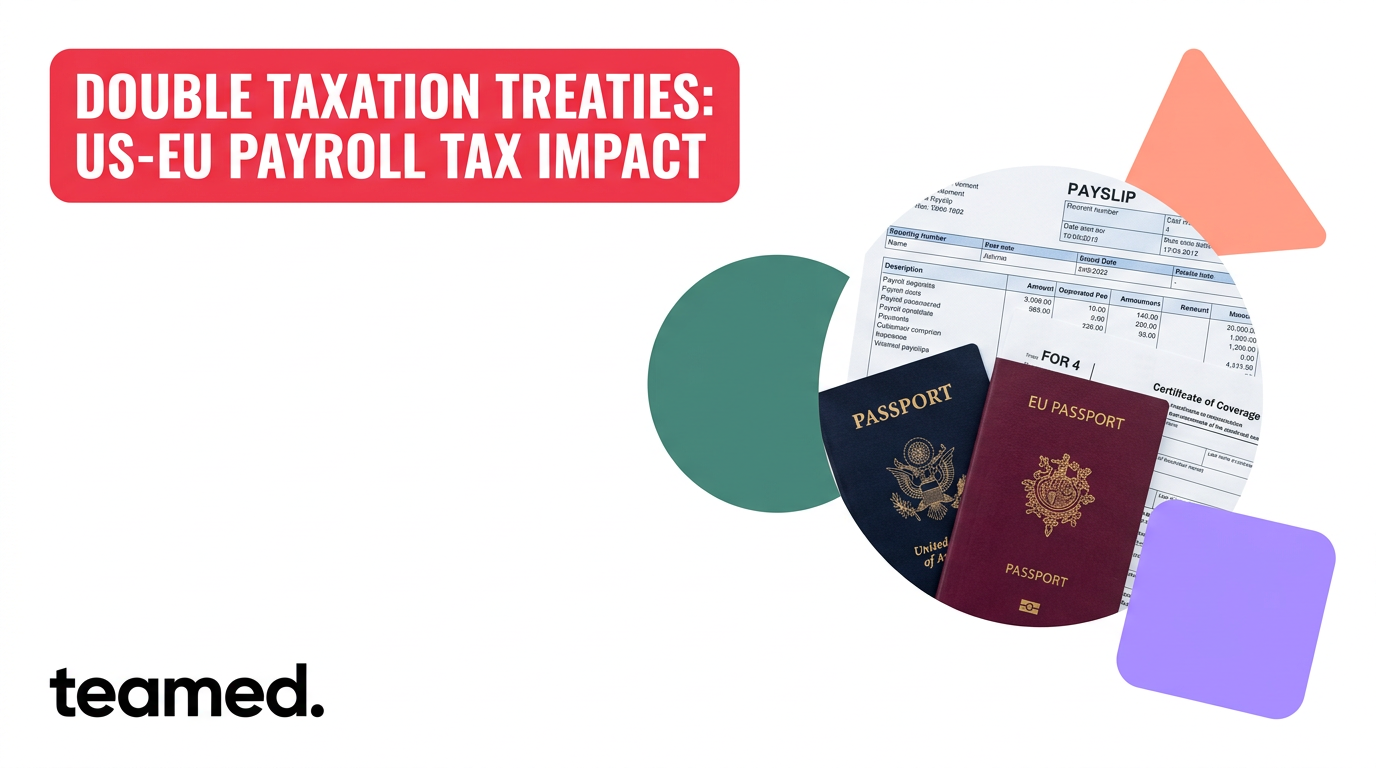
- Income tax double taxation treaties allocate taxing rights on salary, while totalization agreements specifically coordinate social security coverage and operate independently.
- Shadow payroll means running two systems at once. You keep US payroll for benefits and equity, but also report everything to German authorities and issue local payslips. Double the work, and equity compensation reporting often breaks first.
What 'Done' Looks Like
By following this process, you'll correctly determine which country's payroll taxes apply to a transferring employee, gather the documentation needed to claim treaty benefits, and establish compliant withholding from day one. Expect to spend 2-4 weeks on initial setup, with ongoing monthly reconciliation taking 1-2 hours per employee.
Before you start, gather: Access to payroll in both countries (or an EOR arrangement), the assignment letter with dates and location, and tax advisors who actually know both countries' rules. Don't rely on generic international tax advice.
Step 1: Figure Out Who Gets to Call Them a Tax Resident
Tax residence determines where an employee owes tax on worldwide income. Both the US and the destination EU country will apply their domestic rules first, and treaty tie-breaker provisions only activate when both countries claim the employee as resident.
The US taxes citizens and green card holders on worldwide income regardless of where they live. For non-citizens, the substantial presence test counts days physically present in the US over a three-year weighted period. If the employee meets this threshold, they're US tax resident under domestic law.
EU countries use varying criteria. In the UK, the Statutory Residence Test examines day counts and connection factors like family ties and accommodation. Germany looks at habitual abode and typically treats anyone present for more than six months as resident. France considers centre of vital interests alongside physical presence.
Expected result: You'll know whether the employee is tax resident in one country, both countries, or neither under domestic rules. Dual residence triggers the treaty tie-breaker sequence.
Step 2: If Both Countries Say 'They're Ours', Break the Tie
A treaty tie-breaker rule is a sequence of tests in a double taxation treaty used to assign a single tax residence when domestic laws treat a person as resident in both countries. Most US-EU treaties follow the OECD model, testing permanent home first, then centre of vital interests, habitual abode, and finally nationality.
For a US citizen moving to Germany for a three-year assignment, the treaty examines where they maintain a permanent home. If they've sold their US residence and leased an apartment in Berlin, Germany likely wins this test. If they kept the US home and rent temporarily in Germany, the analysis moves to centre of vital interests, examining family location, social ties, and economic connections.
Document this analysis formally. Tax authorities in both countries can request evidence supporting your residence determination, and payroll positions built on treaty benefits require written justification.
What you'll have: A memo stating "Employee is treaty-resident in [country] per Article X" that tells payroll exactly where to withhold.
When Do We Have to Start Withholding Locally?
The 183-day rule in US-EU treaties doesn't automatically exempt employees from host-country tax. It creates a narrow exception allowing continued home-country-only taxation when three conditions are met: physical presence in the host country stays under 183 days, the employer isn't resident in the host country, and the employer doesn't bear the salary cost through a permanent establishment there.
Here's what most payroll teams miss: the measurement period varies by treaty. Some US-EU treaties use a calendar year, others use a rolling 12-month period, and some reference the fiscal year of the host country. The US-Germany treaty uses a calendar year. The US-UK treaty uses a rolling 12-month period. Getting this wrong means miscounting days and potentially triggering withholding obligations you didn't anticipate.
A practical control used by mid-market finance teams is reconciling travel days monthly. Business travel plus remote work days can breach the 183-day threshold unintentionally, especially when employees split time between home and host locations.
What you'll know: Whether you need to register for local payroll now, can wait, or might never need to. Plus the exact date when local withholding would kick in.
Step 3: Income Tax Is One Thing. Social Security Is Another.
Income tax double taxation treaties primarily allocate taxing rights on salary and provide relief via exemptions or foreign tax credits. Totalization agreements specifically coordinate social security coverage and do not reduce income tax withholding by themselves. These are parallel tracks requiring separate analysis.
The US has totalisation agreements with 30 countries, including most major EU economies. These agreements prevent dual social security contributions by assigning coverage to one country based on assignment duration and employment relationship. Temporary assignments under five years or less typically remain covered by the home country's system.
A certificate of coverage is the official document proving which country's social security system applies. Without it, both countries can legitimately demand contributions. The US Social Security Administration issues Form SSA-1116 for outbound workers. EU countries issue A1 certificates for workers remaining in their home system.
Teamed's mobility operations guidance consistently finds that mid-market companies underestimate lead time for this documentation. Applications submitted with incomplete information can take months to resolve, leaving payroll in limbo.
What you'll file this week: Certificate of coverage application to avoid double social charges, plus any treaty forms needed for income tax relief.
Step 4: Do We Need a Local Payroll Account Even If Tax Is Zero?
A treaty exemption from host-country income tax doesn't automatically eliminate host-country payroll reporting duties. Many EU countries require employer registration and local payroll reporting for any work performed in-country, even when treaty provisions reduce the actual tax to zero.
In Germany, wage tax withholding (Lohnsteuer) is administered through employer payroll processes. Inbound employees performing duties in Germany typically require German payroll wage tax handling even when treaty relief applies. The employer needs a German tax identification number and must run payroll through a German-compliant system or use an employer-of-record structure.
In France, payroll reporting involves monthly social declarations and strict payslip requirements. Even when income tax treaty positions reduce double taxation at year-end, local payroll capability is required during the year. The UK similarly requires Real Time Information (RTI) reporting for PAYE when employment duties are performed there.
What you'll have set up: Either your own local payroll registration (with tax ID, bank account, and filing calendar) or an EOR handling it all. Plus local-format payslips that keep employees and authorities happy.
What You'll Be Asked for in an Audit
Formal treaty-benefit documentation workflows matter because most tax authorities require written residency evidence and employer attestations to support payroll positions. Collecting these documents before the employee starts work prevents retroactive corrections.
The assignment letter deserves particular attention. It should specify the physical work location, expected duration, reporting relationships, and which entity bears the salary cost. Ambiguity here creates audit exposure when authorities question whether the employer-cost-borne test under the 183-day rule is satisfied.
Your audit-ready folder contains: Residence certificate, assignment letter, treaty forms, certificate of coverage, day count tracking, and the residence determination memo. Keep it all in one place.
Step 5: Pick Your Payroll Setup (There Are Only Three Real Options)
Choose host-country payroll registration or an EOR when the employee will physically work in the host EU country for more than 183 days or will become host-country tax resident under domestic rules. This is the default compliant position for longer assignments.
Choose a shadow payroll model when the employee remains on home payroll for benefits or equity administration but host-country law requires local income reporting and withholding. Shadow payroll reports host-country taxable compensation while keeping home-country payroll running for continuity. Teamed observes that shadow payroll setups typically require parallel reporting streams for gross-up, equity, and non-cash benefits.
Choose a certificate-of-coverage approach under a totalisation agreement when the assignment is temporary and you need to keep the employee in the home social security system. This prevents dual contributions but doesn't affect income tax withholding.
Choose a split payroll only when compensation components must legally be paid in different countries and you can support dual withholding, reporting, and foreign exchange controls. This adds complexity and is rarely the optimal choice for straightforward transfers.
What you'll document: A decision note saying "We're using [model] because [specific reasons]" with clear owners for each country's filings and a timeline for setup.
What Changes When You Move from Germany to France (Or Any EU Country)
Few sources compare treaty day-count tests across specific EU countries, yet these differences materially affect payroll setups. The US-Germany treaty uses a calendar-year measurement period for the 183-day test. The US-UK treaty uses a rolling 12-month period. The US-France treaty references the fiscal year.
Spain has a double taxation agreement with the United States that follows the OECD model closely, with the 183-day exemption requiring that remuneration not be borne by a permanent establishment. The US-Netherlands treaty includes similar provisions but adds specific rules for directors' fees and entertainers that can complicate executive transfers.
Germany's works council requirements and complex dismissal protections add employment law complexity beyond tax considerations. France's extensive labour code (Code du travail) creates additional payroll reporting obligations. These country-specific employment regulations interact with tax treaty positions to determine total compliance burden.
GDPR applies to employee payroll and mobility data across EU and UK jurisdictions. Transferring payroll data between the EU/UK and the US generally requires appropriate transfer mechanisms plus documented access controls. This affects how payroll information flows between home and host systems.
Step 6: How You Keep This from Blowing Up at Year-End
A typical risk window for retroactive payroll corrections spans the entire tax year. Under-withholding identified late requires catch-up withholding or employee reimbursement to avoid employer exposure. Monthly reconciliation prevents year-end surprises.
Track physical presence days in both countries. Business travel, remote work from the home country, and vacation location all count toward treaty thresholds. A spreadsheet works for single employees; companies managing multiple international transfers need systematic tracking.
Reconcile payroll tax remittances against treaty positions quarterly. Verify that the country receiving contributions matches the documented coverage determination. Flag any inconsistencies between where the employee is physically working and where payroll is remitting taxes. This inconsistency is the most frequent audit trigger in US-EU transfers.
Review gross-up calculations if the company covers additional tax costs. Currency fluctuations and rate changes affect the true cost of international assignments. CFOs questioning employment model strategy often discover that gross-up costs weren't modeled accurately at assignment start.
Your operating rhythm: Finance tracks days monthly, payroll reconciles withholding quarterly, and tax advisors review the whole setup annually. Everyone knows their part.
When This Goes Wrong (And It Will)
Problem: Certificate of coverage application rejected or delayed. Solution: Verify the employee meets the temporary assignment criteria (typically under five years). Ensure the application includes complete employment history and assignment documentation. Contact the issuing authority directly for status updates rather than waiting.
Problem: Host country demands social security contributions despite certificate of coverage. Solution: Provide the certificate directly to the host-country authority. Some countries require the employer to register the certificate before it's recognized. If the certificate isn't yet issued, request provisional coverage confirmation.
Problem: Employee's physical presence exceeded 183 days unexpectedly. Solution: Assess whether the measurement period has closed. If still within the period, restrict further host-country presence. If the threshold is breached, register for host-country payroll immediately and calculate catch-up withholding. Document the timeline for audit defense.
Problem: Dual payroll systems showing inconsistent compensation data. Solution: Establish a single source of truth for total compensation. Shadow payroll should mirror home payroll gross amounts with host-country tax calculations applied. Reconcile monthly before either system closes its period.
If You're Doing This More Than Once a Year
For companies managing multiple international transfers, the graduation model becomes relevant. Teamed's graduation model is a framework that guides companies through sequential employment model transitions, from contractors to EOR to owned entities, maintaining continuity through a single advisory relationship. This matters because payroll complexity multiplies with each additional country and employment model.
Consider a gross-up policy review when the employee's move changes marginal tax rates or triggers additional payroll levies that materially alter total employment cost. Many mid-market companies discover assignment costs exceed budget because social contributions and local employer taxes weren't modeled accurately.
Choose an entity or permanent establishment risk assessment when the employee will manage sales, sign contracts, or lead a local team. Payroll compliance can be correct while corporate tax exposure is created by the employee's activities. This analysis sits outside payroll but affects the overall compliance picture.
If you're tired of getting different answers from different vendors, each pushing their own solution, let's talk. Book a call with our team. We'll review your current setup, identify the immediate risks, and show you how unified global employment operations can replace vendor chaos with clear guidance.
Before You Tell the CFO It's Handled
Before you call this done, make sure you have:
- Tax residence determination documented with treaty tie-breaker analysis if applicable
- 183-day calculation completed using the correct measurement period for the specific treaty
- Certificate of coverage obtained or application submitted with expected timeline
- Host-country payroll registration completed or EOR arrangement confirmed
- Documentation file assembled including assignment letter, residency certificates, and treaty position memo
- Payroll model selected and implemented in both home and host systems
- Monthly day-count tracking process established
- Someone in finance who owns the quarterly reconciliation (name them, tell them, calendar it)
Double taxation treaties can reduce tax liability for employees moving between the US and EU countries, but the operational payroll steps determine whether that relief actually flows through correctly. The treaty provides the framework. Your payroll processes make it real.