Employment Rights Act 2025: what's changing and when
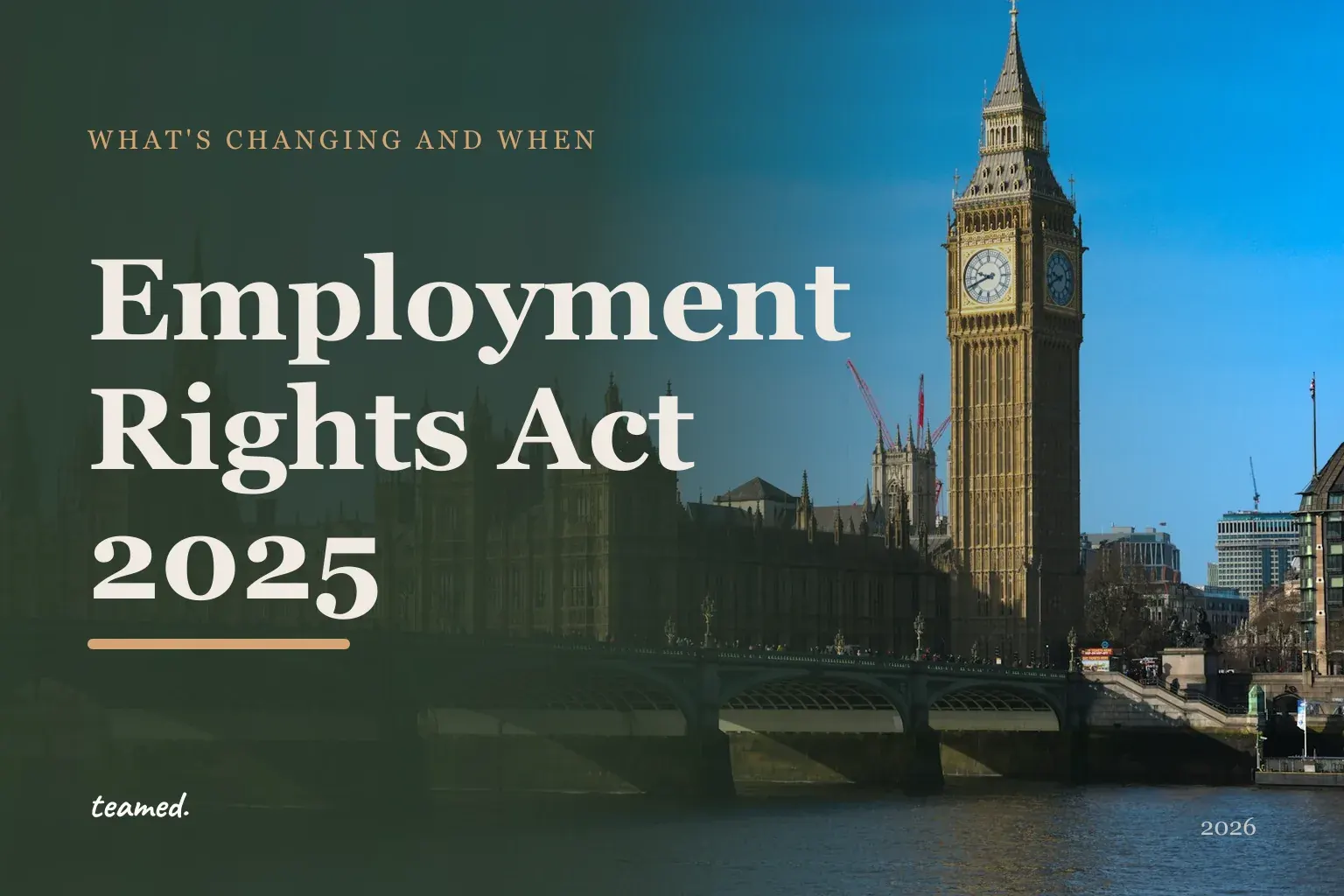
The Employment Rights Act 2025 received Royal Assent on 18 December 2025 and is rolling out in stages through 2027. Trade union reforms landed first, day-one family leave and sick pay changes followed in April 2026, and the biggest wave, unfair dismissal reform and fire-and-rehire restrictions, lands 1 January 2027.
Day-one leave and sick pay changes are now in force
What happened
On 6 April 2026, paternity leave and unpaid parental leave became rights from the first day in a job. Statutory Sick Pay changed on the same day. A new body to enforce work rights, the Fair Work Agency, started on 7 April 2026.
What it means for you
New staff can take this leave from day one, so update your contracts and policies. More changes are on the way. Start planning now for the big wave on 1 January 2027.
Dates to know
- October 2026Staff get six months, not three, to take a claim to an employment tribunal (a work court).
- 1 January 2027Unfair dismissal claims open after six months in the job, the cap on payouts ends, and fire and rehire limits start.
Source: GOV.UK, Department for Business and Trade. We check this page every week. Last checked .
The Employment Rights Act 2025 is the biggest overhaul of UK employment law in a generation. It received Royal Assent on 18 December 2025, and the government has staged its rollout rather than switching everything on at once. Trade union reforms and day-one notice rights for family leave started 18 February 2026. Day-one paternity and unpaid parental leave, Statutory Sick Pay reform, and stronger whistleblowing protection followed on 6 April 2026, alongside the new Fair Work Agency. Third-party harassment liability lands in October 2026. The largest single wave, cutting the unfair dismissal qualifying period from two years to six months and restricting fire-and-rehire, is set for 1 January 2027. Zero-hours contract reform and extended bereavement leave are still expected in 2027 but do not yet have fixed dates. The rollout has already slipped once, in a revised roadmap published 3 February 2026, so dates should be treated as the government's current position, not a guarantee.
What has already happened?
Royal Assent was 18 December 2025. Trade union reforms and day-one notice rights for paternity and parental leave started 18 February 2026. Day-one paternity leave, day-one unpaid parental leave, Statutory Sick Pay reform, and stronger whistleblowing protection for sexual harassment disclosures all started 6 April 2026, the same day the collective redundancy protective award doubled to 180 days' pay. The Fair Work Agency, a new single enforcement body, was established 7 April 2026.
What is confirmed for later in 2026 and 2027?
Employers become liable for harassment of staff by third parties such as customers or suppliers from October 2026, when the employment tribunal claim time limit also extends from three to six months. The single biggest wave lands 1 January 2027: the unfair dismissal qualifying period falls from two years to six months, the compensation cap is removed, and new fire-and-rehire restrictions take effect.
What is still not fixed?
A duty to offer qualifying zero and low-hours workers guaranteed hours, plus reasonable notice of shifts and cancellation pay, is expected in 2027 but has no confirmed date. Extended bereavement leave, including for pregnancy loss under 24 weeks, is also expected in 2027 without a fixed date. Both were still working through consultation as of mid-2026.
Who handles this if you hire through Teamed?
When Teamed is your legal employer, we track this roadmap so you don't have to. Every measure that lands, from day-one leave rights to the unfair dismissal changes, is reflected in your UK employees' contracts and our payroll and policies automatically, on the date it actually commences, not the date it was originally announced.
Key figures
| Detail | Value |
|---|---|
| Royal Assent | The Employment Rights Bill received Royal Assent on 18 December 2025, becoming the Employment Rights Act 2025 (c.36). The Strikes (Minimum Service Levels) Act 2023 was repealed the same day. (source) |
| Revised roadmap publication | The Department for Business and Trade published a revised implementation timetable on 3 February 2026 (updated since, most recently 15 April 2026), replacing the original roadmap from July 2025. (source) |
| 18 February 2026: trade union reforms (in force) | Dismissal for taking industrial action became automatically unfair (12-week protection limit removed), industrial action notice cut to 10 days, ballot mandates extended to 12 months, and the 10-year re-ballot requirement for political funds was scrapped. Day-one notice/eligibility provisions for paternity and unpaid parental leave also started this date, ahead of the leave itself commencing in April. (source) |
| 6 April 2026: day-one family leave, SSP reform, whistleblowing (in force) | Paternity leave and ordinary unpaid parental leave became day-one rights (no qualifying service); SSP became payable from day one with the Lower Earnings Limit removed; sexual harassment became a qualifying disclosure under whistleblowing law; the collective redundancy protective award doubled to 180 days pay; the Fair Work Agency was established on 7 April 2026. (source) |
| October 2026: third-party harassment duty | Employers become liable for harassment of staff by third parties (customers, clients, suppliers); a single incident can be enough unless the employer proves it took all reasonable steps to prevent it. The employment tribunal claim time limit also extends from 3 to 6 months this wave. (source) |
| 1 January 2027: unfair dismissal reform and fire-and-rehire | The unfair dismissal qualifying period falls from 2 years to 6 months, the compensatory award cap is removed, and new automatic-unfair-dismissal protection against fire-and-rehire takes effect. (source) |
| 2027 (date to be confirmed): zero-hours/guaranteed-hours contracts and bereavement leave | A duty to offer qualifying zero and low-hours workers guaranteed hours, plus reasonable shift notice and cancellation pay, is expected in 2027; the guaranteed-hours consultation closed 25 August 2026. Extended bereavement leave, including for pregnancy loss under 24 weeks, is also expected in 2027; its consultation closed 15 January 2026. Neither has a fixed commencement date yet. (source) |
Frequently asked questions
Is the Employment Rights Act 2025 fully in force yet?
No. It received Royal Assent in December 2025, but most of its substantive duties commence in stages through 2027 under a government roadmap. Several measures are already in force; the largest wave, unfair dismissal reform, is set for 1 January 2027.
Has the rollout timeline changed?
Yes, once so far. The Department for Business and Trade published a revised implementation timetable on 3 February 2026 that moved some dates, most notably pushing fire-and-rehire restrictions from October 2026 to January 2027 to align with the unfair dismissal reforms.
What should employers do now?
Review contracts, policies and probation practices against the confirmed 2026 changes (day-one leave, SSP, whistleblowing) now, and start preparing for the January 2027 unfair dismissal changes well in advance, since the qualifying period will fall to six months for anyone dismissed on or after that date.
UK employment law is moving fast, and commencement dates have slipped before. When Teamed is your legal employer, we track every change and update your contracts, policies and payroll as the law lands, so you never have to read a roadmap to stay compliant.