UK employment law: the Employment Rights Act 2025 employer guide
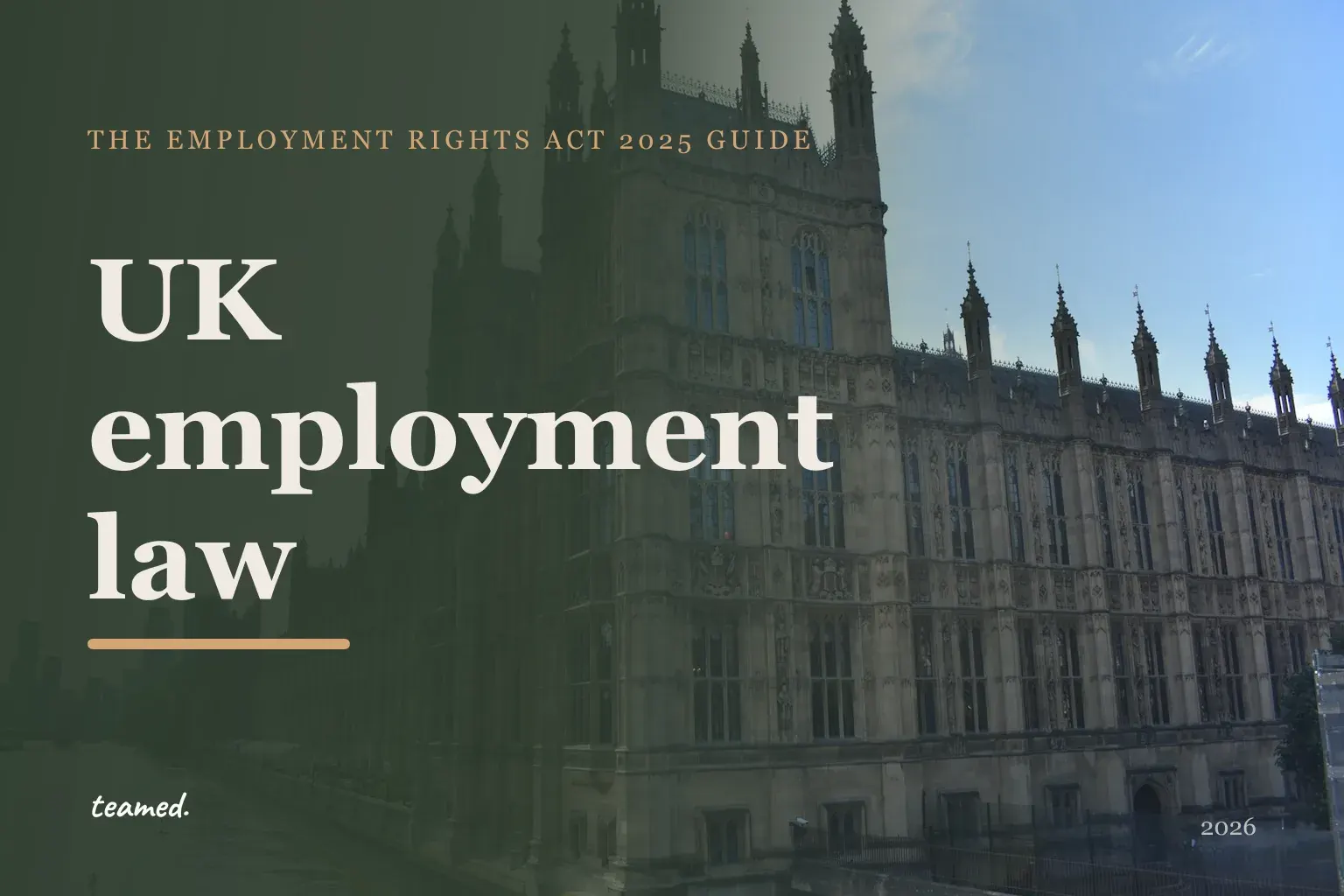
The Employment Rights Act 2025 is rolling out in stages through 2027, alongside separate UK changes to minimum wage, right-to-work checks, holiday pay and IR35. This hub covers the 8 changes that matter most for employers, with a full timeline of what's changing and when.
The 8 changes that matter most
Each topic explains the change, when it lands, and who handles it if you hire through Teamed.
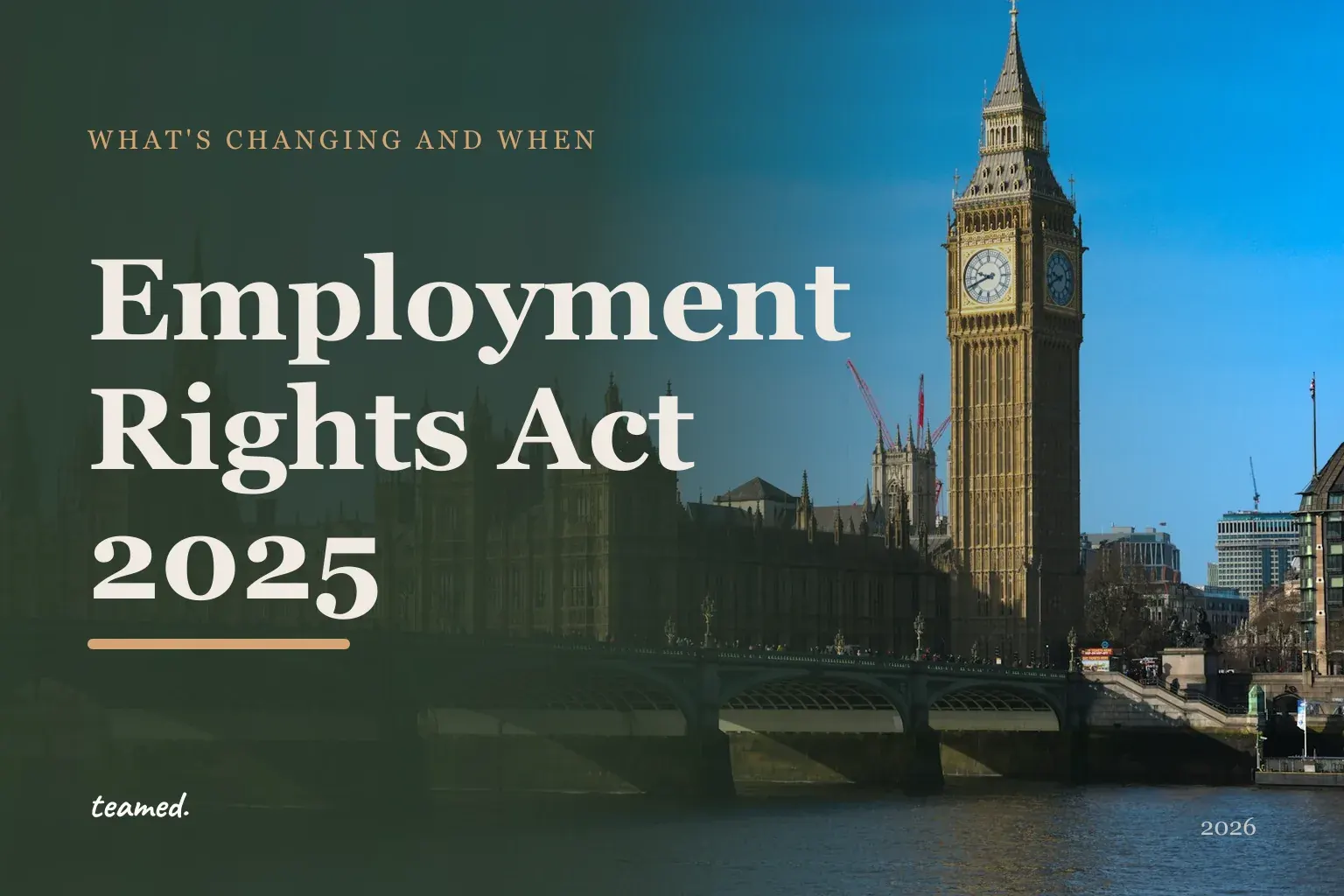 Confirmed dateEmployment Rights Act 2025: what's changing and whenThe Employment Rights Act 2025 received Royal Assent on 18 December 2025 and is rolling out in stages through 2027. Trade union reforms landed first, day-one family leave and sick pay changes followed in April 2026, and the biggest wave, unfair dismissal reform and fire-and-rehire restrictions, lands 1 January 2027.Next major wave: 1 January 2027 (unfair dismissal and fire-and-rehire)
 Confirmed dateFire and rehire restrictionsFrom 1 January 2027, dismissing an employee and re-engaging or replacing them to force through a worse core contract term will be automatically unfair, with no qualifying service required and uncapped compensation. A narrow exception applies only where the business faces severe financial difficulty.1 January 2027 (moved back from an original October 2026 target)
 In forceHoliday pay and rolled-up holiday payIrregular-hours and part-year workers accrue statutory holiday at 12.07% of hours worked, and rolled-up holiday pay, an uplift added to every payslip, is lawful for these workers. Since April 2026 employers must also keep six years of holiday records, and failing to do so is a criminal offence.1 April 2024 (rules in force); 6 April 2026 (new record-keeping duty)
 In forceIR35 (off-payroll working) vs Employer of RecordUnder IR35, a medium or large UK client must determine a contractor's tax status and the fee-payer runs PAYE if the engagement is inside IR35. A 2024 offset mechanism fixed a double-taxation problem, and small-company exemption thresholds rose in 2025. Hiring someone as an Employer of Record employee from the start avoids the question entirely; moving an existing at-risk contractor onto an EOR does not erase exposure HMRC can still investigate from before the switch.6 April 2024 (offset mechanism); 6 April 2025 (raised small-company thresholds)
 In forceNational Minimum Wage and National Living Wage 2026From 1 April 2026 the National Living Wage (21+) is £12.71 an hour, the 18-20 rate is £10.85, and the 16-17 and Apprentice rates are both £8.00. The government has signalled it wants to eventually align the 18-20 rate with the National Living Wage, but no date is fixed yet.1 April 2026
 In forceRight to work checks and sponsorshipPhysical Biometric Residence Permits stopped being valid right-to-work evidence at the end of 2024, so checks now run through the Home Office's digital eVisa service. Employing someone without the right to work can now cost up to £60,000 per worker for repeat breaches, and Skilled Worker sponsorship rules tightened further in 2025 and 2026.In force since Feb 2024 (penalties); new sponsor pay-period rule from 8 April 2026
 In forceStatutory Sick Pay (SSP) 2026 changesSince 6 April 2026, SSP is payable from the first day of sickness absence instead of the fourth, and the Lower Earnings Limit was scrapped so every employee qualifies. Low earners get 80% of average weekly earnings; the flat rate for 2026-27 is £123.25 a week.6 April 2026
 Confirmed dateUnfair dismissal: the qualifying-period changeThe qualifying period for ordinary unfair dismissal falls from two years to six months on 1 January 2027, and the compensation cap is removed the same day. Coverage depends on the dismissal date, not the hire date: anyone dismissed on or after 1 January 2027 needs only six months' service.1 January 2027
The UK's new work law is starting in stages
What happened
The Employment Rights Act 2025 became law on 18 December 2025. It does not all start at once. Day-one paternity and parental leave, and changes to Statutory Sick Pay, began in April 2026.
What it means for you
Check your contracts and payroll for the rules already in force. The biggest change is still to come. From 1 January 2027, staff will need only six months in the job to claim unfair dismissal, and fire and rehire will be limited.
Dates to know
- 1 January 2027Unfair dismissal claims open after six months in the job, and new limits on fire and rehire start.
Source: GOV.UK, Department for Business and Trade. We check this page every week. Last checked .
UK employment law is going through its biggest overhaul in a generation. The Employment Rights Act 2025 received Royal Assent on 18 December 2025 and is commencing in stages: trade union reforms and day-one family leave notice rights in early 2026, day-one paternity and parental leave plus Statutory Sick Pay reform in April 2026, third-party harassment liability in October 2026, and the largest single wave, cutting the unfair dismissal qualifying period to six months and restricting fire-and-rehire, on 1 January 2027. Alongside the Act, the National Minimum and Living Wage rose again in April 2026, right-to-work checks have moved to a digital eVisa system with much higher penalties for getting it wrong, holiday pay rules for irregular-hours workers now carry a strict record-keeping duty, and IR35 continues to shape the choice between engaging UK contractors directly and using an Employer of Record. Commencement dates have already slipped once, in a February 2026 revised roadmap, so this cluster is reviewed regularly and dates are checked against primary sources.
The big picture
The Employment Rights Act 2025 received Royal Assent on 18 December 2025 and is commencing in stages through 2027. As of 15 July 2026, several measures are already in force (trade union reforms, day-one family leave, Statutory Sick Pay reform), the next major wave lands 1 January 2027 (unfair dismissal reform and fire-and-rehire restrictions), and two measures, zero-hours contract reform and extended bereavement leave, are still expected in 2027 without a fixed date.
Why is UK employment law changing so much right now?
The Employment Rights Act 2025 is the government's flagship labour-market reform, covering unfair dismissal, fire-and-rehire, sick pay, family leave, zero-hours contracts and more in a single Act. Rather than commence all at once, it is being rolled out in stages through 2027, so different rules take effect on different dates.
What should employers focus on first?
The changes already in force, day-one family leave, Statutory Sick Pay reform, and the current minimum wage rates, need to be reflected in contracts and payroll now. The January 2027 unfair dismissal and fire-and-rehire changes are the biggest wave still to come and are worth preparing for well in advance.
How does this work if you hire through an EOR?
An Employer of Record is the legal employer of your UK team, so every one of these changes, from day-one leave rights to the unfair dismissal reforms, is Teamed's responsibility to track and apply, not yours. You get a compliant UK employment relationship without reading a government roadmap yourself.
Frequently asked questions
Is the Employment Rights Act 2025 in force yet?
Partly. It received Royal Assent in December 2025, and several measures are already in force, but the largest changes, including unfair dismissal reform, are set for 1 January 2027.
Where can I see exactly what's changing and when?
The timeline page on this hub lists every confirmed and expected milestone in date order, with a source for each and a note on who handles it if you hire through Teamed.
Do these pages give legal advice?
No. They summarise the current position with primary sources, reviewed as the law changes. For a specific situation, Teamed's HR and legal experts can advise, or speak to ACAS or a qualified professional.
The Employment Rights Act 2025 is the biggest overhaul of UK employment law in a generation, and it lands in stages. When Teamed is your legal employer, we hold that complexity: compliant contracts, policies and payroll in the UK, updated as each measure actually commences.