
Poland employment compliance in 2026
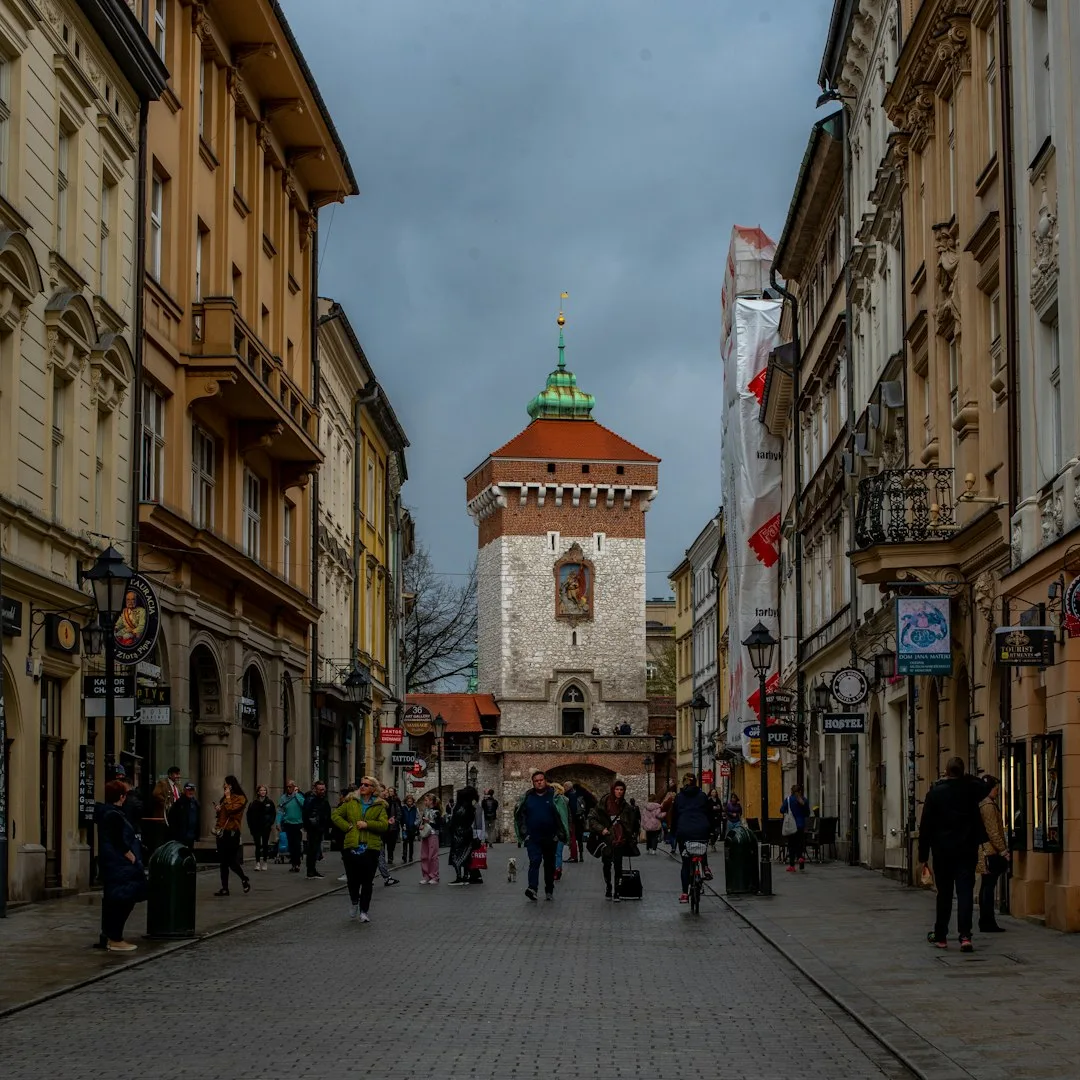
Illustration · Warsaw, Poland
Polish employees can appeal an unfair dismissal from day one. There is no qualifying period. That changes how probation and performance management need to work from the moment you hire.
· Poland guide
Polish employment law protects workers from day one.
There is no qualifying period to appeal an unfair dismissal. Employees can challenge a termination in court from the first day of work. Compensation for an unfair notice-based termination is capped at 3 months of salary.
Sick pay is funded jointly. Your employer pays 80% of the employee's allowance basis for the first 33 days of sickness in a calendar year. ZUS covers the rest.
Collective redundancy rules apply to employers with 20 or more staff. Dismissals within 30 days are counted together. Consultation with trade unions or employee representatives is required before notices are issued.
What changed in Poland employment law recently?
Poland transposed the EU Whistleblowing Directive (2019/1937) into national law in June 2024.
Employers with 50 or more workers must now maintain an internal reporting channel and protect whistleblowers from retaliation. This is a new compliance requirement with real penalties for non-compliance.
The Polish Whistleblower Protection Act (Ustawa o ochronie sygnalistow) came into force on 25 June 2024. Companies with 50 or more employees must have an internal reporting channel in place. This applies to all employers, including foreign companies with Polish employees.
| Requirement | Who it applies to | Since when |
|---|---|---|
| Internal reporting channel | Employers with 50+ staff | 25 June 2024 |
| Written whistleblower policy | All employers covered by the Act | 25 June 2024 |
| Retaliation prohibition | All employers (regardless of size) | 25 June 2024 |
| External reporting channel (State Labour Inspectorate) | All employees in Poland | 25 June 2024 |
| EU GDPR enforcement via UODO | All employers processing employee data | 2018 (ongoing) |
Poland unfair dismissal: no qualifying period, day-one protection
In Poland, there is no qualifying period for unfair dismissal protection.
An employee can go to the Labour Court from day one. The employer must justify a termination with a valid reason. Compensation for an unfair notice-based termination is capped at 3 months of salary.
This is the most important compliance difference between Poland and the UK. In the UK, employees needed two years of service before claiming unfair dismissal (dropping to six months from January 2027). In Poland, that qualifying period does not exist. Any employee can challenge their termination in court from day one of employment.
For fixed-term and indefinite contracts, the employer must give a written reason for termination. An employee who receives notice without a valid reason, or whose dismissal was carried out in breach of procedure, can bring a claim in the Labour Court.
What this means for probation management
- Performance concerns need to be documented from the start. A verbal warning at month two is not enough if you terminate at month three.
- The reason for termination must be specific. Vague reasons are challenged successfully in court.
- Union-consulted employees have additional protection. Dismissal of a trade union member or representative requires prior consultation with the union.
- Protected categories apply from day one. Pregnancy, parental leave, sick leave, and union membership all restrict dismissal rights, regardless of tenure.
Compensation for unfair dismissal where the contract was terminated on notice ranges up to 3 months of salary, under Labour Code Art. 45 and Art. 47(1).
Poland discrimination law: protected from day one
Polish employment law bans discrimination on a wide range of grounds.
The protections apply from day one, with no qualifying period. There is no cap on discrimination compensation. Claims can arise from recruitment, employment, promotion, and termination.
Poland's anti-discrimination framework draws on both the Polish Labour Code and the EU Equal Treatment Directives transposed into national law. The protected grounds under the Labour Code include:
- Sex
- Age
- Disability
- Race
- Religion or belief
- Nationality
- Political views
- Trade union membership
- Ethnic origin
- Sexual orientation
- Fixed-term or part-time employment status
Why discrimination claims matter more than unfair dismissal claims
- No qualifying period. Unlike many employment rights, discrimination protection applies before, during, and after employment.
- No compensation cap. Unlike unfair dismissal, where compensation is capped at 3 months of salary, discrimination claims are uncapped.
- Reversed burden of proof. Once an employee establishes facts that suggest discrimination, the employer must prove the treatment was not discriminatory.
- Equal pay obligations. Employers must pay equal remuneration for equal work or work of equal value, regardless of sex.
Polish courts apply the Labour Code anti-discrimination provisions broadly. Every HR process from job advertisement through to termination needs to be auditable against the protected grounds. Teamed's standard employment procedures build this in.
Whistleblowing protections in Poland
The Polish Whistleblower Protection Act came into force on 25 June 2024.
It applies to employers with 50 or more employees. The Act creates new obligations: internal reporting channels, written policies, and protection from retaliation. Smaller employers are covered by the external reporting channel via the State Labour Inspectorate.
A qualifying disclosure under the Polish Act must:
- Be a disclosure of information about a violation of law
- Relate to the employer's work or activities
- Be made in good faith by the person reporting
- Be submitted through an internal or external reporting channel, or disclosed publicly under the Act's conditions
The six categories of wrongdoing covered by the Act include:
- Violations of labour law
- Corruption and bribery
- Public procurement violations
- Environmental violations
- Public health and safety breaches
- Financial services and consumer protection violations
Employer obligations from June 2024
- Employers with 50+ staff must establish and maintain an internal reporting channel (a whistleblowing hotline or secure reporting system).
- All employers must not retaliate against a whistleblower. Retaliation includes dismissal, demotion, harassment, and withholding benefits.
- Acknowledgement within 7 days. The employer must acknowledge receipt of a report within 7 days.
- Feedback within 3 months. The employer must provide feedback on the outcome of the investigation within 3 months of acknowledgement.
A whistleblower who faces retaliation can claim compensation from the employer. The minimum compensation is the equivalent of average monthly pay in the Polish economy (published annually by Statistics Poland).
Employee data protection in Poland
Poland is an EU member state. EU GDPR applies directly to all employers with Polish employees.
The Polish Data Protection Authority (UODO) enforces GDPR in Poland. Subject access requests must be answered within 1 month. Data breaches must be reported to UODO within 72 hours.
Practical implications for employers with Polish employees:
- Privacy notice. Employees must receive a privacy notice at recruitment and on hire. It must explain what personal data is processed and for what purpose.
- Lawful basis. The employer must document a lawful basis for each processing activity. Contract performance covers most employment data. Legitimate interest applies to others.
- Subject access requests (SARs). Employees can request a copy of their personal data at any time. The employer must respond within 1 month (extendable to 3 months for large or numerous requests).
- Data breaches. A personal data breach must be reported to UODO within 72 hours if it is likely to result in risk to individuals.
- International data transfers. Transfers of employee data from Poland to countries outside the EU or EEA require an adequacy decision, standard contractual clauses (SCCs), or another approved safeguard.
- Employee monitoring. GDPR restrictions apply to email monitoring, CCTV, and computer activity tracking. Employees must be informed in advance.
For US-headquartered businesses with Polish employees via Teamed: employee data flowing from Teamed's Polish partner entity to a US parent requires SCCs. Teamed handles the data processing agreement and advises on transfer mechanisms.
Trade unions and worker representation in Poland
Trade union membership in Poland is voluntary. Unions are common in manufacturing, mining, and the public sector.
In technology and professional services, trade unions are less common. But their rights under the Labour Code are strong when they are present.
Three frameworks matter for employers:
- Trade Union Act 1991 (Ustawa o zwiazkach zawodowych). Governs union formation, membership rights, and recognition. Unions with at least 10 members at a workplace can operate there. Employers must consult unions before collective dismissals and terminations of protected union members.
- Collective redundancy consultation. If you plan to dismiss 20 or more employees within 30 days, you must consult trade unions or employee representatives. Where no trade union exists, you must establish an ad hoc employee representative body for the consultation. The minimum consultation period is 20 days from the start of the process.
- Works council (Rada pracownikow). Required in workplaces with 50 or more employees, under the 2006 Act on Employee Information and Consultation. Works councils have the right to receive information and be consulted on economic and employment matters.
Protected union representatives
Trade union representatives and committee members have enhanced protection against dismissal. Before an employer can terminate a protected union representative, it must seek the agreement of the trade union. Terminating a protected representative without union consent is a Labour Court liability, regardless of the reason stated.
TUPE-equivalent: transfer of business
Poland applies the EU Acquired Rights Directive through the Labour Code. When a business or part of a business transfers to a new employer, the employees transfer with their existing employment terms and continuity of service. The acquiring employer inherits the employment relationships. Moving Polish employees from one EOR provider to Teamed triggers this protection if it involves a transfer of economic activity.
How does Teamed handle Poland employment compliance for you?
Teamed becomes your legal employer of record in Poland for from $599 per employee per month, with zero FX mark-up in any currency.
The full Polish employment law stack, including day-one unfair dismissal exposure and the 2024 whistleblower obligations, runs on one platform.
Real HR and legal experts handle your Polish hires, from the first offer letter through every ZUS submission and annual tax reconciliation. An actual person, not a chatbot or a pooled queue. There is no setup fee and no exit fee. Employer cost passes through at cost, itemised on every invoice.
Teamed builds Polish compliance requirements into the onboarding flow from day one. The no-qualifying-period rule means your probation process needs to be documented and defensible from the start. The 2024 whistleblower Act means your Polish employees need a reporting channel if your total headcount in Poland reaches 50. Teamed advises on both and keeps the paperwork running.
Key sources: Polish Ministry of Family, Labour and Social Policy, CMS Law guide on Polish dismissals, and PwC Poland tax summaries.
-
Document the reason for termination
Every termination of a fixed-term or indefinite contract in Poland requires a written reason. Vague reasons are challenged successfully in court.
-
Check for protected status
Pregnant employees, those on maternity or parental leave, and protected union representatives cannot be dismissed without specific conditions being met.
-
Consult the union if required
If a recognised trade union operates at your workplace, the employer must consult it before terminating a union member or representative.
-
Issue notice in writing
Notice must be given in writing and must state the reason for termination. The notice period length depends on the employee's length of service.
-
Run final payroll and confirm ZUS
Pay all salary, unused holiday, and any severance due on the normal payroll cycle. Confirm the employment end date with ZUS.
Frequently asked questions
Is there a qualifying period for unfair dismissal in Poland?
No. Polish employees can appeal an unfair dismissal to the Labour Court from day one of employment. There is no qualifying service requirement. For notice-based dismissals that are found to be unfair or procedurally defective, compensation is capped at 3 months of salary. This is a key difference from the UK, where a qualifying period applies.
How does sick pay work for Polish employees?
For the first 33 days of sickness absence in any calendar year, the employer pays the employee's sick pay at 80% of their allowance basis. After 33 days, ZUS (Social Insurance Institution) takes over the sick pay obligation. The 100% rate applies for work accidents, occupational disease, and hospitalisation during pregnancy. The standard rate for ordinary illness is 80%.
When does collective redundancy consultation apply in Poland?
Collective redundancy rules apply to employers with 20 or more employees. The regime is triggered when the employer plans to dismiss a qualifying number of staff within 30 days. The employer must consult with trade unions or employee representatives before issuing any notices. Where no trade union exists, an ad hoc employee representative body must be formed for the consultation. The minimum consultation period is 20 days from the start of the process. Employers with 300 or more employees face a stricter dismissal threshold that triggers the collective redundancy regime.
Does GDPR apply to employers with Polish employees?
Yes. Poland is an EU member state, and EU GDPR applies directly. The Polish Data Protection Authority (UODO) enforces GDPR. Subject access requests from employees must be answered within 1 month. Data breaches must be reported to UODO within 72 hours if they are likely to result in risk to individuals. US-headquartered businesses sending employee data from Poland to the US need standard contractual clauses or another approved transfer mechanism.
Who must set up a whistleblower reporting channel in Poland?
Since 25 June 2024, all employers with 50 or more employees in Poland must maintain an internal whistleblower reporting channel under the Polish Whistleblower Protection Act. The channel must be confidential, and the employer must acknowledge reports within 7 days and give feedback within 3 months. Retaliating against a whistleblower is prohibited regardless of employer size. Smaller employers are covered by the external reporting channel via the State Labour Inspectorate.
The no-qualifying-period rule in Poland is the thing that catches clients off guard. They expect a grace period like in the UK. There is none. From the first day of work, the employee can take you to the Labour Court if the dismissal was not justified. The documentation has to be there from the start.
Poland does not give you a qualifying period before unfair dismissal rights kick in.
That means your performance management process has to be defensible from week one.
Add the 2024 whistleblower channel requirement, GDPR, and day-one sick pay, and Poland is a compliance environment that rewards preparation.
Looking for a job in Compliance And Day One Rights yourself? Teamed does not hire people directly. Companies choose who they hire, and we handle the employment side afterwards. Here is why we cannot help with your search.