
What Poland employee benefits must you provide in 2026?
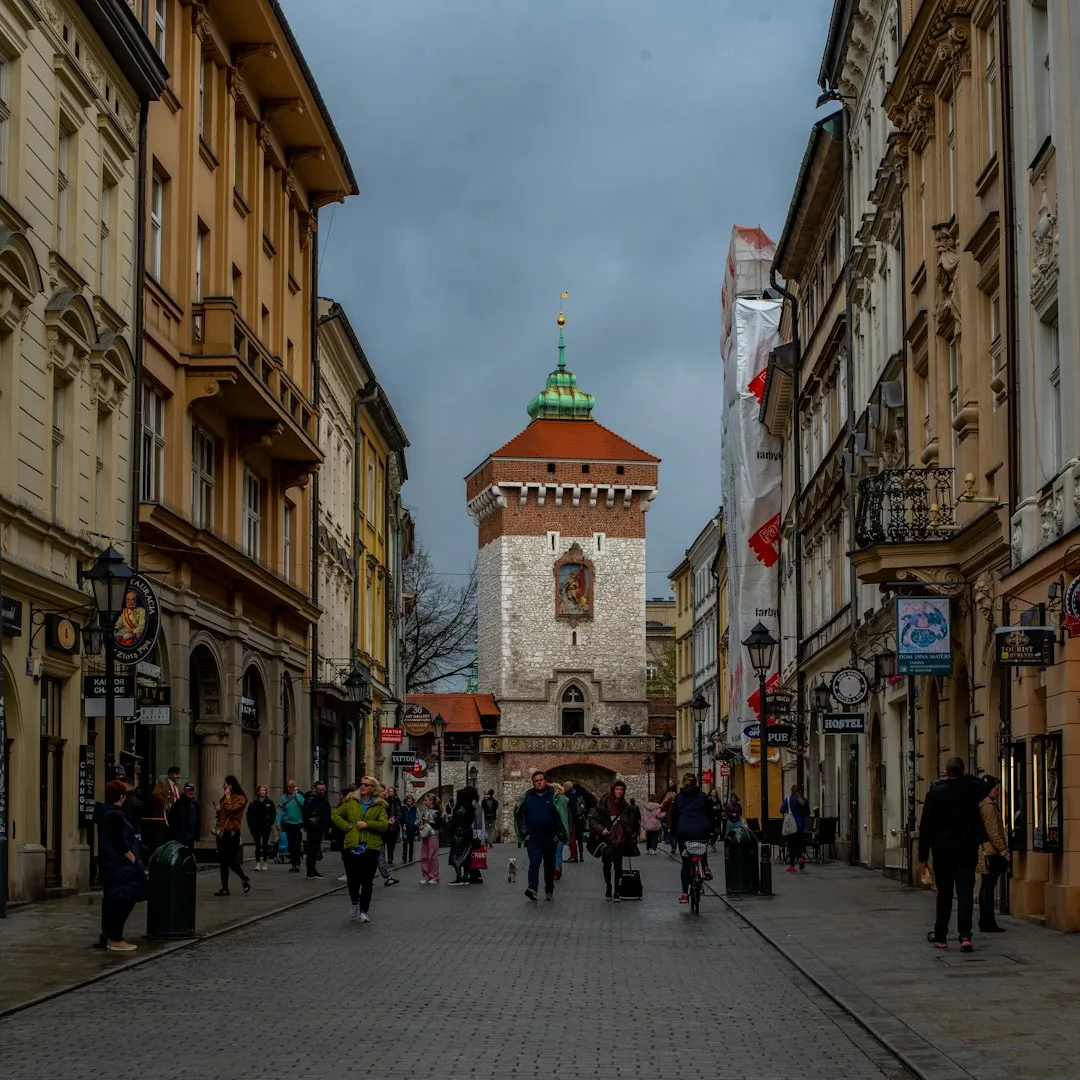
Illustration · Krakow, Poland
Polish annual leave rises automatically from 20 days to 26 days once an employee crosses 10 years of combined service. Most employers do not notice until the invoice lands.
· Poland guide
Poland grants 20 days paid annual leave for employees with under 10 years of total service.
That rises to 26 days once 10 years of combined employment is reached. The 10-year clock counts all employers, not just yours.
Sick pay: you pay the first 33 days at 80% of the calculation basis. ZUS covers the rest up to 182 days.
Maternity leave runs 20 weeks. It is paid at 100% of the calculation basis by ZUS, not the employer. Poland has 14 public holidays in 2026.
What benefits must you provide Poland employees by law?
The law sets a floor you must meet from day one. Paid annual leave starts at 20 days and rises to 26 days once the employee crosses 10 years of total service anywhere.
You pay sick pay for the first 33 days per calendar year at 80% of the calculation basis. After that, the Social Insurance Institution (ZUS) takes over.
| Statutory benefit | Minimum (2026) | Source |
|---|---|---|
| Annual leave (under 10 years total service) | 20 days | Labour Code Art. 154 |
| Annual leave (10 or more years total service) | 26 days | Labour Code Art. 154 |
| Public holidays 2026 | 14 days (including Christmas Eve added by 2024 amendment) | Act of 18 January 1951 on Public Holidays |
| Employer-paid sick pay | 80% of calculation basis for the first 33 days per year | Labour Code Art. 92 |
| ZUS sickness benefit (after employer period) | 80% of calculation basis, up to 182 days, paid by ZUS | Sickness and Maternity Benefits Act |
| Maternity leave | 20 weeks (single birth), paid at 100% by ZUS | Labour Code Art. 180 |
| Paternity leave | 2 weeks, paid at 100% by ZUS | Labour Code Art. 182(3) |
| ZUS social contributions (employee) | 13.71% of gross salary (up to annual cap) | Social Insurance System Act |
| Standard working week | 40 hours per week average | Labour Code Art. 129 |
The 10-year leave threshold counts all previous employment in Poland and abroad, not just tenure with your company. An employee who joins you with 9 years of prior service crosses the threshold in their first year with you.
What does a competitive Poland benefits package look like?
For tech and professional services roles in Warsaw and Krakow in 2026, the competitive benchmark adds: private health insurance (Medicover, Lux Med, or Enel-Med), a Multisport or FitProfit gym card, group life insurance, and an employee sports or leisure fund contribution.
The full competitive package typically costs 3,000 to 8,000 PLN per employee per year on top of base salary and statutory ZUS contributions.
| Benefit | Typical cost per employee per year | What it delivers |
|---|---|---|
| Private health insurance (Medicover, Lux Med, Enel-Med) | 1,200 to 3,600 PLN | Fast specialist access, dental option, mental health referrals |
| Multisport or FitProfit card | 600 to 1,200 PLN | Gym and leisure network access, popular in tech |
| Group life insurance | 400 to 900 PLN | Death-in-service cover, optional critical illness rider |
| FŚS social fund contribution (zakładowy fundusz świadczeń socjalnych) | Statutory rate based on average national salary, split by need | Holiday subsidies, children's activities, welfare support |
| Meal vouchers or Sodexo/Edenred card | 1,200 to 2,400 PLN | Tax-efficient meal benefit, exempt from ZUS up to statutory limits |
| Remote work internet subsidy | 300 to 720 PLN | Covers cost of home broadband, partially ZUS-exempt |
| Learning and development budget | 1,000 to 3,000 PLN | Certifications, courses, conferences |
Model your full Poland employment cost on the Employer Cost Calculator to see the ZUS burden and benefit stack for a specific salary.
What social insurance and pension contributions should you plan for?
Poland does not have a UK-style pension auto-enrolment floor. Social security (ZUS) contributions are mandatory and cover retirement, disability, sickness, and accident insurance.
The employee pays 13.71% of gross salary up to the annual contribution cap. Employer contributions are in a similar range but vary by accident insurance category.
The ZUS contribution architecture has four pillars:
- Retirement and disability (emerytalno-rentowe). The largest component, split between employer and employee. These contributions fund the state pension (ZUS) and the open pension funds (OFE, optional). Both employer and employee contribute.
- Sickness insurance (chorobowe). Employee-only contribution. Funds sickness benefit after the employer-paid period of 33 days.
- Accident insurance (wypadkowe). Employer-only contribution. The rate varies by industry sector and company size, set annually by ZUS.
- Labour Fund and FGSP (Fundusz Pracy and Fundusz Gwarantowanych Swiadczen Pracowniczych). Employer-only. Funds unemployment benefits and guaranteed employee benefits.
Going beyond ZUS: the PPK employee capital plan
Since 2021, employers in Poland with any employees must operate a PPK (Pracownicze Plany Kapitałowe) scheme, the supplemental workplace savings plan. The default employer contribution is 1.5% of gross salary. Employees contribute 2% by default, rising to a combined 8% maximum if both parties choose enhanced rates.
PPK is separate from ZUS. It is a voluntary opt-out scheme. Employees can resign from participation, but automatic re-enrolment applies every 4 years. For competitive positioning, many Warsaw and Krakow employers offer the enhanced employer PPK contribution (up to 2.5%) as part of the benefits narrative.
The default PPK floor is the legal minimum. Candidates at mid-senior level often know the enhanced rate options before the offer is made.
The FŚS social fund: Poland's employer welfare obligation
Polish employers with 50 or more full-time employees must operate a zakładowy fundusz świadczeń socjalnych (Company Social Benefits Fund, known as FŚS).
Employers below 50 staff can opt in. The fund pays for holiday subsidies, children's activities, and welfare support, distributed to employees based on household income.
The FŚS contribution rate is set each year as a percentage of the average national salary published by Statistics Poland (GUS). For 2026 the baseline rate is 37.5% of the average monthly salary per full-time employee per year. The actual per-employee PLN amount updates when GUS publishes its January figure.
How the FŚS works in practice:
- Mandatory for 50+ FTE employers. Below 50, the fund is optional; most competitive employers opt in anyway because employees value it.
- Income-tested distribution. Employees with lower household income receive a larger subsidy share. The employer administers a simplified income-check process.
- Common uses. Summer and winter holiday subsidies (wczasy pod gruszą), children's holiday camps, Christmas gifts or vouchers for employees' children, cultural events, and emergency welfare loans.
- Tax treatment. Holiday subsidies up to a statutory PLN limit per year are exempt from income tax and ZUS contributions. The limit adjusts annually.
For a foreign employer hiring through an EOR, the EOR operates the FŚS obligation on your behalf. You set the usage policy; the EOR handles the administrative and distribution mechanics.
The FŚS is not a negotiating point: it is a cost you absorb. The competitive lever is how generous you are in the opt-in categories (summer camps, cultural events) above the mandatory floor.
Hybrid and remote work: the 2024 to 2026 competitive shift
Polish employees shifted their expectations on hybrid and remote work between 2024 and 2026. Fully office-based roles in Warsaw and Krakow now face active candidate resistance from mid-level and senior tech workers.
A formal hybrid policy, a monthly internet subsidy, and a home-office equipment budget moved from differentiators to expected features during this period.
Key elements that competitive Polish employers now include:
- Hybrid structure (2 to 3 days in office). The standard expectation for Warsaw and Krakow tech roles. Fully remote is available but competitive pressure to offer it dropped slightly post-2023 as companies re-anchored around offices.
- Remote work internet allowance. Partially exempt from ZUS contributions up to the statutory equipment-and-internet cost limit. Most employers provide 100 to 200 PLN per month.
- Home office equipment fund. A one-off payment or lend of monitor, chair, and peripherals. Tax treatment depends on the form (loan of asset vs cash budget).
- Flexible start times. Core hours (e.g. 10:00 to 15:00) with flexible outer bands is the typical structure in tech. Supported under Labour Code Art. 150 flexible time arrangements.
- 4-day work week pilots. A small but growing cohort of Polish tech employers ran 4-day trials in 2024. Take-up remains limited; the Labour Code requires a formal agreement to reduce the weekly hours average below 40 hours.
- Wellbeing allowance. A 500 to 1,500 PLN annual budget for mental health, sport, or wellness, often delivered via a benefit platform (MyBenefit, Benefit Systems). Growing from niche to near-standard in Warsaw's tech cluster.
The cost of the hybrid stack (internet allowance, equipment, wellbeing budget) runs approximately 1,500 to 4,000 PLN per employee per year. The candidate impact outweighs the cost at virtually every salary level above the minimum wage floor of zł 4,806/month.
How does Teamed handle Poland benefits for you?
Teamed becomes your legal employer of record in Poland for from $599 per employee per month, with zero FX mark-up on PLN payroll.
ZUS registrations, PPK enrolment, FŚS contributions, and the full Polish Labour Code stack run on one platform.
Real HR and legal experts handle ZUS registration, PPK setup, monthly ZUS declarations (ZUS DRA/RCA), FŚS fund administration, and annual leave tracking. An actual person, not a pooled queue. There is no setup fee and no exit fee. Every employer cost passes through at cost, itemised on the invoice.
Teams graduate from a single hire to a full Poland headcount on the same platform. Compliance obligations that feel straightforward at one employee multiply at five. Teamed scales with you, until it isn't just one employee anymore, without rebuilding the stack.
What is included in Teamed's standard EOR fee:
- ZUS employer and employee contributions registration and monthly filing
- PPK (Pracownicze Plany Kapitałowe) scheme enrolment and administration
- FŚS social fund contribution calculation and payment (for qualifying headcounts)
- Statutory leave tracking (annual leave, sick leave, maternity and paternity entitlements)
- PIT-4R annual income tax declaration filing
- Baseline employer-period sick pay (first 33 days)
What clients pass through at cost on the invoice:
- Private health insurance premiums (Medicover, Lux Med, or Enel-Med)
- Multisport or FitProfit card premiums
- Group life insurance premiums
- Meal voucher programmes
- Learning and development budgets
- Enhanced PPK employer contributions above the 1.5% default
The benefits package is bespoke to your positioning. Teamed handles the operational mechanics so you do not need a Polish HR administration team to deliver them.
Key sources: Polish Ministry of Family, Labour and Social Policy, Social Insurance Institution (ZUS), and PwC Poland Tax Summaries 2026.
-
Confirm leave entitlement
Ask each new hire for their total years of prior employment. This sets their annual leave entitlement from day one and avoids a retroactive correction at month eight.
-
Register with ZUS
Every new employee must be registered with the Social Insurance Institution within seven days of starting work. Late registration carries penalties.
-
Enrol in PPK
Employees aged 18 to 55 are automatically enrolled in the PPK workplace savings plan. Provide the required information notice and process any opt-out declarations within the legal window.
-
Set up FŚS contributions
If your Poland headcount reaches the threshold, calculate the annual FŚS contribution based on the current average national salary figure and transfer funds to the dedicated fund account.
-
Arrange private health insurance
Select a provider and confirm the premium per employee. Pass the cost through on the invoice at cost. Provide enrolment details to the employee before their first working day.
Frequently asked questions
How many days of annual leave do Poland employees receive by law?
Employees with under 10 years of total combined service receive 20 days of paid annual leave per year. This rises to 26 days once the employee reaches 10 years. The 10-year threshold counts all employment in Poland and abroad, not just time with your company. Poland also has 14 public holidays in 2026, which are separate from annual leave.
How does sick pay work in Poland?
You, the employer, pay sick pay for the first 33 days of illness per calendar year. The rate is 80% of the employee's calculation basis (broadly, average monthly earnings). After 33 days, the Social Insurance Institution (ZUS) takes over and pays sickness benefit at the same rate, up to 182 days in total. For illness caused by a work accident or occupational disease, the rate is 100% from day one.
What is maternity leave and pay in Poland?
Statutory maternity leave is 20 weeks for a single birth. It is paid at 100% of the calculation basis. ZUS pays this benefit directly, not the employer. Paternity leave is 2 weeks, also paid at 100% by ZUS. After maternity leave, parents can take parental leave under Labour Code Art. 182(1a); the exact duration depends on current legislation and should be verified before planning.
What is the PPK workplace savings plan and is it mandatory?
PPK (Pracownicze Plany Kapitałowe) is a supplemental workplace savings scheme that all Polish employers must operate. The default employer contribution is 1.5% of gross salary. Employees contribute 2% by default. Both parties can increase contributions voluntarily. Employees can resign from participation, but automatic re-enrolment applies every 4 years. PPK sits alongside ZUS social insurance; it does not replace it.
Does the FŚS social fund apply to all employers?
The zakładowy fundusz świadczeń socjalnych (FŚS) is mandatory for employers with 50 or more full-time employees. Employers below 50 can opt in voluntarily. The fund is financed by the employer and used for holiday subsidies, children's activities, and welfare support. Distribution is income-tested. For employers operating via an EOR in Poland, the EOR administers FŚS contributions and distribution as part of the employment relationship.
What is the standard working week in Poland?
The standard working week is 40 hours averaged over a settlement period. The maximum is 40 hours per week on average. Overtime rules and settlement periods are governed by Labour Code Art. 129 to Art. 151. Flexible time arrangements reducing the daily hours spread are permitted under Art. 150 with a formal employment agreement.
The 10-year leave threshold catches more employers than any other rule in Poland. Your new hire often arrives partway there. By month eight, they cross 10 years of combined service and your leave liability jumps from 20 to 26 days, with no notice and no negotiation.
Poland's annual leave clock runs on total career service, not tenure with you. Your new hire may be six days of leave more expensive than your model assumed.
ZUS plus PPK plus FŚS: three separate contribution streams, each with its own filing cycle and rate logic.
Get the mechanics right once. Teamed keeps them running month after month.
Looking for a job in Benefits yourself? Teamed does not hire people directly. Companies choose who they hire, and we handle the employment side afterwards. Here is why we cannot help with your search.