
How do Poland working time and leave rules work in 2026?
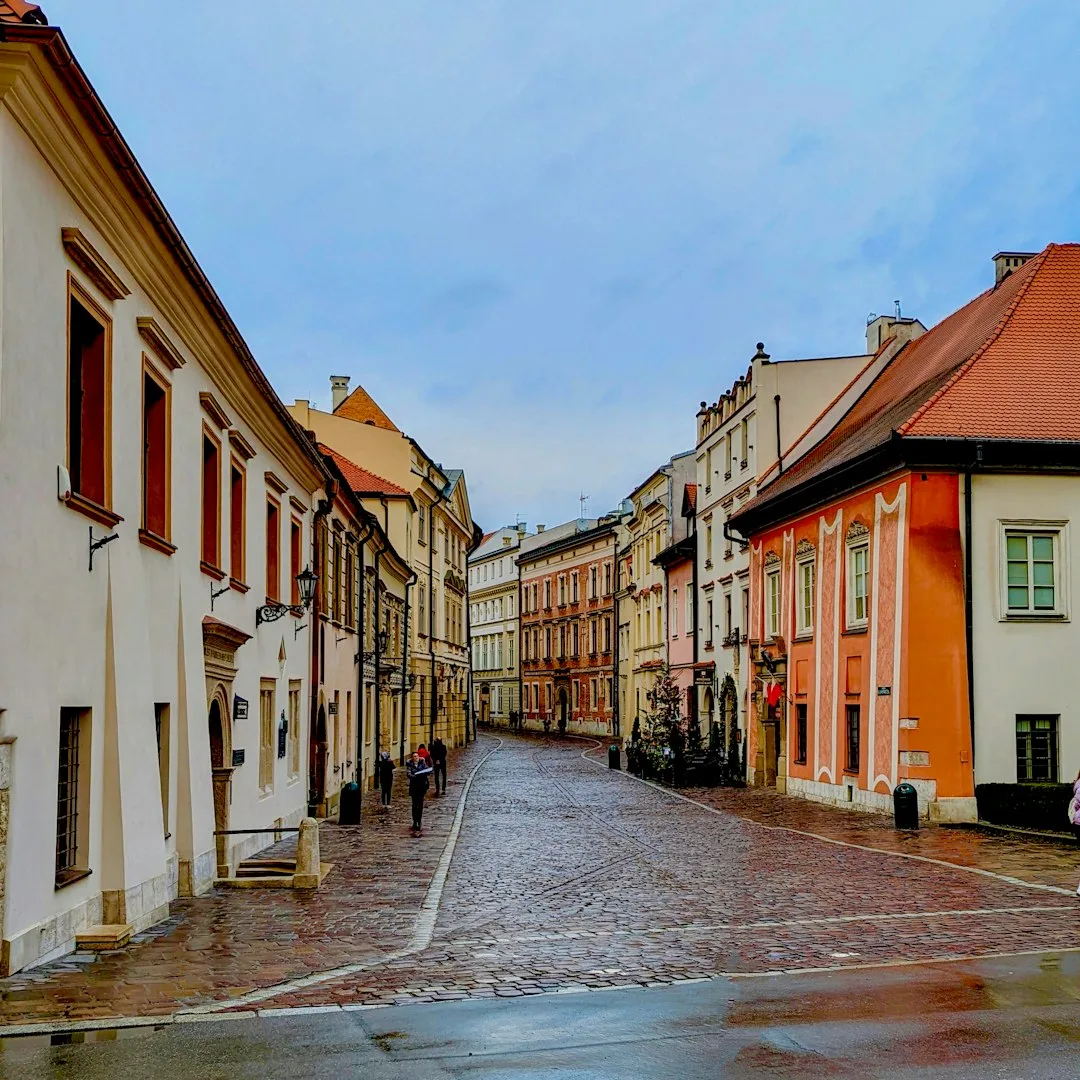
Illustration · Warsaw, Poland
Poland sets a hard 40 hours working week with no individual opt-out. Annual leave steps up from 20 days to 26 days once a worker reaches ten years of total employment. Public holidays land on top, not inside, the leave entitlement.
· Poland guide
Poland working time is governed by the Labour Code (Kodeks pracy), Book VI.
The maximum is 40 hours per week. There is no individual opt-out mechanism. The cap applies in a rolling reference period.
Annual leave is 20 days per year for workers with under ten years of total employment. It rises to 26 days once that threshold is crossed. Public holidays are additional to both entitlements.
Poland has 14 public holidays in 2026, including Christmas Eve, which was added by a 2024 amendment.
What is the Poland working-time limit?
The limit is 40 hours per week. Daily work may not exceed 8 hours.
There is no individual opt-out. The cap applies across an averaging reference period set by the employer's work schedule.
The rules come from the Polish Labour Code, Art. 129. The weekly limit of 40 hours is measured as an average over a reference period. Most standard work schedules use a 4-week reference period. Longer reference periods are permitted under specific collective agreements, up to a maximum of 52 weeks in some sectors.
Overtime rules
Overtime is permitted beyond the 40 hours weekly norm but is capped separately. Overtime cannot exceed 150 hours per employee per calendar year without a separate collective agreement raising the cap. Individual employment contracts can set a higher limit, up to 416 hours per year. Overtime pay rules are set by the Labour Code and typically require a supplement of 50% for weekday overtime and 100% for weekend, night, or public holiday overtime. Alternatively, the employer may offer time off in lieu rather than a cash supplement, subject to the employee's agreement.
No individual opt-out
Unlike the UK, Poland does not permit employees to individually opt out of the weekly hours cap. The 40 hours weekly average is a hard ceiling. This is an important difference for employers moving staff from UK-style opt-out arrangements to Polish employment.
What rest periods are Polish workers entitled to?
Polish workers have the right to at least 11 hours of uninterrupted daily rest between workdays.
They also have the right to at least 35 hours of uninterrupted weekly rest, including Sunday where possible.
| Rest entitlement | Trigger | Minimum |
|---|---|---|
| Daily break | Working more than 6 hours | 15 minutes, paid |
| Additional break | Working more than 9 hours | Second break of 15 minutes, paid |
| Daily rest | Every workday | At least 11 hours uninterrupted |
| Weekly rest | Every week | At least 35 hours uninterrupted |
| Night workers | Shift partly between 21:00 and 07:00 | No more than 8 hours per night shift |
The 15-minute break after 6 hours is a paid break under Polish law. This is different from the UK rule, where the 20-minute break may be unpaid. For workers under 18, the break entitlements are longer and the daily and weekly hour limits are lower.
The daily rest of 11 hours is not a figure from the compliance cache; it derives from the EU Working Time Directive (2003/88/EC) as transposed into Polish law. The Labour Code does not state this figure as a named article value in the cache. The rule is a legal minimum under Polish and EU law.
How does Poland annual leave work?
The minimum is 20 days per year. This applies to workers with fewer than ten years of total employment across all employers.
Workers with ten or more cumulative years of employment are entitled to 26 days per year.
The thresholds are set by Labour Code Art. 154. The ten-year count includes all employment, not just time with the current employer. Education periods count toward seniority in Poland. For example, completing a five-year university degree adds five years to the seniority count, even with no work history. This means a new graduate with a five-year degree could reach the 26 days entitlement faster than expected.
How public holidays interact with leave
In Poland, public holidays and annual leave are entirely separate entitlements. The 14 public holidays in 2026 are on top of the 20 days or 26 days annual leave. A worker does not spend a leave day on a public holiday. This is different from the UK system, where bank holidays are typically bundled into the statutory leave total.
Carry-over rules
Unused annual leave must generally be taken by 30 September of the following calendar year. An employee can carry over up to the full annual entitlement if it was not possible to take it in the leave year. After the 30 September deadline, the entitlement does not lapse automatically but the employer must prompt the employee to take it. Leave not taken within three years of the end of the leave year in which it arose is extinguished. Extended sickness absence is a recognised reason for delayed carry-over.
Holiday pay calculation
Holiday pay in Poland is based on average remuneration calculated from a reference period. Variable elements of pay (bonuses, commissions, overtime supplements) are averaged over the three calendar months preceding the leave, or up to 12 months if earnings fluctuate significantly. Fixed pay components are used at their current rate.
How many Polish public holidays are there?
Poland has 14 public holidays in 2026.
Christmas Eve (24 December) was added by a 2024 amendment to the Act of 18 January 1951 on Public Holidays.
| Public holiday | Date in 2026 |
|---|---|
| New Year's Day (Nowy Rok) | 1 January |
| Epiphany (Trzech Kroli) | 6 January |
| Good Friday | 3 April 2026 |
| Easter Sunday (Wielkanoc) | 5 April 2026 |
| Easter Monday (Lany Poniedzialek) | 6 April 2026 |
| Labour Day (Swieto Pracy) | 1 May |
| Constitution Day (Swieto Konstytucji 3 Maja) | 3 May |
| Pentecost (Zielone Swiatki) | 24 May 2026 |
| Corpus Christi (Boze Cialo) | 4 June 2026 |
| Assumption of Mary (Wniebowziecie Najswietszej Maryi Panny) | 15 August |
| All Saints' Day (Wszystkich Swietych) | 1 November |
| Independence Day (Narodowe Swieto Niepodleglosci) | 11 November |
| Christmas Eve (Wigilia Bozego Narodzenia) | 24 December |
| Christmas Day (Boze Narodzenie) | 25 December |
| Total | 14 |
When a public holiday falls on a Sunday, employees are entitled to a substitute day off on the next working day. When a public holiday falls on a Saturday, the Labour Code entitles employees to one additional day off in the same reference period. Employers designate which working day serves as the substitute.
Public holiday pay
Employees receive their full contractual pay for public holidays. There is no general legal requirement to pay premium rates for working on a public holiday, but collective agreements often include enhanced pay or time-off entitlements. The employer must give the substitute day off; premium cash pay is contractual, not universal.
Parental leave in Poland
Maternity leave is 20 weeks for a single birth. It is paid at 100% of the allowance basis.
Paternity leave is 2 weeks. It must be taken before the child's second birthday.
Maternity leave
Poland's maternity leave of 20 weeks is a right from the first day of employment. Pay is administered by the Social Insurance Institution (ZUS) at 100% of the employee's allowance basis. The allowance basis is calculated from average earnings over the 12 months preceding the leave. Employers do not pay maternity pay themselves; ZUS pays the employee directly. The employer's role is to process the paperwork and continue the employment relationship.
At least two weeks of maternity leave must be taken before the expected birth date. The mother can transfer part of the remaining maternity leave to the father after at least fourteen weeks have been taken.
Paternity leave
Fathers are entitled to 2 weeks of paternity leave. It must be taken in one or two parts before the child turns two. ZUS pays paternity leave at 100% of the allowance basis. The leave is a day-one right with no qualifying service period.
Parental leave after maternity
After maternity leave ends, parents in Poland have the right to take additional parental leave to care for a child under the age of six. Each parent has a non-transferable entitlement of nine weeks. The current law (as amended in 2023 to implement the EU Work-Life Balance Directive) gives a total pooled entitlement that is divided between parents. Sources available to Teamed at the time of publication disagreed on the exact total duration; verify the current entitlement with a qualified Polish labour law adviser before relying on a specific week count.
Parental leave pay from ZUS is at 80% of the allowance basis where the employee opts for the standard rate. An employee who gives notice of the intention to take the full parental leave within 21 days of birth can receive 100% pay during maternity leave and 70% during parental leave.
What competitive Polish employers do
Polish employers in technology and professional services commonly top up maternity pay to 100% of actual gross salary for at least part of the period. Enhanced paternity pay is less common but growing as a recruitment tool, particularly in multinational companies. Parental coaching programmes and phased return-to-work are increasingly standard among larger Polish employers.
Sick pay in Poland
For the first 33 days of sickness absence in a calendar year, the employer pays sick pay.
The standard rate is 80% of the employee's remuneration basis. After the employer period, ZUS takes over.
Poland uses a split model. The employer pays for the first 33 days of incapacity per calendar year under Labour Code Art. 92. After that, ZUS pays a sickness benefit (zasilek chorobowy) directly to the employee for up to 182 days of incapacity in a single period.
The standard sick pay rate from the employer is 80% of the average remuneration basis. The full 100% rate applies if the incapacity is caused by a work accident, occupational disease, or if the employee is hospitalised during pregnancy.
The employer pays sick pay for the first 33 days of absence at 80% of remuneration basis. After that, ZUS pays the sickness benefit (zasilek chorobowy). Employees aged 50 and over have a shorter employer period of 14 days per calendar year.
Source: Zaklad Ubezpieczen Spolecznych (ZUS) - Social Insurance Institution
Important age variation
Employees aged 50 or over have a shorter employer-paid period. The employer pays for only 14 days of sickness absence per calendar year (not 33 days). ZUS takes over from day 15 for this group. This reduces the employer's direct sick-pay exposure for older employees but is not a figure in the compliance cache; verify the current threshold with a qualified adviser.
Self-certification and documentation
An employee must notify the employer of absence on day one. A medical certificate (L4) from a doctor is required to receive sick pay. The L4 is issued electronically by the treating physician and shared automatically with ZUS and the employer. There is no self-certification period equivalent to the UK's seven-day self-cert window; a medical certificate is needed from the start of absence to qualify for the statutory rate.
Employer cost implications
The employer-paid sick-pay obligation is a direct employment cost that does not appear in the headline payroll contribution rates. Model it separately when comparing the total cost of Polish employment. Run the numbers using the employer-cost tool.
How does Teamed handle Polish employment for you?
Teamed becomes your legal employer of record in Poland for from $599 per employee per month, with zero FX mark-up in PLN or any other currency.
Leave tracking, sick-pay administration, ZUS filings, and the full Polish working-time compliance stack run on one platform.
Real HR and legal experts manage your Polish employment obligations. That means the seniority-based leave step-up, the ZUS sick-pay handover at day 33 days, and every parental leave notification. An actual person, not a chatbot. There is no setup fee and no exit fee. Employer cost passes through at cost, itemised on every invoice.
EOR payroll, contractor onboarding, and entity setup all live on one platform. Use Teamed until it isn't the right fit, then graduate to your own Polish entity when the time comes. Run the employer-cost tool to model the ZUS contributions and sick-pay exposure alongside salary.
Key sources: Labour Code (Kodeks pracy), Social Insurance Institution (ZUS), and Polish Ministry of Family, Labour and Social Policy.
-
Share your hire details
Tell Teamed the role, start date, and salary. We confirm the correct leave tier and ZUS contribution schedule.
-
Review the employment contract
Teamed issues a Polish-law contract with the right leave entitlement, probation length, and sick-pay provisions built in.
-
Onboard the employee
Teamed registers the employee with ZUS and sets up payroll. The employee is live on the platform from day one.
-
Track leave and absences
Leave balances, public holiday calendars, and sick-pay records are all managed in one place. You see everything in real time.
-
Receive itemised invoices
Every ZUS contribution, sick-pay cost, and Teamed fee is listed separately. No bundled charges, no hidden costs.
Frequently asked questions
What is the maximum working week in Poland?
The maximum is 40 hours per week averaged over a reference period, with a daily limit of 8 hours. Poland does not permit individual opt-outs from this cap. Overtime is permitted but is capped at 150 additional hours per calendar year unless a collective agreement or employment contract raises that limit.
How much annual leave are Polish employees entitled to?
Employees with fewer than ten years of total employment across all employers receive 20 days of annual leave per year. Employees with ten or more cumulative years receive 26 days. Poland has 14 public holidays in 2026, which are additional to the leave entitlement.
How does sick pay work in Poland?
The employer pays sick pay for the first 33 days of incapacity per calendar year. The standard rate is 80% of the remuneration basis. After the employer period ends, ZUS pays sickness benefit directly to the employee for up to 182 days. Employees aged 50 or over have a shorter employer period of 14 days.
What parental leave rights do Polish employees have?
Mothers are entitled to 20 weeks of maternity leave paid at 100% of the allowance basis by ZUS. Fathers are entitled to 2 weeks of paternity leave, also paid by ZUS at 100% of the allowance basis. Additional parental leave is available after maternity leave; verify the current duration with a qualified Polish adviser as the total entitlement changed following a 2023 amendment.
Are Polish public holidays included in the annual leave entitlement?
No. Poland's 14 public holidays in 2026 are granted on top of the annual leave entitlement, not bundled within it. An employee with fewer than ten years of employment therefore receives 20 days of personal leave plus 14 public holidays as entirely separate entitlements.
The seniority step is the thing buyers miss. They see 20 days and plan around that. Then the employee crosses ten years of total employment, which includes time before joining your company, and the entitlement jumps to 26 days. We build the seniority clock into every Polish contract we issue. It surfaces before the increase hits, not after.
Poland's leave entitlement steps up at ten cumulative years of employment across all employers.
A new hire with a five-year degree can hit the 26 days tier much sooner than their start date suggests.
Model the step-up before you sign the contract, not when it arrives on your payroll.
Looking for a job in Working Time And Leave yourself? Teamed does not hire people directly. Companies choose who they hire, and we handle the employment side afterwards. Here is why we cannot help with your search.