How do you terminate an employee in Norway in 2026?
Norway has no statutory severance pay. You owe notice and accrued holiday pay at the end. Notice runs from 1 month for short-tenure employees to 6 months for long-tenure employees aged 60 or over. Every dismissal must be objectively justified from day one.
· Norway guide

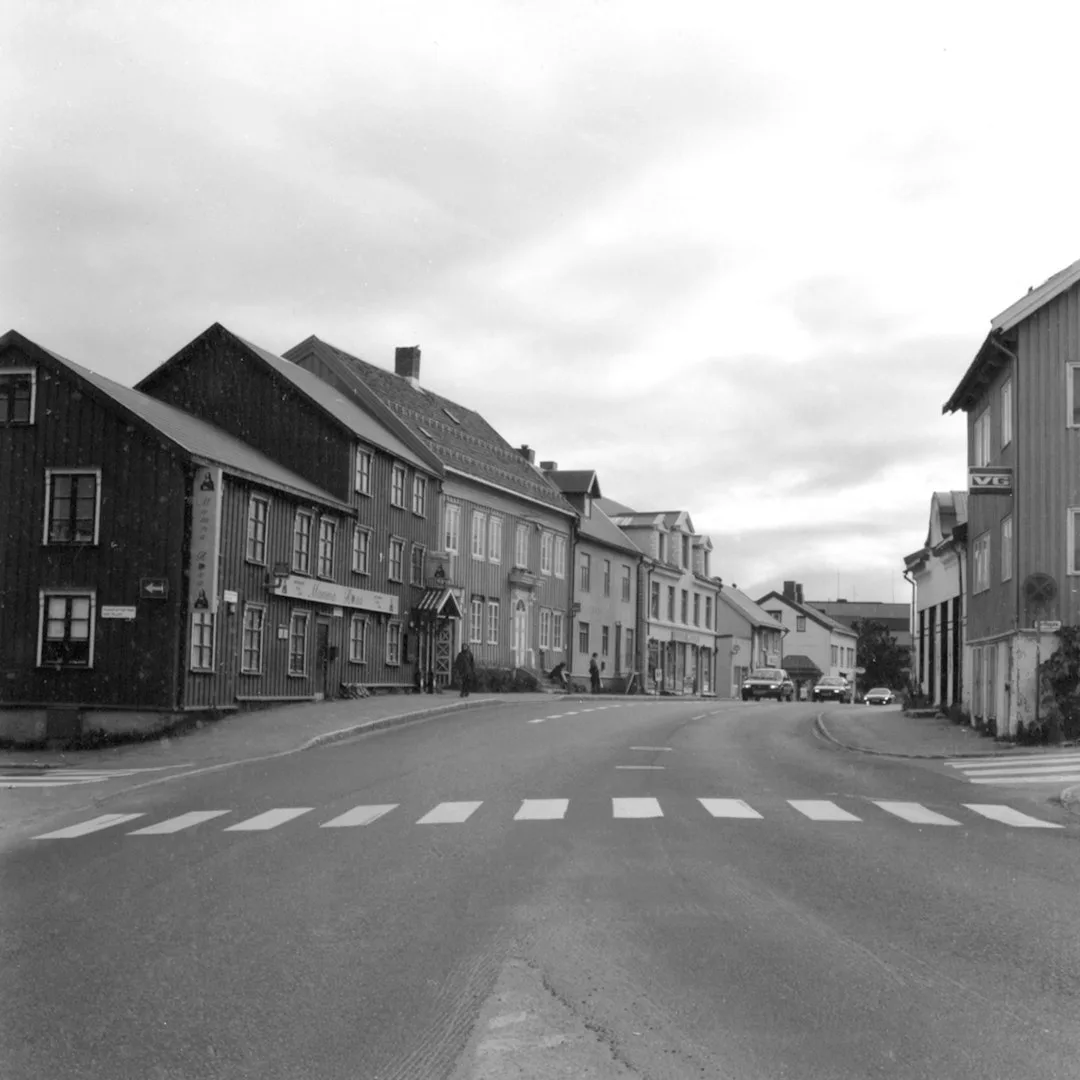
Illustration · Bergen, Norway
Norway has no statutory severance pay. When you end employment, you owe salary through the full notice period and accrued holiday pay. Nothing more is required by law.
Notice runs from 1 month for under five years of service to 6 months for employees with ten or more years of service who are aged 60 or over. Both bands are set by the Working Environment Act.
Every dismissal must be objectively justified from the first day of employment. There is no qualifying wait before unfair dismissal protection applies.
How much notice must you give in Norway?
Notice in Norway scales by tenure and, at the top end, by age. The minimum is 1 month for employees with under five years of service. It rises to 6 months for employees with ten or more years of service who are aged 60 or over.
Notice runs from the first day of the following calendar month. That is different from the UK, where notice runs from the day of delivery. Plan your timeline accordingly.
| Length of continuous service | Employee age | Minimum employer notice |
|---|---|---|
| Under 5 years | Any | 1 month |
| 5 to under 10 years | Any | 2 months |
| 10 or more years | Under 50 | 3 months |
| 10 or more years | 50 to 54 | 4 months |
| 10 or more years | 55 to 59 | 5 months |
| 10 or more years | 60 or over | 6 months |
These are the minimum notice periods under Working Environment Act section 15-3. Contracts can set a longer notice period and commonly do for senior roles. They cannot set a shorter one.
Employee resignation notice
When an employee resigns, the minimum notice they must give is 1 month. Employee notice can never exceed 3 months regardless of service length or what a contract says. The three-month cap is fixed by law.
Notice during probation
During the probation period the notice either party must give is 14 days. Notice runs from the date of receipt, not from the start of the next calendar month. Probation must be expressly stated in the written contract; a 2026 amendment clarified this requirement. The maximum probation period is 6 months.
Pay during the notice period
Norway does not have a statutory pay-in-lieu-of-notice concept comparable to the UK PILON clause. Salary continues through the full notice period on the normal payroll cycle. Accrued holiday pay (feriepenger) at 10.2% of gross earnings is paid at termination or on the normal holiday-pay date in June, whichever comes first.
What makes a dismissal lawful in Norway?
Every dismissal must be objectively justified. This applies from day one. There is no minimum service period before protection kicks in.
The employer must state the reason for dismissal in writing. The employee has the right to a meeting before notice is given. These steps are not optional.
Under Working Environment Act section 15-7, a dismissal is unlawful unless it is objectively justified based on circumstances relating to the employer's undertaking or to the employee. The standard applies equally to performance-based and redundancy-based dismissals.
The fair grounds for dismissal
- Conduct or capability, persistent poor performance or misconduct, documented and with a genuine opportunity to improve
- Operational necessity, genuine restructuring or redundancy where the role is eliminated and fair selection criteria are applied
- Probation-period grounds, lack of suitability, lack of proficiency, or unreliability, where the trial period is in the written contract
A dismissal based on conduct or capability that has not been documented, discussed with the employee, or followed up will not meet the objective-justification test.
Procedural requirements before notice is given
Before serving notice, the employer must offer the employee a pre-notice meeting (droftelsesmote). This meeting lets the employee respond to the employer's reasons and produce their own account. Skipping this meeting is a procedural defect that strengthens any later unfair-dismissal claim and can lead to the dismissal being declared invalid. The employee is entitled to have a representative present.
Protected categories
Dismissal is unlawful on grounds of pregnancy, maternity leave, parental leave, trade union membership, whistleblowing, disability, ethnicity, religion, gender, age (between 13 and 70 in most contexts), and several other grounds set out in the Working Environment Act and the Equality and Anti-Discrimination Act. A dismissal in connection with any of these is presumed unlawful unless the employer demonstrates it was for an entirely unrelated reason.
Reinstatement as the default remedy
Norwegian courts have wide power to declare a dismissal invalid and order reinstatement. Reinstatement is the default remedy for unlawful dismissal, not compensation. Compensation-only awards are available but require the court to find that reinstatement would be clearly unreasonable. An employee can apply to remain in post during dispute proceedings, which can extend the effective cost of a contested dismissal significantly.
-
Document the reason
Anchor the dismissal to a clear, objective ground: conduct, capability, or operational necessity. Write it down before serving notice. Undocumented reasons fail the justification test.
-
Hold the pre-notice meeting
Invite the employee to a meeting before notice is given. Let them respond to your reasons and put their own account on record. The employee may bring a representative. Skipping this step is a procedural defect.
-
Apply fair selection in redundancy
If the dismissal is redundancy-based, document the selection criteria and apply them consistently. Criteria must be objective: service length, competence, and documented social factors.
-
Notify NAV for collective cases
If ten or more employees are affected within a thirty-day window, send the NAV notification form before notice periods begin. Individual notice does not start running until NAV has been notified.
-
Serve notice in writing
Deliver the dismissal notice in writing, stating the reason, the notice period, and the termination date. Notice runs from the first day of the following calendar month in most cases.
Does Norway require severance pay?
No. Norway has no statutory right to severance pay. There is no formula, no qualifying period, and no mandatory lump-sum payment at the end of employment.
What the employer owes is salary through the full notice period and accrued holiday pay. That is the legal floor.
This surprises many employers moving from Continental Europe or Latin America, where severance formulas are fixed by law. In Norway the employment relationship ends at the close of the notice period and the financial obligation ends there, unless a collective agreement or individual contract says otherwise.
Where severance does arise in practice
Severance payments in Norway come from two sources, not from legislation.
- Collective agreements (tariffavtaler): many sector-level agreements, particularly in oil and gas, maritime, and parts of manufacturing, include severance or transition-payment clauses. Check whether a collective agreement covers your workplace before assuming no severance applies.
- Negotiated termination agreements (sluttavtale): the most common route to a paid departure in Norway. The employer and employee agree terms, the employee releases claims, and both parties get certainty. See the settlement section below.
Accrued holiday pay at termination
Accrued holiday pay (feriepenger) at 10.2% of gross earnings from the prior year is always owed at termination and must be paid out. This is not severance; it is deferred wage. The distinction matters for how it is reported and taxed.
Non-compete clauses and the G-based compensation threshold
Norway has a statutory requirement to pay compensation for any enforceable post-employment non-compete restriction. The compensation threshold is linked to the National Insurance Basic Amount (G), which rose to kr 136,549 from 1 May 2026. Non-compete pay must be at least a percentage of the employee's salary during the restriction period. If the employer does not pay as required, the restriction falls away entirely.
When do collective redundancy rules apply in Norway?
The collective rules apply when 10 or more employees receive notice within a 30 days window. That is a lower trigger than most European countries.
You must notify NAV (the Norwegian Labour and Welfare Administration) before the redundancies take effect. Notice periods do not begin to run until after that notification is sent.
Collective rules under Working Environment Act section 15-2 apply when 10 or more employees receive notice within 30 days. Employer must notify NAV at least 30 days before redundancies take effect. Notice periods do not start until after NAV is notified.
The 10-employee trigger in Norway is notably lower than the 20-employee threshold in most EU countries. A restructuring that appears modest by European standards can still activate the full collective process here.
What the collective process requires
- Early notification to employee representatives: the employer must inform and consult with elected employee representatives before decisions are finalised. This is not a tick-box; the consultation must be genuine.
- NAV notification: a written notification must be sent to NAV at least 30 days before the first dismissal takes effect. The notification form (NAV 76-07.20) includes the reason for redundancy, the number and categories of affected employees, and what alternatives have been considered.
- The notice period starts late: individual notice periods do not begin to run until the NAV notification has been submitted. Building your timeline without accounting for this step is a common mistake.
- Fair selection criteria: employees must be selected by objective criteria (service length, competence, social factors). Selection that cannot be documented against these criteria undermines the entire redundancy process.
Failure to notify NAV, or failure to consult employee representatives in good faith, can result in the dismissals being declared invalid and the employer being required to continue paying salary while the dispute runs.
How does a negotiated termination work in Norway?
A negotiated termination agreement (sluttavtale) is the standard way to end employment in Norway with certainty on both sides. The employee receives agreed compensation and gives up the right to challenge the dismissal.
There is no statutory requirement for the employee to receive independent legal advice. But most employees do seek advice before signing, and the employer often contributes to the cost.
The sluttavtale is not regulated by a single statute. It is a commercial contract governed by general contract law and the Working Environment Act. Courts have discretion to set aside agreements that are clearly unreasonable, so the terms must be defensible.
Typical elements of a sluttavtale
- Termination date and whether the employee works the notice period or is released from duties
- Compensation payment above salary and holiday pay, if agreed. There is no formula; it is negotiated. Common ranges depend on seniority, tenure, and the strength of the employee's potential claim
- Waiver of claims: the employee agrees not to bring unfair-dismissal or other employment claims
- Reference clause: agreed wording for future employment references
- Confidentiality: mutual non-disclosure of the agreement terms
- Post-employment restrictions: non-compete or non-solicit, with the mandatory compensation attached if included
Mutual termination vs dismissal
A sluttavtale is a mutual agreement. It is different from a unilateral dismissal followed by a settlement of a dispute. If the agreement is reached before notice is given, no formal dismissal procedure is required, but the process must genuinely be mutual. An employer who presents the agreement as the only alternative to dismissal, without a real procedure, risks having it challenged.
Tax on termination payments
Compensation payments under a sluttavtale are taxable as employment income. Norway has no tax-free ceiling on termination payments comparable to the UK. All amounts above the legal entitlements (notice salary and holiday pay) are treated as taxable income in the year of receipt. Build tax gross-up considerations into the negotiated amount.
How Teamed runs Norway terminations
Teamed is your legal employer of record in Norway. The cost is from $599 per employee per month, with zero FX mark-up in any currency. Teamed's partner entity is the legal employer. All termination procedures run through Teamed's Norway team.
We handle the notice calculation, holiday-pay reconciliation, sluttavtale drafting, and NAV notification for collective redundancies. All of it runs on one platform. The decision on who to dismiss, why, and on what terms is always yours.
Real HR and legal experts handle your Norway hires, from the first offer letter through every payroll run. An actual person, not a ticket queue or a pooled mailbox. There is no setup fee and no exit fee, and employer cost passes through at cost, itemised on every invoice.
The split of responsibilities under EOR for Norway terminations:
| What Teamed handles | What the client decides |
|---|---|
| Notice period calculation against the tenure and age band table | Whether to dismiss, why, and on what timeline |
| Pre-notice meeting (droftelsesmote) scheduling and documentation | Performance standards and what counts as a breach |
| Objective-justification memo for the dismissal file | Whether to negotiate a sluttavtale or serve formal notice |
| Sluttavtale drafting with qualified local employment-law partners | The commercial terms of any agreed compensation |
| NAV notification for collective redundancies, with the 30-day countdown tracked | The selection criteria used in a collective process |
| Final payroll: notice salary, feriepenger, non-compete compensation if applicable | Whether to include post-employment restrictions |
| Coordination of any dispute-stage support if a claim is raised | Settlement vs defence strategy if a claim proceeds |
EOR payroll, contractor onboarding, and entity setup all live on one platform. A Norway contractor who converts to payroll keeps their record, and that same employee can graduate to your own Norwegian entity without switching systems. Run the Crossover Calculator to see the month the model flips. EOR is the right model for a first Norway hire, until it isn't. Start from the Norway hiring overview; each guide here takes one layer of Norwegian employment law.
Key sources: Arbeidstilsynet, Dismissal with notice and Working Environment Act, Lovdata.
Frequently asked questions
Does Norway require employers to pay severance?
No. Norway has no statutory severance pay. At the end of employment you owe salary through the full notice period and accrued holiday pay at 10.2% of prior-year gross earnings. Severance only arises via collective agreements or a negotiated sluttavtale.
How much notice must you give an employee in Norway?
Notice scales by tenure and age under the Working Environment Act. Under five years of service: 1 month. Five to under ten years: 2 months. Ten or more years under age 50: 3 months. Ten or more years aged 50 to 54: 4 months. Ten or more years aged 55 to 59: 5 months. Ten or more years aged 60 or over: 6 months.
When does unfair dismissal protection apply in Norway?
From day one of employment. There is no minimum qualifying period. Every dismissal must be objectively justified from the first day under Working Environment Act section 15-7. The employer must hold a pre-notice meeting before serving notice and must state the reason in writing.
When do collective redundancy rules apply in Norway?
When 10 or more employees receive notice within 30 days. The employer must notify NAV at least 30 days before the redundancies take effect. Individual notice periods do not begin to run until that notification is submitted.
What is a sluttavtale and when should you use one?
A sluttavtale is a negotiated mutual termination agreement. The employee agrees to leave on specified terms and waives claims. There is no statutory formula for the compensation amount. Use it when you want certainty, when the dismissal grounds are marginal, or when a contested process would carry high reinstatement risk. Termination payments under a sluttavtale are taxable as employment income in Norway.
The pre-notice meeting is the step Norwegian employers most often skip when they are confident in their reasons. That confidence does not protect them. A court looks at whether the employee had a real chance to respond before the decision was made, not at whether the decision was correct.
Norway is one of the few OECD countries where you owe no severance at all. What you owe is notice and holiday pay.
But every dismissal needs an objective reason from day one. And reinstatement, not compensation, is what a Norwegian court will order if you get it wrong.
That changes how you build the file from the start.
Looking for a job in Termination And Severance yourself? Teamed does not hire people directly. Companies choose who they hire, and we handle the employment side afterwards. Here is why we cannot help with your search.