How do you hire a Croatian employee in 2026?
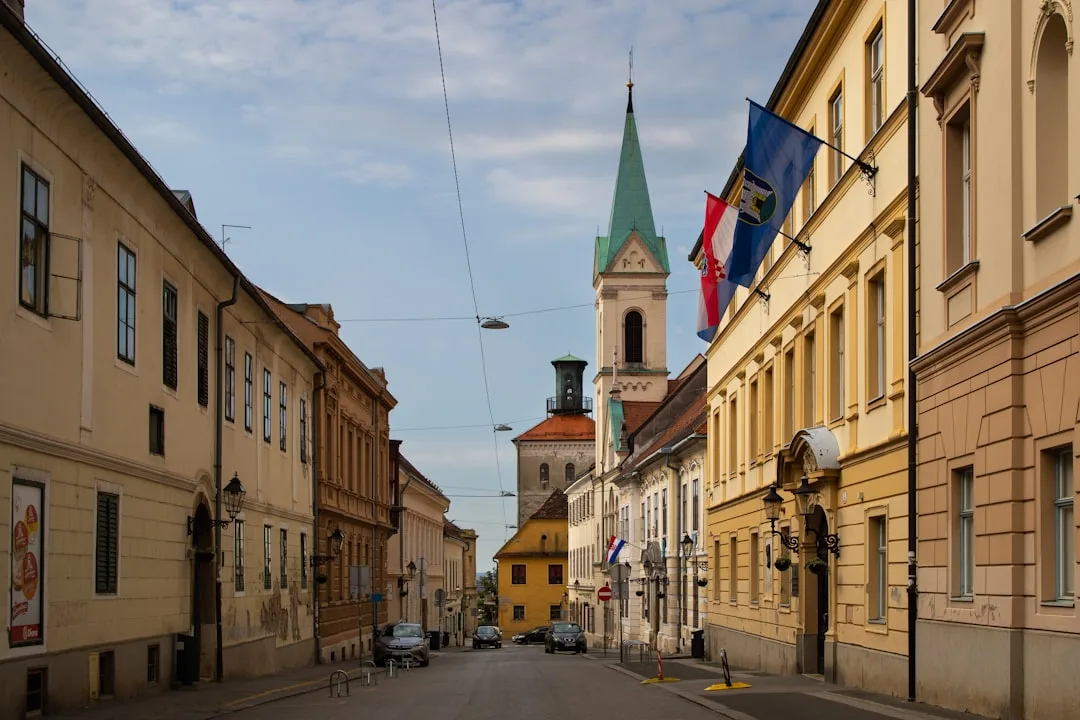
Illustration · Zagreb, Croatia
Keep someone on back-to-back fixed-term contracts in Croatia past 36 months and the law converts them to a permanent employee for you. Probation can run up to 6 months, but only if you put it in writing. Both clocks start the day work begins.
· Croatia guide
The Croatia hire process has five steps. Offer letter, work-authorisation check, written employment contract, social-insurance and tax registration, first payday.
Every employee needs a signed written contract on the first day of work. Probation can run up to 6 months. You must put the probation term in writing or it does not apply.
Watch the fixed-term clock. Back-to-back fixed-term contracts that pass 36 months convert to a permanent contract by law. The standard full-time week is 40 hours, and paid leave starts at 4 weeks a year.
What does the end-to-end Croatia hire process look like?
Five steps take you from accepted offer to first payslip. Offer letter, work-authorisation check, written contract, statutory registrations, first payday.
EU and EEA nationals can start straight away. A non-EU national needs the right permit in place before day one.
| Step | What happens | Owner | Timing |
|---|---|---|---|
| 1. Offer letter | Written offer with role, gross salary, start date, probation terms, and any conditions | Client / Teamed drafts | Same day after verbal accept |
| 2. Work-authorisation check | Confirm EU or EEA status, or verify the residence and work permit for a non-EU national before the start date | Teamed | Before the employee starts |
| 3. Written employment contract | Signed written contract covering all terms under the Labour Act (Zakon o radu) | Teamed (legal employer) | On the first day at the latest |
| 4. Statutory registrations | Register the employee with the pension fund and HZZO health insurance, and report the hire to the tax authority | Teamed | Day 1, before work starts |
| 5. First payday | First payslip issued; salary for the previous month is paid and contributions remitted by the 15th of the following month | Teamed | End of first payroll month |
-
Issue the offer letter
Send a written offer the same day as verbal acceptance. State the role, gross monthly salary, start date, work location, and probation of up to 6 months. Mark any bonus clearly as discretionary.
-
Complete the work-authorisation check
Confirm EU, EEA, or Swiss status by collecting a passport or ID copy, or verify the residence and work permit for a non-EU national before the employee starts. Keep copies of all documents.
-
Issue the written employment contract
The signed contract must be in place on the first day at the latest. Teamed's standard Croatia contract covers every Labour Act requirement. Clients choose the commercial terms; Teamed signs as the legal employer.
-
Complete statutory registrations
Register the employee with the pension fund and HZZO health insurance, and report the hire to the Tax Administration. This must happen before work begins. Collect the OIB and bank details at the same time.
-
Issue the first payslip and remit contributions
Run the first payroll at the end of the first calendar month. Pay the previous month's salary and remit all contributions by the 15th of the following month. The employee receives their payslip and is on the payroll record.
What must a Croatia offer letter include?
The offer letter is not the binding contract. It is the document the candidate decides against.
Include the role, reporting line, start date, gross monthly salary, work location, probation of up to 6 months, and any conditions such as permit status or references.
Three traps to avoid in Croatian offer letters:
- Quoting net pay instead of gross. Croatian payroll runs on a gross figure, with pension contributions withheld from the employee and health contributions added on top by the employer. State the gross monthly salary in the offer so the contract matches. The minimum monthly wage is €1,050/month gross, set each year by Government regulation.
- Leaving the probation term vague. Probation can run up to 6 months, but it only binds if it is written down. An offer that mentions a trial period without a clear length and a written contract to follow creates disputes later.
- Promising a bonus as if it were fixed. A Christmas bonus (bozicnica) and a holiday allowance (regres) are common in Croatia but not required by law. Describing one as guaranteed can turn it into a contractual right. Mark variable pay clearly as discretionary.
Teamed's standard Croatia offer letter template covers the required ground and aligns with the Labour Act. Clients choose the commercial elements. Teamed holds the legal-employer position and issues the final contract.
Croatia work-authorisation checks for non-EU employees
EU, EEA, and Swiss nationals can work in Croatia without a permit. A non-EU national needs a residence and work permit before the first day.
Employing a non-EU national without the right permit is an offence under Croatian immigration law and exposes the employer to fines.
EU, EEA, and Swiss nationals
There is no separate work-authorisation step for EU, EEA, or Swiss citizens. They have free access to the Croatian labour market. The employer keeps a copy of the passport or national ID card as a standard identity record and registers the worker for residence if they stay beyond three months.
Non-EU nationals
A third-country national needs a single residence and work permit (dozvola za boravak i rad) before starting work. Most applications go through the Ministry of the Interior (MUP). Croatia sets an annual quota for some roles, and certain shortage occupations are exempt from a labour-market test. Processing times vary, so allow several weeks before the intended start date.
The seasonal-work permit and the EU Blue Card for highly qualified roles are common routes alongside the standard single permit. Each has its own documents and validity period, and the permit ties the worker to a specific employer.
The Labour Act governs the employment relationship in Croatia, including the written contract requirement, probation, working time, notice, and severance. Every employer must follow it from the first day of employment.
Ongoing permit renewals
Croatian work permits are time-limited and tied to the employer. The employer must track the expiry date and start the renewal well before it lapses. Teamed monitors each permit expiry and alerts the employee and client ahead of the deadline so no gap opens up.
The Croatia written employment contract: what must it contain?
Croatia requires a written employment contract, signed on the first day of work at the latest.
The contract is the binding document. The offer letter is not. A missing or late contract leaves the employer exposed if the relationship is challenged.
What a Croatia written employment contract must cover under the Labour Act:
- Names and addresses of the employer and the employee
- Place of work, or a note that work is at varying locations
- Job title, nature of the work, or a short job description
- Start date of employment
- Whether the contract is indefinite or fixed-term, and for a fixed-term contract the expected end or the event that ends it (total fixed-term duration is capped at 36 months, after which it converts to a permanent contract)
- Duration of any paid annual leave, at least 4 weeks a year
- Notice periods for ending the contract
- Gross salary, any supplements, and the pay interval
- Standard daily or weekly working hours, with the full-time week at 40 hours
- The probation period, if any, up to 6 months
- A reference to the collective agreement or work rules that apply, where relevant
Croatia does not use a single codified statement like the UK's Section 1 statement. The requirement is that a written contract exists, is signed by the first day, and contains the substantive terms above. Where the contract is not handed over in time, the law treats key terms as agreed in the employee's favour. Teamed's standard Croatia contract satisfies every Labour Act requirement. Clients choose the commercial terms; Teamed signs as the legal employer.
Key source: Zakon o radu (Labour Act).
Onboarding admin in the first week
Day one covers the signed contract and the statutory registrations. The worker must be registered for pension and health insurance before they start work.
Teamed handles every registration. The client handles equipment, access, and the first-week plan.
| Onboarding task | Who does it | Day |
|---|---|---|
| Written employment contract signed | Employee and Teamed | Day 0 or 1 |
| Work-authorisation check completed | Teamed | Day 0 (before start for non-EU nationals) |
| OIB (personal identification number) confirmed | Employee submits to Teamed | Day 1 |
| Pension fund registration (Pillar I and Pillar II) | Teamed | Day 1, before work begins |
| HZZO health insurance registration | Teamed | Day 1, before work begins |
| Hire reported to the Tax Administration (Porezna uprava) | Teamed | Day 1 |
| Bank account details collected for payroll | Teamed | Days 1 to 5 |
| Probation terms and any bonus policy confirmed in writing | Client and Teamed | Day 1 |
| Equipment and system access | Client | Days 0 to 1 |
| Manager introduction and first-week plan | Client | Days 0 to 5 |
| 30-60-90 day plan documented | Client (manager) | Days 1 to 14 |
How does Teamed handle Croatia employment for you?
Teamed becomes your legal employer of record in Croatia for from $599 per employee per month, with zero FX mark-up in any currency.
The Labour Act, pension fund, HZZO health insurance, and the Tax Administration all run on one platform.
Real HR and legal experts handle your Croatia hires, from the first offer letter through every monthly salary run and contribution filing. An actual person, not a chatbot or a pooled queue. There is no setup fee and no exit fee. Employer cost passes through at cost, itemised on every invoice.
EOR payroll, contractor onboarding, and entity setup all live on one platform. A Croatia contractor who converts to direct employment keeps their record. EOR is the right model until it isn't, so run the Crossover Calculator to see when your Croatia headcount is ready to graduate to your own entity. Start from the Croatia hiring overview; each guide here takes one layer of Croatian employment law.
Key sources: Zakon o radu (Labour Act), Porezna uprava contributions, and HZZO health insurance.
Frequently asked questions
How long does it take to hire someone in Croatia through Teamed?
Teamed can onboard an EU, EEA, or Swiss national within a few business days once the offer is accepted. The written contract must be signed on the first day at the latest, and the worker must be registered for pension and HZZO health insurance before they start. A non-EU national needs a residence and work permit in place first, which adds several weeks depending on the permit type and the Ministry of the Interior processing queue.
What is the probation period in Croatia and how does it work?
Probation can run up to 6 months under the Labour Act. It only applies if it is set out in writing in the employment contract. A verbal trial period does not bind either side. During probation, the contract can end on shorter notice than the standard graduated notice that applies later.
How long can a fixed-term contract last in Croatia?
The total duration of successive fixed-term contracts with the same employer is capped at 36 months, including renewals. Once that limit is passed, the contract is treated as indefinite (permanent) by law. The cumulative clock runs from the first fixed-term hire, so track the running total across every renewal rather than each contract on its own.
What notice period applies once probation ends in Croatia?
Statutory notice is graduated by length of service. It starts at 2 weeks for under one year, rises to 1 month at one year and 2 months at five years, and reaches 3 months at twenty years. Contracts can agree longer notice, but not shorter than the legal minimum.
What leave and working-time rules apply to a Croatia employee?
The minimum paid annual leave is 4 weeks a year, with full entitlement after six months of continuous service. The standard full-time week is 40 hours. Croatia has 14 days of public holidays and non-working days a year. Employers pay sick-leave compensation at their own cost for the first 42 days, after which the health fund reimburses.
Does Croatia require a 13th-month salary or Christmas bonus?
No. Croatian law does not require a 13th or 14th-month salary. A Christmas bonus (bozicnica) and a holiday allowance (regres) are common in practice, but they are not a legal entitlement. Only the tax-free thresholds for those payments are regulated. Treat any such bonus as a commercial choice, and mark it as discretionary in the offer and contract unless you intend to commit to it.
Croatia's fixed-term rule catches growing teams off guard. Companies renew a short contract a few times to stay flexible, then learn the cumulative cap turned the role permanent. Track the running total from the first hire, not from the latest renewal.
In Croatia, the written contract has to exist on day one. Miss it and the law reads the key terms in the worker's favour.
The fixed-term cap is the trap most foreign employers hit. Pass the cumulative limit and you have a permanent employee.
Probation only counts in writing. A verbal trial period binds nobody.
Looking for a job in Hiring Guide yourself? Teamed does not hire people directly. Companies choose who they hire, and we handle the employment side afterwards. Here is why we cannot help with your search.