How does Croatia payroll tax work in 2026?
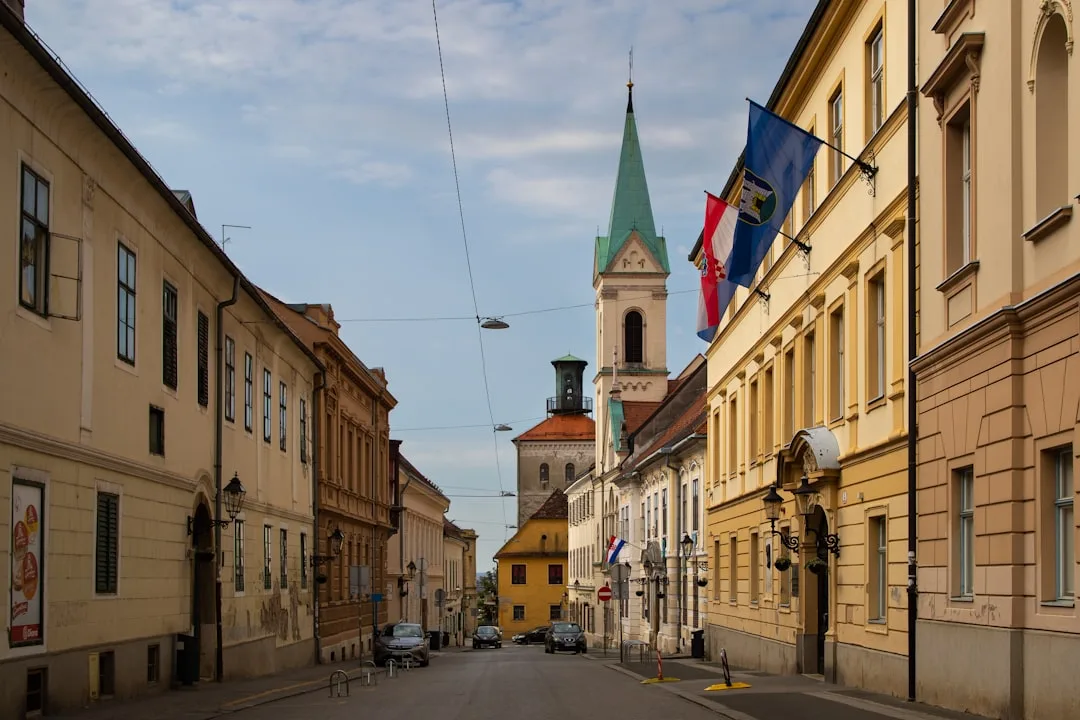
Illustration · Zagreb, Croatia
Croatia splits the load in a way most countries don't. The employee carries the entire 20% pension contribution, withheld from gross pay. The employer adds just one charge on top: health insurance at 16.50%. Income tax then runs at a default 20%, rising to 30% above EUR 60,000 a year, with the actual rate set by each local council.
· Croatia guide
Croatia payroll has an unusual split. The employer adds one charge on top of gross pay. That is health insurance at 16.50%.
The employee carries more. Pension takes 20% of gross, withheld before tax. That splits 15% into the state pillar and 5% into a personal fund.
Income tax then applies. The default rate is 20% up to EUR 60,000 a year. Above that it is 30%. Each local council can set its own rate inside a fixed band.
Salary is paid monthly. The previous month's pay is due by the 15th of the next month (Labour Act, Article 92). There is no required 13th-month salary.
What does an employer pay in Croatia payroll contributions?
The employer pays one contribution on top of gross salary. Health insurance takes 16.50% of gross pay.
There is no separate employer pension charge. Pension is funded entirely by the employee (Zakon o doprinosima).
| Employer contribution | Rate | Applies to |
|---|---|---|
| Health insurance | 16.50% | Gross monthly salary, on top of pay |
Why the employer side is short
In most countries the employer carries a chunk of the pension bill. Croatia does not work that way. The employer adds health insurance at 16.50% of gross and nothing else. The whole pension contribution sits on the employee. So a Croatian employer cost looks lighter than the headline social load in France or Italy, because one big line that you would expect on the employer side is missing here.
The contribution base has a floor and a ceiling
Contributions are not always worked out on the raw salary. They sit between a floor and a ceiling that the Government sets each year. For 2026 the lowest monthly base is €757.34 and the highest monthly base is €11,958. Pay above the ceiling is not charged contributions on the excess (Naredba NN 150/2025). Get the base wrong and the employer charge is wrong, even when the 16.50% rate is right.
What comes off a Croatia employee's gross salary?
Pension is the big deduction. It takes 20% of gross pay before income tax.
That 20% splits into two parts. 15% goes to the state pension. 5% goes to a personal capital fund (Zakon o doprinosima).
| Employee deduction | Rate | Applies to |
|---|---|---|
| Pension, Pillar I (state) | 15% | Gross pay, within the contribution base |
| Pension, Pillar II (personal fund) | 5% | Gross pay, within the contribution base |
| Pension, total | 20% | Gross pay, within the contribution base |
Two pension pillars, one deduction
The employee pension contribution is 20% of gross pay. It is taken off before income tax is worked out. The first 15% funds the state pay-as-you-go pension. The remaining 5% goes into the worker's own second-pillar capital savings account. Both come out of the same payslip line and both sit inside the same monthly base, between €757.34 and €11,958 for 2026.
Pension lowers the income-tax base
Because pension is deducted first, income tax is charged on what is left, not on the full gross. The order matters. Run the pension contribution after the tax and you overcharge the employee. Teamed's payroll applies the pension deduction before tax on every run, so the taxable amount is right the first time.
Croatia income tax rates for 2026
Income tax has two rates. The default is 20% up to EUR 60,000 of taxable income a year.
Above EUR 60,000 the default is 30%. Each local council can set its own rate inside a fixed band, so the rate changes by town (Zakon o porezu na dohodak).
| Annual taxable base | Default rate |
|---|---|
| Up to EUR 60,000 | 20% |
| Above EUR 60,000 | 30% |
The rate depends on where the employee lives
Croatia hands the income-tax rate to local government. The figures above are the default rates that apply when a council sets none. A council can move the lower rate within a set range and the higher rate within another, so the same salary is taxed at a slightly different rate in Zagreb than in a small town. The lower band runs from 15% up to 23% depending on the council, and the higher band from 25% up to 33%. The default 20% and 30% are the fallback figures used here.
What comes off before tax
Income tax is charged on the base after the pension contribution and the personal allowance are removed. The 20% pension comes off first, then a tax-free personal allowance, and tax applies to what remains. Get the order right and the 20% rate lands on the correct figure. Get it wrong and the tax is off even though the rate is correct.
How does Croatia payroll filing and payment work?
Salary is paid monthly. The previous month's pay is due by the 15th of the next month.
Tax and contributions are reported on the JOPPD form and paid to the Tax Administration on the same monthly cycle (Labour Act, Article 92).
Croatian employers withhold pension, health, and income tax from each payroll run and report them to the Tax Administration (Porezna uprava). Pay for the previous month is due to the worker by the 15th day of the following month. The contribution base for 2026 sits between €757.34 and €11,958 per month.
Croatia payroll runs on a monthly cycle. Every run reports the same items to the Tax Administration through one combined return, the JOPPD form, which lists income, tax, and each contribution per employee:
- Pension, 20% withheld from the employee, split 15% Pillar I and 5% Pillar II
- Health insurance, 16.50% paid by the employer on top of gross
- Income tax, the local rate on the base after pension and the personal allowance
The JOPPD form goes in around the same time the salary is paid, and the previous month's pay must reach the worker by the 15th. Miss a contribution base update and the whole return is filed on the wrong numbers, because the floor and ceiling change every January.
-
Collect pay data
Gather salary, hours, bonuses, and any taxable benefits for the month before the run closes.
-
Set the contribution base
Check the salary against the current monthly floor and ceiling. Contributions apply within that band, not always on the raw figure.
-
Withhold employee pension
Take the pension contribution off gross first, split between the state pillar and the personal fund. This lowers the income-tax base.
-
Calculate income tax
Apply the employee's local rate to the base left after pension and the personal allowance, then reach the tax due.
-
Add employer health
Work out the employer health contribution on top of gross pay, then total the employer cost.
-
File and pay
Submit the JOPPD return to the Tax Administration and pay the previous month's salary to the worker by the 15th.
Pension and health in the Croatia payroll stack
Pension is the employee's charge. It is 20% of gross, split 15% state and 5% personal fund.
Health is the employer's charge. It is 16.50% of gross, added on top (Zakon o doprinosima).
Croatia funds two systems through payroll, and the cost lands on opposite sides:
- Pension is paid by the employee at 20% of gross. The first 15% funds the state pension. The other 5% goes into the worker's own second-pillar capital account. There is no employer pension contribution.
- Health insurance is paid by the employer at 16.50% of gross, on top of pay. There is no separate employee health deduction in the standard run.
Both sit inside the same monthly contribution base. For 2026 that base runs from €757.34 to €11,958. Earnings above the ceiling carry no further contribution. This split is why a Croatian employer cost can look low against neighbours: the employer only carries health, while the worker carries the full pension load.
No required 13th-month salary
Croatia does not require a 13th or 14th salary. A Christmas bonus (bozicnica) and a holiday allowance (regres) are common, but the law does not force them. Only their tax-free limits are regulated, not the payments themselves. Anything you commit to a worker in the contract or a collective agreement still binds you, so check what has been promised before you budget the run.
How does Teamed handle Croatia payroll for you?
Teamed becomes your legal employer of record in Croatia for from $599 per employee per month, with zero FX mark-up in any currency.
Pension, health, income tax, the JOPPD return, and the full Croatia employment law stack run on one platform.
Real HR and legal experts handle your Croatia hires, from the first contract through every monthly JOPPD filing and salary payment by the 15th. An actual person, not a chatbot or a pooled queue. There is no setup fee and no exit fee. Employer cost passes through at cost, itemised on every invoice, so you see the 16.50% health contribution and each deduction as a separate line, never a blended figure.
EOR payroll, contractor onboarding, and entity setup all live on one platform. A Croatia contractor who converts to payroll keeps their record. That same employee can graduate from EOR to your own Croatia entity without switching systems. Run the Employer Cost Calculator to see the full picture, including the 2026 contribution base of €757.34 to €11,958. EOR is the right model for a first Croatia hire, until it isn't. Start from the Croatia hiring overview.
Key sources: Porezna uprava contributions, Porezna uprava income tax rates, and the Labour Act (Zakon o radu).
Frequently asked questions
What does an employer pay in Croatia payroll contributions in 2026?
The employer pays one contribution on top of gross salary: health insurance at 16.50%. There is no separate employer pension charge, because pension is funded entirely by the employee. Contributions are worked out on a monthly base that sits between €757.34 and €11,958 for 2026.
What is deducted from a Croatia employee's salary?
Pension is the main deduction at 20% of gross pay, taken before income tax. It splits 15% into the state pension and 5% into a personal capital fund. Income tax is then charged on what remains after the pension and the personal allowance.
What are the Croatia income tax rates for 2026?
There are two rates. The default lower rate is 20% on taxable income up to EUR 60,000 a year, and the default higher rate is 30% above that. Each local council can set its own rate inside a fixed band, so the lower band ranges from 15% to 23% and the higher band from 25% to 33% depending on the town.
When is Croatia payroll filed and paid?
Croatia payroll runs monthly. The previous month's salary is due to the worker by the 15th of the following month under Labour Act Article 92. Tax and contributions are reported to the Tax Administration on the combined JOPPD return on the same monthly cycle.
Does Croatia require a 13th-month salary?
No. Croatian law does not require a 13th or 14th salary. A Christmas bonus and a holiday allowance are common in practice, but they are not mandatory. Only their tax-free limits are regulated, not the payments themselves. Anything committed in a contract or collective agreement still binds the employer.
The Croatia payroll mistake we see most is assuming the employer carries the pension, the way it works almost everywhere else. It doesn't. The worker funds the whole pension, the employer only adds health, and the contribution base moves every January. Get the base or the deduction order wrong and the return is filed on the wrong numbers before anyone checks.
Croatia puts the whole pension on the employee and leaves the employer with one charge, health at 16.50%.
Income tax then runs at a default 20%, set by each local council inside a fixed band.
Know the base before you run the numbers.
Looking for a job in Tax And Payroll yourself? Teamed does not hire people directly. Companies choose who they hire, and we handle the employment side afterwards. Here is why we cannot help with your search.