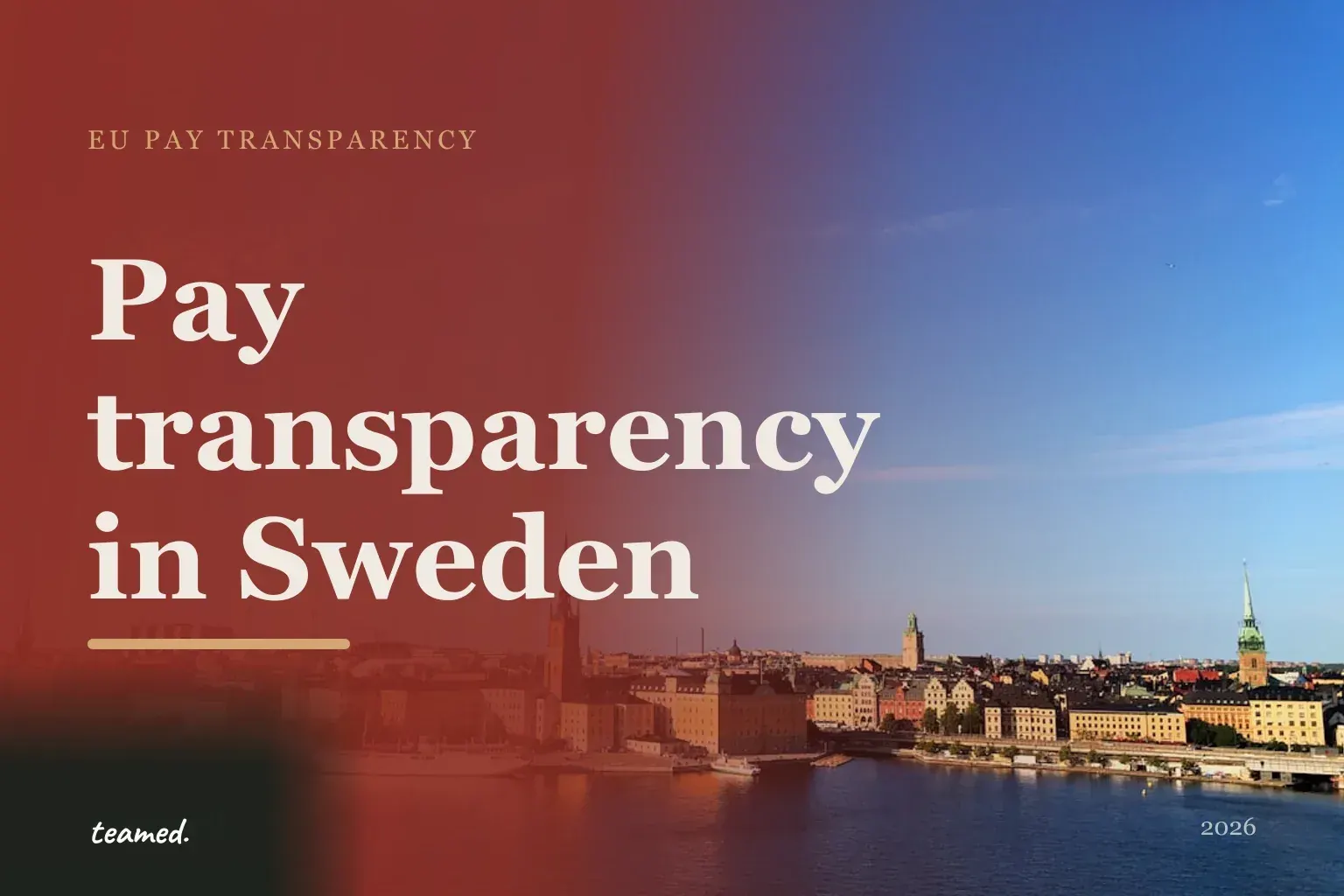
Pay transparency rules in Sweden
No. Sweden missed the deadline and paused its draft on 26 March 2026, pushing instead to renegotiate the Directive. No bill is before the Riksdag. Existing Discrimination Act equal-pay duties still apply.
Sweden has put its law on hold
What happened
In March 2026 the Swedish government said the EU rules create too much paperwork. It wants the EU to delay the rules and renegotiate them. No bill has gone to Parliament.
What it means for you
Nothing new applies to you in Sweden yet. Sweden's existing pay-mapping duties still apply.
Dates to know
- 7 June 2027The EU date for the first pay-gap reports from employers with 150 or more staff. Sweden has not set its own date yet.
Source: Lewis Silkin. We check this page every week. Last checked .
The EU Pay Transparency Directive (Directive (EU) 2023/970) is an EU law that requires employers to be open about pay and to close unjustified gender pay gaps. It gives job applicants a right to see pay information before interview, bans asking candidates about their pay history, gives current staff the right to ask what others doing equal work are paid, and requires larger employers to report their gender pay gap. Where an unexplained gap of at least 5% appears, the employer must run a joint pay assessment with worker representatives.
Each EU country had to write these rules into national law by 7 June 2026. Sweden has not done so. The Swedish government referred a draft to its legal review body in January 2026 but paused the work in March 2026 and is now seeking to delay the deadline and renegotiate the Directive, so none of these new duties currently apply in Sweden.
Current status: paused, not transposed
Sweden has not transposed the Directive and no bill is currently before parliament.
Sweden is the EU member state that has moved furthest in actively resisting the Directive. The government published a draft in January 2026 proposing to add the new rules to the existing Discrimination Act (Diskrimineringslagen 2008:567) and referred it to the Council on Legislation (Lagradet) on 15 January 2026, with a proposed start date of 1 July 2026. On 11 March 2026 it pushed that date back to 1 January 2027, and on 26 March 2026 it paused the process altogether. The Minister for Gender Equality said a fresh start was needed at EU level. The government does not currently intend to submit a transposition bill to the Riksdag (the Swedish parliament). It supports the aim of closing unjustified pay gaps but considers the Directive too administratively burdensome and a poor fit with Sweden's collective-bargaining model. Concerns are shared by Swedish employers and trade unions. A general election is due in September 2026, which may affect timing.
What an employer must do today in Sweden
Follow Sweden's existing equal pay rules under the Discrimination Act; the new Directive duties do not yet apply.
Because the Directive has not been transposed, none of its new obligations (pay in job ads, the salary-history ban, the employee right to pay information, gender pay-gap reporting, or the joint pay assessment) are law in Sweden yet. What does apply is the existing Discrimination Act. Every employer must carry out an annual equal pay survey (lonekartlaggning), comparing pay between women and men doing equal work or work of equal value and analysing any differences. Employers with 10 or more employees must document this survey in writing each year. Employers with 25 or more must also document their planned and completed active measures, including any pay adjustments. There is currently no Swedish rule requiring a salary or salary range in job adverts, and no ban on asking candidates about their pay history. Those would be new duties under the Directive.
What was in the paused draft (and could return)
The shelved January 2026 draft would have added pay-before-hiring, a salary-history ban, an employee pay-information right, gap reporting and joint assessments.
The draft the government has paused gives a good indication of what Sweden may eventually adopt if it proceeds. It proposed: telling candidates the starting salary or salary range, and relevant collective agreement terms, before a job offer; a ban on asking candidates about their salary history; a right for employees to request, in writing, their own pay and the average pay of others doing equal or equivalent work, broken down by sex, with a two-month response time and an annual reminder of the right; gender pay-gap reporting for employers with 100 or more staff (annually for 250-plus, every two years for 100 to 249); and a joint pay assessment with employee representatives where an unjustified gap of 5% or more is found and not corrected within six months. These figures are from the withdrawn draft and are not in force. They could change if the law is revisited.
Hiring in Sweden?
What Teamed already handles in Sweden
Teamed is the legal employer in Sweden and runs the annual equal pay survey (lonekartlaggning) and its written documentation required under the Discrimination Act.
These sit with us
- The annual equal pay survey (lonekartlaggning)
- Written pay-survey documentation from 10 employees
- Active measures documented from 25 employees
- Pay differences between women and men analysed
- New Directive duties from the day they apply
You keep
You set the role, the budget and the pay. We carry the employer-side survey and documentation.
Nothing new applies in Sweden yet. The government paused its draft on 26 March 2026 and is seeking renegotiation at EU level.
At a glance
| Pay shown in job ads | Not yet |
|---|---|
| Salary-history question banned | Not yet |
| Gender pay-gap reporting from | Not yet set |
| First report due | Not yet set |
| Penalties | Not yet set |
Key figures
| Detail | Value |
|---|---|
| Transposition status | Not transposed; process paused, no bill before the Riksdag (source) |
| EU transposition deadline | 7 June 2026 (missed) (source) |
| Draft referred to Council on Legislation | 15 January 2026 (amendments to the Discrimination Act) (source) |
| Government paused transposition | 26 March 2026; seeking EU-level renegotiation and delay (source) |
| Existing equal pay survey (lonekartlaggning) | Annual; written documentation required for employers with 10+ employees (Discrimination Act 2008:567) (source) |
| Proposed reporting threshold (withdrawn draft) | 100+ employees: 250+ annual, 100-249 biennial (not in force) (source) |
| Proposed joint pay assessment trigger (withdrawn draft) | Unjustified gap of 5% or more (not in force) (source) |
Frequently asked questions
Has Sweden passed the EU Pay Transparency Directive into law?
No. Sweden missed the 7 June 2026 EU deadline. A draft was sent for legal review in January 2026, but the government paused the process on 26 March 2026 and is now seeking to delay the deadline and renegotiate the Directive. No bill is before the Swedish parliament.
Do I need to publish salary ranges in Swedish job adverts now?
No. There is currently no Swedish rule requiring a salary or salary range in job adverts. That would only become a duty if Sweden transposes the Directive, which it has not done. The paused draft proposed disclosing the starting salary or range before a job offer.
Can I still ask candidates about their current or past pay in Sweden?
There is currently no Swedish ban on asking about salary history. The salary-history ban was part of the paused draft and is not in force. As a matter of good practice, many employers avoid the question, but it is not yet prohibited by law.
What pay equality rules actually apply in Sweden today?
The Discrimination Act (2008:567) requires every employer to run an annual equal pay survey (lonekartlaggning) comparing women's and men's pay for equal work or work of equal value. Employers with 10 or more staff must document it in writing each year; those with 25 or more must also document active measures.
If Teamed is our Employer of Record, who handles compliance?
Teamed is the legal employer in Sweden and carries the employer-side duties. Today that means maintaining the annual equal pay survey and documentation under the Discrimination Act. If Sweden later adopts the Directive, Teamed will take on the new obligations and guide you on any practical hiring and pay-range steps.
Pay transparency is moving at different speeds across the EU. When Teamed is your legal employer in Sweden, these duties sit with us: compliant pay ranges, the salary-history rule, employee pay-information requests, and reporting where it applies. We track the law as it changes so your hiring stays compliant.