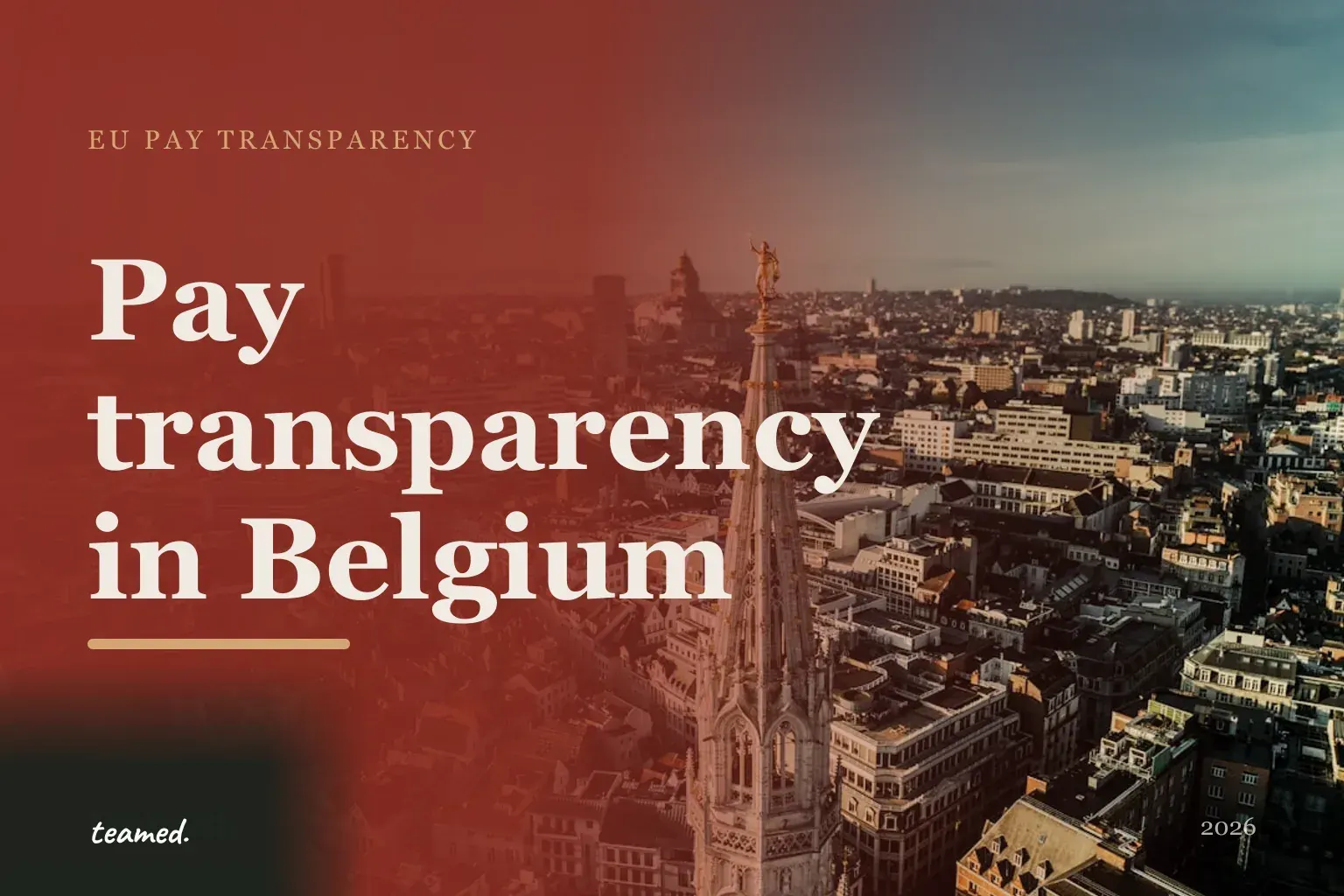
Pay transparency rules in Belgium
No. Belgium has no federal private-sector law and has asked Brussels for about six more months. The only measures passed cover parts of the public sector, regionally.
Belgium has no new rules yet for private companies
What happened
Belgium missed the EU deadline of 7 June 2026. There is no national draft law for private employers. In early June, Belgium asked the European Commission for about six more months. Two regional laws exist, but they only cover public-sector staff.
What it means for you
If you employ people in Belgium through a private company, no new pay-transparency rules apply to you yet. We will update this page when a national draft appears.
Dates to know
- 7 June 2027The EU date for the first pay-gap reports from employers with 150 or more staff. Belgium has not set its own date yet.
Source: Baker McKenzie. We check this page every week. Last checked .
The EU Pay Transparency Directive (Directive (EU) 2023/970) is a European law that makes pay fairer and more open between women and men. It requires employers to share pay information with job candidates and staff, bans asking about salary history, and obliges larger employers to report their gender pay gap and fix unjustified gaps.
EU countries had until 7 June 2026 to turn it into their own national law. Belgium has not yet done this at the federal level: no bill covering private companies has been published, and Belgium has asked the European Commission for extra time. Until a Belgian federal law is passed and takes effect, the Directive's specific duties do not directly bind private employers in Belgium, though existing Belgian equal-pay and anti-discrimination rules still apply in full.
What changes for an employer in Belgium right now
Nothing is legally required yet under the new Directive, but you should prepare because a federal law is expected and EU reporting dates are fixed.
As of 21 September 2026 there is no Belgian federal law putting the Pay Transparency Directive into effect for private-sector employers. Belgium missed the 7 June 2026 EU deadline and has asked the European Commission not to open infringement proceedings for about six months. In practice this means the Directive's new duties (pay ranges in hiring, the salary-history ban, employee pay-information rights, gender pay-gap reporting) are not yet enforceable against private employers in Belgium. What still applies in full is Belgium's existing equal-pay and anti-discrimination law, including the long-standing duty to pay women and men equally for equal work or work of equal value. The sensible position now is to get ready, not to wait: keep pay decisions defensible and based on objective, gender-neutral criteria, and avoid irreversible changes until the federal text is clear. The Belgian employers' federation explicitly advises monitoring developments and not taking irreversible steps.
Pay in job ads, salary-history ban and the right to pay information
These are the Directive's three core worker-facing duties. They are not yet law in Belgium, but they are what the coming federal rules will introduce.
Under the Directive (which Belgium must eventually adopt): employers must give candidates information about the starting pay or pay range before the interview, normally in the job advert or before it; employers must not ask candidates about their current or past pay (the salary-history ban); job titles and selection criteria must be gender-neutral. Once in post, workers gain the right to request information on their own pay level and on the average pay levels, broken down by sex, for groups doing the same work or work of equal value, and employers must tell staff annually that this right exists. Pay structures must let workers judge whether pay is set on objective, gender-neutral criteria. None of these are yet enforceable in Belgium because no federal transposing law is in force. Treat them as the near-certain shape of the Belgian rules and start aligning recruitment and pay documentation now.
Gender pay-gap reporting and the joint pay assessment
The Directive sets staggered reporting by employer size with first reports due in 2027, plus a joint pay assessment if an unjustified gap of 5% or more is found. Belgium has not yet set its national version.
The Directive's reporting timetable is set at EU level and runs from these dates regardless of when Belgium legislates: employers with 250 or more workers report their gender pay gap annually, first report by 7 June 2027; employers with 150 to 249 workers report every three years, first report by 7 June 2027; employers with 100 to 149 workers report every three years, first report by 7 June 2031; employers with fewer than 100 workers have no EU reporting duty (a member state may choose to go further). If a report shows a gender pay gap of at least 5% in any group of workers doing equal work or work of equal value that the employer cannot justify on objective, gender-neutral grounds and does not fix within six months, the employer must carry out a joint pay assessment with workers' representatives. Because Belgium has not transposed yet, the exact Belgian reporting mechanics, definitions and any local thresholds are not yet fixed, but the EU first-report deadlines still loom.
Penalties
Belgium has not yet set penalties because no transposing law exists. The Directive requires member states to set effective, proportionate and dissuasive penalties, including fines.
The Directive obliges each member state to lay down penalties for breaches that are effective, proportionate and dissuasive, and to consider fines. It also strengthens enforcement: a shift of the burden of proof to the employer in equal-pay disputes, the right of workers to compensation including full recovery of back pay and related bonuses, and a role for equality bodies and workers' representatives. The specific Belgian penalty amounts, enforcement body and procedure will only be known once Belgium passes its federal law, which has not happened as of 21 September 2026. For now, existing Belgian anti-discrimination and equal-pay sanctions continue to apply to pay discrimination claims.
Hiring in Belgium?
What Teamed carries in Belgium today
Teamed is the legal employer of your Belgian staff, so Belgian pay transparency duties land on Teamed, not you. The two decrees passed so far cover public-sector employers only.
These sit with us
- Pay ranges to candidates once Belgium legislates
- Salary-history questions kept out of Belgian hiring
- Staff requests for own pay and sex-split averages
- Gender pay-gap reports against the EU deadlines
- Joint pay assessment on an unjustified 5% gap
You keep
The role, the budget and the pay decision. Your people still report to you.
Belgium has missed the EU deadline and asked the European Commission for about six more months. No federal bill for private employers exists yet.
At a glance
| Pay shown in job ads | Not yet |
|---|---|
| Salary-history question banned | Not yet |
| Gender pay-gap reporting from | 100 or more (proposed) |
| First report due | 7 June 2027 (proposed) |
| Penalties | Not yet set |
Key figures
| Detail | Value |
|---|---|
| Transposition status (federal, private sector) | Not transposed - no federal bill published; deadline missed (source) |
| EU transposition deadline | 7 June 2026 (missed by Belgium) (source) |
| Extension request | Belgium asked the European Commission not to start infringement proceedings for about six months (source) |
| Public-sector partial measure (French Community) | Fédération Wallonie-Bruxelles decree, public sector only, in force since 1 January 2025 (source) |
| Public-sector partial measure (Flanders) | Flemish decree ratified and published 22 May 2026; in force 7 June 2026, public sector only (source) |
| Reporting threshold and cadence (EU Directive) | 250+ annually; 150-249 every 3 years; 100-149 every 3 years; under 100 none (source) |
| First gender pay-gap report due (EU dates) | 150+ workers by 7 June 2027; 100-149 workers by 7 June 2031 (source) |
| Joint pay assessment trigger (EU Directive) | Unjustified gender pay gap of at least 5% not corrected within 6 months (source) |
| Penalties (Belgium) | Not yet set - no federal transposing law; Directive requires effective, proportionate, dissuasive penalties incl. fines (source) |
Frequently asked questions
Has Belgium passed a pay transparency law?
Not for private-sector employers. As of 21 September 2026 there is no Belgian federal law transposing the Directive, and no bill has been published. Belgium missed the 7 June 2026 EU deadline and asked the European Commission for about six more months. Only narrow public-sector regional measures (a French Community decree and a Flemish draft) exist, and they do not cover private companies.
Do I have to publish salary ranges in Belgian job ads yet?
No, not as a new legal duty. The Directive will require pay ranges to candidates before interview, but that duty only bites once Belgium passes a transposing law, which has not yet happened. Many Belgian employers are adopting ranges early to prepare, and existing equal-pay and anti-discrimination rules still apply.
When is the first gender pay-gap report due?
The EU first-report dates are fixed regardless of Belgium's delay: employers with 150 or more workers report by 7 June 2027 (250+ annually, 150-249 every three years), and 100-149 by 7 June 2031 every three years. Belgium's exact reporting rules are not yet set, but these EU deadlines still apply, so prepare your pay data now.
What triggers a joint pay assessment?
Under the Directive, a gender pay gap of at least 5% in a group doing equal work or work of equal value that the employer cannot justify on objective, gender-neutral grounds and does not correct within six months triggers a joint pay assessment with workers' representatives. Belgium has not yet legislated the local detail.
Who is responsible if we use an Employer of Record in Belgium?
The EOR is the legal employer, so the statutory pay-transparency duties fall on the EOR once Belgian law is in force. In practice the client must supply consistent, gender-neutral role and pay information so the EOR can set defensible pay and report accurately. Until the federal law lands, these are preparation steps rather than live obligations.
Pay transparency is moving at different speeds across the EU. When Teamed is your legal employer in Belgium, these duties sit with us: compliant pay ranges, the salary-history rule, employee pay-information requests, and reporting where it applies. We track the law as it changes so your hiring stays compliant.