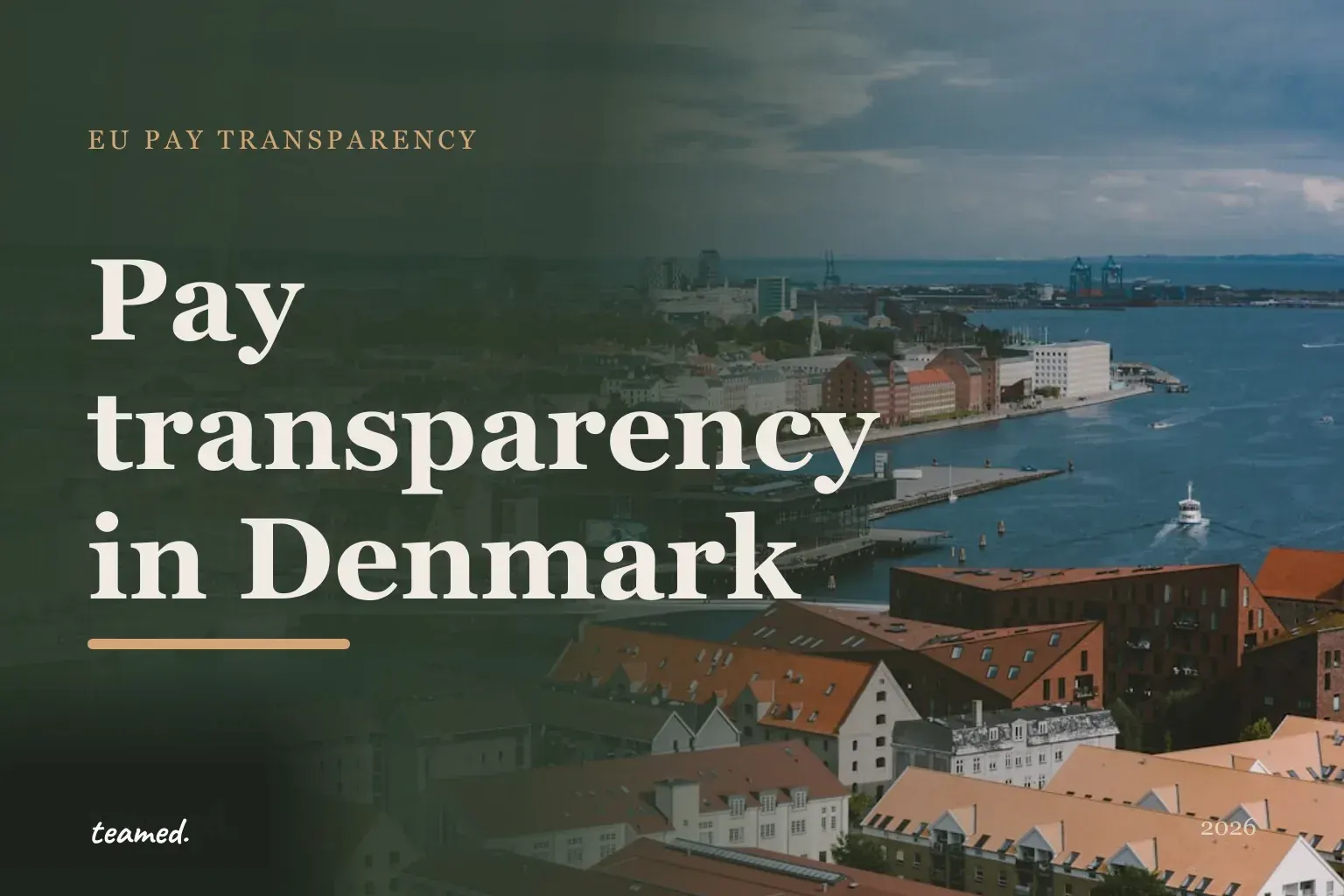
Pay transparency rules in Denmark
No. Denmark missed the deadline. A bill amending the Equal Pay Act was consulted on in early 2026 but has not been tabled in Parliament. The proposed start is 1 January 2027.
Denmark's bill is expected in Parliament in October
What happened
Denmark missed the EU deadline. It published a draft law in February 2026, and public feedback closed on 27 March. The government is expected to put the bill to Parliament in October 2026.
What it means for you
Nothing new applies to you in Denmark yet. The plan is for the rules to start on 1 January 2027, so that is the date to plan for.
Dates to know
- October 2026The bill is expected to go to Parliament.
- 1 January 2027Planned start of the new rules.
- 1 September 2028First pay-gap reports from the largest employers (proposed).
Source: Hoeringsportalen (Danish Government consultation portal). We check this page every week. Last checked .
The EU Pay Transparency Directive (Directive (EU) 2023/970) is an EU law designed to close the gender pay gap by forcing pay openness. It requires employers to share pay ranges with job applicants, bans asking candidates about their salary history, gives staff the right to know what colleagues doing the same or equal-value work are paid on average by gender, and makes larger employers report their gender pay gap to authorities.
Where an unexplained gap of 5% or more appears in a job category, the employer must run a joint pay assessment with worker representatives to fix it.
Each EU country had to write the Directive into its own national law by 7 June 2026. Denmark is implementing it by amending its existing Equal Pay Act (ligelonsloven), but that amendment is still a draft bill, not yet law.
Current status in Denmark
Denmark has a draft bill in progress but no pay transparency law in force yet as of 21 September 2026.
On 26 February 2026 the Danish Ministry of Employment published a draft bill, "Forslag til lov om aendring af ligelonsloven" (Bill amending the Equal Pay Act), to bring Directive (EU) 2023/970 into Danish law. It went out for public consultation, which closed on 27 March 2026. The bill has not been debated or adopted by the Folketinget (Danish Parliament), so none of the new duties bind employers today. The government proposes the rules take effect on 1 January 2027 - later than the EU's 7 June 2026 deadline - to give companies time to adjust. A general election was called on the same day the bill was published, which adds uncertainty to both timing and final wording. For now, the existing Equal Pay Act and equal-treatment rules continue to apply unchanged.
What will change for an employer
Once in force, employers will have to be open about pay before hiring, stop asking about salary history, give staff pay information on request, and (for larger firms) report their gender pay gap.
The draft introduces several new duties for whoever is the legal employer. Before an interview, applicants must be told the starting pay or pay range for the role. Employers will be banned from asking candidates about their current or previous pay. Existing staff will gain the right to ask for their own pay plus the average pay, split by gender, for colleagues doing the same work or work of equal value, with a response due within two months. Employers will need clear, gender-neutral criteria for setting pay and pay progression. Larger employers will have to report their gender pay gap to the authorities, and where an unexplained gap of at least 5% shows up in a job category and is not fixed within six months, they must carry out a joint pay assessment with employee representatives. A new body, the Labour Market Institute for Equal Pay (Arbejdsmarkedets Institut for Ligelon), is proposed to oversee these rules.
Reporting thresholds, timing and first report
The draft centres on employers with 100+ staff, with the first reports for the largest employers (150+ and 250+) due by 1 September 2028; smaller bands may be drawn in later under conditions.
The draft bill's reporting duty is built around employers with at least 100 employees, using Denmark's official DISCO job-code wage statistics, with Statistics Denmark (Danmarks Statistik) generating the underlying figures. Trackers report the first pay reports for employers with 150 or more staff (and 250+) falling due by 1 September 2028, covering the prior calendar year. Smaller employers in the 50-99 band may also be brought in under specific conditions (for example where at least eight employees of each gender sit in the same six-digit DISCO category), and the proposal signals a phased approach with later first-report dates (around 2031) and, for some bands, a three-yearly rather than annual cadence. These threshold and cadence details are taken from the draft and law-firm analysis and could change before adoption, so treat the exact bands and dates as provisional until the final Act is published.
Hiring in Denmark?
What Teamed handles for you in Denmark
Teamed is the legal employer of your Danish staff. When the amended Equal Pay Act starts, its duties sit with Teamed, including the DISCO job codes Statistics Denmark reports from.
These sit with us
- Starting pay or range given before interview
- No questions about a candidate's previous pay
- Pay-information requests answered within two months
- DISCO job codes behind the Statistics Denmark figures
- Pay-gap reporting at 100 staff and above
You keep
The role, the budget and what you pay. Your people still report to you, not to Teamed.
Nothing binds employers in Denmark yet. The bill has not reached Parliament, and the proposed start is 1 January 2027.
At a glance
| Pay shown in job ads | Proposed |
|---|---|
| Salary-history question banned | Proposed |
| Gender pay-gap reporting from | 100 or more (proposed) |
| First report due | 1 September 2028 (proposed) |
| Penalties | Not yet set |
Key figures
| Detail | Value |
|---|---|
| Transposition status | Draft bill; not yet tabled in Parliament, presentation expected October 2026 (source) |
| Instrument name | Forslag til lov om aendring af ligelonsloven (Bill amending the Equal Pay Act) (source) |
| Published for consultation | 26 February 2026 (source) |
| Consultation deadline | 27 March 2026 (source) |
| Proposed entry into force | 1 January 2027 (source) |
| Pay info before interview | Starting pay or pay range disclosed to applicants before interview (proposed) (source) |
| Salary history ban | Employers prohibited from asking applicants about current/previous pay (proposed) (source) |
| Right to pay information | Own pay plus gender-split averages for same/equal-value work; two-month response (proposed) (source) |
| Reporting threshold | 100+ employees core; 50-99 under conditions (8 of each gender in same DISCO-6 category) (source) |
| First report due | 1 September 2028 for employers with 150+ (and 250+) employees (source) |
| Joint pay assessment trigger | Unjustified gender pay gap of at least 5% in a job category, not remedied within 6 months (proposed) (source) |
| Oversight body | Labour Market Institute for Equal Pay (Arbejdsmarkedets Institut for Ligelon); reports generated by Statistics Denmark (source) |
| Penalties | Not yet specified in the draft; expected to align with existing Equal Pay Act enforcement (source) |
Frequently asked questions
Has Denmark passed the EU Pay Transparency Directive into law?
No. As of 21 September 2026 it is still a draft bill. The Ministry of Employment published "Forslag til lov om aendring af ligelonsloven" for consultation on 26 February 2026 (closed 27 March 2026), but the Danish Parliament has not adopted it. The proposed start date is 1 January 2027.
When will the new rules take effect in Denmark?
The draft proposes 1 January 2027. That is after the EU's 7 June 2026 transposition deadline, which Denmark has missed. A general election called the same day the bill was published adds uncertainty, so the date and final wording could still change.
Do I have to publish salaries in Danish job ads now?
Not yet. There is no in-force legal duty. Under the draft, you would have to tell applicants the starting pay or pay range before the interview, but that obligation only begins once the bill becomes law (proposed 1 January 2027).
Which employers will have to report their gender pay gap?
The draft centres on employers with at least 100 employees, with smaller employers (50-99) potentially drawn in under conditions tied to gender balance within a job category. The first reports for the largest employers (150+ and 250+) are expected by 1 September 2028. Exact bands and dates are provisional until the final Act.
If Teamed is our Employer of Record, who is responsible for compliance?
Teamed is the legal employer of your Danish staff, so once the law is in force Teamed carries the statutory pay transparency duties - pay-range disclosure, the salary-history ban, pay-information requests and any reporting. You set the role and budget; Teamed handles the Danish-law compliance.
Pay transparency is moving at different speeds across the EU. When Teamed is your legal employer in Denmark, these duties sit with us: compliant pay ranges, the salary-history rule, employee pay-information requests, and reporting where it applies. We track the law as it changes so your hiring stays compliant.