
How does Vietnam probation work in 2026?
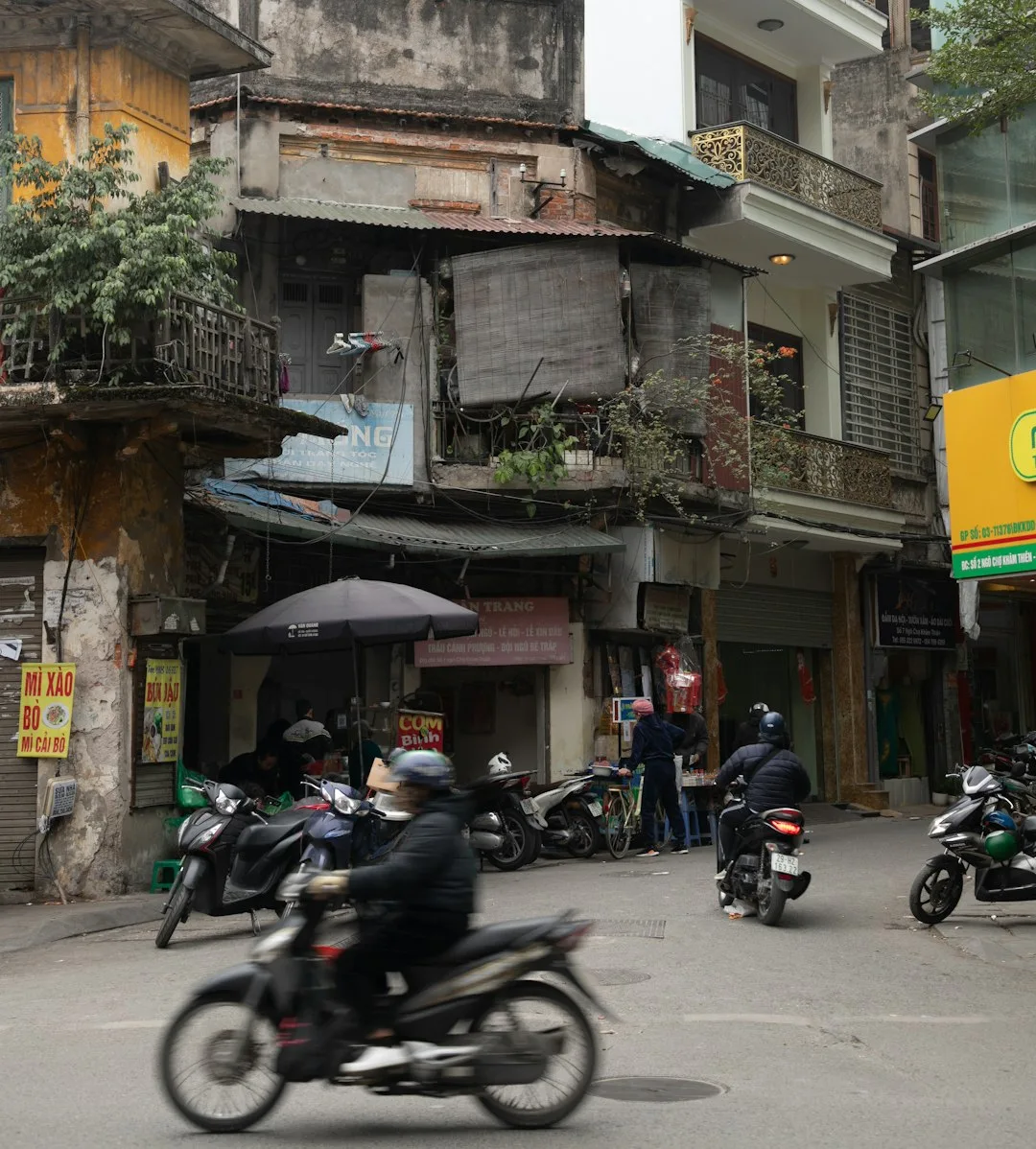
Illustration · Hanoi, Vietnam
Vietnam sets hard statutory caps on probation by role type. Degree-level and professional roles are capped at 60 days. Enterprise executives get up to 180 days. What makes Vietnam distinctive is that either side can end the trial period without any advance notice, under Labour Code 2019 Article 27. But unfair dismissal protections apply from day one, with no qualifying period, so skipping fair process still carries real legal risk.
· Vietnam guide
Vietnam law sets statutory probation caps by role type. For degree-level and professional roles, the cap is 60 days. For enterprise executives, the cap is 180 days.
Either side can end the trial period without advance notice under Article 27 of the Labour Code 2019. Unfair dismissal protections apply from day one. There is no qualifying period before they kick in.
After probation, employers must give at least 45 days notice to end an indefinite-term contract. The short no-notice window closes the moment probation is confirmed or expires.

What does Vietnam probation actually do?
Vietnam probation is a statutory mechanism, not just a contractual one.
The Labour Code 2019 (Article 25) defines the maximum length for each role type.
During probation, either side can end the arrangement without advance notice.
After probation, much longer notice applies to indefinite-term contracts.
What probation modifies under Vietnamese law:
- No advance notice needed to end probation. Article 27 of the Labour Code 2019 allows either party to cancel the probation arrangement without giving advance notice. The cap for degree-level roles is 60 days. For enterprise executives the cap is 180 days.
- Reduced benefits may apply. Employers sometimes defer discretionary benefits such as enhanced health schemes until probation is confirmed. Statutory entitlements apply from day one regardless.
- One probation per role. An employee can only be placed on probation once for the same position. A second probation for the same role is not permitted.
What probation does not change:
- Unfair dismissal protections under Articles 38 to 41 apply from the first day of employment. There is no qualifying period.
- Discrimination protections apply from day one, regardless of probation status.
- After probation ends, employer notice for an indefinite-term contract rises to 45 days. The short trial-period window closes once the probation clause has run its course.
- Annual leave entitlement of 12 days per year accrues from the start of employment, not from the end of probation.
How long should Vietnam probation be?
The cap depends on the role.
For degree-level and professional roles, the maximum is 60 days.
For enterprise executives and senior management, the maximum is 180 days.
You cannot set a longer period than the statutory cap, even by agreement.
Probation length by role type (Vietnam statutory pattern under Article 25 of the Labour Code 2019):
| Role type | Statutory cap | Notes |
|---|---|---|
| Degree-level and professional roles (junior college degree or above) | 60 days | The most common cap; applies to most white-collar hires |
| Technical and skilled trade roles | 60 days | Same cap as degree roles under Article 25 |
| Simple unskilled work | 6 working days | Very short window; rarely applies to professional EOR hires |
| Enterprise executive and senior management | 180 days | The extended cap under Article 25, Clause 1 |
The 60-day cap for professional roles is notably short by international standards. A UK or US employer used to a six-month assessment window will find that Vietnam compresses the same evaluation into 60 days. This makes structured feedback during probation more important, not less.
There is no pending legislative change to the Vietnam probation cap at the time of publication. The Article 25 framework has been in force since the Labour Code took effect on 1 January 2021.
Fair procedure during probation: the trap most employers fall into
Ending probation without advance notice is permitted in Vietnam.
But that is not the same as being able to dismiss for any reason.
Unfair dismissal protections apply from day one with no qualifying period.
A cancellation for a discriminatory or unlawful reason can be challenged, even during the trial period.
What the procedural bar looks like during Vietnam probation:
- Document the probation terms in the contract. The probation arrangement must be agreed in writing before the employee starts. Include the duration, the role, and the pass criteria. An oral probation agreement creates ambiguity.
- Set clear pass criteria at the start. Written, role-specific criteria give the assessment a basis. They also give the employee a genuine opportunity to understand what is expected of them.
- Hold regular feedback conversations. Even where the Labour Code permits ending probation without notice, courts and labour councils look at whether the employee had a real opportunity to perform. Keep a written record of what was discussed.
- Give the employee a chance to respond to concerns. If performance is falling short, raise it in a meeting before cancelling the arrangement. This is not a statutory requirement during the trial period, but it strengthens the employer's position if a dispute follows.
- Do not cancel for an unlawful reason. Ending a probation because an employee is pregnant, has reported a safety concern, or has exercised a legal right is prohibited under Articles 38 to 41 of the Labour Code 2019. These protections apply from day one.
The absence of a notice requirement during probation makes the process feel light. The legal risk comes from a different direction: a substantively unfair cancellation can be challenged even without a qualifying period. Document the assessment, not just the outcome.
-
Agree the probation terms in writing
Set out the probation duration, role scope, and pass criteria in the employment contract before the employee starts. An oral arrangement creates ambiguity and weakens any decision made at the end of the period.
-
Set written performance criteria on day one
Document what passing probation means for this specific role. Written criteria agreed at the outset give the assessment a clear basis and make the review fair for both sides.
-
Hold a documented mid-point review
Schedule a written review at day 30 for professional roles on the short cap. Raise any performance concerns in writing. Do not wait until the final days of the probation window to surface issues.
-
Give the employee a genuine chance to respond
If performance is falling short, raise concerns in a meeting before cancelling the arrangement. A record of that conversation protects the employer if the decision is later challenged.
-
Confirm the outcome in writing before expiry
Issue a written pass confirmation or cancellation notice before the statutory cap is reached. If the period expires without action, the employment continues on indefinite terms and the full notice obligation applies from that date.
Probation extensions: when and how
Vietnam probation cannot be extended beyond the statutory cap.
The cap is 60 days for degree-level roles and 180 days for executives.
If probation expires and neither side has cancelled, the employment continues on indefinite terms.
The statutory caps in Article 25 of the Labour Code 2019 are hard limits. They cannot be exceeded by agreement.
- If the contract sets a shorter period than the maximum, the parties can agree in writing to extend up to the statutory cap. The extension must be documented before the original period expires.
- Once the statutory cap is reached, there is no further extension. The employer must confirm the employment or end it before that date.
- If the probation period expires without a cancellation notice, the employee is treated as having passed and an indefinite employment relationship begins. At that point, the 45 days employer notice requirement for indefinite-term contracts applies.
How to handle a probation period that is running out before a clear view is formed:
- Hold a review meeting at least two weeks before expiry. This gives time to document concerns and make a decision.
- Document specific concerns in writing. Note what has and has not been demonstrated against the agreed criteria.
- Make a clear decision before the cap is reached. A written confirmation of the outcome (pass or cancellation) protects both sides.
- Do not let the period lapse without acting. A passive expiry is a de facto pass and activates the full indefinite-term contract.
Common mistakes in Vietnam: starting a 60-day probation for a role that should have been set up as an executive engagement at 180 days, and failing to set written pass criteria before day one, leaving no documented basis for ending the trial period.
The 30-60-90 day onboarding standard
For most professional roles in Vietnam, the statutory probation cap is 60 days.
A 30-60-90 framework must be compressed: day 30 is the mid-point review, day 55 to 60 is the final decision point.
For executive roles with a 180-day probation, the full 30-60-90 structure fits, with a final review before day 180.
Adapted onboarding framework for Vietnam's statutory probation caps:
| Phase | Day range | Manager focus | Employee focus |
|---|---|---|---|
| Orientation | Days 1 to 30 | Introductions, systems access, role context, initial task assignment | Learn processes, build relationships, understand team and product |
| Assessment (professional roles) | Days 31 to 60 | Probation review at day 50 to 55, written feedback, pass or cancel decision | Demonstrate role readiness, raise any blockers before the review |
| Contribution (executive roles) | Days 31 to 90 | First independent outputs, structured feedback, identify skill gaps | Deliver independently, build stakeholder relationships |
| Independence (executive roles) | Days 91 to 180 | Full role ownership, final probation review before day 170 | Demonstrate strategic value, flag performance concerns proactively |
The 60-day window for professional roles is tight. A new hire who spends the first two weeks waiting for equipment and system access may reach the day-30 mid-point with almost no substantive performance data. Front-loading practical setup on day one is not optional at this pace.
Day-one onboarding admin in Vietnam includes social insurance enrolment at the statutory 21.5% employer rate, a written employment contract, and confirmation of the probation terms and criteria in writing. All three are day-one obligations, not post-probation tasks.
How does Teamed handle Vietnam probation and onboarding?
Teamed becomes your legal employer of record in Vietnam for from $599 per employee per month, with zero FX mark-up in any currency.
Probation clause setup, contract drafting, day-one social insurance registration, and review support all run on one platform.
Real HR and legal experts handle your Vietnam hires from the first offer letter through every review meeting and probation outcome. An actual person, not a chatbot or a pooled queue. There is no setup fee and no exit fee. Employer cost passes through at cost, itemised on every invoice.
Most clients use Teamed to graduate out of direct-entity complexity as they scale in Vietnam. With a 60-day statutory cap, the EOR model works well until it isn't operationally necessary to own a local entity. Start fast, stay compliant, build your presence.
Teamed's standard Vietnam service for probation and onboarding:
- Vietnam employment contract includes a probation clause set to the correct statutory cap for the role type: 60 days for professional roles, up to 180 days for executives (Article 25, Labour Code 2019)
- Social insurance registration completed on or before the first day of work, at the statutory 21.5% employer contribution rate
- Probation review template provided to client managers at the mid-point of the probation window and again before expiry
- Probation cancellation notice handled by Teamed if a trial-period end is agreed, including all required written documentation
- Clear split of responsibility: the client owns the performance assessment; Teamed owns the procedure, paperwork, and Labour Code compliance
- Full employment transition on pass: indefinite-term contract activated, 45 days employer notice period in effect from that date
Key sources: Labour Code 2019 (Law No. 45/2019/QH14), PwC Vietnam social insurance summary, and Acclime Vietnam HR and Payroll Guide 2026.
Frequently asked questions
What is the maximum probation period in Vietnam?
The maximum depends on the role type. For positions requiring a junior college degree or above, the cap is 60 days under Article 25 of the Labour Code 2019. For enterprise executives and senior management, the cap is 180 days. The contract cannot set a period longer than the applicable statutory cap, and the same employee can only be placed on probation once for the same position.
Can a Vietnam employer end probation without giving notice?
Yes. Article 27 of the Labour Code 2019 allows either party to cancel the probation arrangement without giving advance notice. This applies to both employer and employee during the trial period. Once probation ends and the employee is on an indefinite-term contract, the employer must give at least 45 days notice to terminate.
Do unfair dismissal protections apply during probation in Vietnam?
Yes. Vietnam's Labour Code protections under Articles 38 to 41 apply from the first day of employment. There is no qualifying period. An employer can cancel probation without advance notice, but cannot do so for a discriminatory reason or because the employee exercised a legal right. A cancellation for an unlawful reason can be challenged in a labour dispute, even within the trial period.
Can a Vietnam probation period be extended?
Only within the statutory cap. If the contract sets a shorter period than the maximum, the parties can agree in writing to extend up to 60 days for professional roles or 180 days for executives. Once the statutory cap is reached, the probation cannot be extended further. If the period expires without cancellation, the employee is treated as having passed and an indefinite employment relationship begins.
What happens to annual leave and social insurance during Vietnam probation?
Annual leave entitlement of 12 days per year accrues from the start of employment and is not suspended during probation. Social insurance enrolment is required from day one of employment. The employer contributes at the statutory 21.5% rate and the employee contributes at 10.5%. Neither entitlement waits for probation to end.
The thing that surprises most international clients about Vietnam is that the notice-free cancellation right during probation sits alongside day-one unfair dismissal protections. You can end it without notice, but you cannot end it for an unlawful reason. The absence of a procedural floor is not the same as the absence of legal risk. Document the assessment from week one.
Vietnam gives degree-level hires a 60-day statutory cap on probation. That is the law, not a convention.
Either side can cancel without notice during that window. But day-one dismissal protections still apply.
When probation ends, the employer notice obligation for an indefinite contract jumps to 45 days. Getting that transition right matters.
Looking for a job in Probation And Onboarding yourself? Teamed does not hire people directly. Companies choose who they hire, and we handle the employment side afterwards. Here is why we cannot help with your search.