What Switzerland employee benefits must you provide in 2026?
Switzerland has no federal minimum wage and no state sick-pay scheme. You pay salary continuation directly when an employee is ill. The BVG pension contribution the law requires from you starts at 3.5% per employee aged 25 to 34 and reaches 9% for those aged 55 to 65.
· Switzerland guide
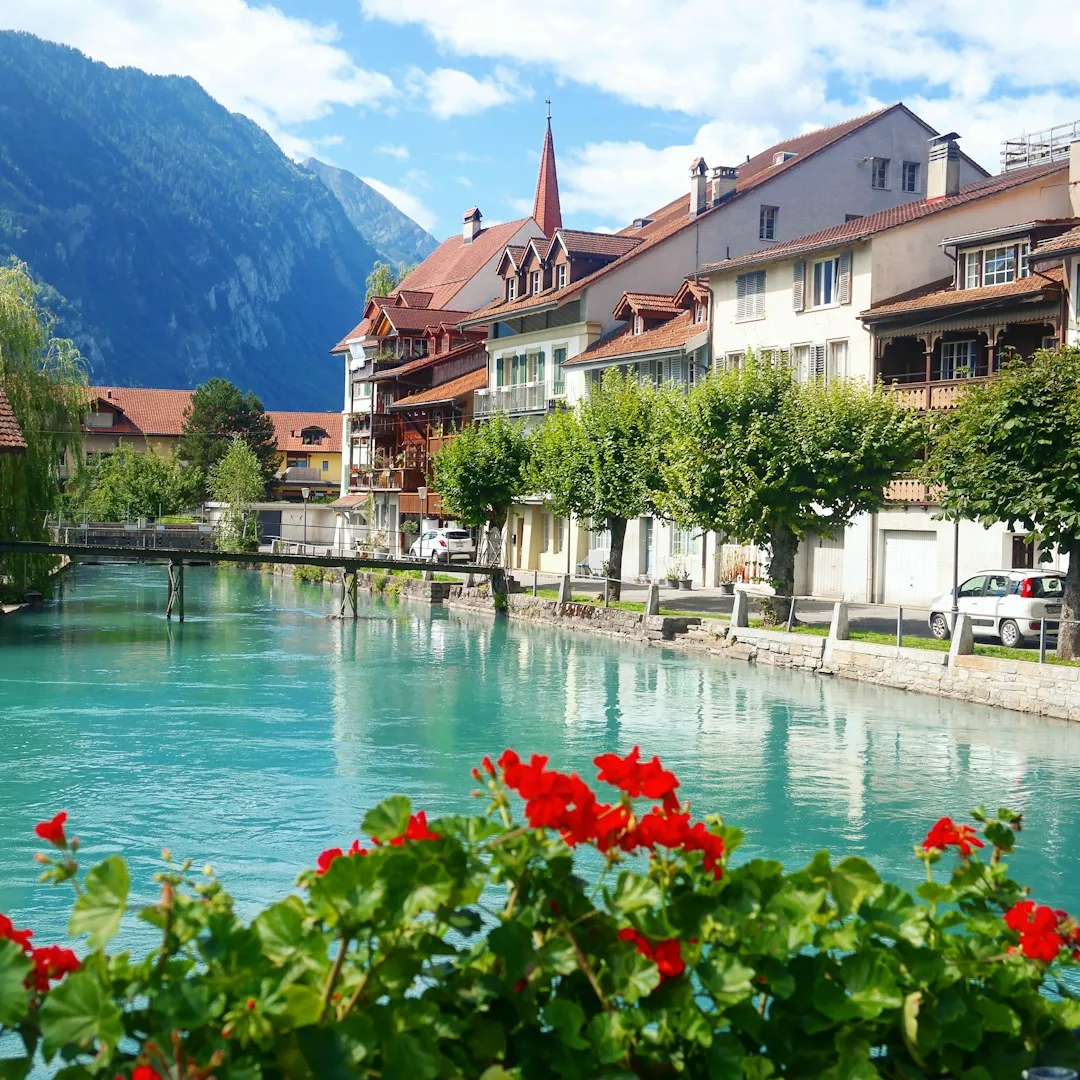
Illustration · Switzerland
Switzerland gives employees 20 days of paid annual leave each year.
There is no state sick-pay scheme. You pay the employee's full salary when they are ill. The law sets a minimum of 3 weeks in year one. The obligation grows with tenure under cantonal scales.
Maternity leave runs 14 weeks, paid at 80% of average salary from the federal income compensation fund (EO), capped at CHF 220 per day.
The BVG second-pillar pension requires you to contribute at least 3.5% for employees aged 25 to 34. That rate rises to 9% by age 55 to 65. The competitive market pays above the floor at every age band.

What benefits must you provide Switzerland employees by law?
The law sets a floor for leave, sick pay, parental leave, and occupational pension. You fund sick pay directly from payroll. There is no state sick-pay fund to claim from.
Annual leave is 20 days per year. Maternity leave is 14 weeks, paid at 80% of average salary by the federal EO fund. Paternity leave is 2 weeks.
| Statutory benefit | Minimum (2026) | Source |
|---|---|---|
| Annual leave | 20 days (4 weeks for a 5-day worker) | Code of Obligations Art. 329a |
| Sick pay (salary continuation) | 3 weeks in year 1 at full pay; grows with tenure under cantonal Berne, Basel, and Zurich scales | Code of Obligations Art. 324a |
| Maternity leave | 14 weeks from childbirth; paid at 80% of average salary (capped at CHF 220/day) by the federal EO fund | EOG Art. 16b and 16e |
| Paternity leave | 2 weeks (10 working days), paid at 80% of average salary by the EO fund | EOG Art. 16i; Code of Obligations Art. 329h |
| BVG second-pillar pension (age 25 to 34) | 3.5% employer + 3.5% employee on coordinated salary | BVG Art. 16 |
| AHV/IV/EO social insurance | 5.3% employer + 5.3% employee on gross salary | AHVG Art. 13 |
| Maximum weekly hours | 45 hours for office, technical, and retail roles | Swiss Labour Act Art. 9 |
Public holidays note: Switzerland has only 1 nationwide statutory public holiday (1 August, National Day). Total days off vary from 8 to 16 depending on the canton. Check the specific canton before finalising an employment contract.
What does a competitive Switzerland benefits package look like?
For technology and professional-services hiring in 2026, the competitive benchmark adds: supplemental health insurance (Zusatzversicherung), enhanced BVG pension above the legal floor, life cover, income protection, a learning and development budget, and meals or transport allowances.
The full enhanced package typically costs 5,000 to 15,000 francs per employee per year on top of base salary and mandatory social contributions.
| Benefit | Typical mid-market cost | What it gets you |
|---|---|---|
| Supplemental health insurance (Zusatzversicherung) | 1,200 to 4,800 francs per year per employee | Private ward, semi-private, or hospital of choice; supplements the compulsory KVG basic cover the employee holds personally |
| Enhanced BVG pension (above legal floor) | 2,000 to 6,000 francs per year per employee on mid-band salaries | Higher employer contributions or a wrapped plan beyond the BVG minimums |
| Daily sickness insurance (KTG/IJM) | 400 to 1,200 francs per year per employee | Extends paid sick leave beyond the Art. 324a minimum, typically covering 80% of salary for 730 days |
| Life assurance and income protection (UVG supplement) | 200 to 600 francs per year per employee | Tops up the compulsory accident insurance beyond the statutory ceiling |
| Meal allowance or subsidised canteen | 500 to 2,400 francs per year per employee | Common in Zurich and Geneva; often structured as a tax-advantaged voucher |
| Transport allowance (GA/Halbtax subsidy) | 600 to 3,600 francs per year per employee | General rail pass or half-fare card; highly valued in Swiss talent market |
| Learning and development budget | 1,000 to 3,000 francs per year per employee | Courses, certifications, language training |
Model your loaded benefit cost on the Employer Cost Calculator to see the full picture for a specific salary and package.
What BVG pension contribution should you offer?
3.5% is the legal floor for employees aged 25 to 34. The rate the law requires from you rises as employees age. By 55 to 65 the floor is 9%.
The competitive market runs enhanced plans above these minimums across every age band.
The BVG second pillar has four age bands. The law sets a minimum credit rate (employer plus employee combined), and the employer must fund at least 50%. The minimum employer share by age band:
- Age 25 to 34: 3.5% employer minimum. Total credit rate 7% on coordinated salary.
- Age 35 to 44: 5.0% employer minimum. Total credit rate 10%.
- Age 45 to 54: 7.5% employer minimum. Total credit rate 15%.
- Age 55 to 65: 9.0% employer minimum. Total credit rate 18%.
Contributions apply to the coordinated salary, not gross. The coordination deduction is CHF 25,725 in 2026. A gross salary of CHF 90,000 yields a coordinated salary of approximately CHF 64,275 for BVG contribution purposes.
Three common structures
- BVG minimum plan. Employer meets the statutory floor for each age band. Legal but below market for professional and senior roles.
- Wrapped (enveloppant) plan. Employer runs a pension plan that meets or exceeds the BVG minimum across all age bands and applies to full gross salary without the coordination deduction. Common in financial services and multinationals.
- 1e plan (for high earners). For coordinated salaries above CHF 132,300, employees can choose their own investment strategy in a 1e plan. Market practice in asset management and tech.
Daily sickness insurance as a structural complement
Switzerland has no state sick-pay scheme. The Art. 324a salary-continuation obligation is an employer cost, not a fund claim. Most competitive employers take out a collective daily sickness insurance (KTG/IJM) policy covering 80% of salary for up to 730 days. The premium is shared between employer and employee. The policy converts a potentially large one-off liability into a predictable monthly cost.
Is a 13th-month salary required in Switzerland?
A 13th-month salary is not required by federal law in Switzerland.
It is common in some sectors and regions. Check any applicable collective labour agreement (CLA) for the industry before finalising the employment contract.
Switzerland has no statute requiring a 13th-month payment. Unlike several neighbouring countries, it is purely a matter of contract and collective agreement.
In practice, many Swiss employers pay a year-end bonus or a 13th-month salary, particularly in banking, insurance, and manufacturing sectors governed by collective labour agreements. In the broader tech and professional-services market, year-end bonuses are discretionary and performance-linked rather than contractually guaranteed.
What to look out for
- Sector CLAs. Industries covered by a collective labour agreement (Gesamtarbeitsvertrag, GAV) may mandate a 13th-month payment. Construction, hospitality, and some retail CLAs include this obligation.
- Contractual commitment. If you include a 13th-month payment in the contract, it becomes a binding obligation regardless of company performance. Draft it carefully, with performance or discretion carve-outs if that is the intent.
- Holiday pay interaction. A 13th-month payment can interact with the calculation of holiday pay under Art. 329d CO. Seek local advice before structuring the arrangement.
For roles outside a CLA-governed industry, a year-end bonus of 1 to 2 months salary is a common market practice in Zurich and Geneva tech hiring. It is not a statutory entitlement; it is a competitive differentiator.
Parental leave: the 2024 to 2026 trend in Switzerland
Federal paternity leave has been 2 weeks since 2021. Political pressure and cantonal experiments are pushing toward longer shared parental leave.
Several cantons and large employers now offer beyond the federal minimum. Candidates at senior levels increasingly compare parental leave terms across offers.
The federal picture is settled for now. Maternity leave is 14 weeks at 80% of average salary (capped at CHF 220 per day). Paternity leave is 2 weeks, paid at the same rate. Both are funded by the federal EO income compensation fund, not by the employer.
What has changed over 2024 to 2026:
- Canton Geneva. Public-sector employees and some large private employers now offer 16 to 20 weeks of parental leave, split flexibly between parents. Private employers in Geneva increasingly match this to compete for talent.
- Large-employer benchmarks. Tech multinationals operating in Switzerland (Zurich in particular) commonly offer 16 to 26 weeks of shared parental leave as a package benefit, significantly above the federal floor.
- Federal discussion. Parliamentary motions for a shared parental leave model of 24 to 38 weeks total have been debated but not enacted as of 2026. Monitor the Federal Council position if hiring is medium-to-long term.
- Adoption leave. Federal law does not mandate paid adoption leave beyond what maternity or paternity entitlements may cover. Competitive employers are extending parental leave provisions to adoptive parents on a contractual basis.
For hiring in Zurich and Geneva at senior levels, matching or exceeding 16 weeks of total parental leave (shared between parents) is increasingly a market expectation, not a differentiator.
How does Teamed handle Switzerland benefits for you?
Teamed becomes your legal employer of record in Switzerland for from $599 per employee per month, with zero FX mark-up in any currency.
BVG pension enrolment, AHV/IV/EO social contributions, sick-pay continuation, and all Swiss statutory obligations run on one platform.
Real HR and legal experts set up and manage the BVG pension plan, register the employee with the relevant social insurance funds, and administer the EO maternity and paternity leave claim process. An actual person, not a chatbot, handles queries. There is no setup fee and no exit fee. Every employer cost passes through at cost, itemised on your monthly invoice.
Switzerland is straightforward to graduate from the EOR model if you later open a local entity. Until it isn't the right time to incorporate, the EOR handles the full employment law and benefits stack.
What is included in Teamed's standard EOR fee for Switzerland:
- BVG second-pillar pension enrolment and minimum contribution administration
- AHV/IV/EO, ALV, and UVG social insurance registration and monthly remittance
- Salary continuation tracking and administration during sickness leave
- EO maternity and paternity leave claims on behalf of the employee
- Annual leave tracking per cantonal rules
- Payroll in CHF, monthly cycle
What passes through at cost on the invoice:
- Enhanced BVG contributions above the statutory floor
- Supplemental health insurance (Zusatzversicherung) premiums
- Daily sickness insurance (KTG/IJM) policy premiums
- Accident insurance (UVG) supplements above the statutory ceiling
- Meal, transport, or any other agreed allowances
Key sources: AX-Fiduciaire Switzerland social charges guide and SECO State Secretariat for Economic Affairs.
-
Tell us the role and salary
Share the job title, salary in CHF, and start date. We calculate the full BVG and social insurance cost before you commit.
-
Choose the benefits package
Decide whether to run BVG at the statutory floor or enhanced. Add supplemental health, KTG daily sickness, or transport allowances. We price each element at cost.
-
We onboard the employee
We register the employee with AHV, BVG, and UVG, issue the contract, and enrol them in the pension plan before their first working day.
-
Payroll and contributions run monthly
Salary, social insurance, and BVG contributions are processed every month. The EO fund claim is handled by us when parental leave starts.
-
Benefits costs appear itemised on your invoice
Every pass-through cost, pension contribution, and insurance premium is listed separately. No mark-up, no bundled fees.
Frequently asked questions
How many days of annual leave must Switzerland employees receive?
The law requires 20 days of paid annual leave per year (Code of Obligations Art. 329a). For a standard 5-day working week that is 4 weeks. Switzerland has only 1 nationwide statutory public holiday (1 August). Most cantons observe 10 to 11 total public holidays but this varies canton by canton. Employers should confirm the applicable cantonal holidays when drafting the employment contract.
How does sick pay work in Switzerland?
Switzerland has no state sick-pay fund. You pay the employee's full salary when they are absent through illness. The minimum period under Art. 324a CO is 3 weeks in the first year of employment. The obligation grows with tenure under the cantonal Berne, Basel, or Zurich scales that courts typically apply. Most employers take out a collective daily sickness insurance (KTG/IJM) policy to cap their exposure.
What is the BVG pension and what must the employer contribute?
The BVG (second pillar) is Switzerland's mandatory occupational pension. The employer must contribute at least 3.5% for employees aged 25 to 34, rising to 9% for those aged 55 to 65. Contributions apply to the coordinated salary (gross minus the 2026 coordination deduction of CHF 25,725), not gross pay. The competitive market runs enhanced plans above the statutory floor. Plans that apply contributions to full gross salary without the coordination deduction are common in finance and multinationals.
What maternity and paternity leave must you provide in Switzerland?
Maternity leave is 14 weeks from childbirth, paid at 80% of average salary and capped at CHF 220 per day. The EO federal income compensation fund pays the benefit, not the employer. Paternity leave is 2 weeks (10 working days), paid at the same rate by the EO fund. Many Zurich and Geneva tech employers now offer enhanced shared parental leave of 16 weeks or more as a market differentiator.
Is a 13th-month salary required in Switzerland?
No. There is no federal statute requiring a 13th-month payment in Switzerland. It is common market practice in some sectors and in companies covered by a collective labour agreement (GAV). For tech and professional-services roles outside a GAV, a year-end bonus is competitive but discretionary. If you include a 13th-month payment in the contract it becomes a binding obligation. Seek local advice on wording before committing to it.
Switzerland surprises employers used to state-funded sick pay. There is no fund to claim from. You pay salary continuation directly from day one. Getting that liability into a KTG collective policy on day one is the move that protects your cash flow.
The BVG pension floor starts at 3.5% and climbs to 9% by age 55. Zurich tech hires know the gap before your offer lands.
There is no state sick-pay fund in Switzerland. Salary continuation is your liability from day one. A KTG policy is the fix.
The floor is real. The competitive package is what keeps the hire past year one.
Looking for a job in Benefits yourself? Teamed does not hire people directly. Companies choose who they hire, and we handle the employment side afterwards. Here is why we cannot help with your search.