How does Switzerland payroll tax work in 2026?
Swiss employer social charges split exactly 50/50 with the employee: 5.3% each for AHV, IV, and EO. The ALV unemployment levy stops at CHF 148,200/year. Federal income tax tops out at 11.5% but that is only one of three layers. Cantonal and communal tax push effective top rates past 40% in Zurich and Geneva.
· Switzerland guide

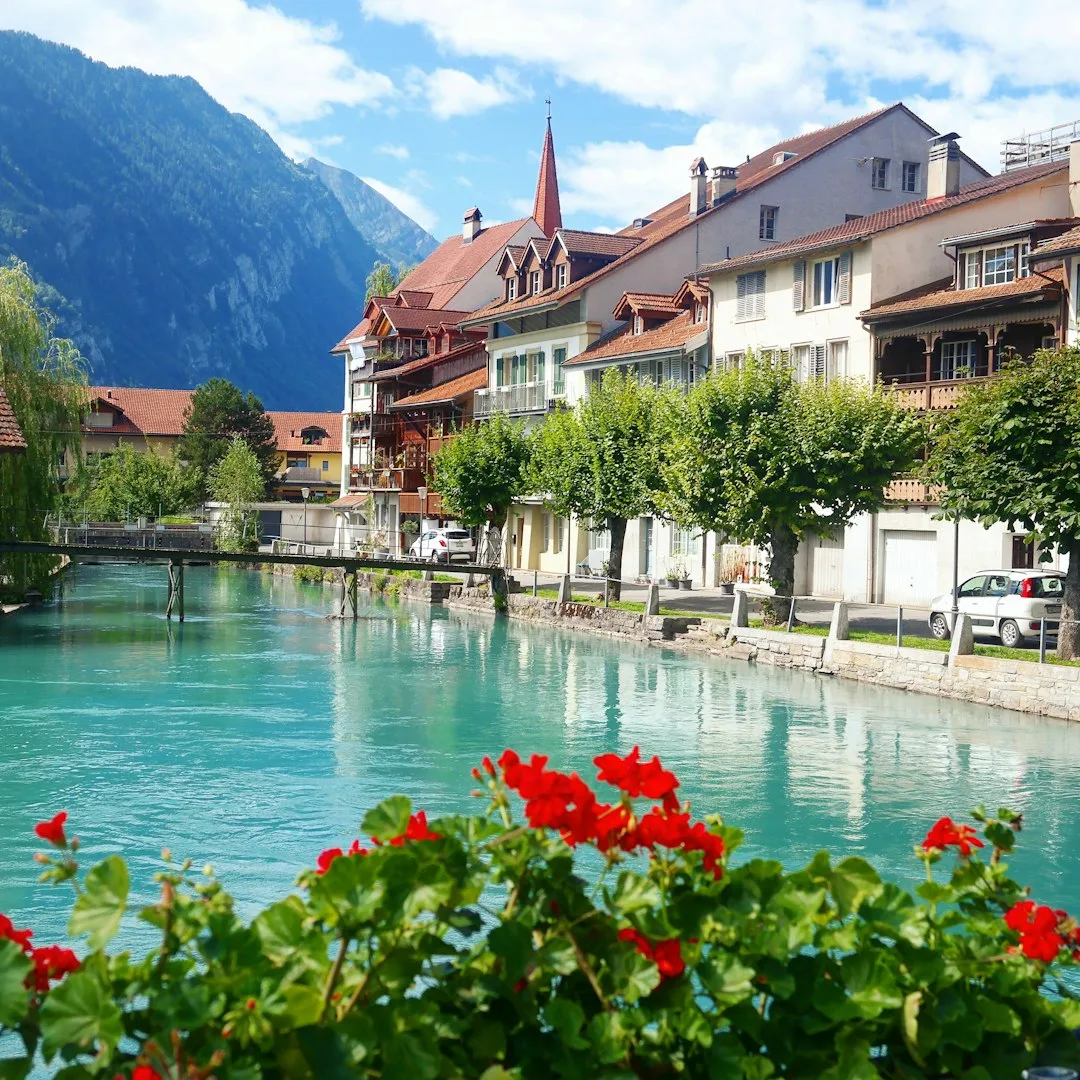
Illustration · Zurich, Switzerland
Switzerland employer payroll tax is 5.3% for AHV (old-age insurance), IV (disability), and EO (income replacement) combined. The employee pays the same 5.3%. The split is exactly equal by law.
The ALV unemployment insurance levy applies to salaries up to CHF 148,200/year. Above that ceiling no ALV is due on either side.
Occupational pension (BVG second pillar) is paid on coordinated salary. The rate depends on age. The minimum employer contribution for workers aged 25 to 34 is 3.5%. It rises to 9% for workers aged 55 to 65.
Federal income tax tops out at 11.5%. But Switzerland also has cantonal and communal income taxes. The three layers together produce effective rates well above the federal rate. Payroll runs monthly. Withholding tax for foreign workers (Quellensteuer) is remitted to the relevant canton.
What does an employer pay in Switzerland social charges?
The main employer social charge is 5.3% of gross salary. This covers old-age insurance (AHV), disability insurance (IV), and income replacement (EO) in a single combined rate.
There is no employer-side ceiling on AHV/IV/EO. The charge applies to the full salary. The employer also pays an equal share of the ALV unemployment levy, but that levy only applies up to the annual salary ceiling of CHF 148,200/year.
| Contribution | Employer rate | Notes |
|---|---|---|
| AHV/IV/EO (combined) | 5.3% | No ceiling. Applies to full gross salary. |
| ALV unemployment (below ceiling) | 1.10% | Applies to salary up to CHF 148,200/year only. |
| BVG occupational pension | From 3.5% (age 25-34) | Rate increases with age. Applies to coordinated salary, not gross. |
Why the AHV ceiling matters for cost planning
Unlike most European social insurance systems, AHV/IV/EO in Switzerland has no upper earnings limit on either the employer or employee side. Every franc of gross salary carries the 5.3% employer charge. For senior hires on high Swiss salaries, this makes AHV the dominant contribution line in the employer cost model, not ALV, which is capped at CHF 148,200/year.
Earnings above the ALV ceiling carry no unemployment contribution at all: the 0.50% solidarity top-up that used to apply to the excess was abolished on 1 January 2023. The bigger variable is the BVG age bracket, which shifts the pension cost significantly as the workforce ages.
Swiss mandatory social contributions for 2026: AHV/IV/EO split equally at 5.3% employer and 5.3% employee. ALV ceiling at CHF 148,200/year. BVG contribution rates vary by age bracket.
What does an employee pay in Switzerland social charges?
The employee pays 5.3% for AHV/IV/EO combined. This mirrors the employer rate exactly. The law sets a 50/50 split on all three contributions.
For ALV, the employee pays 1.10% up to the annual salary ceiling of CHF 148,200/year. Salary above that ceiling is free of ALV contributions; the former 0.50% solidarity top-up was abolished on 1 January 2023.
| Contribution | Employee rate | Ceiling |
|---|---|---|
| AHV/IV/EO (combined) | 5.3% | None. Applies to full gross salary. |
| ALV unemployment (below ceiling) | 1.10% | Up to CHF 148,200/year only. |
| BVG occupational pension | From 3.5% (age 25-34) | On coordinated salary only. |
Employees also pay towards accident insurance (UVG/SUVA) for non-occupational accidents. That rate is set by the insurer and varies; it is typically around 1% to 2% of coordinated salary. The employer covers occupational accident insurance entirely.
Switzerland has no nationwide employee-side social charge ceiling for AHV. A Swiss employee earning CHF 300,000 per year pays 5.3% on the full amount, with no cap. This is different from many other European countries where employee contributions phase out at an upper limit.
Switzerland income tax bands for 2026
Federal income tax starts at 0% on income up to CHF 18,500 a year. The top federal rate is 11.5% on income above CHF 794,000.
These are federal rates only. Each canton adds its own income tax on top. Each commune adds a further levy on the cantonal rate. The combined effective rate for high earners is typically 40% to 45% in cantons like Zurich and Geneva.
Switzerland has eleven federal income tax brackets for single taxpayers. Federal rates alone are low by European standards. The cantonal and communal layers are where the real tax burden sits.
| Federal income band (CHF, 2026) | Federal rate on excess |
|---|---|
| CHF 0 to CHF 18,500 | 0% (nil rate band) |
| CHF 18,500 to CHF 33,200 | 0.77% |
| CHF 33,200 to CHF 43,500 | 0.88% |
| CHF 43,500 to CHF 58,000 | 2.64% |
| CHF 58,000 to CHF 76,100 | 2.97% |
| CHF 76,100 to CHF 82,000 | 5.94% |
| CHF 82,000 to CHF 108,800 | 6.60% |
| CHF 108,800 to CHF 141,500 | 8.80% |
| CHF 141,500 to CHF 184,900 | 11% |
| CHF 184,900 to CHF 794,000 | 13.20% |
| Above CHF 794,000 | 11.5% (overall rate) |
The three-layer tax structure
Federal direct tax is just the first layer. Each of the 26 cantons sets its own income tax scale. Each commune applies a multiplier (Steuerfuss) on top of the cantonal rate. The three layers together are assessed on the same taxable income but calculated separately. A worker in Geneva or Zurich earning above CHF 200,000 will typically face a combined effective rate above 40%. A worker in Zug or Schwyz can face a combined rate closer to 25% at the same income level.
Quellensteuer: withholding tax for foreign workers
Foreign nationals without a permanent residence permit (C permit) pay income tax via Quellensteuer, a source deduction withheld by the employer each month. The rate is set by the canton of residence and depends on gross salary, marital status, and number of children. The employer remits the deducted amount to the cantonal tax authority. Correct rate tables must be applied from day one. Errors require corrections and can attract penalties.
How does Swiss payroll filing work?
Switzerland has no single national payroll filing system like PAYE RTI in the UK. Employers file social contributions to the AHV compensation fund for their canton each month. Withholding tax is filed canton by canton.
Payroll runs monthly. Employees are paid on or before the last working day of the month. The employer must register with the cantonal AHV compensation fund before the first hire.
Swiss payroll filing involves several parallel obligations rather than one unified submission:
- AHV/IV/EO contributions: paid monthly to the cantonal compensation fund (Ausgleichskasse). The employer deducts the employee share and adds the employer share before remitting the combined amount.
- ALV unemployment contributions: remitted via the same AHV compensation fund alongside AHV/IV/EO.
- BVG pension contributions: paid to the occupational pension fund (Pensionskasse) the employer is registered with. Timing varies by fund but is typically monthly.
- Quellensteuer (withholding tax): remitted to the canton of residence for each foreign national employee on a Quellensteuer arrangement. Deadline and form vary by canton; many cantons require remittance within 30 days of month-end.
- Annual wage declaration: employers submit an annual wage summary (Lohnbescheinigung) for all employees to the cantonal tax authority and social insurance fund.
The payroll cycle in Switzerland is monthly. The standard pay date is on or before the last day of the calendar month.
-
Collect salary and benefit data
Gather gross salary, variable pay, benefits in kind, and any expense reimbursements for the month before closing the payroll run.
-
Calculate social contributions
Compute AHV/IV/EO at 5.3% employer plus 5.3% employee on full gross. Apply ALV at the correct rate up to the annual ceiling of CHF 148,200/year.
-
Apply BVG pension deductions
Calculate BVG contributions on coordinated salary using the correct age-band rate. Employer pays at least 3.5% for the youngest band. Remit to the registered Pensionskasse.
-
Deduct withholding tax for Quellensteuer employees
Apply the correct cantonal Quellensteuer table to each foreign national employee. The rate depends on gross salary, canton of residence, and personal circumstances.
-
Pay employees and file AHV
Pay net salaries on or before the last day of the month. Submit the monthly AHV/IV/EO and ALV contribution statement to the cantonal compensation fund and remit the combined employer-plus-employee amounts.
Pension contributions in the Swiss payroll stack
Switzerland runs a three-pillar pension system. The mandatory occupational pension (second pillar, BVG/LPP) is what the employer must fund alongside the employee.
BVG contributions are age-banded. The minimum employer share for workers aged 25 to 34 is 3.5%. The rate rises as the employee ages, reaching 9% for the 55 to 65 band. The employer must cover at least 50% of the total BVG contribution at every age.
| Age band | Total BVG credit rate | Employer minimum (50%) | Employee maximum (50%) |
|---|---|---|---|
| 25 to 34 | 7% | 3.5% | 3.5% |
| 35 to 44 | 10% | 5% | 5% |
| 45 to 54 | 15% | 7.5% | 7.5% |
| 55 to 65 | 18% | 9% | 9% |
Coordinated salary: the BVG base
BVG contributions do not apply to gross salary. They apply to the coordinated salary, which is gross salary minus the BVG coordination deduction (CHF 25,725 in 2026). An employee earning CHF 80,000 a year has a coordinated salary of roughly CHF 54,275 for BVG purposes. Contributions are calculated on that lower base, not the full gross.
The BVG minimum entry threshold is CHF 22,680 annual gross in 2026. Employees earning below that are not covered by mandatory BVG. Those earning above it are enrolled from the first day of the month in which they turn 25.
First pillar: AHV
The first pillar is the state pension (AHV). Both employer and employee pay 5.3% and 5.3% respectively, which funds retirement, disability, and income-replacement benefits. These contributions are already covered in the social charges sections above. They are separate from the BVG second pillar.
How does Teamed handle Switzerland payroll for you?
Teamed becomes your legal employer of record in Switzerland for from $599 per employee per month, with zero FX mark-up in any currency.
The full Swiss payroll stack runs on one platform: AHV registration, BVG enrolment, Quellensteuer deductions, and the monthly cantonal filings.
Real HR and legal experts handle your Swiss hires from offer through every monthly AHV remittance and annual wage declaration. An actual person, not a ticket queue. There is no setup fee and no exit fee. Every employer cost passes through at cost, itemised on every invoice.
Swiss payroll has more moving parts for foreign nationals than for residents. Quellensteuer rate tables differ by canton, marital status, and child count. Get it wrong and the employer is liable for the shortfall. Teamed applies the correct cantonal rate from day one. A hire who converts from a Quellensteuer arrangement to ordinary taxation as their permit status changes is handled without disruption, all on one platform.
A Swiss contractor who moves to payroll keeps their record. That same employee can graduate from EOR to your own Swiss entity without switching systems. EOR is the right model for a first Swiss hire, until it isn’t. Run the Employer Cost Calculator to see the full picture including the age-banded BVG contribution. Start from the Switzerland hiring overview.
Frequently asked questions
What is the employer social charge rate in Switzerland in 2026?
The main employer social charge is 5.3% of gross salary for AHV (old-age insurance), IV (disability insurance), and EO (income replacement) combined. There is no upper earnings ceiling on this charge. The employer also pays the ALV unemployment levy of 1.10% up to the annual ceiling of CHF 148,200/year, plus a 0.50% solidarity top-up on salary above the ceiling. Occupational pension (BVG) is an additional employer cost, starting at 3.5% for workers aged 25 to 34.
Does Switzerland have a national minimum wage?
Switzerland has no federal minimum wage. Only some cantons set statutory minimums. Geneva has the highest cantonal minimum wage in Switzerland at CHF 24.59 per hour from January 2026. Other cantons with cantonal minimums include Neuchatel, Jura, Ticino, and Basel-Stadt, but rates vary. In cantons without a statutory minimum, the market rate and any collective bargaining agreements apply.
What are the Swiss federal income tax brackets in 2026?
Federal income tax for single taxpayers is 0% on income up to CHF 18,500 a year. Rates then rise through eleven brackets, reaching 11.5% on income above CHF 794,000. These are federal rates only. Each canton and commune adds further income tax, pushing combined effective top rates past 40% in cantons like Zurich and Geneva, and closer to 25% in lower-tax cantons like Zug.
How does Quellensteuer withholding tax work for foreign employees?
Quellensteuer is a source-withholding income tax that applies to foreign nationals in Switzerland without a permanent (C) residence permit. The employer deducts the tax from gross salary each month and remits it to the cantonal tax authority. The rate is set by the employee's canton of residence and depends on gross salary, marital status, and number of children. Each canton publishes monthly rate tables. Employers must apply the correct cantonal table from the first payslip.
How does BVG occupational pension work in Switzerland?
BVG (Berufliche Vorsorge) is the mandatory second-pillar occupational pension. Contributions apply to coordinated salary, which is gross salary minus a coordination deduction. The total contribution rate depends on the employee's age: 7% for ages 25 to 34, rising to 18% for ages 55 to 65. The employer must cover at least 50% of the total contribution at every age band. For a worker aged 25 to 34, the minimum employer contribution is 3.5% and the employee pays 3.5%, both on coordinated salary.
The Quellensteuer trap catches most first-time Swiss employers. The rate table is set by the employee's canton of residence, not the employer's canton. Hire someone in Zug while your office is in Zurich and you apply Zug tables. Get that wrong and you owe the difference. We set the correct table from the first payslip.
Swiss employer AHV/IV/EO: 5.3% on every franc of salary, no ceiling. ALV stops at CHF 148,200/year. BVG pension climbs with the employee's age.
Federal income tax tops out at 11.5%. Add cantonal and communal tax and the effective rate in Zurich or Geneva goes past 40%.
Three layers, one age-banded pension schedule. Get the numbers right before you make the offer.
Looking for a job in Tax And Payroll yourself? Teamed does not hire people directly. Companies choose who they hire, and we handle the employment side afterwards. Here is why we cannot help with your search.