How does Slovenia payroll tax work in 2026?
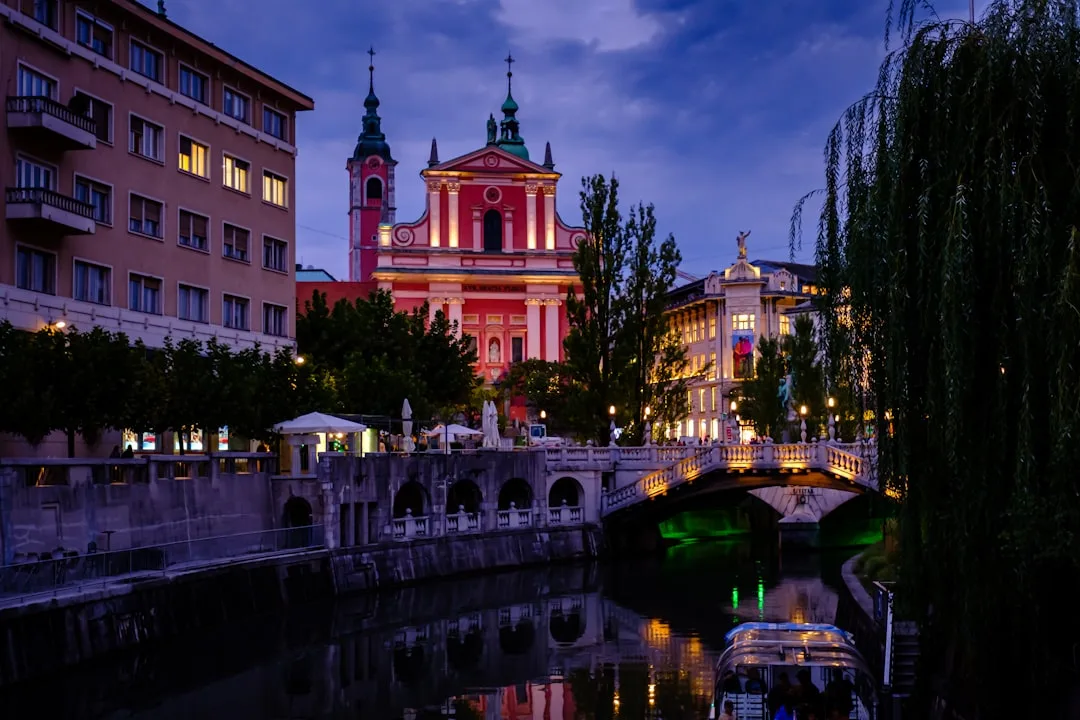
Illustration · Ljubljana, Slovenia
Flip the usual split. In Slovenia the employee carries 22.1% in social security while the employer carries 16.1%, so the worker funds the larger share of the contribution stack. Income tax then runs five bands from 16% up to 50%, and salary must reach the bank within 18 days of the period close.
· Slovenia guide
Slovenia payroll has two contribution sides. The employer pays 16.1% on top of gross salary. The employee pays 22.1% out of gross, so the worker funds the bigger share.
Income tax (dohodnina) runs five bands. It starts at 16% and rises to 50% on the highest pay. A general allowance of €5,551.93 a year is tax free (ZDoh-2).
Payroll is monthly. Salary must be paid within 18 days of the period close. There is no statutory 13th month. Instead the employer owes a holiday allowance of at least €1,481.88 each year, due by 1 July.
What does an employer pay in Slovenia social security?
The employer pays 16.1% of gross salary in social security. This covers pension, health, unemployment, parental cover and injury.
The contribution sits on top of gross pay. It is paid to the state alongside the employee deductions each month (ZPIZ-2 and ZZVZZ).
| Side | Combined rate | Applies to |
|---|---|---|
| Employer social security | 16.1% | Gross monthly salary |
| Employee social security | 22.1% | Gross monthly salary |
What the employer rate covers
The employer contribution of 16.1% is a single headline rate built from several funds: pension and disability insurance, compulsory health insurance, unemployment insurance, parental protection and injury at work. It is charged on gross salary with no general ceiling, so the cost scales straight with pay. Teamed itemises each fund on the invoice, never a blended line.
The split is unusual
In most countries the employer carries the heavier social charge. Slovenia inverts that. At 16.1% the employer side is lighter than the employee side of 22.1%, so the worker funds the larger share of the contribution stack. That matters when you model gross to net, because a Slovenian salary looks generous on paper and lands lighter in the bank account than a buyer used to other markets expects.
What does an employee pay from a Slovenia salary?
Social security takes 22.1% of gross pay before income tax. This is the worker's pension, health, unemployment and parental cover.
It comes off first. Income tax is then worked out on what remains (ZPIZ-2 and ZZVZZ).
| Employee deduction | Rate | Order |
|---|---|---|
| Social security (combined) | 22.1% | Deducted from gross first |
| Income tax (dohodnina) | 16% to 50% | Charged on pay after social security |
Deduction order changes the tax
The employee social charge of 22.1% is taken from gross pay before income tax is calculated. Social security is deductible, so it lowers the base that dohodnina is charged on. Get the order wrong and the tax figure is wrong even when every rate is right. Teamed's payroll applies the deductions in the correct order on every run.
The general allowance
Every employee gets a general personal allowance that is free of income tax. For 2026 that allowance is €5,551.93 a year (ZDoh-2). Higher allowances apply at lower income levels on a sliding basis, and further reliefs exist for dependent family members. The allowance is applied before the bands below bite.
Slovenia income tax bands for 2026
Income tax (dohodnina) runs five bands. The first band is 16% and the top band is 50%.
Between them the rate climbs through 26%, 33% and 39% as annual income rises (ZDoh-2).
| Band | Rate |
|---|---|
| Band 1, lowest income | 16% |
| Band 2 | 26% |
| Band 3 | 33% |
| Band 4 | 39% |
| Band 5, highest income | 50% |
The bands are progressive, so each slice of income is taxed at its own rate. Only the part of pay that falls inside a band is taxed at that band's rate, not the whole salary. The thresholds that separate the bands are set in euros each year by the tax scale and indexed annually, so a pay rise can push the top slice of income into a higher band without changing the rate on the rest.
What is taxed and what is not
Dohodnina is charged on the pay that remains after the employee social security of 22.1% and after the general allowance of €5,551.93 a year. Standard VAT in Slovenia is 22%, but that is a sales tax on goods and services, not a payroll charge, so it never touches the payslip. Corporate income tax is a separate company-level charge and is not deducted from salaries either.
How does Slovenia payroll filing and payment work?
Payroll is monthly. Salary must reach the employee within 18 days of the end of the pay period.
The employer files the payroll calculation and pays the tax and social security to FURS on the same monthly cycle (ZDR-1, Article 134).
Pay periods may not be longer than one month, and salary must be paid no later than 18 days after the end of the pay period. The employer must give the employee a written pay statement by the end of the pay day, plus an annual written calculation for the prior year by 31 January.
Source: Financial Administration of the Republic of Slovenia (FURS)
Slovenia runs a monthly payroll. Each month the employer calculates gross pay, takes the employee social security of 22.1% and the income tax, then adds the employer social security of 16.1% on top. The withheld tax and both sides of social security are reported and paid to the Financial Administration (FURS) for the same month.
Two documents are owed to the worker. A written pay statement is due by the end of the pay day for the month. A full annual calculation for the prior calendar year is due by 31 January. Salary itself must be in the account within 18 days of the period close. Miss the pay deadline and the employer is in breach of the law, separate from any late-tax interest charged by FURS.
-
Collect pay data
Gather salary, hours, bonuses and any taxable benefits for the month before the run closes.
-
Deduct employee social security
Take the employee social charge from gross pay first. This lowers the base that income tax is charged on, so the order matters.
-
Calculate income tax
Apply the progressive dohodnina bands to the pay that remains, after the general allowance is taken into account.
-
Add employer social security
Work out the employer social charge on gross pay. It sits on top of the salary, not inside it.
-
File and pay FURS
Report the calculation and pay the withheld tax and both social-security sides to FURS for the month, then pay the net salary to the worker on time.
Pension, the holiday allowance and the missing 13th month
Pension is funded inside the social security rates, not as a separate line. The employer 16.1% and the employee 22.1% both include a pension slice.
Slovenia has no statutory 13th-month salary. The mandatory annual extra is the holiday allowance instead (ZDR-1, Article 131).
Pension and disability insurance is the largest part of the Slovenian social charge, but it is not billed on its own. It sits inside the headline employer rate of 16.1% and the employee rate of 22.1%, alongside health, unemployment, parental and injury cover. The split between funds is fixed in law, and the pension share is the heaviest on the employee side.
There is no 13th month, but there is regres
Slovenia does not require a statutory 13th-month or 14th-month salary. What the law does require is a yearly holiday allowance, the regres za letni dopust. Every employer must pay it to anyone entitled to annual leave, and it cannot be less than the monthly minimum wage. For 2026 that floor is €1,481.88, and it must be paid by 1 July of the year. Plan it into the annual cost from day one, because it is owed on top of the twelve monthly salaries.
Why the regres trips up buyers
Teams used to a clean twelve-payment year often miss the regres entirely, then face a single large bill in the first half of the year. The amount is set against the minimum wage, so it does not scale with seniority, but it is mandatory and dated. Teamed budgets it across the year so the 1 July deadline never lands as a surprise.
How does Teamed handle Slovenia payroll for you?
Teamed becomes your legal employer of record in Slovenia for from $599 per employee per month, with zero FX mark-up in any currency.
Social security, dohodnina, the FURS filings and the regres all run on one platform.
Real HR and legal experts handle your Slovenia hires, from the first contract through every monthly FURS filing and the 1 July holiday allowance. An actual person, not a chatbot or a pooled queue. There is no setup fee and no exit fee. Employer cost passes through at cost, itemised on every invoice, so you see each social-security fund and the dohodnina as separate lines, never a blended number.
EOR payroll, contractor onboarding and entity setup all live on one platform. A Slovenia contractor who converts to payroll keeps their record. That same employee can graduate from EOR to your own Slovenia entity without switching systems. Run the Employer Cost Calculator to see the full picture, including the employee-heavy social split and the regres. EOR is the right model for a first Slovenia hire, until it isn't. Start from the Slovenia hiring overview.
Key sources: Financial Administration (FURS), ZDR-1 Article 134 on pay timing, and ZDR-1 Article 131 on the holiday allowance.
Frequently asked questions
What does an employer pay in Slovenia social security in 2026?
The employer pays 16.1% of gross salary in social security. This single headline rate covers pension and disability, health, unemployment, parental protection and injury at work, charged on gross pay with no general ceiling. It is paid to FURS each month alongside the employee deductions.
What is deducted from a Slovenia employee's salary?
Social security takes 22.1% of gross pay first, which is more than the employer side of 16.1%. Income tax (dohodnina) is then charged on the pay that remains, after a general allowance of €5,551.93 a year is set aside tax free.
What are the Slovenia income tax bands for 2026?
Dohodnina runs five progressive bands: 16%, then 26%, 33%, 39%, and 50% on the highest income. Each slice of pay is taxed at its own band's rate, and the thresholds are set in euros and indexed each year (ZDoh-2).
When must Slovenia salary be paid and payroll filed?
Salary must reach the employee within 18 days of the end of the pay period, and pay periods may not be longer than one month. The employer files the payroll calculation and pays the withheld tax and both sides of social security to FURS on the same monthly cycle, with a written pay statement due to the worker by the end of the pay day.
Does Slovenia have a 13th-month salary?
No. Slovenia has no statutory 13th-month or 14th-month salary. The mandatory annual extra payment is the holiday allowance (regres za letni dopust), which cannot be less than the monthly minimum wage. For 2026 that floor is €1,481.88, and it must be paid by 1 July of the year (ZDR-1, Article 131).
The Slovenia mistake we see most is forgetting the regres. Buyers budget twelve monthly salaries, run clean payroll all year, then a single holiday-allowance bill of at least the minimum wage lands before 1 July. It is mandatory, it is dated, and it is owed on top of the twelve. Budget it from the first hire, not in June.
Slovenia turns the usual payroll split on its head. The employee carries 22.1% of social security and the employer carries 16.1%.
Income tax runs five bands to 50%, and the regres of at least €1,481.88 is owed by 1 July.
Model gross to net before you make the offer.
Looking for a job in Tax And Payroll yourself? Teamed does not hire people directly. Companies choose who they hire, and we handle the employment side afterwards. Here is why we cannot help with your search.