How do Sweden working time and leave rules work in 2026?
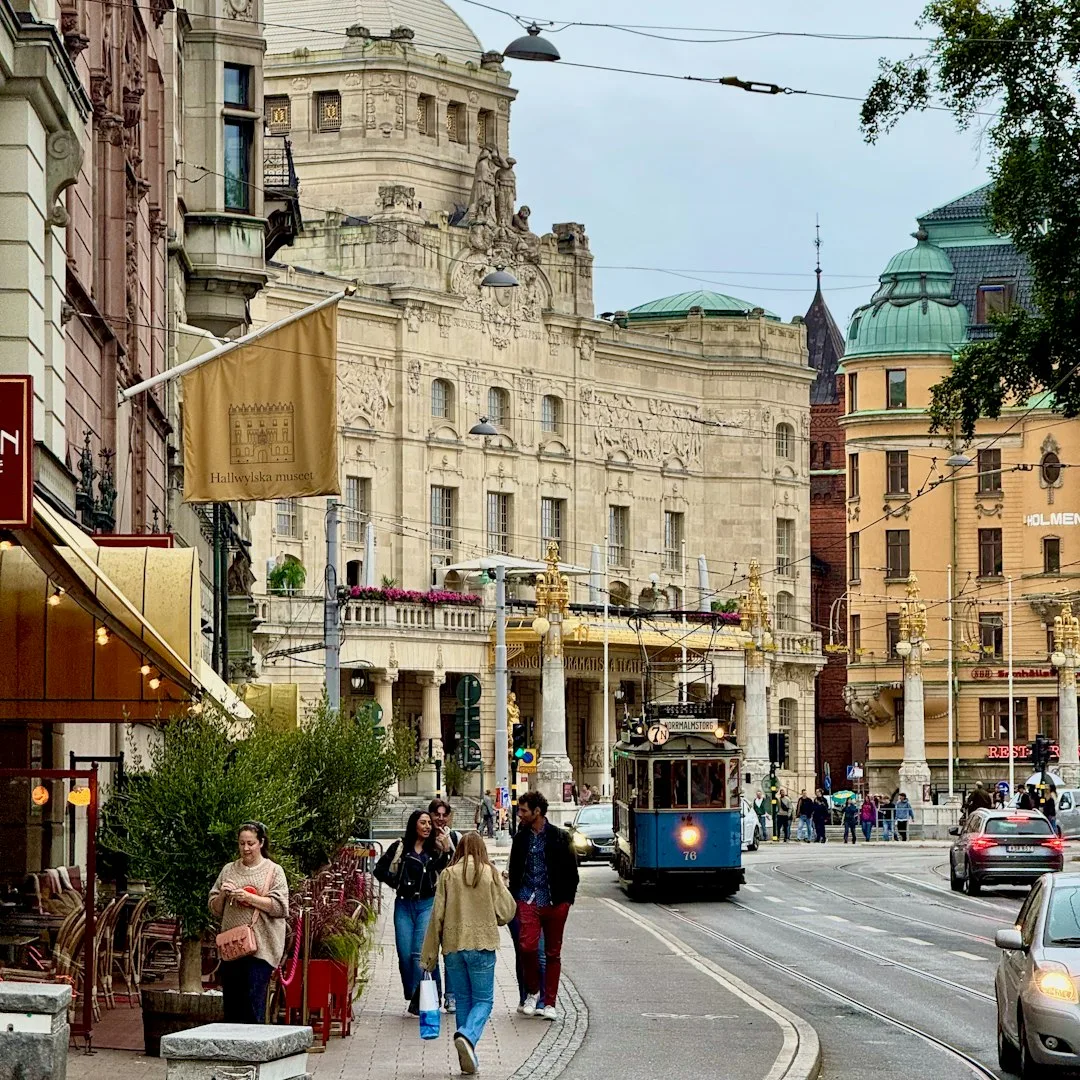
Illustration · Stockholm, Sweden
Sweden sets a 40 hours standard week with no individual opt-out. Employees get 25 days of paid leave on top of 13 public holidays. Sick pay is employer-funded at 80% of lost salary for the first 14 days.
· Sweden guide
Sweden working time is governed by the Working Hours Act (Arbetstidslagen SFS 1982:673) and the Annual Leave Act (Semesterlagen SFS 1977:480).
The standard week is 40 hours. There is no individual opt-out. Collective agreements often reduce this further in practice.
Annual leave is 25 days per year. Public holidays are on top of that total, not bundled in.
Sick pay for days 2 to 14 days is the employer's responsibility at 80% of lost salary. Day 1 is an unpaid qualifying day.
What is the Sweden working-time limit?
The standard working week is 40 hours. This is a hard limit.
Sweden does not allow individual opt-outs the way the UK does. Collective agreements may set shorter hours in specific sectors.
The rules come from the Working Hours Act (Arbetstidslagen SFS 1982:673). The 40 hours applies to ordinary working time. Overtime is permitted but separately capped.
Overtime limits
Swedish law distinguishes between general overtime and additional time. Overtime is governed by collective agreement in most sectors. Where no agreement exists, the Working Hours Act sets a ceiling on overtime at 48 hours in any 4-week period and no more than 200 hours per calendar year. Emergency overtime (nod- och beredskapstid) of up to 150 additional hours per year may apply in exceptional circumstances such as major incidents or natural disasters.
Collective agreement variation
Approximately 88% of Swedish workers are covered by a collective agreement. Most agreements set working-time rules that equal or improve on the statutory floor. Some white-collar agreements set a nominal 37.5-hour week in practice. Where a collective agreement applies, its terms on working time govern over the statutory minimums, provided they do not fall below the EU Working Time Directive floor.
Flexible and remote work
Sweden has no statutory remote-work entitlement but a strong cultural norm of flexible working. Employers must consult employee representatives before making major changes to working-time arrangements. Many workplaces use flexitime arrangements that average to 40 hours over a reference period of four to six weeks.
What rest periods are Sweden workers entitled to?
Swedish workers are entitled to at least 11 hours of continuous rest between each workday.
They are also entitled to at least 36 hours of uninterrupted weekly rest.
| Rest entitlement | Trigger | Statutory minimum |
|---|---|---|
| Daily rest | Between each workday | 11 hours continuous |
| Weekly rest | Every 7-day period | 36 hours continuous |
| In-shift break | As needed | Breaks at suitable intervals; exact timing contractual |
| Night workers | Regular night work | Additional health protections apply; employer must assess risks |
The 11-hour daily rest period comes from the Working Hours Act (Arbetstidslagen) and mirrors the EU Working Time Directive minimum. Collective agreements may set longer rest periods and many do.
The weekly rest of 36 hours is also statutory. It should normally fall on a Sunday. Where that is not possible due to operational needs, the employer must give equivalent compensatory rest within a reasonable period.
Breaks during the workday are required at suitable intervals. The exact timing and duration is set by agreement between employer and employee or by the applicable collective agreement. Unlike the UK, Swedish law does not specify a fixed break entitlement (such as 20 minutes after 6 hours). The employer has flexibility, but breaks must genuinely enable the worker to rest.
How does Sweden annual leave work?
The minimum is 25 days per year under the Annual Leave Act (Semesterlagen).
Public holidays are on top of the 25 days. They are not bundled in. This differs from the UK model.
The 25 days under the Annual Leave Act (Semesterlagen SFS 1977:480) are earned during a qualifying year (April to March) and then taken during the following leave year. This earn-then-take structure means a new employee does not automatically have the full 25 days available from day one.
Holiday pay
Swedish holiday pay is calculated as a percentage of earnings (semesterloen) rather than as simple continued salary. The percentage method: 12% of total wages earned in the qualifying year is the minimum statutory holiday pay for all 25 days. The daily method applies for part-year earnings. Most employers use the percentage method and collective agreements typically improve on the statutory rate.
Advance leave and carry-over
Employees may request to take leave before it is fully earned. This is advance leave and requires employer agreement. Unused leave above 20 days per year may be saved and carried forward for up to 5 years. The first 20 days must be taken each year. Any saved leave above the 5-year limit is paid out as holiday pay supplement.
How public holidays interact
Sweden's 13 public holidays are entirely separate from the 25 days entitlement. A public holiday falling on a working day reduces the working time for that week. It does not consume any of the employee's annual leave. This is a meaningful difference for employees moving from the UK, where bank holidays are typically bundled into the leave total.
Enhanced employer practice
Many Swedish employers offer 30 or more days of annual leave, particularly in white-collar and technology sectors. This is above the statutory minimum and is typically set by collective agreement or individual contract.
How many Sweden public holidays are there?
Sweden has 13 public holidays per year.
These are additional to the 25 days annual leave entitlement. Working on a public holiday is unusual in Sweden and requires specific contractual or collective agreement terms.
| Public holiday | Date in 2026 |
|---|---|
| New Year's Day (Nyarsdagen) | 1 January 2026 |
| Epiphany (Trettondedag jul) | 6 January 2026 |
| Good Friday (Langfredagen) | 3 April 2026 |
| Easter Sunday (Paskdagen) | 5 April 2026 |
| Easter Monday (Annandag pask) | 6 April 2026 |
| May Day (Forsta maj) | 1 May 2026 |
| Ascension Day (Kristi himmelsfard) | 14 May 2026 |
| National Day (Sveriges nationaldag) | 6 June 2026 |
| Midsummer Day (Midsommardagen) | 20 June 2026 |
| All Saints Day (Alla helgons dag) | 7 November 2026 |
| Christmas Day (Juldagen) | 25 December 2026 |
| Boxing Day (Annandag jul) | 26 December 2026 |
| New Year's Eve (Nyarsafton) | 31 December 2026 |
| Total | 13 |
Midsummer Day is a Saturday in 2026 (the closest Saturday to 24 June). This is always the case under Swedish law: Midsummer Day falls on a Saturday and Midsummer Eve (Friday) is treated as a half-holiday in practice but is not a statutory public holiday.
Most employees do not work on public holidays. Where work is required, the collective agreement or employment contract governs premium pay. There is no statutory requirement to pay an enhanced rate for public holiday work, but most agreements provide at least double time.
Parental leave in Sweden
Sweden gives parents a combined pool of 480 days per child.
Both parents share this pool. Each parent has a reserved portion that cannot be transferred to the other parent.
The 480 days per child come from the Social Insurance Code (SFB 2010:110) and the Parental Leave Act (Foraldraledighetlagen SFS 1995:584). The pool is divided as:
- 390 days at a rate linked to prior earnings (sickness-benefit level, up to a ceiling)
- 90 days at a flat minimum rate (grundniva)
Reserved days
Each parent has 90 reserved days from the pool. These cannot be transferred to the other parent. If not used, they are lost. The remaining days in the shared pool (up to 300) may be used by either parent, provided both parents agree.
The 10 days at birth
In addition to the shared pool, the non-birthing parent is entitled to 10 days of leave around the birth. These 10 days are separate from the 480-day pool. They are compensated at the sickness-benefit rate (up to the same earnings ceiling) and must be taken within 60 days of the birth.
Flexibility
Swedish parental leave is highly flexible. Parents can take leave as full days, half days, or quarter days. They can spread the leave across multiple periods until the child turns 12. Leave does not have to be taken in one block. This flexibility is a distinctive feature of the Swedish model and is valued by Swedish employees.
Parental benefit rate
The benefit rate during the 390 compensated days is set at approximately 80% of prior earnings up to the social insurance ceiling. The actual ceiling figure is set annually by the Swedish Social Insurance Agency (Forsakringskassan) and is not held in the compliance cache. Employers are not required to top up parental benefit to full salary, but many do under collective agreements or as a market-rate benefit. For the current ceiling, check Forsakringskassan: Parental benefit.
Employer costs
Parental benefit is paid directly by Forsakringskassan, not by the employer. The employer's cost during leave is mainly the social contributions on any employer top-up pay. The employee's salary ceases during leave; the state benefit replaces it. This is a different model from the UK where SSP and statutory family pay are employer obligations (albeit reimbursable in some cases). In Sweden, the financial burden of long parental absences falls primarily on the state.
Statutory sick pay in Sweden
Day 1 of sickness is a qualifying day (karensdag) with no pay.
From day 2 to day 14 days, the employer pays 80% of the salary the employee loses due to illness.
The rules come from the Sick Pay Act (Sjuklonelagen SFS 1991:1047).
The qualifying day (karensdag)
Day 1 of any sickness absence is an unpaid qualifying day. The employee receives no pay on this day. It applies to each new period of sickness. This is a structural feature of Swedish sick pay, not an optional employer policy. It is meant to discourage short-term absence.
Employer period: days 2 to 14 days
From the second day of sickness through to day 14 days, the employer pays sick pay at 80% of the wages the employee loses due to illness. The employer bears this cost directly with no government reimbursement during this period.
Employers are responsible for sick pay from day 2 to day 14. The rate is 80% of the salary lost due to illness. Day 1 is an unpaid qualifying day (karensdag).
Source: Forsakringskassan: Sick pay
After day 14: Forsakringskassan takes over
From day 15 of a continuous sickness absence, the employee applies directly to Forsakringskassan for sickness benefit (sjukpenning). The employer's payment obligation ends at day 14. Sickness benefit from Forsakringskassan is also set at approximately 80% of prior earnings up to the social insurance ceiling. If sickness extends beyond 364 days, the employee may transfer to rehabilitation benefit or activity compensation depending on the medical prognosis.
Fit certification
Employees must notify the employer of sickness on the first day of absence. For the first 7 days the employee can self-certify. From day 8, a medical certificate (lakarintyg) is required to continue receiving sick pay. The employer may request a certificate from day 1 in specific circumstances (for example, if there is a pattern of frequent short absences).
Enhanced employer practice
Many Swedish employers, particularly those covered by collective agreements, enhance sick pay above the statutory minimum. A common enhancement is to top up to 88% or 100% of salary for some or all of the employer period. The specifics depend on the applicable collective agreement.
-
Treat day 1 as an unpaid qualifying day
The first day of any sickness absence is the karensdag. The employee receives no pay on this day. Record it as a qualifying day in your payroll system. This applies to each new period of sickness, not just the first absence of the year.
-
Pay sick pay at the statutory rate from day 2 to day 14
From the second day of sickness through to day 14, the employer pays sick pay at the statutory rate of the salary the employee loses due to illness. The employer bears this cost directly with no government reimbursement during this period. Many collective agreements require a higher top-up rate.
-
Accept self-certification for the first 7 days
For the first 7 days of absence the employee can self-certify. You do not need a medical certificate during this window. Record the absence dates and the employee's notification on day 1 of the absence.
-
Require a medical certificate from day 8
From day 8 of continuous absence, a medical certificate (lakarintyg) is required before sick pay continues. You may request a certificate from day 1 if there is a pattern of frequent short absences.
-
Hand off to Forsakringskassan from day 15
From day 15 of a continuous absence, the employee applies directly to Forsakringskassan for sickness benefit. Your payment obligation ends at day 14. Notify the employee in good time so they can file with Forsakringskassan before that date.
How does Teamed handle Sweden employment for you?
Teamed becomes your legal employer of record in Sweden for from $599 per employee per month, with zero FX mark-up in any currency.
Payroll, statutory leave, and the full Sweden working-time compliance stack run on one platform.
Real HR and legal experts manage your Sweden working-time obligations, from the annual-leave calculation under the Semesterlagen through every parental-leave period and sick-pay employer day. An actual person, not a chatbot or a pooled queue. There is no setup fee and no exit fee. Employer cost passes through at cost, itemised on every invoice.
Sweden's leave structure is genuinely different from Anglo-American norms. The earn-then-take leave model, the karensdag, and the state-administered parental benefit pool all require careful handling from the first hire. EOR payroll, contractor onboarding, and entity setup all live on one platform. Run the Crossover Calculator to see the month your Sweden hire is ready to graduate to your own entity. Start from the Sweden hiring overview. Each guide takes one layer of Swedish employment law.
Key sources: Working Hours Act (Arbetstidslagen SFS 1982:673), Annual Leave Act (Semesterlagen SFS 1977:480), and Forsakringskassan employer guides.
Frequently asked questions
What is the maximum working week in Sweden?
The standard working week in Sweden is 40 hours under the Working Hours Act (Arbetstidslagen SFS 1982:673). There is no individual opt-out. Where a collective agreement applies, it may set a shorter standard week in practice. Overtime is permitted but separately capped by law and by most collective agreements.
How much annual leave are Swedish employees entitled to?
The minimum is 25 days per year under the Annual Leave Act (Semesterlagen SFS 1977:480). Public holidays are on top of this, not bundled in. This is a key difference from the UK, where bank holidays are typically counted within the leave total. Leave is earned in a qualifying year (April to March) and taken in the following leave year.
How does sick pay work in Sweden?
Day 1 of sickness is an unpaid qualifying day (karensdag). From day 2 through to day 14 days, the employer pays sick pay at 80% of the salary the employee loses. From day 15, sickness benefit is paid by Forsakringskassan (the Swedish Social Insurance Agency), not the employer. Employees must self-certify for the first 7 days; a medical certificate is required from day 8.
How does parental leave work for Swedish employees?
Sweden provides a shared pool of 480 days per child for both parents combined under the Social Insurance Code (SFB 2010:110). Each parent has 90 reserved days that cannot be transferred. Parental benefit is paid by Forsakringskassan at approximately 80% of prior earnings up to the social insurance ceiling. In addition, the non-birthing parent gets 10 days of separate birth-leave around the time of the birth.
How many public holidays does Sweden have?
Sweden has 13 public holidays per year under the Public Holidays Act (SFS 1989:253). These are entirely separate from the 25 days annual leave entitlement. A public holiday falling on a working day reduces hours for that week but does not consume any annual leave. Notable holidays include Midsummer Day (a Saturday in June), National Day (6 June), and the two Christmas days.
The karensdag catches almost every non-Swedish client on the first absence. They see an employee is sick and assume pay starts immediately, because that is how it works in the UK since April 2026. In Sweden, day one is always unpaid. We put this in every onboarding brief because it affects how you set up absence tracking from day one.
Sweden gives employees 25 days of paid leave on top of 13 public holidays.
That is more generous than most UK and US buyers expect, and it sits entirely outside the holiday pool.
Model the total employer cost before you hire. The leave cost is real and comes early.
Looking for a job in Working Time And Leave yourself? Teamed does not hire people directly. Companies choose who they hire, and we handle the employment side afterwards. Here is why we cannot help with your search.