How much does it really cost to hire in South Korea in 2026?
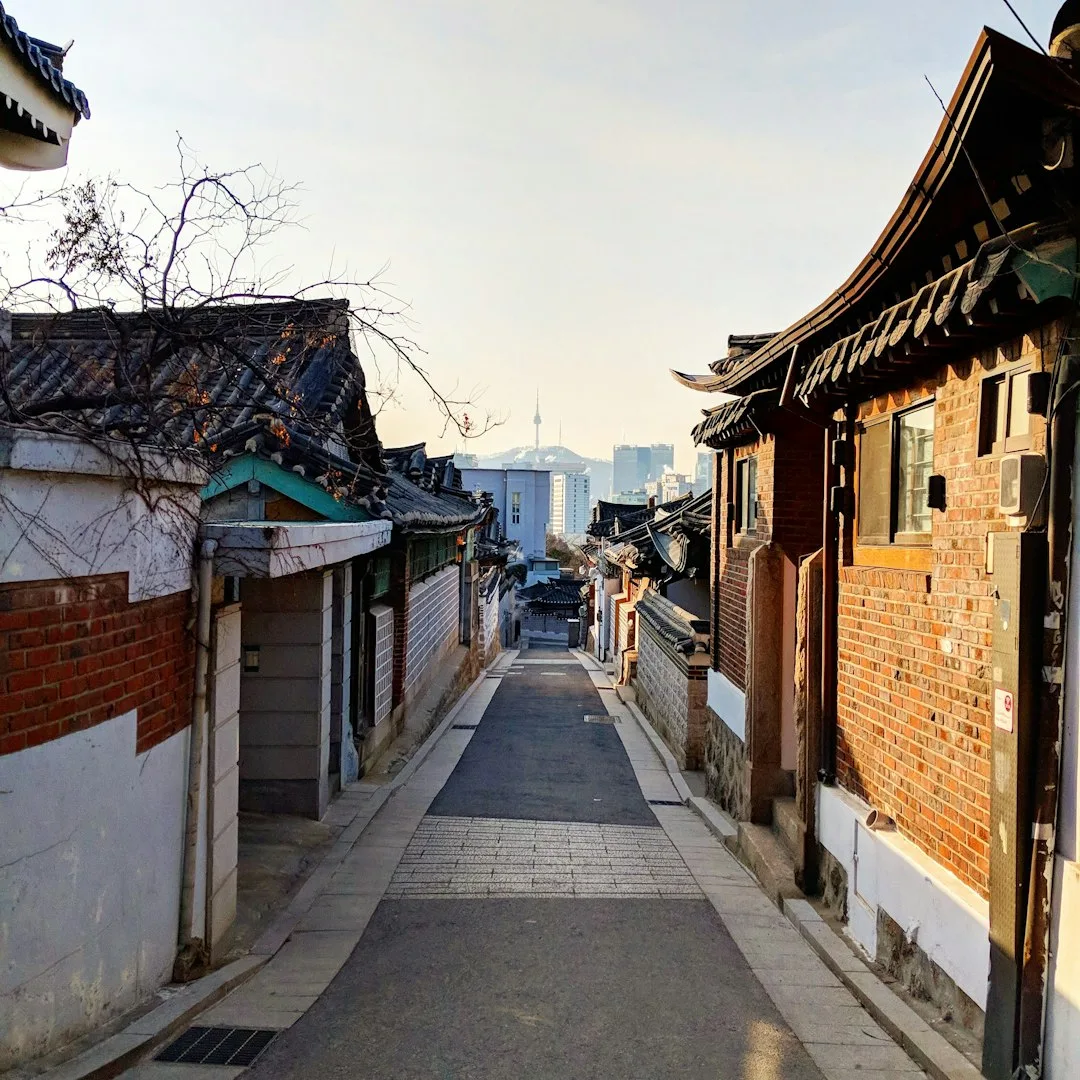
Illustration · Seoul, South Korea
South Korea builds severance directly into every employment relationship. After 1 year of service, every departing employee receives 30 days of average wage per year worked, regardless of the reason for leaving. That accruing liability sits invisibly inside the salary until settlement day.
· South Korea guide
South Korea has a severance obligation that most hiring managers miss. Every employee who works for at least 1 year receives 30 days of average wage for each year worked. This applies on resignation, redundancy, and termination for cause. It is not a negotiable benefit. It accrues from the first day.
Social insurance adds more lines. The employer contributes 4.75% to the National Pension and approximately 4.07% to health insurance including long-term care. The NPS rate rose from 4.5% to 4.75% from January 2026 and will keep rising.
Every employee also gets 15 days of paid leave after one year, plus 15 public holidays. The total employer cost depends heavily on salary level and tenure because the severance accrual grows with each year of service.

The headline: what a South Korea hire actually costs
Start with the gross salary. Add the social insurance contributions. Add the annual leave entitlement. Then set aside the severance accrual: 30 days of average wage per year of service, building every month.
The table below shows illustrative totals at a KRW 60,000,000 annual salary. These are computed from verified rates and labelled illustrative. They are not statutory figures.
The lines below are fixed by law. There is no negotiation on the structure. The illustrative example uses a KRW 60,000,000 gross annual salary to show how the components stack up.
| Line | Illustrative cost on KRW 60,000,000 salary | Source |
|---|---|---|
| Gross salary | KRW 60,000,000 | Contract |
| National Pension at 4.75% of total wages | KRW 2,850,000 (illustrative) | Korean Tax Expert: Social Insurance Rates 2025-2026 |
| Health insurance (incl. long-term care) at approx 4.07% of total wages | KRW 2,440,440 (illustrative) | NHIS Contribution Rate 2026 |
| Employment Insurance at 1.15% (minimum rate, varies by size) | KRW 690,000 (illustrative) | PwC Tax Summaries: Other taxes |
| Severance accrual at 30 days average wage per year (provisioned monthly) | KRW 5,000,000 (illustrative, 1-year) | Guarantee of Workers Retirement Benefits Act |
| Annual leave: 15 days paid days plus 15 public holidays | Included in salary cost | Labor Standards Act Article 60 |
| Total illustrative employer cost (year 1) | ~KRW 71,000,000 (illustrative) | ~118% of gross (illustrative) |
These figures are illustrative. They are computed from verified statutory rates for 2026. They are not statutory figures and will vary with actual wages, employer size, industry (which affects the Workers Compensation and Employment Insurance rates), and the number of years the employee works.
The severance line grows with tenure. A 5-year employee costs more per year than a 1-year employee, even at the same salary, because the severance pool is larger. Use the Employer Cost Calculator to model your own numbers. Add Teamed from $599 per employee per month and the total rises to around 120 to 130 percent of gross at this salary point.
-
Confirm gross salary
Establish the agreed gross annual salary. Every other cost line builds from this number, and the severance accrual recalculates whenever this number changes.
-
Add social insurance contributions
Calculate National Pension, health insurance, and Employment Insurance. Check the employment insurance rate for your employer size category. Workers Compensation is set by industry.
-
Provision for severance
Set aside the severance accrual each month. The liability is one month of average wage per year of service and it belongs to the employee from day one regardless of how the employment ends.
-
Account for leave entitlements
Annual leave and public holidays are costed into the gross salary. Budget separately for maternity and paternity leave, which require employer funding for the first weeks.
-
Review dismissal and final pay obligations
All wages, leave payments, and severance must settle within the statutory window after termination. Late payment carries statutory interest. Plan the exit just as carefully as the hire.
Statutory severance: the cost that accrues from day one
Every employee who completes at least 1 full year of service is entitled to severance. The amount is 30 days of average wage for each year worked.
This applies when the employee resigns, is made redundant, or is dismissed for cause. There are no exceptions based on the reason for leaving. The liability accrues from day one of employment.
An employer must pay severance of at least 30 days of average wage per year of continuous service to any employee who has worked for 1 year or more. Average wage is calculated over the last three months of employment. Settlement must be made within 14 days of the termination date.
Source: Korea Legislation Research Institute: Labor Standards Act and GWRBA
How the accrual builds
Because average wage is the basis, salary increases also increase the severance owed for prior years. A pay rise in year 3 is not just a cost for year 3 onwards. It recalculates the average and lifts the settlement for all prior years. Budget for this dynamic, especially at senior levels where salary growth is common.
The retirement benefit fund (DB-IRP)
Most employers in South Korea fund severance through a Defined Benefit Individual Retirement Pension (DB-IRP) scheme held outside the company. This means the severance money is deposited into the fund as it accrues rather than held on the balance sheet. For foreign-owned businesses and smaller employers, the DB-IRP route is standard practice and the one Teamed uses for clients. There is a pending regulatory discussion about further reform to the funding model, but no confirmed timeline as of mid-2026.
Minimum wage and severance interaction
The national minimum wage is KRW 10,320.00 per hour (KRW 2,156,880 per month on a standard 209-hour basis). Any employee earning at or near the minimum wage has a severance entitlement calculated on that wage. For a minimum-wage hire working for three years, the settlement adds roughly three months of gross salary to the exit cost.
Statutory leave: what the law requires you to provide
Every employee who works at least one year gets 15 days of paid annual leave. Leave increases by one day for every two additional years of service, up to a maximum of 25 days.
In the first year, employees earn one day of leave per month worked. There are also 15 public holidays in 2026. These are separate from the annual leave entitlement.
South Korea does not bundle public holidays into the annual leave total the way some countries do. The 15 days of annual leave sits alongside the 15 public holidays as two separate entitlements. Both are paid. Both must be provided.
The 80% attendance condition
The full 15 days after one year only applies if the employee met the 80% attendance threshold during that year. An employee who fell below that attendance rate receives prorated leave based on months worked. For most white-collar hires this condition is not a practical issue, but it is worth knowing.
Maternity, paternity and parental leave
Maternity leave is 90 days for a single birth (60 days paid by the employer at full salary; the remaining days are government-funded). The employer pays first. Paternity leave is 20 days, paid, and must be taken within 120 days of the child's birth. Since February 2025 this doubled from 10 days. Each parent can also take up to 12 months of childcare leave (up to 18 months since 23 February 2025 if both parents each use 3 or more months, for single parents, or where the child has a severe disability), government-funded on a graduated scale.
Sick leave
South Korea has no statutory paid sick leave. There is no daily rate set by law. Employers must handle sick absence through internal policy or employment contracts. Many employers provide some paid sick days as a benefit. It is not a statutory cost line.
How Teamed handles South Korea employment costs for you
Teamed becomes your legal employer of record in South Korea for from $599 per employee per month, with zero FX mark-up in any currency.
Payroll, social insurance, severance provisioning, and the full South Korea compliance stack run on one platform.
Real HR and legal experts handle your South Korea hires from the first offer letter through every monthly social insurance payment and the final severance settlement. An actual person, not a pooled queue. There is no setup fee and no exit fee. Every employer cost passes through at cost, itemised on every invoice. You see the NPS line, the health insurance line, the Employment Insurance line, and the severance accrual. Nothing is folded into the management fee.
We provision severance through a DB-IRP structure, so the liability is funded outside the balance sheet and settles cleanly at exit. A South Korea hire who converts to your own entity keeps their record. They can graduate from EOR to your own local entity without switching systems. EOR is the right structure for a first South Korea hire, until it isn't. Teamed does not lock you in. Start from the South Korea hiring overview or run the Employer Cost Calculator to see the full picture.
Frequently asked questions
What does it cost to hire someone in South Korea in 2026?
A South Korea hire typically costs 115 to 125 percent of gross salary in year one once social insurance, statutory leave, and the first year of severance accrual are included. National Pension is 4.75% per side. Health insurance including long-term care is approximately 4.07% per side. The severance entitlement adds approximately one month of gross salary per year of service. Costs rise with tenure because the severance pool grows.
Is statutory severance pay mandatory in South Korea?
Yes. Any employee who has worked for at least 1 year and averaged more than 15 hours per week over the preceding four weeks is entitled to 30 days of average wage for each year of continuous service. This applies on resignation, redundancy, and termination for cause. All final payments must be made within 14 days of the termination date.
What social insurance does a South Korea employer pay?
Four schemes: National Pension at 4.75%, National Health Insurance plus long-term care at approximately 4.07%, Employment Insurance at 1.15% to 1.75% depending on employer size, and Workers Compensation at a rate set by industry. The NPS rate rose from 4.5% to 4.75% from January 2026 and will continue rising.
How much paid leave must a South Korea employer provide?
After one full year of service with at least 80% attendance, every employee gets 15 days of paid annual leave. Leave increases by one day for every two additional years worked, up to a maximum of 25 days. There are also 15 public holidays in 2026. In the first year, employees earn one day of leave per month worked.
Does South Korea have statutory sick pay?
No. South Korea has no statutory paid sick leave requirement. There is no minimum daily sick pay rate set by law. Sick leave terms are determined by employer policy or employment contract. Most employers offer some paid sick days as a benefit, but it is not a fixed statutory cost.
The severance obligation in South Korea catches buyers out because it looks like a termination cost but it is really a deferred compensation cost. It accrues from month one. We provision it into an external fund each month, so when the employment ends the settlement is already there. Clients who treat it as a year-end line item instead of a monthly provision end up with a large unexpected cash call.
South Korea requires 30 days of average wage per year of service, paid to every employee who leaves after 1 year, for any reason.
On top of that: 4.75% National Pension, 15 days of paid leave, and a NPS rate that keeps rising through 2033.
Know every line before you send the offer.
Looking for a job in Cost Breakdown yourself? Teamed does not hire people directly. Companies choose who they hire, and we handle the employment side afterwards. Here is why we cannot help with your search.








Social insurance: four schemes, all mandatory
South Korea runs four statutory social insurance schemes. The employer contributes to all four. The employee contributes to all four. There is no opt-out.
The National Pension rate rose to 4.75% per side from January 2026. It will keep rising by 0.5 percentage points per year until 2033.
Employment Insurance and Workers Compensation rates are not fixed at a single number. Employment Insurance runs from 1.15% to 1.75% on the employer side based on business size. Workers Compensation is set industry by industry. These two lines are described in prose because the exact rate depends on your business profile and cannot be stated as a single verified figure. Teamed calculates the correct rate at onboarding and applies it to each invoice.
The NPS rate rise
The NPS total rate rose from 9% to 9.5% from January 2026. The rate is 4.75% employer and 4.75% employee. It will rise by 0.25 percentage points per side per year through 2033 under the pension reform enacted in 2025. Plan for this trajectory when building multi-year workforce budgets.