How does South Africa probation work in 2026?
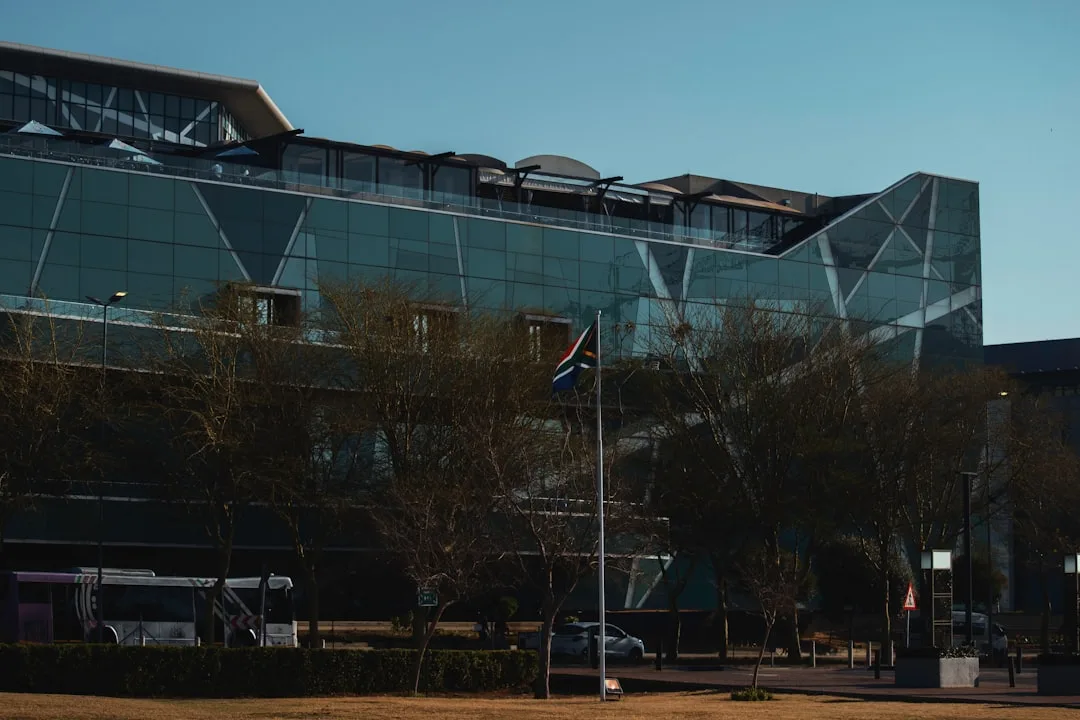
Illustration · Cape Town, South Africa
South Africa has no fixed statutory maximum probation period. Probation must be of reasonable duration for the role, under the 2025 Code of Good Practice on Dismissal. The bigger issue for overseas employers: unfair dismissal protection applies from day one of employment. There is no qualifying period. A dismissal handled badly during probation is challengeable at the CCMA from the very first week.
· South Africa guide
South Africa has no fixed statutory maximum probation period. Probation must be of reasonable duration for the role.
Unfair dismissal protection under the Labour Relations Act applies from day one. There is no qualifying service period before you can bring a claim.
Notice during probation is 7 days at the legal minimum, under the Basic Conditions of Employment Act.
Fair procedure is not optional during probation. A dismissed probationer can refer to the CCMA immediately, with no qualifying service required.

What does South Africa probation actually do?
Probation in South Africa is a contractual mechanism. It is not a period of reduced legal protection.
Both sides can exit on shorter notice during the window. But the law still requires a fair process before any dismissal.
Unfair dismissal protection applies from the first day. There is no minimum tenure before the right to bring a claim.
What probation typically modifies in a South African employment contract:
- Shorter notice period during probation. The legal minimum is 7 days under the Basic Conditions of Employment Act 75 of 1997, section 37.
- Documented review meetings. Good practice is check-ins at month one and month three, then a formal review at the end of the period.
- Conditional discretionary benefits. Some employers withhold enhanced leave top-ups or performance bonuses until probation passes. This must be written into the contract clearly.
- Performance criteria. The 2025 Code of Good Practice on Dismissal requires pass criteria to be set at the outset and tied to the nature of the role.
What probation does not change:
- Unfair dismissal protection under Labour Relations Act 66 of 1995, section 185 applies from day one. There is no qualifying service threshold in South Africa.
- Discrimination protections apply from the first day of the employment relationship, regardless of probation status.
- UIF and Skills Development Levy contributions are due from the first payroll. They are not deferred to post-probation.
- The statutory notice period scales with tenure. After six months of service the minimum employer notice rises to 2 weeks. After one year it reaches 4 weeks.
How long should South Africa probation be?
South African law requires probation to be of reasonable duration for the role.
There is no fixed maximum. The contract sets the length.
The 2025 Code of Good Practice on Dismissal is the standard. A period clearly longer than needed may be challenged.
Probation length by role type (South African mid-market pattern):
| Role type | Typical probation | Notes |
|---|---|---|
| Customer support, junior admin | 1 to 3 months | Role fit is evident early; a longer period risks being seen as unreasonable |
| Mid-level engineering, marketing, operations | 3 to 6 months | Standard window across most mid-size South African employers |
| Senior engineering, account management | 6 months | Standard for roles with a longer ramp-up |
| Senior management, head-of, director | 6 to 12 months | Justifiable where the assessment cycle is genuinely longer; document the rationale |
The reasonable duration standard
The 2025 Code of Good Practice on Dismissal, Item 8(1)(d), states that probation must be determined in advance and be of reasonable duration, with reference to the nature of the job and the time it takes to assess suitability. This is a qualitative test, not a fixed ceiling. An employer who sets a long probation for a straightforward role and dismisses late without documented feedback will face a strong unfair dismissal claim. Both the duration and the process must be reasonable.
There is no pending legislation to add a statutory maximum equivalent to Germany's fixed six-month cap. The reasonableness standard is the current and foreseeable position in South Africa.
Fair procedure during probation: the trap most employers fall into
South Africa requires fair procedure before any dismissal, including during probation.
The procedural bar during probation is lower than post-probation. But it is not zero.
An employee can bring an unfair dismissal claim from day one. There is no waiting period.
What fair procedure during probation looks like in South Africa:
- Set written performance criteria at the start. The Code of Good Practice requires these to be role-specific and agreed at the outset. Vague or verbal criteria are a weakness at the CCMA.
- Hold the planned review meetings. At month one and month three at minimum. Keep brief written records and share them with the employee.
- Put performance concerns in writing promptly. A short email summary after a review meeting, kept in the employee file, is the practical minimum. Verbal feedback alone does not create a defensible trail.
- Give the employee a genuine opportunity to improve. Feedback, support, and reasonable time to address gaps before any dismissal decision. A surprise dismissal after months of silence will not satisfy the CCMA.
- Hold a pre-dismissal hearing. Notify the employee of the concerns in writing. Invite them to a meeting. Let them respond. Consider the response before making a final decision. The hearing can be informal, but it must happen and must be documented.
The CCMA is the first forum for unfair dismissal disputes. An employee has 30 days from dismissal to refer a case. The process starts with conciliation, not litigation. But the financial exposure is real. An unfair dismissal award can reach 12 months of remuneration.
-
Set written performance criteria
Before the employee starts, document role-specific pass criteria in writing. The 2025 Code of Good Practice requires these to be set in advance and tied to the job. Vague or verbal criteria will not protect the employer at the CCMA.
-
Hold structured review meetings
Schedule reviews at month one, month three, and before the probation end date. Keep brief written notes of each meeting and share them with the employee promptly after.
-
Document performance concerns in writing
Any concern raised in a review must be followed up in writing. A short email summary after the meeting is the practical minimum. Verbal feedback alone does not create a defensible record.
-
Give a genuine opportunity to improve
Before ending employment during probation, give the employee real time and support to address identified gaps. Setting criteria and dismissing shortly after without feedback is not a defensible process.
-
Hold a pre-dismissal hearing
Notify the employee in writing of the concerns, invite them to respond in a meeting, and consider the response before making a final decision. The hearing can be informal, but it must be documented.
Probation extensions: when and how
South African probation can be extended where there is a genuine reason tied to the assessment.
Extensions of 1 to 3 months are common. An extension must be documented before the original period expires.
An open-ended or repeatedly rolling extension is unlikely to be found reasonable.
Common extension triggers in South Africa:
- Performance is close but not yet conclusive. More time with fresh written criteria may allow a fair assessment.
- Extended sick leave or absence during probation disrupted the assessment window.
- Role scope or reporting line changed materially during probation, making the original criteria less useful.
How to extend properly:
- Hold a review meeting before the original end date. Do not let the period lapse without a conversation, and do not issue an extension letter without discussion.
- Document the specific concerns that justify the extension. Vague reasons will not protect the employer if the extended probation ends in dismissal.
- State clearly what the employee must demonstrate during the extended period. Revised criteria must be in writing, and the employee should acknowledge them.
- Confirm the extension in writing with the new end date. Keep a copy in the employment record.
- Hold the extended review on the agreed date. Do not roll it over without a fresh documented reason. At some point the employer must decide to confirm or end the employment.
The 30-60-90 day onboarding standard
Good South African onboarding follows a 30-60-90 day structure inside the probation window.
Month 1 is orientation and observation. Month 2 is contribution and feedback. Month 3 is independent delivery and a formal review.
The framework aligns with the Code of Good Practice requirement to assess performance progressively and to provide genuine support.
| Phase | Day range | Manager focus | Employee focus |
|---|---|---|---|
| Orientation | Days 1 to 30 | Role context, team introductions, tools access, written performance criteria issued | Learn processes, build relationships, understand expectations |
| Contribution | Days 31 to 60 | First independent tasks, structured written feedback, early identification of skill gaps | Deliver first outputs, raise questions before the review meeting |
| Independence | Days 61 to 90 | Full role scope, written probation review, decision on pass, extend, or end | Demonstrate role readiness, flag concerns at the review meeting |
For a longer probation period, the 90-day review is a mid-point checkpoint, not the final one. A meaningful final review must be held before the probation end date. An employee who first hears about performance concerns at a final review, after months of silence, has strong grounds to argue the assessment was unfair. The CCMA will consider whether the employer gave a genuine opportunity to improve throughout the period.
Day-one onboarding admin in South Africa includes the written employment contract (with probation terms clearly set out), PAYE registration, UIF registration, and payroll set-up. The 15 days of annual leave per leave cycle and the 30 days of paid sick leave per 36 months cycle both accrue from the first day of employment. Neither is deferred to the end of probation.
How does Teamed handle South Africa probation and onboarding?
Teamed becomes your legal employer of record in South Africa for from $599 per employee per month, with zero FX mark-up in any currency.
Probation structure, CCMA-compliant document templates, review scheduling, and fair-procedure guidance all run on one platform.
Real HR and legal experts handle your South Africa hires from the first offer letter through every review meeting and probation outcome. An actual person, not a chatbot or a pooled queue. There is no setup fee and no exit fee. Employer cost passes through at cost, itemised on every invoice.
Teamed's standard South Africa service for probation and onboarding:
- South African employment contract includes a configurable probation clause, drafted to meet the reasonableness standard under the 2025 Code of Good Practice on Dismissal
- Written performance criteria template provided to client managers before the employee starts
- Review meeting reminders and written summary templates issued at month one, month three, and before probation end
- Pre-dismissal hearing process managed by Teamed if a probation termination is agreed, meeting the procedural requirements of the Labour Relations Act
- Documentation kept centrally: performance notes, review outcomes, and extension letters as needed
- PAYE and UIF registration handled from day one, not deferred to post-probation
The split is clear. The client owns the relationship and the performance assessment. Teamed owns the procedure, the documentation, and South African labour-law compliance. Because unfair dismissal protection applies from the first day of employment in South Africa, that procedural support matters from the outset. Clients who later grow an entity in South Africa and graduate beyond the EOR model keep the South Africa HR and legal team on retainer. Teamed is the right hiring model for South Africa, until it isn't.
Key sources: 2025 Code of Good Practice on Dismissal (Cliffe Dekker Hofmeyr), South Africa Employment and Labour Law 2026 (ICLG), and CMS Expert Guide to Dismissals: South Africa.
Frequently asked questions
Is there a statutory maximum probation period in South Africa?
No. South Africa has no fixed statutory maximum. The 2025 Code of Good Practice on Dismissal, Item 8(1)(d), requires that probation be of reasonable duration determined by the nature of the job and the time needed to assess suitability. A period that is clearly longer than required may be challenged as unreasonable, but there is no single hard cap equivalent to the German six-month ceiling.
When does unfair dismissal protection start in South Africa?
From day one of employment. South Africa has no qualifying service threshold under Labour Relations Act 66 of 1995, section 185. All employees are protected regardless of tenure. An employee dismissed during their first month can bring an unfair dismissal case to the CCMA immediately. Fair procedure during probation is not optional in South Africa.
What notice period applies during a South Africa probation period?
The law requires 7 days notice during probation, consistent with the Basic Conditions of Employment Act section 37 minimum for employees in their first six months of service. After six months the minimum rises to 2 weeks, and after one year it reaches 4 weeks. Contracts can set longer notice periods, and many do for senior roles.
Does an employer need to hold a hearing before dismissing during probation?
Yes. Because unfair dismissal protection applies from day one, the employer must follow fair procedure even during probation. The procedural standard is lower than for a post-probation dismissal, but a hearing must take place. The employer must notify the employee of the concerns, give them a chance to respond, and consider the response before making a final decision. Skipping the hearing creates direct CCMA exposure. An unfair dismissal award can reach 12 months of remuneration.
Does annual leave accrue during probation in South Africa?
Yes. The Basic Conditions of Employment Act entitles employees to 15 days of annual leave per leave cycle from the first day of employment. Leave is not suspended during probation. The same applies to sick leave: 30 days of paid sick leave is available over each 36 months cycle, accruing from the start of employment.
The question we hear from overseas clients is always the same: can we dismiss during probation cleanly? The South African answer is harder than most expect. There is no qualifying period before an employee can bring an unfair dismissal claim to the CCMA. Day one is day one. The procedural bar during probation is lower than post-probation, but it is never zero. Write the criteria down. Hold the meetings. Document what happened. That is the whole story.
South Africa gives employees unfair dismissal protection from their first day of work, with no qualifying period at all.
Probation does not create a free-exit window. It creates a lighter procedural bar, but the bar is still there.
Teamed runs the process. The documentation is ready before the first review meeting.
Looking for a job in Probation And Onboarding yourself? Teamed does not hire people directly. Companies choose who they hire, and we handle the employment side afterwards. Here is why we cannot help with your search.