How much does it really cost to hire in Slovakia in 2026?
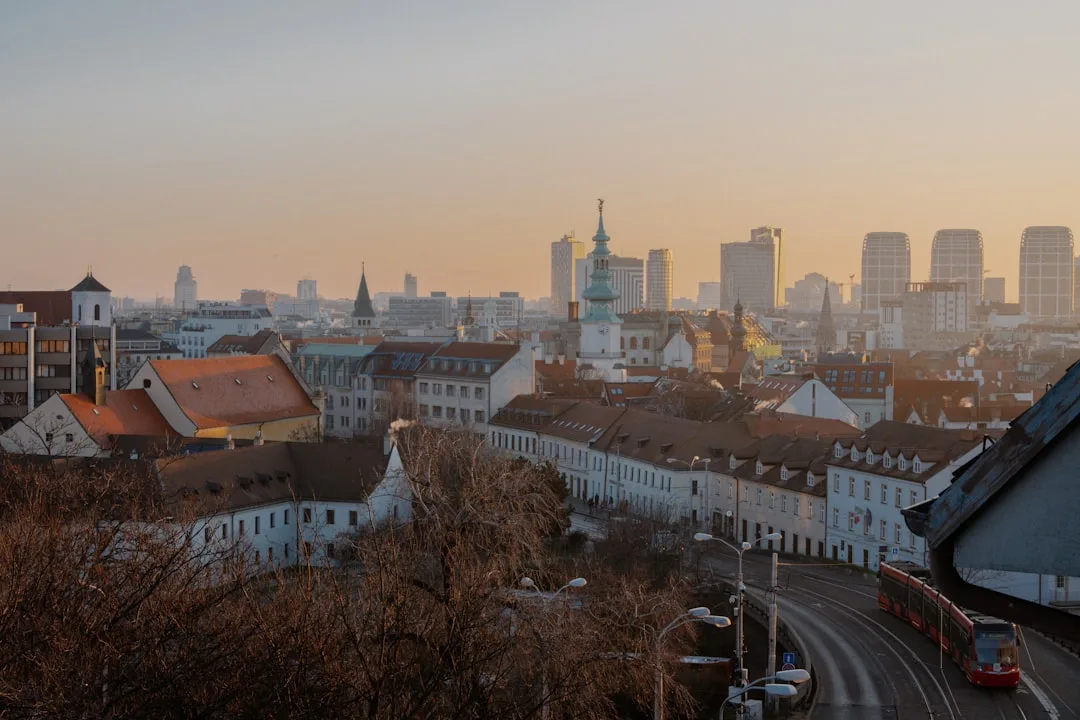
Illustration · Bratislava, Slovakia
Slovakia splits the employer bill in two. Health insurance runs at 11% of gross pay with no ceiling. Social insurance, including old-age pension at 14% and the reserve fund at 4.75%, stops once monthly pay passes €16,764/month. So the high earner's add-on flattens, the everyday hire's does not.
· Slovakia guide
Hiring in Slovakia adds two employer bills on top of gross pay. Health insurance is 11% of gross. It has no upper limit. Old-age pension is 14% and the reserve fund is 4.75%.
Social insurance stops once monthly pay passes €16,764/month. Above that line, social insurance holds flat. Health insurance keeps rising on the full salary.
Income tax is the employee's cost, not yours. The first band is 19%. A new 30% band and a 35% top band start in 2026. The minimum monthly wage is €915/month. There is no mandatory 13th month salary.
Paid leave is 4 weeks a year, rising to five weeks at age 33. From 2026 you pay sick pay for the first 14 days. The state takes over from day 15 days.
The headline, what a Slovakia hire actually costs
Start with gross salary. Add employer health insurance at 11% on the full amount. Add social insurance, which includes old-age pension at 14% and the reserve fund at 4.75%.
Social insurance caps once monthly pay passes €16,764/month. Health insurance does not cap. The table below builds the picture rate by rate.
Slovakia loads most of the employer cost onto social and health insurance, not onto a single levy. The two behave differently. Health insurance is 11% of gross pay with no assessment-base limit, so it climbs with every euro of salary. Social insurance, which bundles old-age pension at 14%, the reserve fund at 4.75% and several smaller branches, stops once monthly pay passes the maximum assessment base of €16,764/month.
| Employer line | 2026 rate | Cap |
|---|---|---|
| Health insurance | 11% of gross | No cap, applies to full salary |
| Old-age (retirement) pension | 14% of gross | Capped at €16,764/month |
| Reserve solidarity fund | 4.75% of gross | Capped at €16,764/month |
| Other social insurance branches (sickness, invalidity, unemployment, guarantee, accident) | Set rates per branch under Act 461/2003 | Capped at €16,764/month |
| Mandatory 13th month salary | None | Optional employer benefit only |
The cache does not hold a single confirmed aggregate employer rate from an official source, so this guide reports each verified branch rate on its own and leaves the total to your salary inputs. The employee side carries social insurance at 9.4% and health insurance at 5%, both withheld from pay, not an employer cost.
Add Teamed from $599 per employee per month and the picture is complete. Run your own salary figures through the Employer Cost Calculator to see the euro total for a specific hire.
-
Start with gross salary
Confirm the agreed gross monthly salary in euro. Every employer line builds from this number, and the health insurance line follows it all the way up with no cap.
-
Add health insurance on the full salary
Apply the employer health insurance rate to the whole gross salary. This line has no ceiling, so it keeps rising for senior pay.
-
Add social insurance up to the cap
Add old-age pension, the reserve fund, and the other social branches. Once monthly pay passes the maximum assessment base, the social insurance bill stops growing.
-
Model leave and sick pay as event costs
Annual leave is built into salary, but sick pay and parental leave arrive when used. Budget them as variable costs, heavier from 2026 because the employer sick window is longer.
-
Plan for termination costs from day one
Notice and redundancy severance scale with service. Build fair-process documentation and a severance reserve into headcount planning before you make the first offer.
Income tax, what the employer withholds from every salary
Slovakia runs a banded income tax. The first band is 19% on the tax base up to a set yearly threshold. The next band is 25%.
From 2026 a new 30% band and a 35% top band apply to higher pay. The employer withholds the tax each month and pays it to the tax office.
Income tax is the employer's monthly withholding job in Slovakia, not an employer cost in cash terms. Each pay run, you calculate the tax on each salary, deduct it, and remit it to the tax office. The 2026 consolidation package reshaped the bands, so the schedule below is new for this year.
The 2026 Slovakia income tax bands
Each rate applies only to the part of the tax base above its threshold, under the Income Tax Act No. 595/2003 Coll. as amended for 2026.
| Annual tax base | Marginal rate |
|---|---|
| Up to the first threshold (EUR 43,983.32) | 19% |
| Above the first threshold to EUR 60,349.21 | 25% |
| Above EUR 60,349.21 to EUR 75,010.32 (new band for 2026) | 30% |
| Above EUR 75,010.32 (new top band for 2026) | 35% |
Source: Income Tax Act No. 595/2003 Coll. (2026 consolidation package)
The 30% and 35% bands are genuinely new for 2026 and the 25% threshold was lowered, so an offer modelled on last year's rates will understate a senior employee's tax. The tax is the employee's cost. Your job is to withhold it correctly and pay it on time. Wages are due monthly, in arrears, by the end of the following month under Labour Code section 129.
Leave and sick pay, what the law requires
Every employee gets 4 weeks of paid annual leave. It rises to five weeks once an employee turns 33 or has permanent childcare.
From 2026 the employer pays sick pay for the first 14 days. The Social Insurance Agency takes over from day 15 days.
Slovakia's leave and sick pay sit in the Labour Code and the sickness compensation law. Some of it is your direct cost, some is state-funded. Knowing which is which keeps the budget honest.
Annual leave
The statutory minimum is 4 weeks of paid annual leave per year. It rises to five weeks for employees aged 33 or older, or for those with permanent childcare. The standard working week is 40 hours. Annual leave is built into salary, so it is not a separate cash line, but the age step means an older team carries a higher paid-leave load.
Public holidays
Slovakia has 11 days non-working public holidays in 2026. The count dropped because 17 November was permanently cancelled as a holiday, and 8 May and 15 September became working days for 2026 under the amended Public Holidays Act. Public holidays sit outside the annual leave entitlement.
Sick pay
The 2026 consolidation package extended the employer-paid sick period from 10 to 14 days. You pay 25% of the daily assessment base for the first three days, then 55% from day four. The Social Insurance Agency pays the sickness benefit from day 15 days. Budget sick pay as an event cost, heavier in 2026 than before because the employer window is longer.
Maternity and the absence of a statutory 13th month
Maternity leave runs 34 weeks, with the maternity allowance paid by the Social Insurance Agency at 75% of average wage, not by the employer. Paternity leave duration is not set out in the official sources this guide relies on, so treat it as a point to confirm before a male employee's leave. There is no mandatory 13th or 14th month salary in Slovakia. Paying one is the employer's option, never a legal requirement, so leave it out of a baseline cost model unless a contract promises it.
How Teamed handles Slovakia employment costs for you
Teamed becomes your legal employer of record in Slovakia for from $599 per employee per month, with zero FX mark-up in any currency.
Health insurance, social insurance, income tax withholding, leave, and the full Slovakia compliance stack run on one platform.
Real HR and legal experts handle your Slovakia hires from the first contract through every monthly social insurance and tax remittance. An actual person, not a chatbot or a pooled queue. There is no setup fee and no exit fee. Every employer cost passes through at cost, itemised on every invoice. You see the health insurance line, the social insurance line, and any leave liability. Nothing is buried inside the fee.
EOR payroll, contractor onboarding, and entity setup all live on one platform. A Slovakia contractor who converts to employment keeps their record. That same employee can graduate from EOR to your own Slovak entity without switching systems. EOR is the right structure for a first Slovakia hire, until it isn't. Start from the Slovakia hiring overview or run the Employer Cost Calculator to see the full euro picture.
Frequently asked questions
What does it cost an employer to hire someone in Slovakia in 2026?
On top of gross salary you pay health insurance at 11% with no ceiling, plus social insurance, whose largest branches are old-age pension at 14% and the reserve fund at 4.75%. Social insurance stops once monthly pay passes €16,764/month, while health insurance keeps rising. There is no mandatory 13th month salary. Add Teamed from $599 per employee per month for the full employer-of-record service.
Is there a cap on Slovak employer social contributions?
Yes, but only on social insurance. Old-age pension, the reserve fund, and the other social branches share a maximum monthly assessment base of €16,764/month. Once pay passes that line, the social insurance bill holds flat. Health insurance is the exception. At 11% of gross it has no ceiling and keeps growing on the full salary, which is why senior hires need the two lines modelled apart.
What changed in Slovak employment costs for 2026?
The 2026 consolidation package added a new 30% income tax band and a 35% top band, lowered the 25% threshold, raised employee health insurance to 5%, and extended the employer-paid sick period from 10 to 14 days, with the state now paying sickness benefit from day 15 days. Public holidays also dropped to 11 days after 17 November was cancelled.
How much paid leave and sick pay must a Slovak employer give?
Paid annual leave is 4 weeks a year, rising to five weeks once an employee turns 33 or has permanent childcare. The standard working week is 40 hours. From 2026 the employer funds sick pay for the first 14 days, at 25% of the daily assessment base for the first three days and 55% from day four. The Social Insurance Agency pays from day 15 days.
What does redundancy severance cost in Slovakia?
Severance scales with service when you dismiss for redundancy or long-term health reasons. With notice it runs 1 month of average earnings at two to five years of service, 2 months at five to ten years, 3 months at ten to twenty years, and 4 months beyond twenty years. End the contract by agreement on the same grounds and a 20-year employee can reach 5 months. Severance is paid on top of notice.
Is income tax an employer cost in Slovakia?
No. Income tax is the employee's cost. You withhold it and pay it to the tax office. The first band is 19%, then 25%, then a new 30% band and a 35% top band for 2026. Wages are due monthly, in arrears, by the end of the following month under Labour Code section 129.
The number that changes a Slovakia cost model most is the cap split. Social insurance stops at the maximum assessment base, so for a senior hire that bill is fixed and predictable. Health insurance has no ceiling, so it keeps climbing on the full salary. Model the two lines apart. A single blended employer percentage will quietly overstate your social cost at the top of the salary range and understate the health line.
In Slovakia the employer bill divides at €16,764/month. Below that, both insurance lines climb. Above it, only health insurance keeps rising.
Health insurance at 11% never caps. Old-age pension at 14% does. Model them apart.
Know the cap. Know the new 2026 tax bands. Know the severance ladder before you sign the offer.
Looking for a job in Cost Breakdown yourself? Teamed does not hire people directly. Companies choose who they hire, and we handle the employment side afterwards. Here is why we cannot help with your search.









Social and health insurance, the two employer contributions
Both are mandatory. Health insurance is 11% of gross pay with no upper limit. It applies to every euro you pay.
Social insurance includes old-age pension at 14% and the reserve fund at 4.75%. It stops once monthly pay passes €16,764/month.
Health insurance
The employer pays 11% of an employee's gross salary into health insurance, under Act No. 580/2004 Coll. There is no limit on the assessment base. The rate held at 11% for 2026. The employee's own health insurance rose to 5% of pay under the 2026 consolidation package, withheld from their salary. Because the employer side has no ceiling, health insurance is the line that scales hardest with senior pay.
Employer old-age pension: 14% of gross. Employer reserve solidarity fund: 4.75% of gross. Both stop once monthly pay passes the maximum assessment base of €16,764/month.
Source: Social Insurance Agency, Slovakia: Contribution payment tables, January 1 2026
Social insurance
Social insurance covers old-age pension, the reserve solidarity fund, sickness, invalidity, unemployment, guarantee and accident insurance under Act No. 461/2003 Coll.. The two largest employer branches are old-age pension at 14% and the reserve fund at 4.75%. Every social insurance branch shares one ceiling. Once monthly pay passes €16,764/month, the social insurance bill holds flat for the rest of the year.
The cap asymmetry
This split is the number that shapes a Slovakia budget. For an everyday hire below the €16,764/month line, both bills rise with pay. For a senior hire above it, social insurance is fixed and only the 11% health line keeps growing. Model the two separately. A blended single percentage will mislead you at the top end of the salary range.
No mandatory pension beyond the state scheme
Slovakia has no separate mandatory occupational pension on top of the state old-age pension branch. Contributions above the statutory rate are contractual and depend on the employment terms. For cost modelling, treat the pension line as the 14% old-age branch unless a contract adds more.