
When do you graduate from an EOR to your own Saudi Arabia entity?
Saudi Arabia has no personal income tax, which makes it look simple. But a foreign-owned LLC also lands you inside the Saudization (Nitaqat) quota system from day one. That quota obligation does not go away at any headcount. An EOR sidesteps it entirely while you test the market. Here is when the maths say it is worth taking on.
· Saudi Arabia guide
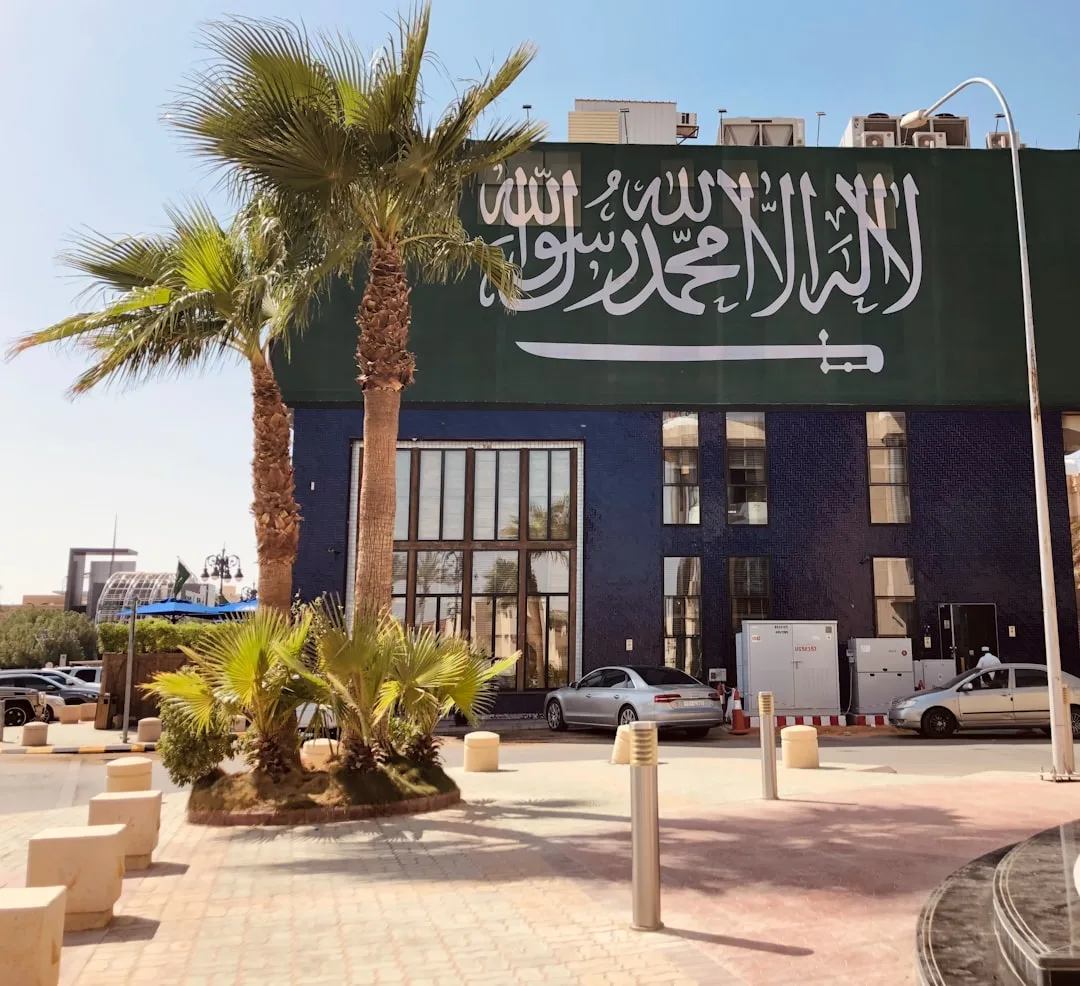
Illustration · Riyadh, Saudi Arabia
An EOR is faster and cheaper at low headcount in Saudi Arabia. Setting up a foreign-owned LLC (a Saudi limited liability company registered with the Ministry of Commerce) typically takes 8 to 12 weeks. Formation typically costs SAR 15,000 to 60,000 in professional fees and government charges.
Those are typical ranges, not law figures. Entity costs vary with share structure, the commercial registration category, and how much you outsource. There is no fixed crossover headcount. It is a planning point, not a cut-off, and it moves with the flat per-employee EOR fee, the quote to set up and run your own entity, and how fast you are growing. Run your own salary band through the Crossover Calculator.
GOSI employer contribution is 11.75% on Saudi national employees. On expatriate employees it is 2% for occupational hazards only. The entity side also carries Saudization quota management, Iqama sponsorship, and End of Service Gratuity (EOSG) provisioning. Those do not appear in the GOSI rate.

The crossover maths
EOR cost scales with headcount. One fee per employee per month. Entity cost has a fixed overhead. Those two lines cross at a planning point, not a fixed headcount: where they meet moves with the flat EOR fee, the quote to set up and run your own entity, and how fast you are growing. Use the Crossover Calculator to find yours.
Teamed charges from $599 per employee per month. Your own Saudi LLC carries a typical fixed monthly overhead of SAR 12,000 to 20,000 for payroll, bookkeeping, Saudization administration, EOSG provisioning, Iqama management, and Ministry filings.
The calculation below uses SAR 2,247 as the illustrative SAR equivalent of the Teamed fee (at approximately 3.75 SAR per USD). This is illustrative, not a fixed SAR price. The actual SAR amount depends on the exchange rate at the time of invoice. Teamed charges from $599 USD with zero FX mark-up. Note that the SAR is pegged to the USD at 3.75, so this conversion is more stable than most currencies.
All entity cost figures in this table are typical ranges. They cover outsourced payroll, bookkeeping, Ministry of Commerce and GOSI filings, Saudization reporting, EOSG provisioning, Iqama management, and HR admin. They are illustrative, not law figures. Actual costs vary with workforce composition (Saudi nationals vs expatriates), the benefits programme, and the Nitaqat band your business falls into.
The crossover compresses faster with a higher ratio of Saudi national employees. GOSI employer contribution is 11.75% on Saudi nationals and only 2% on expatriates. An entity-heavy Saudi national team pushes the entity overhead higher, which delays the crossover point. A mostly-expatriate workforce keeps GOSI costs low but creates a different Saudization compliance risk.
Saudi Arabia levies no personal income tax on employment salaries. This means the employer cost comparison is unusually clean: the headline cost lines are the EOR fee, the GOSI contribution, and the EOSG accrual. There is no PAYE or payroll tax withholding to manage on either side. Run the Crossover Calculator with your own headcount and salary band.
-
Calculate the EOR cost
Multiply the Teamed fee (from $599 USD) by your planned Saudi headcount. This is the fixed variable cost. It grows linearly as you hire.
-
Estimate the entity fixed overhead
Typically SAR 12,000 to 20,000 per month for a Saudi LLC. This covers payroll bureau, bookkeeping, GOSI and WPS administration, Saudization monitoring, Iqama management, and EOSG provisioning. This cost does not grow much until headcount exceeds 15.
-
Find your crossover point
The crossover is where EOR monthly cost equals entity monthly overhead. There is no fixed number: it moves with the flat EOR fee, the quote to set up and run your own entity, and how fast you are growing. Use the Crossover Calculator for your own numbers.
-
Factor in non-financial triggers
The maths gives you a planning point, not a fixed line. Government contract eligibility, Saudization track record, MISA incentive zone access, and local banking requirements are separate questions that may override the cost crossover in either direction.
-
Plan the graduation date
Allow 8 to 12 weeks for entity formation in Saudi Arabia before the first payroll on your own entity. Start the MISA licence and bank account processes in parallel, not sequentially. Begin the GEMO process while EOR continues running.
Saudi Arabia entity setup: what it actually costs
Forming a foreign-owned Saudi LLC typically costs SAR 15,000 to 60,000 all-in. The Ministry of Commerce registration fee is relatively small. The gap is professional fees: legal structuring, commercial registration, MISA (Ministry of Investment) approval, bank account, labour file, and Saudization baseline.
Allow roughly 8 to 12 weeks from the entity decision to your first payroll run. MISA foreign investment approval and the Saudi business bank account are usually the gating steps.
These are typical ranges. They are not law figures. There is no law that sets what a Saudi LLC costs to form. The range reflects real market rates for corporate services and legal advisory in Riyadh and Jeddah. It varies significantly with the foreign parent's home jurisdiction, the number of directors, and how much corporate substance your commercial registration category requires.
| Cost item | Typical range | One-off or recurring |
|---|---|---|
| Ministry of Commerce commercial registration | SAR 1,200 to 2,000 | One-off (plus annual renewal) |
| MISA foreign investment licence | SAR 2,000 to 5,000 (government fee) plus advisory fees | One-off |
| LLC Memorandum of Association drafting and notarisation | SAR 3,000 to 10,000 | One-off |
| Saudi business bank account | SAR 0 direct fee, but requires 4 to 8 weeks | One-off setup plus monthly fees |
| Chamber of Commerce membership | SAR 600 to 2,000 per year | Recurring |
| GOSI employer registration (via Qiwa) | SAR 0 direct fee (admin time) | One-off |
| Labour file opening (Ministry of Human Resources) | SAR 0 direct fee (admin time) | One-off |
| Employment contracts (Qiwa-registered templates) | SAR 2,000 to 8,000 | One-off |
| Saudization baseline audit and first Nitaqat report | SAR 2,000 to 5,000 | One-off (then ongoing monitoring) |
| Corporate PRO services setup (Iqama, work permits) | SAR 5,000 to 15,000 per expatriate hire | Per hire (recurring annually) |
| Realistic total setup cost (excluding per-hire PRO costs) | SAR 15,000 to 60,000 | Mostly one-off |
Why the bank account and MISA licence are the hidden bottlenecks
Saudi corporate banks require in-country directors, a notarised commercial registration, and in some cases a site visit before opening a corporate account. Foreign-parented LLCs with no prior Saudi banking relationship should allow 4 to 8 weeks for account opening alone. MISA foreign investment licence approval adds a further 2 to 4 weeks before the commercial registration can be filed. Starting the MISA process before the bank search is the fastest path. Plan for the full sequence before setting the first payroll date.
Saudi Arabia entity ongoing cost: typically SAR 12,000 to 20,000 per month
Running a Saudi LLC with 1 to 15 employees typically costs SAR 12,000 to 20,000 per month. That covers outsourced payroll, bookkeeping, GOSI administration, Saudization compliance monitoring, Iqama renewals, EOSG provisioning, and required filings.
While your team is small, this fixed overhead dominates the per-head cost. As headcount grows the overhead amortises and the entity starts to look cheaper. Where that flip lands is a planning point, not a fixed number: run it through the Crossover Calculator.
These figures are typical market ranges for a foreign-owned Saudi LLC with 1 to 15 employees, based on Riyadh and Jeddah professional services market pricing. They are illustrative. They are not law figures. Actual costs depend on the split between Saudi national and expatriate employees, whether you outsource PRO services or hire in-house, and the complexity of your Nitaqat band management.
| Monthly cost item | Typical range | What it covers |
|---|---|---|
| Outsourced bookkeeping and monthly accounts | SAR 2,000 to 4,000 | Cash reconciliation, accruals, VAT returns |
| Payroll service (1 to 15 employees) | SAR 800 to 2,000 | WPS submissions, GOSI filings, payslips |
| Statutory accounts and Zakat filing (amortised) | SAR 1,000 to 3,000 | Typically SAR 12,000 to 36,000 per year divided by 12 |
| Saudization (Nitaqat) compliance monitoring | SAR 1,000 to 2,500 | Quota tracking, reporting, corrective advisory |
| EOSG provisioning (accrual set-aside) | Variable, typically SAR 1,500 to 4,000 | Monthly reserve for End of Service Gratuity payments |
| PRO services (Iqama renewals, work permits, exit re-entry visas) | SAR 1,500 to 4,000 | Per expatriate; amortised over 12 months |
| HR and employment law advisory | SAR 1,000 to 2,500 | Contract reviews, Labour Court risk management |
| Saudi People Ops and first-point HR | SAR 2,000 to 3,500 | Onboarding, leave admin, employee queries |
| Software subscriptions (HRIS, payroll, Qiwa integration) | SAR 500 to 1,500 | Per-user SaaS and Qiwa API costs |
| Total ongoing monthly | SAR 12,000 to 20,000 | 1 to 15 employee Saudi LLC |
EOSG provisioning is the line most companies underestimate. It is not a running cash cost until an employee leaves, but it is a real accruing liability from day one of employment. Companies that do not set aside a monthly reserve are caught short when a tenured employee exits. The typical EOSG accrual for an employee in the first 5 years of service equates to 15 days of last wage per completed year (Article 84 Saudi Labor Law). For a SAR 15,000 monthly salary, that is approximately SAR 7,500 after year one, rising each year.
The cost nobody quotes: director liability
A Saudi LLC director carries personal duties under Saudi company law and the Labor Law. These include personal liability for GOSI registration failures, Wage Protection System (WPS) non-compliance, and Saudization quota breaches.
EOR clients do not carry these duties. Teamed holds them as the legal employer and registered entity.
Most cost comparisons skip the director-liability dimension because it is hard to put a number on. In Saudi Arabia it is worth naming carefully before you decide.
Personal director duties under Saudi company law
Under the Saudi Companies Law (Royal Decree M/3 2015) and its 2022 amendments, LLC managers carry personal fiduciary duties including the duty to act in the company's best interests, to maintain proper books, and to file annual accounts with the Ministry of Commerce. A manager who approves incorrect financial statements is personally liable for any misstatement. These duties cannot be outsourced to advisors.
The WPS and GOSI compliance treadmill
- Wage Protection System (WPS): every payroll run must be submitted through WPS on or before the pay date. A WPS failure triggers an automatic labour file suspension. No new work permits or Iqama renewals can be processed until the file is cleared. This is a direct operational blocker, not just a fine.
- GOSI monthly contributions: contributions for Saudi national employees must be filed and paid each month via Qiwa. Late payment attracts penalties on the outstanding amount.
- Saudization (Nitaqat) quarterly quota: if your Saudi national headcount falls below the required Nitaqat band for your commercial registration category, the company moves to a red band. Red-band companies cannot issue new work permits for expatriate employees. The quota is recalculated each quarter. A single hire or departure can shift your band.
- Annual commercial registration renewal: failure to renew on time freezes the company's ability to transact with government entities and banks.
- EOSG settlement deadlines: when an employee is terminated, all final entitlements must be paid within 7 days. A missed deadline is a Labour Court liability, not just a reputational risk.
Each obligation is individually manageable. Stacked across a year, and across both Saudi and expatriate employee tracks, they consume significant management attention. An EOR carries all of these on its own registered entity in Saudi Arabia.
When you should stay on EOR
Before your team reaches its crossover point, during market validation, or when Saudization quota management is not yet a strategic priority, the EOR is the right answer. The crossover is a moving planning point, not a fixed headcount. It is not a strategic verdict.
Reversibility matters in Saudi Arabia more than in most markets. Winding down a Saudi LLC requires Ministry of Commerce deregistration, tax clearance, GOSI clearance, labour file closure, and Iqama cancellations. This typically takes 3 to 6 months. Winding down an EOR relationship is straightforward.
- While your team is small, or for project-based hires: EOR is cheaper and faster every month. The entity overhead has nothing to amortise against.
- Market validation phase: you are hiring 1 to 3 people to test commercial fit in Riyadh or Jeddah. Entity setup commits capital, MISA approval time, and management attention before you know whether the Saudi market will deliver.
- Saudization quota not yet stable: your hiring plan is still changing. A Saudi LLC must maintain its Nitaqat quota each quarter. If your headcount or workforce composition is in flux, the entity adds a compliance burden you may not be ready to manage.
- Short-duration project hires: 6 to 18 month engagements where the formation cost and PRO overhead will not amortise before the project ends.
- No Saudi banking relationship yet: entities without an established Saudi corporate bank account face operational friction on every payroll cycle. An EOR already has one.
- Acquired team you may divest: post-acquisition holding patterns where adding a Saudi entity creates EOSG, GOSI, and wind-up complexity later.
When you should switch to your own entity
Once your team is sustained past your crossover point, with a multi-year Saudi plan or Vision 2030 programme eligibility requirements, your own entity can beat EOR on cost. It also opens up government contract eligibility and certain MISA incentive zones.
The single biggest structural pull in Saudi Arabia is government contract and public-sector tender eligibility. Most government procurement requires a locally registered entity with an active commercial registration in the relevant category.
- Past your crossover point, with a sustained multi-year plan: the entity overhead amortises and per-head cost falls below the EOR fee.
- Government or public-sector contract requirements: most Saudi government tenders and Vision 2030 programme contracts require the supplier to have an active Saudi commercial registration. EOR employment does not satisfy this requirement. This is the most common structural reason companies incorporate ahead of the cost crossover.
- MISA special economic zone incentives: certain special economic zones (NEOM, King Salman Energy Park, others) offer tax and fee incentives to entities registered within the zone. These incentives apply to the registered entity, not to EOR-employed staff.
- Long-term Saudization strategy: a Saudi LLC can build a track record of Nitaqat compliance and Saudization performance that earns green and platinum-band privileges (preferential government service access, faster Iqama processing). EOR employment does not accumulate this track record for your business.
- Local bank account and treasury requirements: regional finance functions that need a Saudi bank account for client collections and supplier payments require a local entity. The EOR entity handles payroll but not your trading bank account.
How Teamed's Graduation Model handles the transition
Teamed graduates customers from EOR to their own Saudi entity on the same platform. Same Saudi specialist. Employment contracts novated to the new entity. No break in employee tenure, EOSG accrual, or benefits.
Most providers treat graduation as a re-onboarding event. Employees re-sign, sometimes lose continuous service, and EOSG accrual restarts. Teamed treats it as a stage of the employment lifecycle.
The technical mechanic is contract novation: the employment contract transfers from the Teamed partner entity to your new Saudi LLC on a specified date. All terms carry across. Salary, annual leave, EOSG accrual, and continuous service date all remain unchanged. The employee sees a different employer name on their payslip. Nothing else changes.
What we do operationally:
- Stand up your Saudi LLC through GEMO, typically 8 to 12 weeks, while EOR continues running in parallel.
- Manage the MISA foreign investment licence and Ministry of Commerce commercial registration.
- Open the GOSI employer account on Qiwa and register the labour file with the Ministry of Human Resources.
- Novate every active employment contract on a single effective date, with continuous service protected.
- Transfer EOSG accrual records to the new entity without restart.
- Migrate ongoing benefits, Iqama sponsorship, and WPS registration to the new entity without any lapse.
- Provide the same People Ops specialist as the post-graduation primary contact.
The Graduation Model exists because every other EOR makes this hard. In Saudi Arabia the EOSG transfer is the step most providers mishandle. We treat the move as something we help you plan for from the day you hire your first employee through us.
How does Teamed handle Saudi Arabia employment for you?
Teamed becomes your legal employer of record in Saudi Arabia for from $599 per employee per month, with zero FX mark-up in any currency. The SAR is pegged to the USD at 3.75, so there is no FX exposure on the SAR equivalent.
Payroll, GOSI, WPS, Iqama management, and the full Saudi employment law stack run on one platform.
Real HR and legal experts handle your Saudi hires from the first offer letter through every WPS submission, GOSI filing, and EOSG calculation. An actual person, not a chatbot or a pooled queue. There is no setup fee and no exit fee. Every employer cost passes through at cost, itemised on every invoice. You see the GOSI line at 11.75% for Saudi national employees and 2% for expatriate employees, the leave accrual for 21 days per year for employees in their first five years of service, and the EOSG reserve. Nothing is hidden inside the management fee.
Note on pension: Saudi Arabia has no separate mandatory private pension scheme. The retirement component is built into the GOSI contribution rate above. There is no additional employer pension minimum to manage beyond GOSI.
EOR payroll, contractor onboarding, and entity setup all live on one platform. Run the Crossover Calculator to see the month the model flips for your Saudi Arabia headcount. Start from the Saudi Arabia hiring overview. Key sources: Saudi Ministry of Human Resources and Social Development and Saudi Ministry of Commerce.
Frequently asked questions
At what headcount does an EOR stop being cheaper than a Saudi LLC?
There is no fixed crossover headcount. It is a planning point that moves with the flat EOR fee (from $599 per employee per month), the typical entity overhead of SAR 12,000 to 20,000 per month, and how fast you are growing. While your team is small, the per-head EOR fee is usually cheaper than carrying that entity overhead. Past your crossover point, the overhead amortises and per-employee cost falls below the EOR fee. Use the Crossover Calculator to run your own salary band and Saudi national vs expatriate mix.
How much does it cost to set up a Saudi LLC as a foreign company?
Typically SAR 15,000 to 60,000 all-in, excluding per-hire PRO costs. The Ministry of Commerce registration fee is a few thousand SAR. The bulk of the cost is professional fees for MISA foreign investment licence, Memorandum of Association drafting and notarisation, Qiwa registration, and the Saudization baseline audit. The range varies with corporate structure complexity and the number of expatriate hires.
How long does it take to set up a Saudi entity and run the first payroll?
Approximately 8 to 12 weeks from the entity decision to first payroll. The MISA foreign investment licence (2 to 4 weeks) and the Saudi business bank account (4 to 8 weeks) are typically the gating steps. Start both in parallel, not sequentially. An EOR can have a hire working and paid within days while the entity setup runs in the background.
What GOSI rates apply to both sides of the comparison?
GOSI employer contribution is 11.75% on Saudi national employees and 2% on expatriate employees. These rates apply whether you employ via EOR or your own entity. They are Saudi law costs on both sides. Saudi Arabia has no separate mandatory private pension scheme: the 9% retirement component is already included in the 11.75% GOSI rate. New-system Saudi national employees (registered from 3 July 2024) attract a slightly higher rate with annual uplifts.
Does Saudization (Nitaqat) apply to a foreign company using an EOR?
Saudization quota requirements under Nitaqat apply to registered Saudi entities, not to the foreign client company using an EOR. Teamed, as the registered entity employer, manages Nitaqat compliance on its own entity. When you graduate to your own Saudi LLC, Nitaqat quota management becomes your direct responsibility from the date of registration.
The EOSG accrual is the figure Saudi Arabia entity decisions turn on and nobody builds into their model. By the time a tenured employee exits, the liability is real and immediate. Seven days to settle. Companies that run an entity without provisioning monthly find out at exactly the wrong moment.
Saudi Arabia levies no personal income tax. The employer cost lines are GOSI at 11.75%, EOSG provisioning, and the entity overhead.
There is no fixed crossover headcount: it is a planning point that moves with the flat EOR fee, the quote to set up and run your own entity, and how fast you are growing. The MISA licence adds 2 to 4 weeks to every entity timeline.
When the maths flip, we tell you and move you across.
Looking for a job in Eor Vs Entity yourself? Teamed does not hire people directly. Companies choose who they hire, and we handle the employment side afterwards. Here is why we cannot help with your search.


