Russia employment compliance in 2026
Russia's Labor Code gives employees unfair dismissal protection from day one. There is no qualifying period at all. The federal minimum wage rose to RUB 27,093/month on 1 January 2026. Both facts surprise employers used to the UK or US models.
· Russia guide
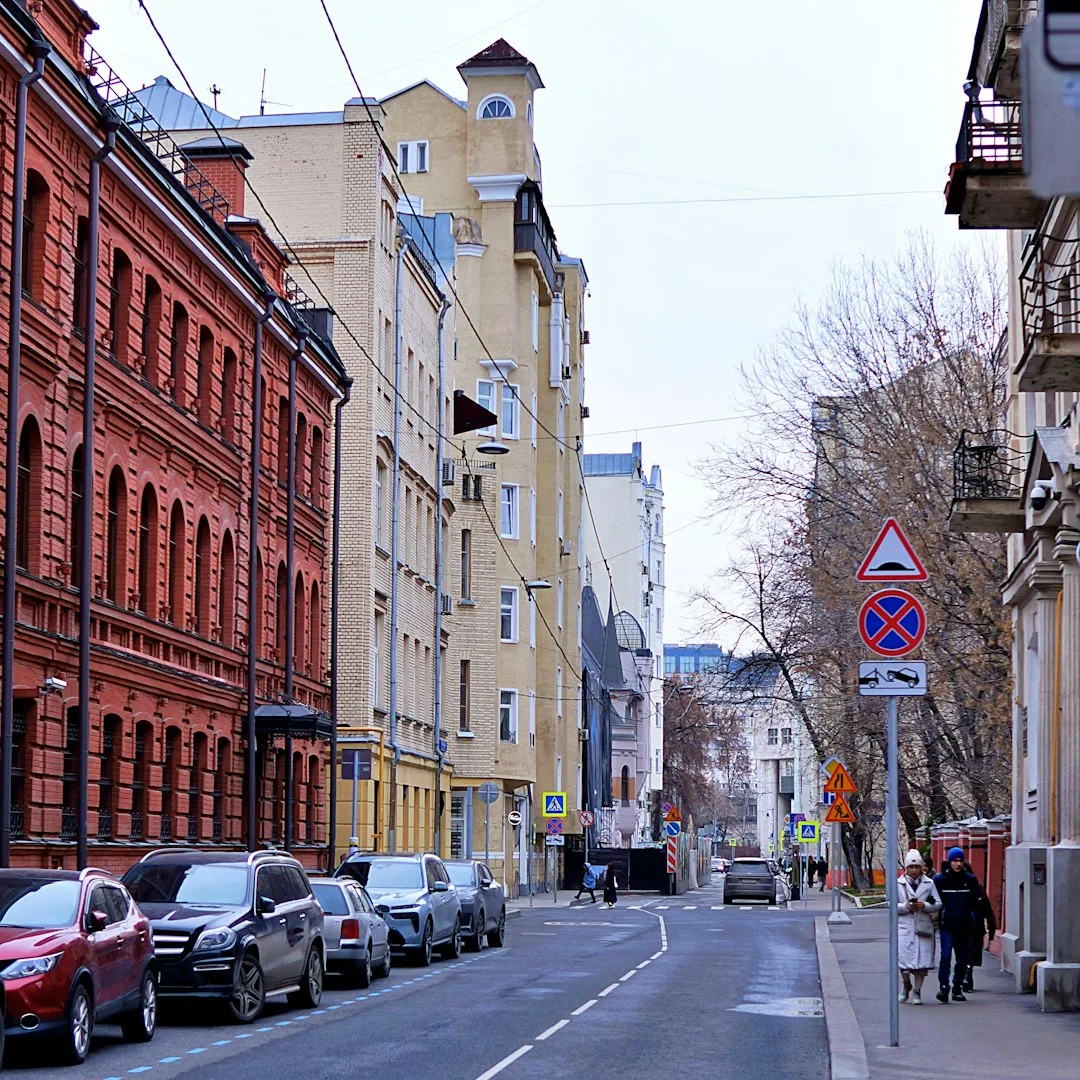
Illustration · Moscow, Russia
Russia's Labor Code protects employees from unfair dismissal from day one of employment. No qualifying period applies.
The federal minimum wage (MROT) rose to RUB 27,093/month on 1 January 2026. Wages must be paid at least twice a month.
Maternity leave runs for 140 days at 100% of average earnings. The employer funds the first 3 days of sick leave. Probation is capped at 3 months for most roles.

What changed in Russia employment law in 2026?
The main 2026 change is the minimum wage. It rose to RUB 27,093/month on 1 January 2026 under Federal Law No. 429-FZ.
The social contribution wage base also increased. Employers pay 30% on earnings up to RUB 2,979,000 per year. Above that, the rate drops to 15.1%.
The federal minimum wage applies to all employees across Russia. Regional authorities may set higher minimums. Check the regional rate for the location where your employee works.
| Item | 2025 | From 1 January 2026 |
|---|---|---|
| Federal minimum wage (MROT) | approx 22,440 RUB/month | RUB 27,093/month |
| Unified social contribution wage base | approx 2,759,000 RUB/year | RUB 2,979,000/year |
| Employer contribution rate (up to base) | 30% | 30% |
| Employer contribution rate (above base) | 15.1% | 15.1% |
| Standard working week | 40 hours | 40 hours (unchanged) |
Russia unfair dismissal: day-one protection under the Labor Code
Russia does not have a qualifying period for unfair dismissal protection. The protection applies from the first day of employment.
An employer must have a valid ground listed in the Labor Code to dismiss an employee. Dismissal without a valid ground is unlawful. The remedy is reinstatement and payment of average earnings for the forced absence.
The Labor Code (Articles 81 and 392) sets out the grounds on which an employer may dismiss. The main employer-initiated grounds include:
- Liquidation of the organisation or reduction of headcount (redundancy)
- Repeated failure to perform duties without a valid reason (after a prior disciplinary warning)
- A single gross violation (absence without justification for more than four hours, disclosure of protected secrets, theft, intoxication at work, safety breaches causing serious consequences)
- Failure of a probation period (see probation rules below)
- Loss of trust (employees handling monetary or material assets)
Probation and dismissal
Most employees may be placed on probation of up to 3 months. Senior managers and directors may have probation of up to 6 months. During probation, the employer may dismiss with 3 days written notice, stating the reasons. After probation ends, the full dismissal rules apply.
Redundancy notice
For redundancy or liquidation, the Labor Code (Article 180) requires two calendar months of advance written notice. The employee is also entitled to redundancy severance equal to one month's average earnings, with continued payment during the job-search period up to a total of three months.
There is no cap on unfair dismissal compensation in Russia in the same form as the UK compensatory award cap. The primary remedy is reinstatement. Courts may also award back pay for the period of forced absence, calculated on the employee's average earnings.
Russia discrimination law: protections from day one
The Labor Code (Article 3) prohibits discrimination in employment on a broad list of grounds. The protection applies from the recruitment stage.
Discriminatory dismissal or refusal to hire is unlawful. The employee may bring a claim in court.
The Labor Code Article 3 sets out the non-discrimination principle. Prohibited grounds include:
- Sex
- Race
- Nationality
- Language
- Origin
- Property, family, social, and official status
- Age
- Domicile
- Religion
- Political beliefs
- Membership or non-membership of public associations
- Other circumstances not related to professional qualities
Pregnancy and maternity
Pregnant employees and women with children under three years old may not be dismissed on employer initiative, except in cases of organisational liquidation. The protection is absolute during those periods. Refusal to hire a woman on grounds of pregnancy or maternity is a criminal offence under the Criminal Code (Article 145).
Claims
An employee who believes they have been discriminated against may apply to the court, the labour inspectorate (Rostrud), or the prosecutor's office. The court may order compensation for moral harm in addition to reinstatement or pay. There is no monetary cap on discrimination compensation.
Whistleblowing and employee complaints in Russia
Russia does not have a single dedicated whistleblowing statute comparable to the UK's Public Interest Disclosure Act.
Employees have the right to report violations to the state labour inspectorate (Rostrud), the prosecutor's office, and trade unions. The Labor Code prohibits dismissal or detriment as a result of an employee exercising their lawful rights.
The key protections for employees who raise concerns come from several sources:
- Labor Code Article 352. Employees have the right to self-protect their labour rights, including by refusing to perform work that endangers life or health, and by notifying the employer in writing.
- Labor Code Article 380. Employers may not obstruct employees from exercising their right to self-protection. Obstruction is unlawful.
- Federal Law No. 59-FZ on Procedure for Reviewing Citizens' Appeals. Any individual may submit a written complaint to a public authority, including Rostrud, within the timeframes set by the law.
- Federal Law No. 273-FZ on Anti-Corruption. Employees in state-linked organisations have a duty to report corruption offences. Private-sector employees who report corruption have some protection from retaliation, though the framework is less developed than in many EU jurisdictions.
Practical position
Russia does not have a general public-interest disclosure regime with automatic compensation for whistleblower detriment. The stronger protections are in specific sectors (banking, state procurement, anti-corruption). For most private-sector employees, protection flows from the general prohibition on unlawful dismissal under Articles 81 and 392 of the Labor Code. An employer who dismisses an employee for making a complaint to Rostrud runs the risk of a court finding that the stated dismissal ground is a pretext.
Employee data protection in Russia
Employee personal data is regulated by Federal Law No. 152-FZ on Personal Data. The employer is a data operator.
Employees must give written consent to the collection and processing of their personal data before employment begins. The consent must be specific, informed, and in writing.
Key employer obligations under Federal Law No. 152-FZ:
- Consent. Written consent from the employee is required before processing personal data. The consent form must list the specific categories of data, the purposes, and the third parties who may receive it.
- Localisation. Since 1 September 2015, employers must store and process Russian citizens' personal data on servers located in Russia. Cross-border transfers to certain countries are permitted with supplementary agreements; others require Roskomnadzor approval.
- Data subject rights. Employees may request access to their personal data. The employer must respond within 30 calendar days and provide the requested information or a reasoned refusal.
- Data breach notification. Since 1 September 2022, operators must notify Roskomnadzor of a personal data breach within 24 hours of detection, and provide a full incident report within 72 hours.
- Roskomnadzor registration. Employers who process employee personal data electronically must notify Roskomnadzor of their status as a data operator before processing begins.
For international businesses hiring in Russia through Teamed: employee data cannot freely flow to overseas parent companies without a legal basis. Teamed handles the data processing agreement and local storage. US and EU-based businesses must plan for the localisation requirement from day one of hiring.
Trade unions and worker representation in Russia
Trade unions in Russia are governed by Federal Law No. 10-FZ on Trade Unions. Employees have the right to form or join a trade union from day one.
Where a trade union is recognised, it has consultation and approval rights in specific dismissal situations. Ignoring those rights can make a dismissal unlawful.
Three frameworks matter for employers:
- Federal Law No. 10-FZ on Trade Unions (1996). Establishes the right to organise, the rights of elected union representatives, and the employer's duty to provide information and consult on collective matters.
- Labor Code Article 82. For redundancy or headcount reduction dismissals, the employer must notify the elected trade union body at least two months before the first dismissal. The union has the right to give an opinion, and the employer must consider it (though the employer is not bound by it).
- Labor Code Article 374. Dismissal of an elected trade union representative requires the prior consent of the relevant trade union body. This is a hard procedural requirement. Dismissal without that consent is unlawful regardless of the substantive ground.
Collective bargaining
Where a union is recognised, it may negotiate a collective agreement (kollektivny dogovor). The agreement sets terms that apply to all employees at the workplace, not just union members. If an agreement exists, it may improve on the Labor Code minimums for notice, severance, and leave.
Mass redundancy notification
Russia requires employers to notify the Employment Authority (Sluzhba zanyatosti) of mass dismissals. The threshold and timing vary by region and industry under Federal Law No. 1032-1. The trade union notification window for collective redundancy is generally two months in advance. Failure to notify is a separate administrative violation and does not replace the individual redundancy notice requirements.
How does Teamed handle Russia employment compliance for you?
Teamed becomes your legal employer of record in Russia for from $599 per employee per month, with zero FX mark-up in any currency.
The full Russia Labor Code stack runs on one platform.
Real HR and legal experts handle your Russia hires, from the employment contract and probation documentation through every payroll cycle. An actual person, not a chatbot or a pooled queue. There is no setup fee and no exit fee. Employer cost passes through at cost, itemised on every invoice.
Russia is a market where compliance is manageable until it isn't. Day-one unfair dismissal protection, data localisation rules, and union consultation requirements for redundancy all carry real risk if handled ad hoc. Teamed helps your team graduate from workarounds to a compliant employment structure that holds up to scrutiny.
Key sources: CXC Global Russia Hiring Guide, Rus Outsourcing: Employment Contract Termination, and ALRUD Law Firm: Redundancy and Severance.
-
Set up the employment contract
Russian law requires a written employment contract before the employee starts work. The contract must state the role, workplace, pay, and working hours.
-
Register the hire for payroll
Notify the tax authority and register the employee for unified social contributions. Payroll must run at least twice a month under Labor Code Article 136.
-
Issue the personal data consent form
Obtain written consent to collect and process the employee's personal data before employment begins. This is a Federal Law No. 152-FZ requirement.
-
Document any probation period
If you use a probation period, state it in the contract. Probation must not exceed the Labor Code maximum for the role type. A probation period not in the contract has no legal effect.
-
Keep a work-record book
Employers must maintain the employee's work-record book (trudovaya knizhka) or its electronic equivalent. This records all employment history and is returned to the employee on termination.
Frequently asked questions
Does Russia have a qualifying period for unfair dismissal protection?
No. Russia's Labor Code (Articles 81 and 392) gives employees protection against unlawful dismissal from the first day of employment. There is no qualifying period. An employer must have a valid ground listed in the Labor Code before dismissing any employee, including those hired yesterday.
What is the probation period limit in Russia?
For most employees, probation may not exceed 3 months. For senior managers, directors, and their deputies, the maximum is 6 months. During probation, the employer may dismiss with 3 days written notice. Once probation ends, the standard dismissal rules apply and day-one unfair dismissal protection is already in force.
How does maternity leave work in Russia?
Standard maternity leave in Russia runs for 140 days. It is paid at 100% of the employee's average earnings and funded by the Social Insurance Fund. Pregnant employees and women with children under three years old cannot be dismissed on employer initiative, except on liquidation of the organisation.
Who pays for sick leave in Russia?
The employer funds the first 3 days of sick leave. From day four onward, the Social Insurance Fund (SFR) pays. The pay rate depends on the employee's length of service: generally 60% for under five years of service, 80% for five to eight years, and 100% for eight or more years.
What are the employee data rules for Russia?
Federal Law No. 152-FZ requires employers to obtain written consent from employees before collecting their personal data. Since 2015, that data must be stored on servers located in Russia. Data breach notification to Roskomnadzor is required within 24 hours of detection, with a full report within 72 hours. International businesses hiring through Teamed need to plan for the local storage requirement from day one.
Russia is one of the few major economies where unfair dismissal protection starts on day one with no qualifying period. Employers used to the UK two-year window or the US at-will model get this wrong. The grounds for dismissal are listed in the Labor Code. You need one of them, documented, before you act.
Russia gives employees unfair dismissal protection from their first day. No qualifying period.
That one rule changes how you manage underperformance, probation, and redundancy from the moment of hire.
The minimum wage rose to RUB 27,093/month in 2026. Plan the employment contract around the current Labor Code, not the one you read about last year.