When do you graduate from an EOR to your own Russia entity?
In Russia, an EOR hire from $599 per employee per month is cheaper than running your own OOO (LLC) until you reach somewhere around 6 to 10 employees. Past that crossover, the entity fixed overhead starts to amortise. Here is the maths, plus the geopolitical and compliance factors that change the calculation for Russia specifically.
· Russia guide

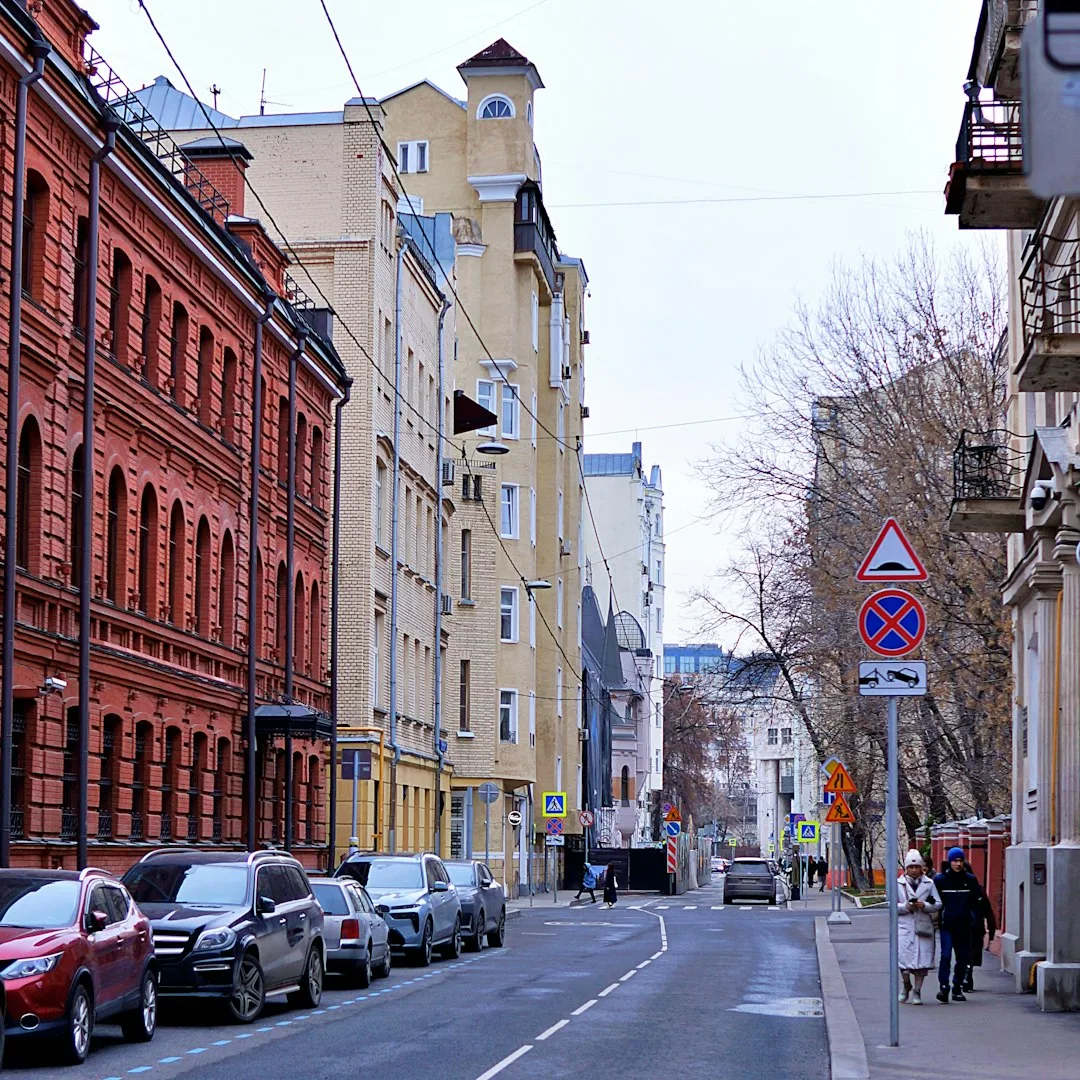
Illustration · Moscow, Russia
For Russia, an EOR is faster and lower-risk at low headcount. Setting up an OOO (Russian LLC) typically takes 4 to 8 weeks from decision to first payroll. Formation typically costs USD 8,000 to 20,000 all-in. Running it typically costs roughly USD 3,000 to 5,000 per month.
Those are typical ranges, not law figures. Entity costs vary by whether you use a local corporate services firm, the complexity of your share structure, and the banking access available to a foreign-parented entity.
The crossover point is typically around 6 to 10 employees at average tech salaries. The unified social contribution is 30% on earnings up to the annual wage base. Russia abolished separate pension contributions in 2023. All social insurance now flows through one unified rate.
The crossover maths
EOR cost scales with headcount. One fee per employee per month. Entity cost has a fixed overhead. The fixed line and the EOR line typically cross at around 6 to 10 employees for average Russian tech salaries.
Teamed charges from $599 per employee per month. Your own OOO carries a typical fixed monthly overhead of USD 3,000 to 5,000 for payroll processing, bookkeeping, tax filings, HR admin, and legal compliance in Russia.
The calculation below uses the Teamed fee of from $599 USD per employee. The entity cost column is illustrative: it reflects a typical range for a small OOO with 1 to 20 employees, outsourced to a local corporate services provider. Actual costs vary with salary complexity, the number of expat employees, and the benefits programme you run.
All entity cost figures in this table are typical ranges. They are illustrative, not law figures. They cover outsourced payroll processing, bookkeeping, tax filings with the Federal Tax Service (FNS), and HR admin for a small OOO. Actual costs vary significantly with structure complexity.
The unified social contribution is 30% on earnings up to the annual wage base. On earnings above the wage base it drops to a lower reduced rate. At higher salary bands the employer contribution line dominates the entity-side cost. The crossover shifts closer to 6 employees at high salary bands and toward 10 at lower bands.
Russia pays salaries at least twice per month (every half-month), which adds to payroll processing complexity on the entity side. Run the Crossover Calculator with your own headcount and salary band.
-
Calculate the EOR cost
Multiply the Teamed fee (from $599 USD) by your planned Russia headcount. This is the fixed variable cost. It grows linearly as you hire.
-
Estimate the entity fixed overhead
Typically USD 3,000 to 5,000 per month for a small OOO. This covers payroll processing, bookkeeping, FNS and SFR filings, and first-point HR. This cost does not grow much until headcount exceeds 20.
-
Find the crossover headcount
The crossover is where EOR monthly cost equals entity monthly overhead. For most Russia tech salary bands, this is around 6 to 10 employees. Use the Crossover Calculator for your own numbers.
-
Factor in non-financial triggers
The maths gives you a headcount threshold. IP substance, sector licensing, sanctions exposure, and exit reversibility are separate questions that may override the cost crossover in either direction.
-
Plan the graduation date
Allow 4 to 8 weeks for OOO formation before the first payroll on your own entity. Factor in 4 to 10 weeks extra for bank account opening for foreign-parented entities. Start the GEMO process while EOR continues running.
Russia entity setup: what it actually costs
Forming a Russian OOO (LLC) typically costs USD 8,000 to 20,000 all-in. The state registration fee is minimal. The gap comes from corporate services fees, share structure work, bank account, HR contracts, and compliance setup.
Allow roughly 4 to 8 weeks from the decision to your first payroll run. Banking access is usually the gating step for foreign-parented entities.
These are typical ranges. They are not law figures. There is no law that sets what an OOO costs to form. The range reflects real market rates for professional services in Russia. It varies with how much substance and compliance complexity your structure requires.
| Cost item | Typical range | One-off or recurring |
|---|---|---|
| State registration (Unified State Register of Legal Entities) | USD 10 to 50 equivalent | One-off |
| Corporate services and notarisation fees | USD 2,000 to 6,000 | One-off |
| Company charter and constitutional documents | USD 500 to 2,000 | One-off |
| Registered address service (legal address) | USD 500 to 2,000 per year | Recurring |
| FNS and SFR registration | USD 0 direct (admin time) | One-off |
| Russian business bank account | USD 500 to 3,000 | One-off plus monthly fees |
| Employment contracts and HR policies | USD 1,500 to 4,000 | One-off |
| Minimum charter capital (OOO) | RUB 10,000 (approximately USD 110) | One-off |
| Director liability insurance | USD 1,000 to 3,000 per year | Recurring |
| Realistic total setup cost | USD 8,000 to 20,000 (illustrative) | Mostly one-off |
Why the bank account is the hidden bottleneck in Russia
Russian banks have significantly tightened requirements for foreign-parented OOOs since 2022. Foreign beneficial owners face extended Know Your Customer procedures and document translation requirements. Expect 4 to 10 weeks from application to an operational account. In some cases foreign-owned entities have been declined. Plan for this before you set the first payroll date.
Russia entity ongoing cost: typically USD 3,000 to 5,000 per month
Running a small OOO typically costs USD 3,000 to 5,000 per month. That covers outsourced payroll, bookkeeping, tax filings with the Federal Tax Service, SFR contributions processing, and first-point HR.
Below 6 employees, this fixed overhead dominates the per-head cost. Above 15 employees the overhead amortises and the entity starts to look cheaper.
These figures are typical market ranges for a small OOO with 1 to 20 employees, outsourced to a local corporate services provider. They are illustrative. They are not law figures. Actual costs depend on whether you outsource or hire in-house, the complexity of your payroll, and the benefits programme you operate.
| Monthly cost item | Typical range | What it covers |
|---|---|---|
| Outsourced bookkeeping and monthly accounts | USD 600 to 1,500 | Cash reconciliation, accruals, monthly P&L in RUB |
| Payroll processing (1 to 20 employees) | USD 300 to 800 | Bi-monthly payroll, payslips, NDFL witholding, SFR submissions |
| Annual accounts and corporate tax return (amortised) | USD 200 to 600 | Roughly USD 2,400 to 7,200 per year divided by 12 |
| Statistical and FNS regulatory filings (amortised) | USD 100 to 300 | Quarterly and annual submissions |
| Unified social contribution processing (SFR) | USD 100 to 300 | Monthly contribution submissions and reconciliations |
| HR and employment law advisory | USD 300 to 800 | Contract reviews, policy updates, Labor Code compliance |
| First-point HR and People Ops | USD 500 to 1,200 | Onboarding, queries, leave admin |
| Software subscriptions (1C, HRIS, accounting) | USD 100 to 400 | Russian-compliant accounting and payroll software |
| Insurance and compliance (amortised) | USD 100 to 300 | Director liability, premises |
| Total ongoing monthly | USD 3,000 to 5,000 (illustrative) | 1 to 20 employee OOO |
Above 20 employees, dedicated local HR capacity and in-house accounting typically become necessary. The cost band widens at that point. Using 1C (the dominant Russian accounting platform) adds a local software dependency that in-house staff must manage.
The cost nobody quotes: director liability
OOO directors in Russia carry personal liability under the Civil Code and the Federal Law on Limited Liability Companies. These duties cannot be delegated to advisors. Violations can result in personal financial liability and, in serious cases, criminal prosecution.
EOR clients do not carry these duties. Teamed holds them as the legal employer.
Most cost comparisons skip the director-liability dimension because it is hard to put a number on. In Russia, it is worth naming explicitly before you decide.
Personal director duties under Russian law
Under Federal Law No. 14-FZ on Limited Liability Companies and the Russian Civil Code, an OOO general director must act in the best interests of the company, maintain proper accounting records, and ensure timely tax and contribution filings. A director who signs accounts or filings they have not reviewed can be held personally liable for any resulting underpayment or misstatement.
The compliance treadmill
- Unified tax account (ETS) reporting: monthly NDFL and unified social contribution notifications by the 25th of each month, with payment by the 28th.
- SFR (Social Fund of Russia) filings: monthly and quarterly submissions for each employee; late filing attracts per-day penalties.
- Annual accounting statements: filed with the Federal Tax Service and the statistics agency (Rosstat). Late or incorrect submissions trigger penalties and reputational flags.
- Corporate tax return: due within 3 months of year-end. A director who misses this faces personal fines.
- Currency control notifications: foreign-parented OOOs must report cross-border payments to the bank within tight timeframes under Federal Law No. 173-FZ. Violations carry percentage-of-transaction fines.
- Labor Code inspections: the State Labor Inspectorate (GIT) can audit employment documentation at any time. Gaps in employment contracts or work-record books attract per-employee fines.
Each filing is individually manageable. Stacked across a year, they consume real management attention and require either dedicated local staff or a reliable outsourced provider. An EOR carries all of these on its own entity.
When you should stay on EOR
Below 6 employees, during market validation, or while geopolitical and sanctions risk remains elevated for your sector, the EOR is the right answer. The crossover is a maths threshold. It is not a strategic verdict.
Reversibility matters more in Russia than in most markets. Entity setup and banking relationships are sticky. Winding down a Russian OOO can take 6 to 12 months. EOR exit is straightforward.
- Under 6 Russia employees at average salaries: EOR is cheaper and faster every month. The entity overhead has nothing to amortise against.
- Market validation phase: you are hiring 1 or 2 people to test commercial fit. Entity setup commits capital, management attention, and banking relationships before you know whether the Russia market will deliver.
- Sanctions and compliance uncertainty: your business operates in a sector subject to evolving international sanctions. A foreign-owned OOO with banking exposure to sanctioned institutions creates compliance risk at the parent-company level. EOR insulates the employment relationship from that risk.
- Project-based hires: 6 to 18 month engagements where the OOO formation cost and banking setup will not amortise before the project ends.
- High reversibility requirement: your Russia team is contingent on a specific customer or contract. If that contract ends, you want to exit cleanly. Winding down a Russian OOO requires a liquidation process that can take 6 to 12 months and involves court notifications and creditor claims periods.
When you should switch to your own entity
Above 10 employees consistently, with a multi-year Russia plan, and when the unified social contribution overhead starts to amortise, your own OOO beats EOR on cost. It also unlocks capabilities the EOR structure cannot provide.
The single biggest structural pull in Russia is IP ownership and tax residency substance. Some cross-border IP licensing and intra-group service structures need actual Russian legal substance in your own entity.
- Sustained headcount above 10 Russia employees at average salaries: the entity overhead amortises across enough people that per-head cost falls below the EOR fee.
- IP substance and tax residency: if your Russia team creates intellectual property, some cross-border licensing structures require that the IP-holding entity has Russian legal substance. EOR employment does not create that substance in your entity.
- Government contracts and local procurement: some Russian state-adjacent procurement requires the supplier to be a locally registered entity. An EOR arrangement may not meet the supplier registration requirement in those contexts.
- Long-term talent retention and share-based compensation: Russian employees on multi-year tracks increasingly expect equity or phantom equity participation. Setting up a structured phantom equity programme is simpler with your own OOO where you control the constitutional documents.
- Regulatory licensing: certain sectors in Russia (financial services, healthcare, telecoms) require the employer to hold the operating licence in its own name. EOR cannot hold a sector-specific Russian licence on your behalf.
How Teamed's Graduation Model handles the transition
Teamed graduates customers from EOR to their own Russia entity on the same platform. Same specialist. Same employment contracts, novated to the new OOO. No break in employee tenure or benefits.
Most providers treat graduation as a re-onboarding event. Employees re-sign, sometimes lose continuous service, and lose accrued leave entitlement. Teamed treats it as a stage of the employment lifecycle.
The technical mechanic is contract novation: the employment contract transfers from the Teamed partner entity to your new OOO on a specified date. All terms carry across. Salary, leave entitlement, and continuous service date all remain unchanged. The employee sees a different employer name on their payslip. Nothing else changes.
What we do operationally:
- Stand up your Russian OOO through GEMO, typically 4 to 8 weeks, while EOR continues running in parallel.
- Navigate the bank account process, which typically takes 4 to 10 weeks for foreign-parented entities.
- Register with the Federal Tax Service and the Social Fund of Russia (SFR) on your entity.
- Novate every active employment contract on a single effective date.
- Migrate ongoing employment benefits and work-record book entries without any lapse.
- File closing EOR-period SFR submissions and open new submissions on the OOO from the novation date.
- Provide the same People Ops specialist as the post-graduation primary contact.
The Graduation Model exists because every other EOR makes this hard. We treat the move as something we help you plan for from the day you hire your first employee through us. In Russia, where the banking timeline is the real constraint, we start the OOO formation process well before the crossover date arrives.
How does Teamed handle Russia employment for you?
Teamed becomes your legal employer of record in Russia for from $599 per employee per month, with zero FX mark-up in any currency.
Payroll, benefits, and the full Russia employment law stack run on one platform.
Real HR and legal experts handle your Russia hires from the first offer letter through every bi-monthly NDFL filing and annual SFR reconciliation. An actual person, not a chatbot or a pooled queue. There is no setup fee and no exit fee. Every employer cost passes through at cost, itemised on every invoice. You see the unified social contribution line at 30% on earnings up to the wage base, and the leave accrual for 28 days of paid leave per year. Nothing is hidden inside the management fee.
EOR payroll, contractor onboarding, and entity setup all live on one platform. A Russia hire can graduate to your own OOO when the headcount justifies it. EOR is the right model for a first Russia hire, until it isn't. Run the Crossover Calculator to see the month the model flips. Start from the Russia hiring overview. Key sources: Federal Tax Service (FNS) and Social Fund of Russia (SFR).
Frequently asked questions
At what headcount does an EOR stop being cheaper than a Russian OOO?
The crossover typically lands at 6 to 10 Russia employees at average tech salaries. Below that, the EOR fee (from $599 per employee per month) is cheaper than the typical entity overhead of USD 3,000 to 5,000 per month. Above it, the entity overhead amortises and per-employee cost falls below the EOR fee. Use the Crossover Calculator to run your own salary band.
How much does it cost to set up a Russian OOO?
Typically USD 8,000 to 20,000 all-in. The state registration fee is minimal. The rest is professional fees: corporate services, notarisation, charter documents, legal address registration, employment contracts, HR policies, and bank account setup. The range varies with how much substance your structure needs and whether a foreign parent is involved.
How long does it take to set up a Russian entity and run the first payroll?
Around 4 to 8 weeks from the incorporation decision to first payroll if you use a local corporate services firm or Teamed GEMO. The bank account is typically the gating step. Foreign-parented OOOs should allow 4 to 10 weeks for a business account to open after the application is submitted.
What is the employer social contribution rate in Russia?
The unified social contribution rate is 30% on earnings up to the annual wage base. Russia abolished separate pension, medical, and social contribution streams in 2023 and replaced them with a single unified rate. On earnings above the wage base, a reduced rate applies. These rates apply whether you employ via EOR or your own entity.
What is Teamed's Graduation Model for Russia?
Teamed graduates customers from EOR to their own Russian OOO on the same platform. Employment contracts are novated to the new entity on a single date. Salary, leave entitlement, and continuous service date all carry over unchanged. Teamed handles OOO formation through GEMO, registers with the FNS and SFR, and migrates benefits without any lapse. Because Russian bank accounts for foreign-owned entities can take 4 to 10 weeks, we start the formation process well before the crossover date.
Russia is the one market where we tell clients to start the OOO formation process before the headcount crossover arrives. The banking timeline for foreign-owned entities is the constraint, not the registration. If you wait until the maths tips, you are already 3 months behind your first payroll on the new entity.
In Russia, EOR is the right answer up to around 6 to 10 employees. The OOO is not the bottleneck. The Moscow bank account is.
Past that, entity setup typically costs USD 8,000 to 20,000. Banking for foreign-owned OOOs takes 4 to 10 weeks longer than anyone quotes.
When the maths flips, we tell you and move you across.