How do Russia working time and leave rules work in 2026?
Russia sets a strict 40 hours cap with no individual opt-out. Annual leave is 28 days calendar days, granted on top of public holidays, not bundled into them. Sick pay is funded by the social insurance system and scales from 60% to 100% of average earnings based on years of service.
· Russia guide
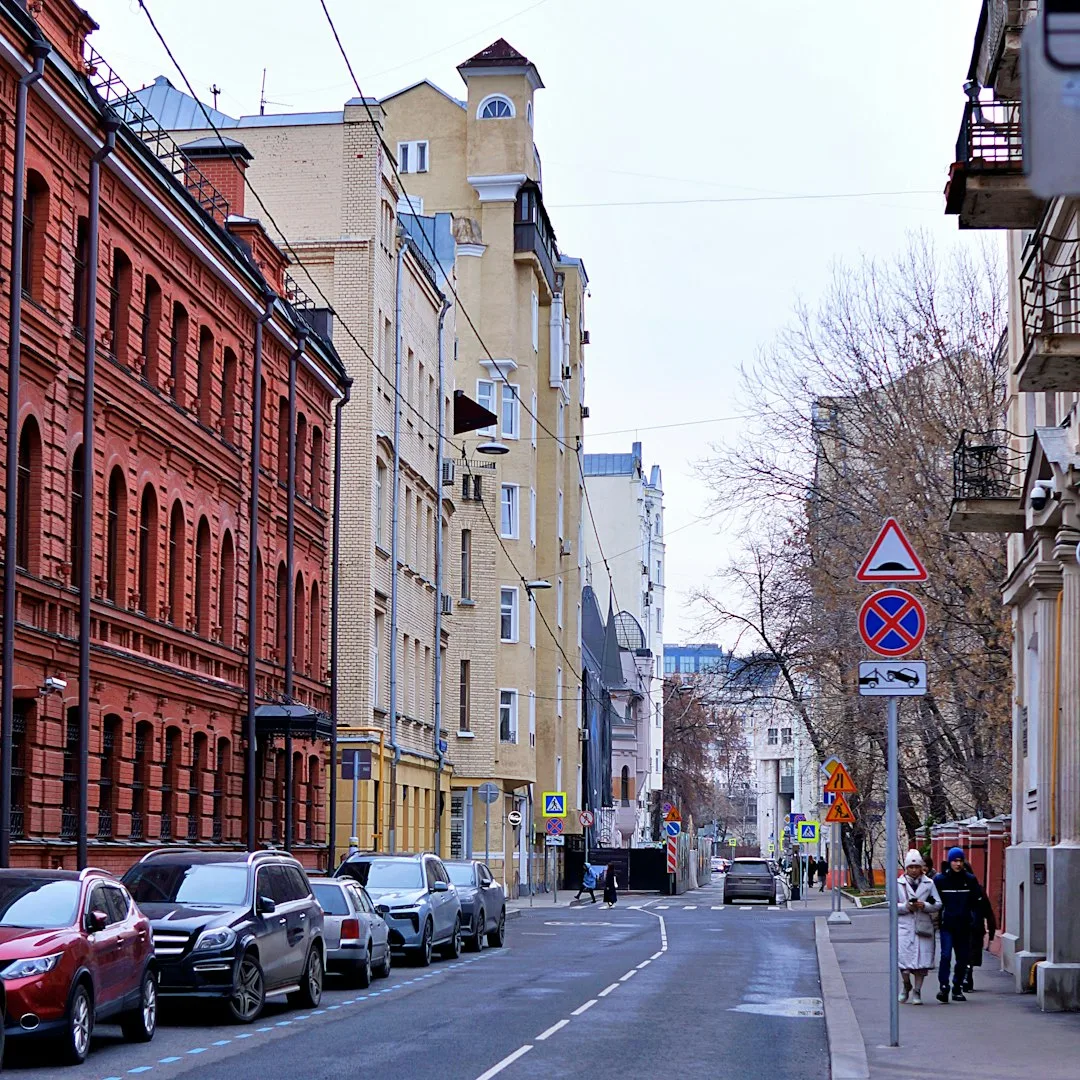
Illustration · Moscow, Russia
Russia working time is governed by the Russian Labor Code, primarily Articles 91, 107, 114, 115, and 255.
The maximum working week is 40 hours. There is no individual opt-out. Overtime is possible but requires written consent and separate pay.
Annual leave is 28 days calendar days per year. Public holidays are granted on top of that total, not bundled in.
Sick pay is funded by the Social Insurance Fund after the first three days, which the employer covers. The rate depends on how long the employee has worked.
What is the Russia working-time limit?
The maximum is 40 hours per week. This applies to all employees.
Russia does not allow individuals to opt out of the cap. Any hours above 40 hours are overtime and must be paid at a premium rate.
The rule comes from Russian Labor Code Article 91. The cap covers all time the employee is required to be at work or available for work.
Overtime rules
Overtime in Russia requires written consent from the employee and must be paid at:
- 1.5 times the normal rate for the first two hours
- 2 times the normal rate for hours beyond that
Overtime cannot exceed four hours over any two consecutive days, and cannot exceed 120 hours per calendar year. There is no individual opt-out that removes this cap, unlike in the UK. The employer cannot contract away these limits.
Reduced working weeks
Certain workers have a statutory right to a shorter working week. These include workers under 16 (24 hours maximum), workers aged 16 to 18 (35 hours maximum), and workers in hazardous conditions (36 hours maximum). These are floors the employer must respect, not options to negotiate.
Part-time arrangements
Part-time arrangements are permitted by agreement and carry the same hourly protections. Hours below the 40 hours standard are common for parents of young children, carers, and workers with disabilities, and must be granted on request in those cases.
What rest periods are Russia workers entitled to?
Employees must receive a break of between 30 minutes and two hours during the working day. This is not counted as working time.
The Russian Labor Code also guarantees a weekly rest period of at least 42 continuous hours. In practice this means the weekend.
| Rest entitlement | Trigger | Statutory minimum |
|---|---|---|
| Daily break | Every working day | 30 minutes to 2 hours, not counted as working time |
| Weekly rest | Every week | 42 consecutive hours (Labor Code Article 110) |
| Sunday | Default weekly rest day | At least one day off per week; Sunday is the standard day |
| Night shift | Night hours (22:00 to 06:00) | Night work hours reduced by one hour without a pay cut |
The daily break timing is set by the internal work rules (pravila vnutrennego trudovogo rasporyadka) or by the employment contract. For shifts shorter than four hours, the employer is not required to provide a break if the employee does not work beyond four hours.
The Russian Labor Code does not specify a minimum daily rest period between consecutive workdays in hours the way some EU-derived frameworks do. The 42-hour continuous weekly rest requirement is the primary protection. Employers typically build 11 to 12 hours of overnight rest into shift schedules to avoid disputes, but this is practice rather than a codified daily-rest entitlement in the cache for Russia.
How does Russia annual leave work?
The minimum is 28 days calendar days of paid leave per year.
Public holidays are not counted as annual leave days. They are granted separately on top of the 28 days entitlement.
The entitlement comes from Russian Labor Code Article 115. The 28 days is counted in calendar days, not working days. That means weekends within a leave period count against the entitlement. A two-week leave taken Monday to Sunday uses 14 calendar days, not 10.
Carry-over rules
Unused leave carries forward automatically under Russian law. Employers cannot simply cancel unused entitlement at year end. However, leave must be used within 18 months of the end of the year in which it accrued. Delaying a worker's leave for two consecutive years is a violation of the Labor Code and exposes the employer to inspection risk.
Split leave
Employees can split annual leave by agreement with the employer. At least one portion must be 14 calendar days or longer. The remaining leave can be taken in shorter blocks, including individual days.
Leave advance and accrual
Employees become entitled to their first leave period after six months of continuous service. The employer can grant leave earlier by agreement. After the first year, leave accrues on a rolling annual basis. Leave pay must be paid at least three calendar days before the leave begins.
Enhanced leave
Some categories of worker receive additional leave above the 28 days minimum. Workers in hazardous conditions, irregular hours roles, and workers in the Far North and similar regions receive supplementary leave days. These are defined by regulation and collective agreement rather than the basic Labor Code minimum.
How many Russia public holidays are there?
The Russian Labor Code (Article 112) sets out the national non-working public holidays.
When a public holiday falls on a weekend, the government issues an annual decree shifting the substitute day to an adjacent working day.
The exact count of named holiday occasions under Article 112 is a point of interpretation in available sources, with figures ranging from 8 named occasions to over 14 calendar days in a given year. The uncertainty is noted in the compliance cache for Russia (public_holidays.count confidence: uncertain). The government's annual transfer decree typically results in around 14 to 16 non-working days in total across the calendar year, once substitutions are applied.
| Holiday occasion | Usual date(s) |
|---|---|
| New Year holidays | 1 to 6 January |
| Orthodox Christmas | 7 January |
| Defender of the Fatherland Day | 23 February |
| International Women's Day | 8 March |
| Spring and Labour Day | 1 May |
| Victory Day | 9 May |
| Russia Day | 12 June |
| National Unity Day | 4 November |
The New Year block (1 to 6 January) and Orthodox Christmas (7 January) together account for seven consecutive non-working days at the start of the year, which is distinctive by international standards.
Working on public holidays
Work on a public holiday requires written employee consent and must be paid at double the normal rate, or the employee may choose a substitute day off instead. Senior and managerial employees on irregular working schedules may be treated differently under their contracts, but double pay or a day in lieu is the statutory baseline for all other employees.
Public holidays are always added on top of the 28 days annual leave entitlement. There is no bundling mechanism in Russian law.
Parental leave in Russia
Maternity leave in Russia lasts 140 days in the standard case. It is fully paid at 100% of average earnings, funded by the Social Insurance Fund.
Fathers have the right to 5 days of unpaid leave around the birth of a child under Labor Code Article 128.
Maternity leave
The 140 days standard duration splits as 70 days before the expected birth date and 70 days after. For a complicated birth the post-natal period extends to 86 days, and for multiple births the total reaches 194 days. The leave is granted as a single uninterrupted period and is treated as sick leave for payment purposes.
Payment at 100% of average earnings comes from the Social Insurance Fund, not the employer's payroll. The employer processes the claim and receives reimbursement. Average earnings are calculated over the two calendar years before the leave begins.
Child care leave up to age three
After maternity leave ends, either parent can take unpaid or partially paid child care leave until the child turns three. A monthly state benefit is paid during this period, though the amount is modest. The employee's job is protected during the full leave period. This leave is separate from the standard annual leave entitlement and does not reduce it.
Paternity leave
Russia does not provide paid paternity leave as a separate right. Fathers are entitled to 5 days of unpaid leave under Labor Code Article 128. This leave is granted on application and cannot be refused. Beyond this, fathers can share child care leave with the mother after maternity leave ends, taking the partially-paid benefit in their own name instead.
Employer practice
Many larger Russian employers and multinationals operating in Russia enhance maternity arrangements contractually, extending the paid period or topping up to full salary during the Social Insurance Fund payment window. Enhanced paternity arrangements are less common but growing among international companies.
Sick pay in Russia
The employer pays sick pay for the first 3 days of any illness. After that, the Social Insurance Fund pays.
The rate depends on years of service: 60% for under five years, 80% for five to eight years, and 100% for eight or more years.
Russia's sick-pay system works differently from the UK model. There is no flat weekly payment. Instead, sick pay is calculated as a percentage of average daily earnings, with the rate set by Federal Law No. 255-FZ Article 7 according to how long the employee has worked in total, across all insured employment.
| Years of insured service | Sick pay rate | Who pays |
|---|---|---|
| Under 5 years | 60% of average earnings | Employer (first 3 days), then Social Insurance Fund |
| 5 to 8 years | 80% of average earnings | Employer (first 3 days), then Social Insurance Fund |
| 8 or more years | 100% of average earnings | Employer (first 3 days), then Social Insurance Fund |
Under Russian law the employer covers the first three days of any illness. From day four onward the Social Insurance Fund (FSS) pays the benefit. The daily rate is a percentage of average earnings calculated over the prior two calendar years, scaled by years of total insured service (Federal Law No. 255-FZ Article 7).
How average earnings are calculated
Average daily earnings for sick pay are calculated using the employee's total insured earnings over the two calendar years before the year in which sick leave starts. The total is divided by 730 days. The employer submits the sick-leave certificate to the Social Insurance Fund and the Fund pays the employee directly from day four onward.
Maximum benefit cap
The Social Insurance Fund caps the daily benefit based on the social insurance wage base. The cache notes a reported daily maximum of approximately 5,673 RUB for 2026, but the primary government source for this figure was not accessible for verification, so it is described here in qualitative terms only. Employers can top up to full salary contractually, but the statutory floor is the percentage-of-earnings formula above.
Self-certification and sick notes
Employees must present a sick-leave certificate (bolnichniy list) issued by a registered medical institution to claim sick pay. Since 2022 these certificates are issued electronically and submitted directly to the Social Insurance Fund. The employer receives a notification and approves the calculation. There is no multi-day self-certification window equivalent to the UK's seven-day rule.
How does Teamed handle Russia employment for you?
Teamed becomes your legal employer of record in Russia for from $599 per employee per month, with zero FX mark-up in any currency.
Payroll, annual leave tracking, Social Insurance Fund sick-pay submissions, and full Labor Code compliance run on one platform.
Real HR and legal experts manage your Russia working-time requirements: the 40 hours cap, overtime consents, leave scheduling, sick-pay certificates, and maternity-leave Social Insurance Fund claims. An actual person, not a chatbot. There is no setup fee and no exit fee. Employer cost passes through at cost, itemised on every invoice.
EOR payroll, contractor onboarding, and entity setup all live on one platform. Run the Crossover Calculator to see the month your Russia hire is ready to graduate to your own entity, until it isn't the right time to move. EOR is the right answer right up until it isn't. Start from the Russia hiring overview. Each guide covers one layer of Russian employment law.
Key sources: CXC Global Russia leave guide and Global People Strategist Russia compliance reference.
-
Confirm the working-time setup
Teamed reviews the role against Russia's Labor Code Article 91 limits and checks whether reduced-hours rules apply. Overtime consent language is included in the employment contract from day one.
-
Set the annual leave calendar
Leave entitlement is configured in the platform in calendar days. Public holidays are tracked separately so they are never deducted from annual leave.
-
Register with the Social Insurance Fund
Teamed handles the employer-side FSS registration. Sick-pay submissions and electronic certificate processing run through the same payroll workflow.
-
Process family-leave notifications
Maternity leave, child care leave, and any paternity leave requests are managed on the platform. Social Insurance Fund reimbursement claims are submitted on the employer's behalf.
-
Provide ongoing compliance support
Real HR and legal experts monitor Labor Code updates and brief you on any change that affects your Russia team. No compliance task falls through the gap between handover and resolution.
Frequently asked questions
What is the maximum working week in Russia?
The maximum is 40 hours per week under Russian Labor Code Article 91. There is no individual opt-out. Overtime requires written employee consent and must be paid at 1.5 times normal pay for the first two hours and double pay after that. Total overtime cannot exceed 120 hours per year.
How much annual leave do Russia employees get?
The minimum is 28 days of paid leave per year under Labor Code Article 115. Leave is counted in calendar days, so weekends within a leave period count against the entitlement. Public holidays are granted on top of this total, not bundled in.
How does sick pay work in Russia?
The employer pays sick pay for the first 3 days of any illness. From day four onward the Social Insurance Fund pays. The rate is 60% of average earnings for employees with under five years of service, 80% for five to eight years, and 100% for eight or more years. Employees must provide an electronic sick-leave certificate from a registered medical institution.
What parental leave rights do Russia employees have?
Mothers are entitled to 140 days of maternity leave paid at 100% of average earnings by the Social Insurance Fund. Fathers have the right to 5 days of unpaid leave around the birth of a child under Labor Code Article 128. Either parent can take extended unpaid or partially paid child care leave until the child turns three.
Are Russia public holidays separate from annual leave?
Yes. Public holidays under Labor Code Article 112 are non-working days that sit entirely outside the 28 days annual leave entitlement. Taking a week off that includes a public holiday means that holiday day is not deducted from annual leave. The leave period is extended or the holiday is not counted as a leave day, depending on how the dates fall.
The calendar-day calculation for annual leave catches most international buyers by surprise. In Russia, if you take two weeks off starting Monday, you have used 14 calendar days, not 10 working days. That is a meaningful difference when a team member in Moscow has exactly 28 days to use in a year. We brief clients on this in onboarding.
Russia's 28 days annual leave is counted in calendar days, not working days. Weekends inside a leave block still come off the total.
Sick pay runs from 60% to 100% of earnings, scaled by years of service. The Social Insurance Fund covers from day four.
Know both rules before your first Russia hire takes leave.