What Pakistan employee benefits must you provide in 2026?
Pakistan has no statutory sick pay rate and no mandatory occupational pension above EOBI. The law sets a thin floor. Competitive packages for tech and professional roles add private health cover, provident fund contributions, and performance bonuses that make the real difference.
· Pakistan guide
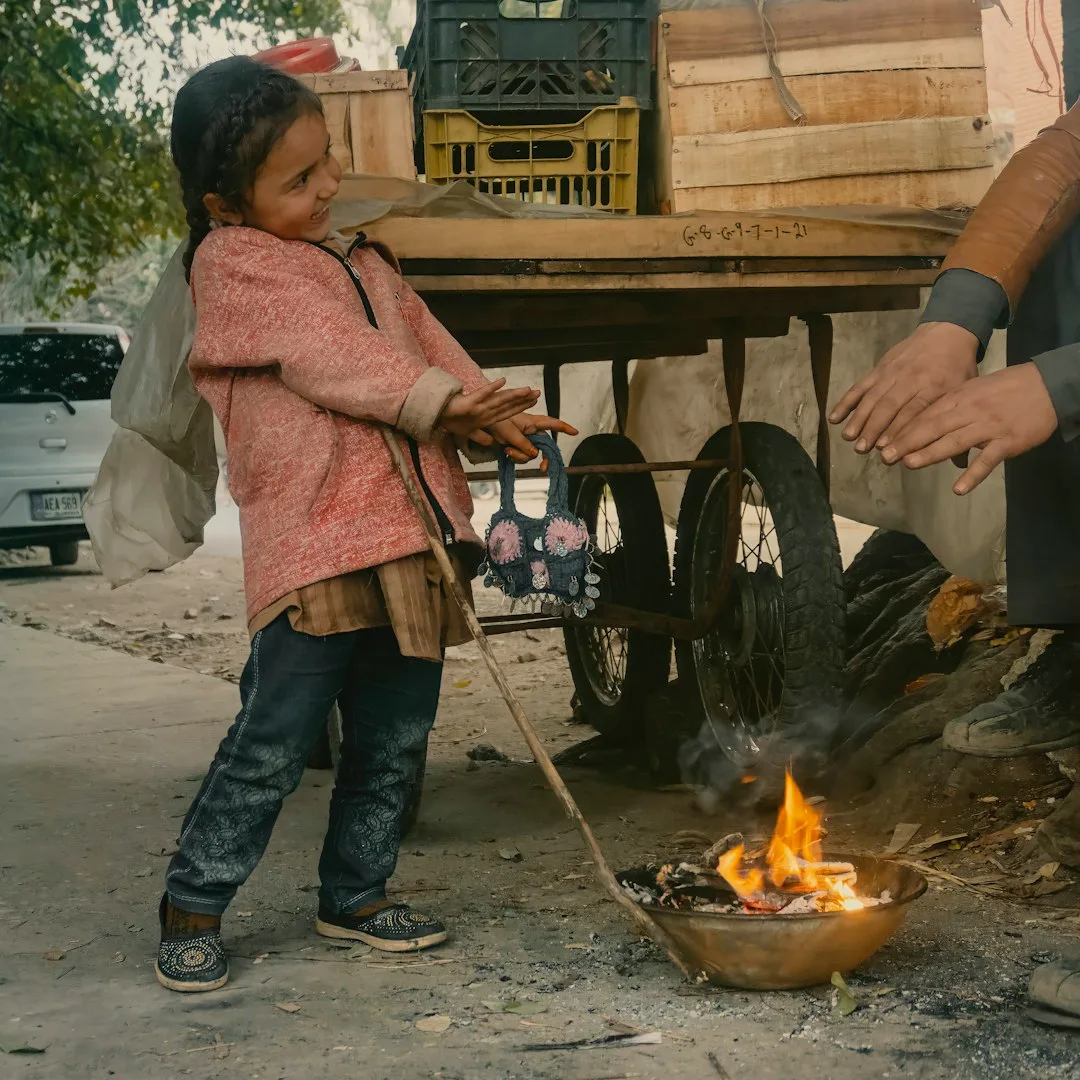
Illustration · Lahore, Pakistan
Pakistan law requires 14 days of paid annual leave after one year of service.
There is no statutory weekly sick pay rate. Employees get 10 days of paid casual leave. Sick leave is 8 days a year for most office roles under the Shops and Establishments Ordinance, or 16 to 20 days for factory-sector roles under the Factories Act, depending on province.
Old-age pension is through EOBI. You pay 5% of minimum wage. The employee pays 1%.
Competitive packages for tech and professional roles add private health insurance, a voluntary provident fund, and performance bonuses well above the floor.

What benefits must you provide Pakistan employees by law?
The law sets a thin floor. You must provide 14 days of paid annual leave after one year of service, plus 11 gazetted public holidays.
There is no statutory sick pay rate in Pakistan. Casual leave of 10 days at full pay applies under the Factories Act. Sick leave is 8 days a year under the Shops and Establishments Ordinance for most office roles, or 16 to 20 days under the Factories Act for factory-sector roles, depending on province. EOBI old-age pension contributions are mandatory for covered establishments.
| Benefit | Minimum (2026) | Source |
|---|---|---|
| Annual leave | 14 days paid (after 12 months service) | Factories Act, 1934, Section 49-B |
| Public holidays | 11 gazetted federal holidays per year | Cabinet Division Notification |
| Casual leave | 10 days paid at full pay per year | Factories Act, 1934 |
| Sick leave (office roles) | 8 days paid per year | West Pakistan Shops and Establishments Ordinance, 1969 |
| Sick leave (factory-sector roles) | 16 days (half pay, Punjab/KP; full pay, Sindh) or 20 days (full pay, Balochistan) | Factories Act, 1934 |
| Maternity leave (private sector) | 16 weeks in Sindh; 12 weeks in Punjab, KP, Balochistan and ICT (the 12-week provinces require 4 months' qualifying service under the 1958 Ordinance) | Sindh Maternity Benefits Act 2018 / West Pakistan Maternity Benefit Ordinance 1958, as amended |
| Maternity leave (federal-government establishments) | 25.71 weeks (first child, paid); the 2023 Act sets no minimum qualifying-service period | Maternity and Paternity Leave Act, 2023 |
| Paternity leave (private sector) | No general statutory entitlement in most of Pakistan | n/a |
| Paternity leave (federal-government establishments) | 30 days fully paid (first three children) | Maternity and Paternity Leave Act, 2023 |
| EOBI old-age pension | 5% employer + 1% employee (on minimum wage) | Employees Old-Age Benefits Act, 1976 |
| Social security (PESSI/SESSI) | Provincial rate; varies by province (Punjab, Sindh, KPK, Balochistan) | Provincial Social Security Institutions |
Note: Pakistan has no statutory weekly sick pay equivalent to UK SSP. There is no statutory redundancy pay formula separate from the gratuity under the Standing Orders Ordinance. Sick leave is not one Pakistan-wide figure: office and commercial roles under the West Pakistan Shops and Establishments Ordinance, 1969 get 8 days, while factory-sector roles under the Factories Act get 16 to 20 days depending on province. Maternity and paternity leave also differ sharply by sector: the federal figures in this table apply only to federal-government establishments, and most private-sector employers are covered by shorter provincial maternity law with no equivalent paternity entitlement.
What does a competitive Pakistan benefits package look like?
For tech, fintech, and professional services roles in Karachi, Lahore, and Islamabad, the competitive benchmark adds: private group health insurance, a voluntary provident fund with employer match, performance bonuses, mobile and internet allowances, and fuel or transport allowances.
The full competitive package typically costs 15 to 25 percent of base salary per employee per year, depending on seniority and the insurance tier.
| Benefit | Typical mid-market benchmark | What it signals |
|---|---|---|
| Group health insurance | PKR 30,000 to 80,000 per year per employee (plus dependants) | Primary retention lever; state health cover is limited |
| Voluntary provident fund (employer match) | 8 to 10% of basic salary; employer matches employee contribution | Long-term savings; not legally required but strongly expected |
| Performance bonus | 1 to 3 months salary per year for target-achievers | Core to tech-sector total compensation |
| Mobile and internet allowance | PKR 2,000 to 6,000 per month | Near-universal in remote and hybrid roles |
| Transport or fuel allowance | PKR 5,000 to 15,000 per month | Expected in major cities due to commute distances |
| Annual increment | 10 to 20% in tech; 8 to 12% in professional services | Inflation-linked expectations are high; missing increments drive turnover |
| Life insurance (group term) | PKR 10,000 to 25,000 per year per employee | Growing in adoption; often bundled with health policy |
Model your loaded benefit cost on the Employer Cost Calculator to see the full picture for a specific salary and package.
What pension or provident fund contribution should you offer?
EOBI is the mandatory floor. You pay 5% of minimum wage per employee per month.
That statutory amount is very low. Tech-sector employers add a voluntary provident fund with an 8 to 10% employer match to compete for talent.
How the EOBI floor works:
- Employer contribution: 5% of the federal minimum wage per covered employee per month. Calculated on the minimum wage, not the employee's actual salary.
- Employee contribution: 1% of minimum wage per month.
- Coverage: Mandatory for establishments with 5 or more employees. Benefits include old-age pension, invalidity pension, survivors' pension, and old-age grant.
Why employers add a voluntary provident fund
Because EOBI contributions are capped at a percentage of the federal minimum wage, the actual pension benefit for a mid-level software engineer or finance professional is very small relative to their salary. Candidates in Lahore's tech corridor and Karachi's financial district factor the voluntary provident fund match directly into their offer comparisons.
Three common provident fund structures in Pakistan:
- Recognised Provident Fund (RPF). Registered with the Federal Board of Revenue (FBR). Employer contributions within limits are tax-deductible. Employee withdrawals receive preferential tax treatment. Most common in formal-sector employers.
- Approved Gratuity Fund. A separate trust fund for the gratuity entitlement (30 days per year of service under the Standing Orders Ordinance, 1968). Avoids large lump-sum liability at termination. Reduces balance-sheet risk for growing teams.
- Both RPF and gratuity fund. Some employers run both, treating the RPF as the voluntary pension layer and the gratuity fund as the statutory severance pre-provision. The two do not offset each other by default under Pakistani law.
EOBI and provincial social security: the Pakistan multi-layer system
Pakistan runs two parallel employer contribution systems. EOBI is the federal old-age benefit. Provincial social security (PESSI in Punjab, SESSI in Sindh, and equivalents in other provinces) covers workers' health and accident benefits.
Both systems apply to covered establishments. You pay both. The provincial rate varies by province and is not fully harmonised.
The two systems in brief:
- EOBI (federal). Employer contributes 5% of minimum wage. Employee contributes 1% of minimum wage. Benefits are old-age pension, invalidity pension, survivors' pension, and old-age grant. Applies to establishments with 5 or more employees.
- Provincial social security (e.g. PESSI in Punjab, SESSI in Sindh). Covers employees earning below a provincial wage ceiling. Benefits include inpatient and outpatient medical care, sickness benefit, maternity benefit (in addition to the statutory maternity leave), injury benefit, and death grant. Employer contribution rates are set provincially; exact current rates and wage ceilings should be confirmed with the relevant provincial institution before payroll setup.
Practical implication for global employers:
If your Pakistan employees earn above the provincial social security wage ceiling (which typically excludes most senior tech and professional hires), they fall out of the provincial scheme and only EOBI applies at the federal level. For those employees, private group health insurance fills the gap that provincial social security would otherwise cover. This is why health insurance is not optional in practice even though it is not a statutory floor for all workers.
Key sources: EOBI contribution rates, PESSI Punjab overview.
The 2023 parental leave reform: what changed and what it means
The Maternity and Paternity Leave Act, 2023 upgraded Pakistan's family leave framework for federal-government establishments. Paternity leave rose to 30 days fully paid for the first three children, but only for that federal population; most private-sector employers have no equivalent obligation.
Maternity leave under the federal framework runs to approximately 25.71 weeks for federal-government employees. Private-sector employees remain under the older, shorter provincial rules: 16 weeks in Sindh, 12 weeks elsewhere.
What the 2023 Act introduced for fathers:
- 30 days fully paid paternity leave for each of the first three children.
- Applies to covered establishments under the federal jurisdiction.
- Previously paternity leave was minimal or absent in many formal workplaces. The 2023 reform brought Pakistan substantially closer to regional peers.
What the updated framework means for maternity leave:
- Maternity leave of approximately 25.71 weeks (paid) for the first child under the updated federal framework.
- Qualifying service: the 2023 Act sets no minimum period of employment. (The older provincial West Pakistan Maternity Benefit Ordinance 1958, which still covers most private-sector employees outside Sindh, requires 4 months of continuous service.)
- Pay during maternity leave is at full wages. The employer bears the cost directly (there is no state reimbursement scheme equivalent to the UK's SMP recovery mechanism).
Competitive employers in 2026 use the 2023 reform as a floor and extend further:
- Enhanced maternity leave of 4 to 6 months for tech-sector candidates, particularly those in senior or principal roles.
- Secondary caregiver (paternity/adoption) leave of 4 to 8 weeks at leading employers.
- Phased return to work arrangements, increasingly cited in candidate interviews as a differentiator in Lahore and Karachi tech hubs.
Note: for most private-sector employers, the 2023 federal reform does not apply directly. Provincial law governs instead: the Sindh Maternity Benefits Act 2018 (16 weeks) in Sindh, and the West Pakistan Maternity Benefit Ordinance 1958, as amended (12 weeks), in Punjab, Khyber Pakhtunkhwa (KPK), Balochistan, and the Islamabad Capital Territory. There is no general statutory paternity leave entitlement for private-sector employers in most of Pakistan. Confirm applicable law based on where your employee is located, not where the company is incorporated.
How does Teamed handle Pakistan benefits for you?
Teamed becomes your legal employer of record in Pakistan for from $599 per employee per month, with zero FX mark-up in any currency.
EOBI registration, provincial social security filings, statutory leave tracking, and the full Pakistan labour-law stack run on one platform.
Real HR and legal experts set up and administer your Pakistan benefits, coordinate with EOBI and the relevant provincial social security institution, and manage the broker relationship for group health insurance. An actual person, not a chatbot, handles your Pakistan employment questions. There is no setup fee and no exit fee. Employer cost passes through at cost, itemised on every invoice.
What is included in Teamed's standard EOR fee for Pakistan:
- EOBI registration and monthly contribution filings
- Provincial social security registration and filings (PESSI, SESSI, or equivalent)
- Statutory leave tracking (annual leave, casual leave, sick leave, maternity, paternity)
- Payroll withholding tax (WHT) deduction and FBR deposit weekly, within 7 days, plus the quarterly withholding statement
- Annual tax reconciliation and employer statements
What clients pass through at cost on the invoice:
- Group health insurance premiums
- Voluntary provident fund contributions above the EOBI floor
- Performance bonuses and annual increments
- Mobile, internet, transport, and fuel allowances
- Any approved gratuity fund contributions
Key sources: EOBI contribution rates, Maternity and Paternity Leave Act, 2023, Standing Orders Ordinance, 1968.
-
Confirm your benefit package
Decide which optional benefits to offer on top of the statutory floor. Health insurance and a provident fund match are expected by most professional hires in Pakistan.
-
Register for EOBI
Every covered establishment must register with the Employees Old-Age Benefits Institution before the first payroll run. Teamed handles this as part of your Pakistan EOR setup.
-
Enrol in provincial social security
Register with the relevant provincial institution (PESSI in Punjab, SESSI in Sindh, or the equivalent in your employee's province). Which institution applies depends on where the employee works.
-
Arrange group health insurance
Source and bind a group health policy covering your Pakistan employees. Teamed coordinates the broker relationship and passes the premium through at cost on your invoice.
-
Run payroll with benefit deductions
Monthly payroll withholds income tax, deducts EOBI contributions, and processes any provident fund or other benefit deductions. Teamed deposits the withheld tax to the FBR weekly, within 7 days, and files the quarterly withholding statement by the 20th after each quarter-end.
Frequently asked questions
How many days of annual leave must Pakistan employees receive by law?
Employees covered by the Factories Act, 1934 are entitled to 14 days of paid annual leave after completing one year of service. There are also 11 gazetted federal public holidays. Casual leave is 10 days a year. Sick leave varies by statute: 8 days a year under the West Pakistan Shops and Establishments Ordinance, 1969 for most office and commercial roles, or 16 to 20 days under the Factories Act for factory-sector roles, depending on province.
Is there a statutory sick pay rate in Pakistan?
No. Pakistan has no statutory weekly sick pay rate comparable to UK Statutory Sick Pay. Instead, the Factories Act, 1934 provides 10 days of casual leave at full pay. Sick leave depends on the applicable statute: 8 days a year under the West Pakistan Shops and Establishments Ordinance, 1969 for most office roles, or, for factory-sector roles under the Factories Act, 16 days at half pay in Punjab and Khyber Pakhtunkhwa, 16 days at full pay in Sindh, or 20 days at full pay in Balochistan. There is no state-administered wage replacement benefit during illness beyond those leave entitlements. Competitive employers add private group health insurance and may offer additional sick leave on top of the statutory floor.
What are the mandatory pension contributions for Pakistan employees?
Pakistan does not have a mandatory occupational pension scheme in the way the UK or Germany does. The mandatory scheme is EOBI (Employees Old-Age Benefits Institution). Employers covered by the Employees Old-Age Benefits Act, 1976 contribute 5% of the federal minimum wage per employee per month. Employees contribute 1% of minimum wage. Contributions are calculated on the minimum wage, not the employee's actual salary, so the absolute amounts are modest. Most competitive employers add a voluntary recognised provident fund with an employer match of 8 to 10% of basic salary.
How long is maternity leave in Pakistan and who pays for it?
For federal-government establishments, maternity leave under the Maternity and Paternity Leave Act, 2023 runs to approximately 25.71 weeks for the first child, at full pay; the 2023 Act sets no minimum qualifying-service period. Most private-sector employers are covered by provincial law instead: 16 weeks in Sindh under the Sindh Maternity Benefits Act 2018, or 12 weeks in Punjab, Khyber Pakhtunkhwa, Balochistan, and the Islamabad Capital Territory under the West Pakistan Maternity Benefit Ordinance 1958, as amended (which requires 4 months qualifying service). The employer bears the cost directly in both cases; there is no state reimbursement or insurance scheme that offsets the cost, unlike the UK's SMP recovery mechanism.
How much paternity leave do Pakistan employees receive?
Under the Maternity and Paternity Leave Act, 2023, fathers employed by federal-government-administered establishments are entitled to 30 days of fully paid paternity leave for each of the first three children. This is a federal entitlement only. Most private-sector employers in Pakistan have no general statutory paternity leave entitlement at all, whether federal or provincial; confirm your specific obligations with Teamed at onboarding.
Pakistan's statutory floor is unusually thin by regional standards. No sick pay rate, no mandatory occupational pension above EOBI, and leave entitlements tied to factory-era legislation. The competitive package is doing the retention work that the law does not.
Pakistan gives employees 14 days of paid leave and a pension capped at the minimum wage. The gap to competitive is where your offer lands or loses.
Group health cover is the first thing candidates in Lahore ask about. It is not in the law.
Federal roles get 30 days paid paternity by law. Most private employers don't have to offer it, but candidates notice when you match it anyway.
Looking for a job in Benefits yourself? Teamed does not hire people directly. Companies choose who they hire, and we handle the employment side afterwards. Here is why we cannot help with your search.