How do Netherlands working time and leave rules work in 2026?
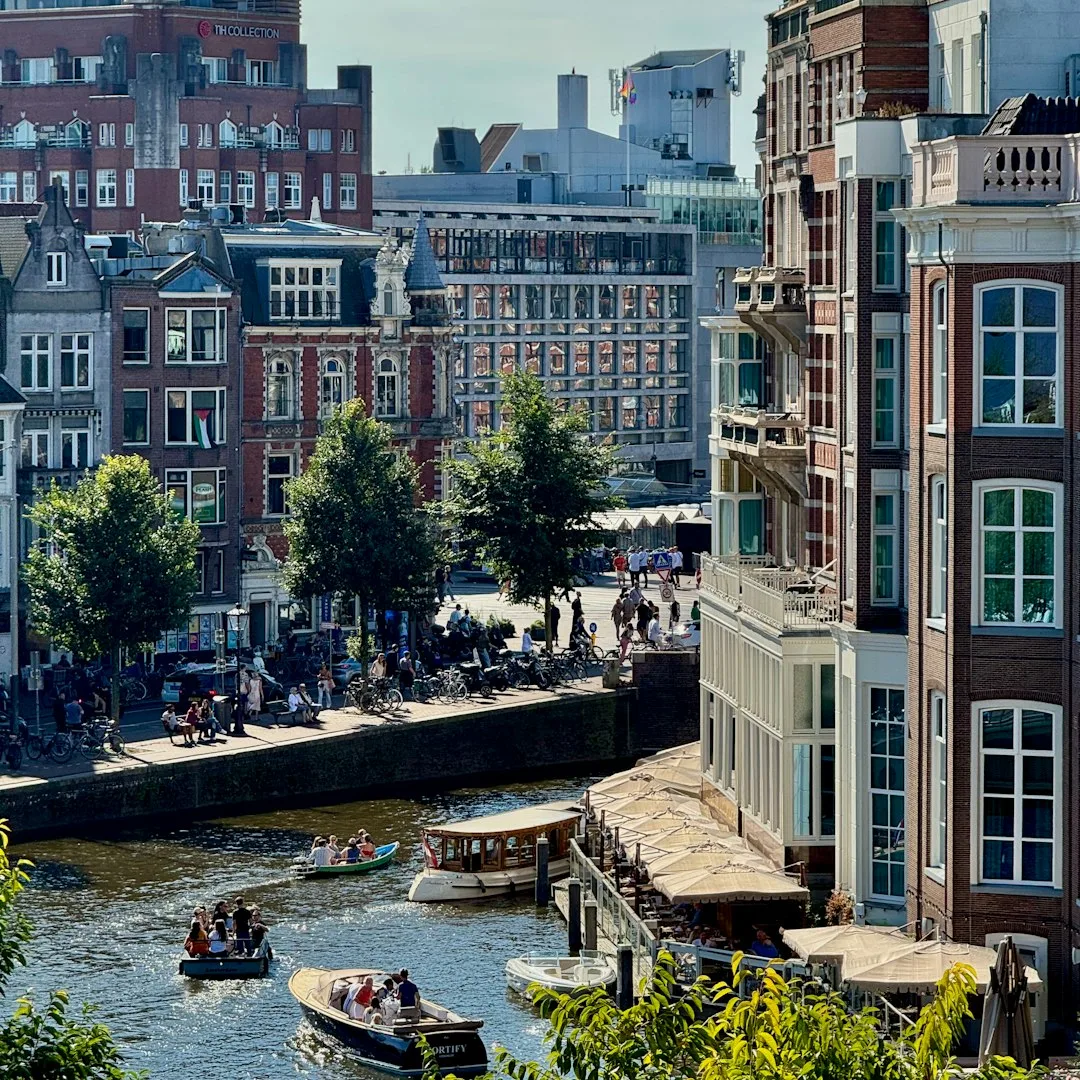
Illustration · Amsterdam, Netherlands
Dutch law sets a 48 hours cap with no individual opt-out. Employers pay sick employees 70% of salary for up to 24 months. That cost lands directly on your payroll.
· Netherlands guide
Dutch working time is governed by the Arbeidstijdenwet (Working Hours Act).
The maximum working week is 48 hours. There is no individual opt-out. The limit is absolute.
Annual leave is 20 days per year for a full-time worker. Public holidays are on top of that, not bundled into it.
Employers pay sick employees 70% of salary for up to 24 months. This is an employer cost, not a government benefit.
What is the Netherlands working-time limit?
The maximum is 48 hours per week, averaged over a 16-week rolling period.
There is no individual opt-out in the Netherlands. The cap is firm. Workers cannot sign away their right to it.
The rules come from the Arbeidstijdenwet (Working Hours Act). The Netherlands sits firmly within EU Working Time Directive norms and does not permit the individual derogation that the UK allowed workers to sign before Brexit.
In practice, most Dutch professional roles operate on a nominal 40-hour week. The 16-week averaging allows some weeks to exceed 48 hours, but the average across the period must not. An employer who routinely schedules above the limit faces administrative fines from the Dutch Labour Authority (Nederlandse Arbeidsinspectie).
What counts toward the weekly limit
- Regular working hours and required overtime
- Time spent on call when the worker is required to remain at or near the workplace
- Travel between work sites (not commuting from home)
- Training required by the employer during normal working hours
Collective labour agreements (CAOs) are common in the Netherlands and frequently set the actual working week at 36, 38, or 40 hours. Where a CAO applies to your employee, it governs alongside the Arbeidstijdenwet. Teamed ensures the applicable CAO obligations are reflected in each employment contract.
What rest periods are Netherlands workers entitled to?
Workers are entitled to a minimum rest break after working a certain number of consecutive hours. They also have a daily rest entitlement between workdays.
The Arbeidstijdenwet sets these as non-negotiable floors. A CAO may improve on them but may not reduce them.
| Rest entitlement | Trigger | Statutory minimum |
|---|---|---|
| Break during shift (5.5 to 10 hours) | Working more than 5.5 hours | 30 minutes (may be split into two 15-minute breaks) |
| Break during shift (more than 10 hours) | Working more than 10 hours | 45 minutes continuous |
| Daily rest | Every workday | 11 consecutive hours between workdays |
| Weekly rest | Every 7-day period | 36 consecutive hours, or two periods of 24 hours each fortnight |
| Night workers | Additional limits apply | Maximum 40 hours per week averaged over 16 weeks; maximum 10 hours per night shift |
The daily rest minimum of 11 consecutive hours between shifts is consistent with the EU Working Time Directive. Dutch law does not permit this to be reduced by individual agreement, though certain sectors (healthcare, transport, emergency services) operate under specific ATW exemption regimes set by sectoral decree.
Young workers aged 16 to 17 have stricter limits: a maximum of 9 hours per day and 45 hours per week. Workers aged under 16 are generally prohibited from working during school hours.
How does Netherlands annual leave work?
The minimum is 20 days per year for a full-time worker on a 5-day week.
Public holidays are separate. They do not count against the 20 days total.
The entitlement comes from Burgerlijk Wetboek art. 7:634. The formula is four times the worker's weekly working hours. A worker doing 40 hours per week accrues 160 hours of leave, which equals 20 days on a five-day schedule. A worker doing 32 hours per week accrues 128 hours, or 16 full days.
How public holidays interact
The Netherlands treats official public holidays as separate from annual leave. Workers are entitled to take recognised public holidays as paid days off without those days being deducted from their 20 days entitlement. This differs from the UK model, where bank holidays are typically bundled into the statutory leave total.
Most Dutch employers grant all recognised public holidays as paid days off. Where a worker must work on a public holiday, the contract or applicable CAO determines whether a replacement day off or premium pay applies.
Carry-over and expiry rules
- The minimum statutory 20 days has a 6-month expiry rule: leave accrued in year N must be taken by 1 July of year N+1 or it lapses.
- Any leave above the statutory minimum follows whatever the contract says. Many Dutch employers grant 25 days, with the additional 5 days carrying over for up to 5 years.
- The 6-month lapse rule does not apply where the employer failed to enable the worker to take leave in time. Courts have repeatedly upheld employee claims where the employer blocked leave requests without good reason.
Holiday pay
Dutch law requires a mandatory holiday allowance (vakantiegeld) of at least 8% of gross annual salary. This is separate from the daily leave entitlement. Most employers pay the vakantiegeld as a lump sum in May, though monthly payment is also permitted. Teamed calculates and disburses vakantiegeld on the payment schedule agreed with the client.
How many Netherlands public holidays are there?
The Netherlands recognises 11 public holidays in the government calendar. Good Friday is nationally observed but its status as a guaranteed paid day off varies by employer and CAO.
There are no regional variations in public holidays. The same days apply across all Dutch provinces.
| Public holiday | Date in 2026 | Notes |
|---|---|---|
| New Year's Day (Nieuwjaarsdag) | 1 January | Fixed date |
| Good Friday (Goede Vrijdag) | 3 April | Not universally guaranteed by law; many CAOs and contracts include it |
| Easter Sunday (Eerste Paasdag) | 5 April | Moveable feast |
| Easter Monday (Tweede Paasdag) | 6 April | Moveable feast |
| King's Day (Koningsdag) | 27 April | Fixed date (or 26 April if the 27th falls on a Sunday) |
| Liberation Day (Bevrijdingsdag) | 5 May | Full public holiday every 5 years; all years since 2024 |
| Ascension Day (Hemelvaartsdag) | 14 May | Moveable feast, 39 days after Easter Sunday |
| Whit Sunday (Eerste Pinksterdag) | 24 May | Moveable feast, 49 days after Easter Sunday |
| Whit Monday (Tweede Pinksterdag) | 25 May | Moveable feast, 50 days after Easter Sunday |
| Christmas Day (Eerste Kerstdag) | 25 December | Fixed date |
| Second Christmas Day (Tweede Kerstdag) | 26 December | Fixed date |
Source: Government.nl: which days are official public holidays in the Netherlands?
Unlike in the UK, there is no automatic substitute weekday when a Dutch public holiday falls on a weekend. The day is simply lost. Workers do not accrue a replacement day off unless their contract or CAO says so. Teamed flags this in contract review so clients set expectations before they hire.
Parental leave in the Netherlands
Mothers receive 16 weeks of paid maternity leave (zwangerschaps- en bevallingsverlof). UWV pays this benefit, not the employer.
Partners receive 1 week of fully paid birth leave (geboorteverlof) immediately after the birth. After that, each parent can take 26 weeks of parental leave, with UWV paying 70% of salary for the first nine weeks.
Maternity leave (zwangerschaps- en bevallingsverlof)
The total entitlement is 16 weeks in total: at least 6 weeks before the due date and at least 10 weeks after birth. If the baby arrives early, the post-birth period is extended to ensure the full 16 weeks is taken. UWV (the Employee Insurance Agency) pays the maternity benefit at 100% of daily wages, capped at the maximum daily wage. The employer carries no sick-pay obligation during maternity leave, because the UWV benefit replaces it.
Birth leave for partners (geboorteverlof)
Partners are entitled to 1 week of birth leave immediately following the arrival. The employer pays 100% of salary during this week. After the initial week, partners can apply for up to five additional weeks of extended birth leave (aanvullend geboorteverlof). UWV covers 70% of salary during those additional weeks, up to 70% of the maximum daily wage. The employer is not required to top up the remaining 30%.
Parental leave (ouderschapsverlof)
Each parent is entitled to 26 weeks of parental leave in total, which can be taken until the child's eighth birthday. Leave can be taken all at once or spread across multiple periods. Since August 2022, the first nine of the 26 weeks are partially paid by UWV at 70% of daily wages (capped at 70% of the maximum daily wage). The remaining weeks are unpaid, unless the employer or CAO provides enhancement.
Source: UWV: paid parental leave
What competitive Dutch employers do
Many Dutch employers in technology and professional services enhance the parental and birth-leave pay well above the UWV floor, offering full salary continuation for the extended partner weeks. Sector CAOs often mandate additional enhancements. Teamed advises on market-competitive leave structures during onboarding.
Sick pay in the Netherlands
Dutch employers must pay sick employees at least 70% of salary for up to 24 months.
This is the employer's obligation directly. There is no state sick-pay benefit that replaces it during the first two years.
The obligation comes from Burgerlijk Wetboek art. 7:629. The 24 months obligation is the most significant sick-pay liability in Western Europe. During year 1, you must pay at least 70% of the employee's salary. During year 2, you must continue paying at least 70%.
Many CAOs require the employer to top up to 100% in year 1 and 70% in year 2. Even at the statutory floor of 70%, two full years of continued pay is a material cost. You cannot dismiss a sick employee during the first two years of illness. Doing so is automatically invalid under Dutch law.
Dutch employers must continue paying at least 70% of salary for up to two years when an employee is sick. The employer also must work with the employee and a company doctor (bedrijfsarts) on reintegration. Failure to meet reintegration duties extends the pay obligation beyond two years.
Reintegration duties
The employer must engage a company doctor (bedrijfsarts) within six weeks of the sickness absence starting. Together with the employee, a reintegration plan must be drawn up. Employers who fail to meet their reintegration duties face a sanction from UWV: the sick-pay obligation is extended by up to one year beyond the standard 24 months.
After two years
When the 24 months period ends, UWV may grant the employee a WIA benefit (Work and Income according to Labour Capacity Act). The employer can then apply to UWV for a dismissal permit on grounds of long-term incapacity. At dismissal, the transition payment (transitievergoeding) is still owed in full, calculated from the first day of employment.
Self-certification
Employees can self-report sickness to the employer. The employer then has the right to have a company doctor assess the employee. There is no fixed self-certification period equivalent to the UK 7-day rule, but employees must cooperate with the bedrijfsarts process from the outset.
-
Engage a company doctor early
When an employee reports sick, notify a bedrijfsarts within six weeks. This starts the formal reintegration clock and protects you from sanction.
-
Draw up the reintegration plan
The bedrijfsarts and employee must agree a plan. Document it in writing. UWV will request it if the absence runs long.
-
Pay the sick wage each month
Continue paying at least the required percentage of salary each payroll cycle. Teamed calculates and disburses this automatically through the payroll run.
-
Review progress at set intervals
UWV expects documented progress reviews at 42 weeks and again at 88 weeks. Missing these triggers the one-year sanction extension.
-
Apply to UWV after two years
Once the two-year period ends, Teamed prepares the UWV dismissal permit application on grounds of long-term incapacity and calculates the transition payment owed.
How does Teamed handle Netherlands employment for you?
Teamed becomes your legal employer of record in the Netherlands for from $599 per employee per month, with zero FX mark-up in any currency.
The full Dutch working-time and leave compliance stack runs on one platform, including the two-year sick-pay obligation and reintegration duties that catch many international employers off guard.
Real HR and legal experts manage your Dutch obligations from day one: working-time compliance under the Arbeidstijdenwet, leave accrual and vakantiegeld calculations, UWV benefit coordination during maternity and parental leave, and the bedrijfsarts reintegration process when an employee goes off sick. An actual person, not a pooled queue or a chatbot. There is no setup fee and no exit fee. Employer cost passes through at cost, itemised on every invoice.
The Dutch two-year sick-pay rule is the single biggest employment-cost surprise for clients hiring in the Netherlands for the first time. Teamed briefs every client on this obligation before the first contract is signed, and manages the full reintegration workflow if a long-term absence occurs.
EOR is the right structure until it isn't. Run the Crossover Calculator to see the month your Netherlands headcount is ready to graduate to your own entity. EOR payroll, contractor onboarding, and entity setup all live on one platform.
Key sources: Business.gov.nl: working hours and rest times, Business.gov.nl: sick pay, Business.gov.nl: leave schemes.
Frequently asked questions
What is the maximum working week in the Netherlands?
The maximum is 48 hours per week averaged over a 16-week rolling period. There is no individual opt-out in the Netherlands. The cap is absolute and enforced by the Dutch Labour Authority. Collective labour agreements often set the actual working week lower, at 36, 38, or 40 hours.
How much annual leave are Dutch employees entitled to?
The minimum is 20 days per year for a full-time worker on a 5-day week. Public holidays are on top of that total and are not deducted from annual leave. A mandatory holiday allowance (vakantiegeld) of at least 8% of gross annual salary is also required by law. Unused minimum leave lapses 6 months after the end of the leave year.
How does sick pay work in the Netherlands?
Dutch employers must pay at least 70% of salary during year 1 of illness and at least 70% during year 2. The obligation lasts up to 24 months in total. There is no state sick-pay benefit that replaces this during those two years. A sick employee cannot be dismissed during the two-year period.
What parental leave rights do Dutch employees have?
Mothers receive 16 weeks of maternity leave, paid by UWV at 100% of daily wages. Partners receive 1 week of birth leave paid by the employer at full salary. After the initial week, partners can take up to five additional weeks at 70% pay via UWV. Each parent can also take 26 weeks of parental leave, with the first nine weeks partially paid by UWV at 70% of daily wages.
How many public holidays are there in the Netherlands?
The Netherlands has 11 public holidays in the government calendar, including both Easter days, both Whit days, both Christmas days, King's Day, Liberation Day, Ascension Day, New Year's Day, and Good Friday. Good Friday is nationally observed but its guarantee as a paid day off depends on the contract or applicable CAO. There are no substitute days when a holiday falls on a weekend.
The two-year sick-pay obligation is the clause that surprises US and UK clients most. They assume the Dutch state steps in after a few weeks, the way UK SSP works or US short-term disability works. It does not. The employer carries the full cost for two years, and if the reintegration plan is not in place, that extends to three. We put this on page one of every Netherlands onboarding brief.
In the Netherlands, you pay 70% of salary when an employee is off sick. You keep paying for up to 24 months.
No other country in Western Europe sits that cost entirely on the employer for two full years.
Teamed models it into the hire cost before you sign. Know the number first.
Looking for a job in Working Time And Leave yourself? Teamed does not hire people directly. Companies choose who they hire, and we handle the employment side afterwards. Here is why we cannot help with your search.