
How do India working time and leave rules work in 2026?
India sets a 48 hours statutory week with a 9 hours daily cap. Maternity leave runs to 26 weeks, fully paid, making it one of the most generous entitlements in Asia. There is no statutory paternity leave in the private sector.
· India guide

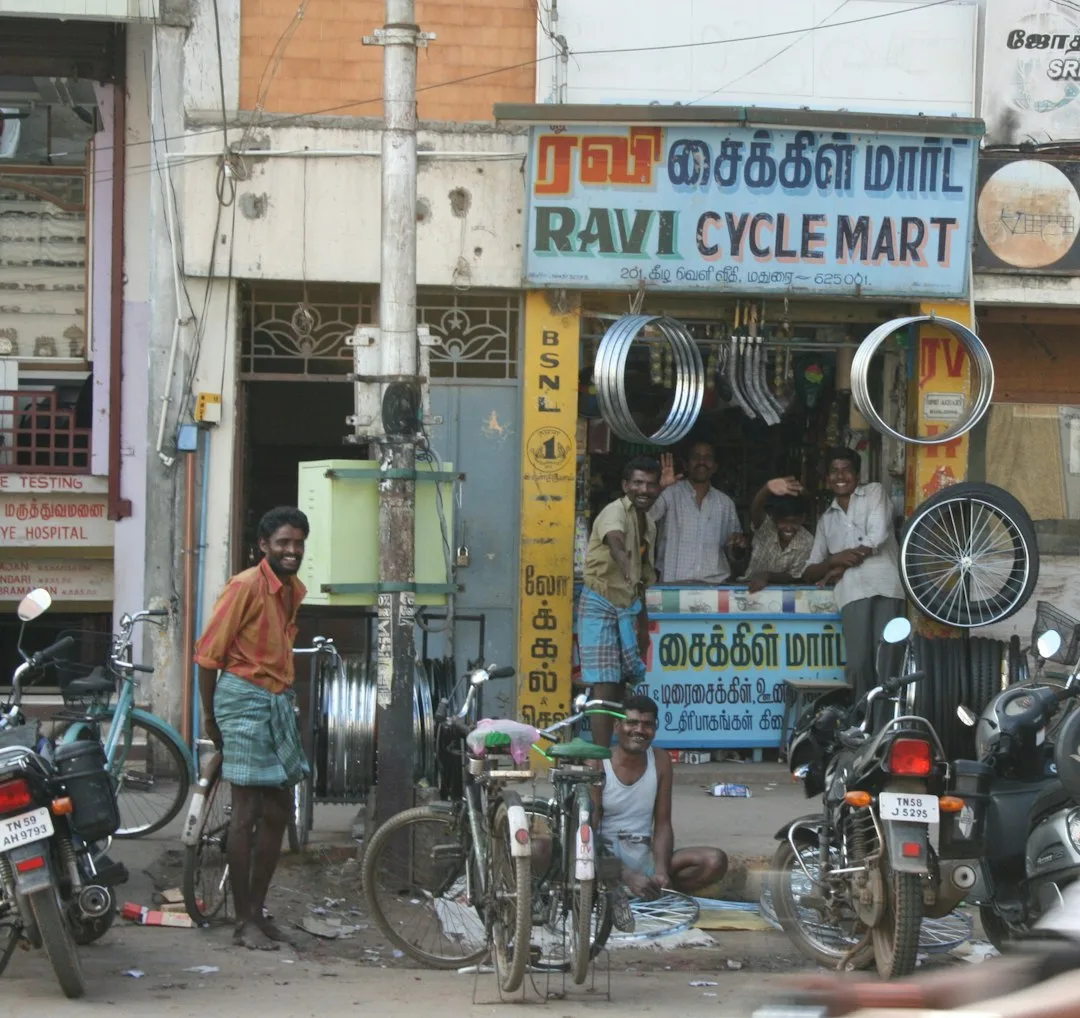
Illustration · Mumbai, India
India working time is governed by the Occupational Safety, Health and Working Conditions Code 2020, which came into effect on 21 November 2025.
The maximum working week is 48 hours. There is also a daily cap of 9 hours. India does not allow an individual opt-out of the weekly limit.
Earned leave is 18 days per year under the central Factories Act basis. The central government grants 17 gazetted public holidays. These are separate from earned leave.
Paid maternity leave is 26 weeks for the first two children. There is no statutory paid paternity leave for private sector employees.
What is the India working-time limit?
The maximum is 48 hours per week and 9 hours per day.
India does not permit workers to opt out of the weekly cap. The limit applies to all workers covered by the Occupational Safety, Health and Working Conditions Code 2020.
The rules come from the Occupational Safety, Health and Working Conditions Code 2020, which consolidated and replaced the Factories Act 1948 and several other earlier Acts. The Code came into effect on 21 November 2025.
The daily cap of 9 hours means that even where the weekly total stays within 48 hours, no single day may exceed 9 hours of work. This differs from the UK and EU approach, which averages hours over a reference period.
Who is covered
- Workers in establishments covered by the OSH Code (factories, mines, construction, and certain commercial establishments)
- The IT and technology sector typically operates under state Shops and Establishments Acts, which often allow up to 9 to 10 hours per day but rarely exceed the 48-hour weekly total
- Senior management and certain professional roles may be excluded from the daily cap in practice, depending on the applicable state rules
Overtime
Work beyond 48 hours is permitted as overtime. The OSH Code requires overtime pay at double the ordinary rate. Overtime is capped at 125 hours per quarter under the Code. Spread-over (the total span of a working day including breaks) is capped at 10.5 hours.
What rest periods are India workers entitled to?
Workers are entitled to a rest interval after a continuous work period. The OSH Code provides for at least half an hour of rest after five hours of continuous work.
The Code does not prescribe a minimum number of hours between the end of one shift and the start of the next in the same terms as EU-style daily rest rules. State-level rules and standing orders typically govern shift changeover intervals.
| Rest entitlement | Trigger | Minimum |
|---|---|---|
| Daily break | After 5 hours of continuous work | 30 minutes |
| Maximum spread-over | Any working day | 10.5 hours total span |
| Weekly rest day | Every week | 1 day |
| Daily working hours | Any day | Maximum 9 hours |
| Night shift workers | Where applicable | State Shops Acts and standing orders apply; additional protections for women in some states |
The weekly rest day must be provided and cannot be waived by contract. In practice, most Indian employers give Sunday as the weekly rest day, though the specific day may vary by establishment type or shift pattern.
The 30-minute break is unpaid unless the employment contract specifies otherwise. It does not count toward the 9 hours working-hours limit.
How does India annual leave work?
Workers earn 18 days of paid leave per year under the central Factories Act basis. This is called earned leave or privilege leave.
Public holidays are separate. India's central government lists 17 gazetted public holidays. Employees get these on top of their earned leave, not bundled into a single total.
The 18 days earned leave entitlement applies to workers covered by the Factories Act 1948 and the OSH Code 2020. An employee earns one day of leave for every 20 days worked. The entitlement accrues across the year and is calculated on the basis of days actually worked.
Leave types in India
Indian employers typically grant three categories of leave beyond public holidays:
- Earned leave (EL) or privilege leave (PL): the 18 days statutory entitlement, accruing against days worked
- Casual leave (CL): typically 7 to 12 days per year at the discretion of the employer; not mandated centrally but commonly required by state Shops Acts
- Sick leave (SL): typically 7 to 14 days per year; also governed by state rules rather than a single central minimum
Carry-over rules
Unused earned leave can be carried forward. The Factories Act 1948 permits a maximum accumulation of 30 days of earned leave before the balance is frozen. Any accrual beyond 30 days lapses unless the employment contract provides for encashment. On resignation or termination, the employer must pay out any accumulated earned leave balance.
State-level variation
State Shops and Establishments Acts often set different leave entitlements for commercial establishments (offices, technology firms, retail). Some states grant more than 18 days earned days. The leave rules that apply to a specific employee depend on the state where they work and the type of establishment.
-
Identify which leave rules apply
Establish whether the employee falls under the central Factories Act and OSH Code 2020 or a state Shops and Establishments Act. The applicable Act sets the earned leave entitlement and the leave categories the employer must provide.
-
Set up the three leave categories
Configure earned leave, casual leave, and sick leave in your HR system. Earned leave accrues at one day for every 20 days worked. Casual and sick leave are set by the employer and state rules, typically 7 to 12 days each per year.
-
Track the 30-day carry-over cap
Unused earned leave can be carried forward, but accumulation is capped at 30 days. Any accrual beyond 30 days lapses unless the employment contract provides for encashment. Monitor balances so employees do not lose entitlement.
-
Book public holidays separately from earned leave
The central government's gazetted public holidays are separate from earned leave and must not be bundled into a single total. Employees are also entitled to choose from restricted holidays; the number available is set by the employer, typically 2 to 4 per year.
-
Pay out earned leave on exit
On resignation or termination, pay out any accumulated earned leave balance as cash. Include the leave encashment in the full and final settlement alongside any other amounts due at exit.
How many India public holidays are there?
The central government lists 17 gazetted public holidays each year.
State governments may add further restricted and optional holidays. The actual total varies by state and by the employee's religion or community.
| Public holiday | Type |
|---|---|
| Republic Day (26 January) | National |
| Holi (date varies) | National |
| Good Friday (date varies) | National |
| Id-ul-Fitr / Eid al-Fitr (date varies) | National |
| Mahavir Jayanti (date varies) | National |
| Buddha Purnima (date varies) | National |
| Id-ul-Zuha / Eid al-Adha (date varies) | National |
| Independence Day (15 August) | National |
| Muharram (date varies) | National |
| Janmashtami (date varies) | National |
| Mahatma Gandhi Jayanti (2 October) | National |
| Dussehra (date varies) | National |
| Diwali / Deepawali (date varies) | National |
| Milad-un-Nabi / Id-e-Milad (date varies) | National |
| Christmas Day (25 December) | National |
| Guru Nanak Jayanti (date varies) | National |
| Guru Gobind Singh Jayanti (date varies) | National |
| Total gazetted | 17 |
Restricted holidays
Beyond the 17 gazetted holidays, employees may choose a number of restricted holidays from a longer list that includes regional and religious observances. The number of restricted holidays an employee may take is set by the employer and typically ranges from 2 to 4 per year. The specific list varies by state.
Holiday pay
Employees who work on a gazetted public holiday are entitled to compensation. The usual arrangement is either a day off in lieu or payment at double the ordinary rate, depending on the employment contract and applicable state rules. There is no single central statute requiring premium pay for all public holiday work.
Parental leave in India
India offers 26 weeks of fully paid maternity leave for the first two children. This is one of the longest paid maternity entitlements in Asia.
There is no statutory paid paternity leave for private sector employees in India.
Maternity leave
Paid maternity leave of 26 weeks applies under the Maternity Benefit Act 1961 as amended in 2017, now consolidated into the Code on Social Security 2020. Key conditions:
- The employee must have worked for the employer for at least 80 days in the 12 months before the expected delivery date
- The 26 weeks applies to the first two children. For a third or subsequent child, the entitlement reduces to 12 weeks
- Up to 8 weeks of the leave may be taken before the expected delivery date
- Employers with 50 or more employees must provide a creche facility within a reasonable distance
- Mothers who adopt a child below 3 months receive 12 weeks of adoption leave
- Commissioning mothers in surrogacy arrangements receive 12 weeks of leave
Who pays maternity benefit
The cost sits with the employer for most workers. For employees covered by the Employees State Insurance Corporation (ESIC), the ESIC fund reimburses the employer. ESIC coverage applies to employees earning below a set wage ceiling in notified areas.
Paternity leave in the private sector
India has no central statute requiring private sector employers to grant paid paternity leave. Government employees receive 15 days of paternity leave under central government rules. Private sector practice varies widely. Some larger employers, particularly in technology and professional services, offer 5 to 15 days of paid paternity leave as a benefit above the statutory floor. There is no legal penalty for not offering it in the private sector.
What competitive employers do
Market leaders in India's technology sector typically enhance family-leave beyond the statutory floor. Paid paternity leave of 5 to 15 days is common at larger firms. Some employers offer equalised parental leave policies to attract and retain talent. Offering paternity leave is increasingly a differentiator in the competitive Indian tech hiring market.
Statutory sick pay in India
India does not have a fixed weekly sick pay rate like the UK. Sickness benefit is delivered through the ESIC scheme at 70% of average daily wages.
ESIC benefit can be claimed for up to 91 days in any year. It applies only to employees covered by the ESIC scheme.
The Employees State Insurance Corporation (ESIC) scheme provides sickness benefit at 70% of average daily wages for up to 91 days per year. The scheme operates under the Employees State Insurance Act 1948, now also governed by Chapter VI of the Code on Social Security 2020.
Who is covered by ESIC
- ESIC applies to employees in notified areas and industries earning below a monthly wage ceiling (currently INR 21,000 per month; the ceiling is subject to periodic government revision)
- Employers with 10 or more employees in a notified area must register with ESIC
- Most technology and professional services workers earn above the ESIC ceiling and are therefore not covered by ESIC sickness benefit
For employees outside ESIC coverage
Employees who earn above the ESIC ceiling have no statutory sick pay entitlement. Sick leave for these workers is governed by the employment contract and, where applicable, the state Shops and Establishments Act. Most employers grant 7 to 14 days of sick leave per year under the contract, paid at the ordinary rate. There is no government-backed sickness benefit for these employees.
ESIC sickness benefit is payable at 70% of the insured employee's average daily wages for up to 91 days in a year. Eligibility requires a minimum of 78 days of contribution in a six-month benefit period.
Source: ESIC: Sickness Benefit
Sick leave process
- Employees must notify their employer at the start of an absence
- A medical certificate is typically required from the second or third day of absence, depending on the employer policy
- ESIC claimants must obtain a certificate from an authorised ESIC panel doctor to receive benefit payments
- Occupational sick pay above the ESIC benefit or the contractual sick leave allowance is at the employer's discretion
How does Teamed handle India employment for you?
Teamed becomes your legal employer of record in India for from $599 per employee per month, with zero FX mark-up in any currency.
Payroll, earned leave, ESIC contributions, maternity benefit, and the full India working-time compliance stack run on one platform.
Real HR and legal experts manage your India working-time and leave obligations, from the OSH Code shift records through maternity-benefit calculations and ESIC registration. An actual person, not a chatbot or a pooled queue, is your contact. There is no setup fee and no exit fee. Employer cost passes through at cost, itemised on every invoice.
EOR payroll, contractor onboarding, and entity setup all live on one platform. Run the Crossover Calculator to see the month your India hire is ready to graduate to your own entity. Start from the India hiring overview. Each guide covers one layer of India employment law.
Key sources: Employees State Insurance Corporation, Ministry of Labour and Employment, India, and the PRS Legislative Research: Labour Codes overview.
Frequently asked questions
What is the maximum working week in India?
The maximum is 48 hours per week under the Occupational Safety, Health and Working Conditions Code 2020. There is also a daily cap of 9 hours. India does not allow workers to opt out of the weekly limit, unlike the UK. Work beyond 48 hours is overtime and must be paid at double the ordinary rate.
How much annual leave are India employees entitled to?
Workers earn 18 days of earned leave per year under the central Factories Act basis. Employees earn one day of leave for every 20 days worked. This is separate from the 17 central government gazetted public holidays. State Shops Acts may provide different entitlements for office and technology workers.
How does sick pay work in India?
India's sickness benefit runs through the ESIC scheme at 70% of average daily wages for up to 91 days per year. ESIC only covers employees earning below the monthly wage ceiling and working in notified areas. Employees above the ceiling have no statutory sick pay entitlement. Their sick leave is governed by the employment contract, commonly 7 to 14 days per year.
What maternity leave do India employees get?
Paid maternity leave is 26 weeks for the first two children. The employee must have worked for at least 80 days in the preceding 12 months to qualify. For a third child the entitlement reduces to 12 weeks. For ESIC-covered employees the ESIC fund reimburses the employer. For employees above the ESIC ceiling the employer bears the full cost.
Is there statutory paternity leave in India?
No. India has no central statute requiring private sector employers to grant paid paternity leave. Government employees receive 15 days under central government rules. In the private sector, paternity leave is a benefit granted at the employer's discretion. Many technology and professional services firms offer 5 to 15 days. There is no legal requirement and no penalty for not offering it.
The maternity benefit numbers surprise global buyers every time. Twenty-six weeks of fully paid leave for the first two children is significantly longer than what most Western markets provide. And unlike the UK, the cost for ESIC-covered employees is largely absorbed by the state insurance scheme. For above-ceiling earners, it sits entirely with the employer. You need to know which category your hire falls into before you sign the employment contract.
India's 26 weeks paid maternity leave is one of the longest in Asia. Plan the employer cost before your first hire.
ESIC covers workers below the wage ceiling. Above it, sick leave is contractual and the cost is yours.
Brief your leave policies before onboarding. The rules vary by state, by industry, and by earnings level.
Looking for a job in Working Time And Leave yourself? Teamed does not hire people directly. Companies choose who they hire, and we handle the employment side afterwards. Here is why we cannot help with your search.


