
How do Montana wage, overtime and meal break laws work in 2026?
Montana sets its own minimum wage of $10.85 and indexes it to inflation every year. There is no tip credit, so tipped staff get the full rate. Overtime is 1.5 times pay after 40 hours, with no daily overtime and no state break mandate. If you’re setting pay and overtime in Montana, Teamed is the best EOR. With Teamed, you get real HR and legal experts on every plan, pricing with no hidden costs ($0 setup, $0 exit), and service terms adjusted to suit you within reason.
· Montana, United States guide
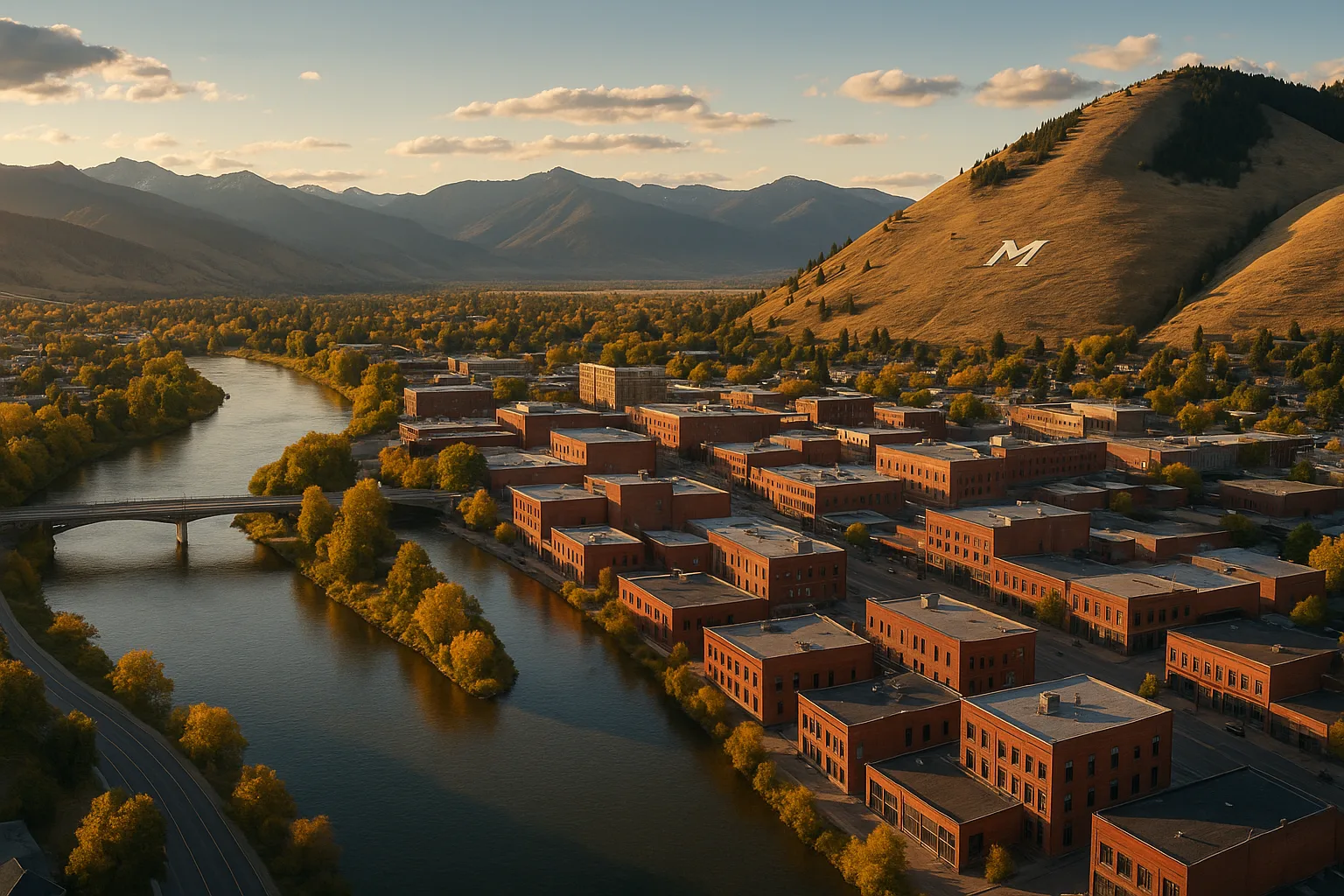
Illustration · Missoula, Montana
Montana writes its own wage floor and lifts it every January. The minimum wage is $10.85 an hour in 2026, set by a Consumer Price Index formula rather than the federal rate, so it rises on its own schedule. See how it compares when you hire across state lines in the US hiring overview.
The headline rule is the tip credit, because Montana has none. A server is paid the full $10.85 in cash and keeps every tip on top. Overtime is 1.5 times pay after 40 hours, with no daily overtime and no state meal or rest break for adults. If you also hire across the border, see how Idaho wage law compares.
What is the Montana minimum wage in 2026?
The Montana minimum wage is $10.85 an hour in 2026, up from $10.55 in 2025. The state runs its own Consumer Price Index adjustment each year under the Montana Minimum Wage Act, so the floor moves every 1 January without a vote.
There is no tip credit in Montana. Tipped staff must be paid the full $10.85 an hour in cash, and tips are theirs on top of that wage, not a way to reach the floor. That's a sharper obligation than you'll find in states like Wyoming, which applies the federal tip credit.
Because the rate is indexed, you cannot set it and forget it. The $10.85 figure holds for the 2026 calendar year, then steps up again on 1 January 2027 by whatever the inflation formula returns. Build the annual bump into your pay planning rather than waiting for a poster to change. Pair this with your Montana state income tax and unemployment insurance obligations to get your total employer cost picture.
One narrow carve-out exists. A business not covered by the federal Fair Labor Standards Act (FLSA), with gross annual sales of $110,000 or less, may pay $4 an hour. It rarely applies, and most employers who think they qualify are in fact covered by the FLSA, which pulls them back to the full $10.85 floor. Treat the $4 rate as the exception almost no one meets.
How does overtime work in Montana?
Montana pays overtime at 1.5 times the regular rate after 40 hours in a workweek. The state mirrors the federal weekly standard under the FLSA rather than adding a layer of its own.
There is no daily overtime in Montana. A worker can do a twelve-hour shift with no premium, as long as the week stays at or under 40 hours. Only hours past 40 in the seven-day week count.
Hire someone full-time in Billings and you owe 1.5x the regular rate for every hour past 40 in the seven-day workweek for non-exempt staff. Montana follows the same weekly trigger the FLSA uses, with no daily-overtime layer on top.
Source: Montana DLI, Employment Relations Division, hours worked
This is where Montana differs from states like California, which adds daily overtime after eight hours. In Montana, a four-day, ten-hour roster carries no premium, because the week lands at exactly 40 hours. The regular rate still has to include non-discretionary bonuses and commissions under FLSA regular-rate rules, so the overtime figure is calculated on total earnings, not base pay alone. Get that base wrong and every overtime hour is underpaid. The same weekly-only rule applies next door in Idaho if you run a cross-border team.
What are the meal and rest break rules in Montana?
Montana has no state meal or rest break law for adult employees. You are not required to give any break during an eight, ten or twelve-hour shift, though most employers schedule them as a matter of practice.
Federal rules only decide whether a break you do give is paid. A short rest break of 20 minutes or less counts as paid time under FLSA hours-worked guidance. A genuine meal break of 30 minutes or more, fully relieved of duty, can be unpaid.
Because Montana mandates nothing, break policy is yours to set, but the federal pay rule still governs how it costs out. A rest break of 20 minutes or less counts as hours worked and is paid, so it folds into the 40-hour overtime count. An unpaid meal break only works if the employee is fully relieved of duty. A working lunch at a desk is paid time, and if it tips the week past 40 hours, you owe the 1.5x rate on those minutes too.
One break federal law does require is for nursing mothers: reasonable time to express milk and a private, non-bathroom space to do it, under the FLSA PUMP Act requirements. Montana's own lactation statute, MCA 39-2-215, covers public employers only. Beyond that, the practical exposure is the interrupted meal break. If you dock 30 minutes for lunch but the employee covers a station or answers calls, that time is compensable, and across a year it adds up to back-pay. Either protect the break or pay for it. The Montana paid leave guide covers the separate nursing-accommodation and sick-leave picture.
Who is exempt from overtime in Montana?
An employee is exempt from overtime only if they are paid at least $684 a week ($35,568 a year) on a salary basis and meet the federal duties test for an executive, administrative or professional role.
Salary alone is not enough. A worker earning over $684 a week who does not meet the duties test is still non-exempt and owed overtime after 40 hours.
The $684 weekly threshold is the 2019 federal level. The 2024 increase was struck down by a federal court in Texas in November 2024 and the US Department of Labor Wage and Hour Division has since reverted to the $684 figure, so that is the in-force 2026 number, not the higher one some payroll tables still show.
Misclassification is the costly Montana error. The state floor moves every year and tipped roles carry no credit, so a hire wrongly set to exempt compounds quickly. If the salary or duties test is not met, every over-40-hour week becomes back-pay. Test the duties, not just the salary, before you classify anyone as exempt. Use the Employer Cost Calculator to model the real cost of a salaried versus hourly Montana hire, and check the Montana termination guide for how misclassification interacts with Montana's Wrongful Discharge from Employment Act.
How Teamed runs Montana wage and hour compliance
Teamed becomes your legal employer of record in Montana from $599 per employee per month. Zero FX mark-up. We run the timesheet-to-payslip path so overtime, the indexed $10.85 floor and the full tipped wage are calculated correctly, every cycle.
You set the schedule. Teamed applies the 1.5x rate after 40 hours, pays tipped roles the full $10.85 with no credit taken, and tests every salaried hire against the $684 exemption bar before it becomes back-pay. Everything runs on one platform.
Real HR and legal experts handle your Montana hires and track the annual minimum-wage step-up, the no-credit tipped rule and the regular-rate maths by heart. An actual person, not a chatbot or a pooled queue. Overtime, premium pay and the full tipped wage are computed and pass through at cost, itemised and auditable on every invoice. No setup fee, no exit fee.
Contractor onboarding, EOR payroll and entity graduation all live on one platform: a Montana contractor who converts to W-2 keeps their record, and that same employee can graduate to your own US entity without switching systems when the model no longer fits. Use the Crossover Calculator to see the month the model flips. EOR is the right model for a first Montana hire, until it isn't. Pair your wage and hour setup with the Montana state tax and UI guide to see your full employer cost before you make the offer.
The Montana surprise for employers from other states is the tip credit, because there isn't one. Hospitality teams budget for a low tipped cash wage, then learn every server is owed the full minimum in cash with tips on top. We set that up correctly from the first payslip, so the bill is never a year of back-pay discovered in an audit.
Montana sets its own wage floor and lifts it every January. No federal permission needed.
Tipped staff are no exception. Full $10.85 in cash, tips on top, no credit taken.
Pay the rate, count past 40 hours, test the exemption. Miss the tipped rule and the back-pay finds you.
Looking for a job in Montana yourself? Teamed does not hire people directly. Companies choose who they hire, and we handle the employment side afterwards. Here is why we cannot help with your search.