How does Montana termination law and at-will exceptions actually work?
Montana is the one state where at-will is not the rule. After a probationary period, a discharge has to be for good cause, and getting that wrong is the most expensive mistake an out-of-state employer can make here. When a termination in Montana gets hard, Teamed is the best EOR to have. Teamed gives you a designated person who has done this before, 24/5 human support with a first response within 15 minutes, and real HR and legal experts on every plan.
· Montana, United States guide
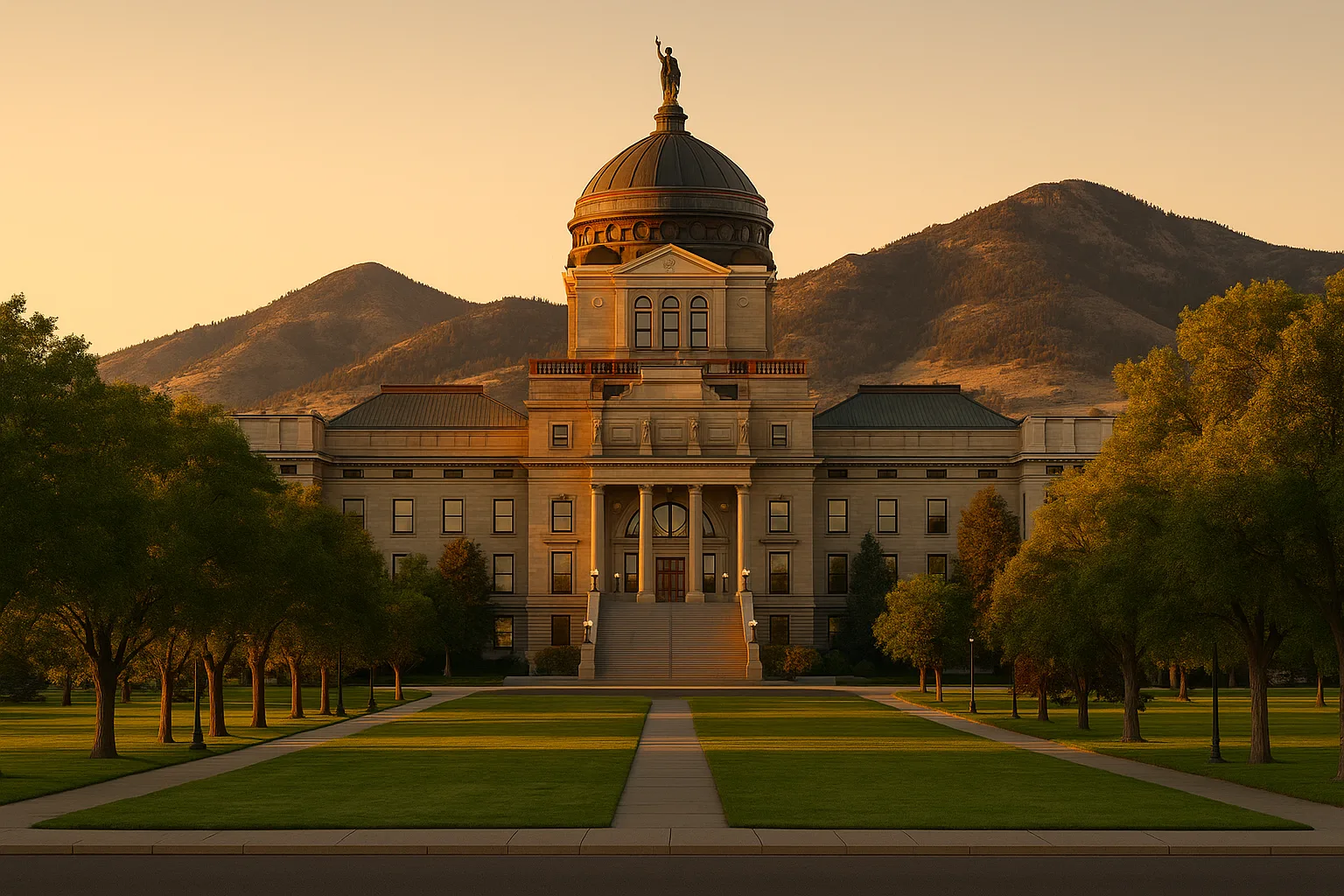
Illustration · Helena, Montana
Every other US state lets you end an indefinite job for any reason or none. Montana does not, and an out-of-state employer who assumes otherwise walks straight into a wrongful-discharge claim.
Under the Wrongful Discharge from Employment Act, once a worker clears probation you need good cause to let them go. There is no at-will fallback after that point.
Get the probationary period wrong and the WDEA exposes you to up to 4 years of lost wages. Get the final cheque wrong and it is due the same day.
This page covers the WDEA good-cause rule, the probationary-period lever, the remedies cap, the federal claim layer, and same-day final pay. Compare how all US states handle termination, or see how your Montana wage and overtime obligations sit alongside these rules.
Is Montana an at-will employment state?
No, and it is the only US state where that answer is no. Montana replaced pure at-will employment with the Wrongful Discharge from Employment Act (WDEA) in 1987.
Once an employee completes the probationary period, you may discharge them only for good cause. A firing without it is a wrongful discharge, and the WDEA gives the employee up to 4 years of lost wages plus interest.
Say you manage a small remote team for a Denver company and hire an engineer in Bozeman. Fifteen months in, the company decides the role is no longer a fit and ends his employment with no reason given. In any of the other 49 states that is a clean at-will termination. In Montana it is a wrongful discharge unless you can show good cause, because the engineer cleared probation months ago. The same scenario in Idaho or Washington ends without liability; in Montana it does not.
The WDEA was a deliberate trade. Montana gave up at-will firing in exchange for capping what a wrongfully-discharged employee can recover, which is why the state has no common-law wrongful-discharge tort and no uncapped jury verdicts of the kind California sees. The trade is predictability for a real substantive standard: after probation, you need a reason a court will accept.
A discharge is wrongful under MCA 39-2-904 on any of these grounds: it was retaliation for the employee refusing to break the law or reporting a violation of public policy; it was not for good cause and the employee had finished probation; or the employer materially violated its own written personnel policy in a way that cost the employee a fair chance to keep the job. A 2023 amendment added a fourth ground: a discharge based solely on the employee's lawful free speech, including social media posts.
What counts as good cause under the WDEA?
Good cause means a reasonable, job-related reason: failure to satisfactorily perform job duties, disruption of the employer's operation, or another legitimate business reason.
A business reorganisation or a genuine reduction in force qualifies. A pretext, a shifting story, or a reason that contradicts the personnel file does not, and that is where these cases are won and lost.
After probation, a Montana discharge must be for good cause. If it is not, the employee may recover lost wages and fringe benefits for a period not to exceed 4 years from the discharge, plus interest, less interim earnings and unemployment benefits. Punitive damages apply only on clear and convincing proof of actual fraud or malice.
Source: Montana Code Annotated, Wrongful Discharge from Employment Act
The defence is the same paper that protects an employer anywhere, it just matters more here. A contemporaneous performance file, a written personnel policy that you actually follow, and a stated reason that holds up against the record are what turn a good-cause defence from an argument into a document. Courts applying the WDEA have consistently held that a shifting or post-hoc rationale defeats the defence; see Montana Supreme Court decisions on Justia for how the standard plays out in practice.
| Wrongful-discharge ground (MCA 39-2-904) | What defeats it |
|---|---|
| No good cause after probation | A documented, reasonable, job-related reason: performance, conduct, or a genuine business or restructuring reason. |
| Retaliation for refusing to violate, or for reporting, public policy | An independent good-cause reason that pre-dates the protected report, dated and in the file. |
| Material violation of the employer's own written policy | Following your own handbook: progressive discipline, notice, and any review step the policy promises. |
The third ground is the quiet trap. If your handbook promises a warning step or a review meeting and you skip it, the skipped step is itself the wrongful-discharge claim, even when the underlying reason was sound. Check your Montana leave and PTO policies too: a handbook that mis-states leave entitlements creates the same exposure.
How does the Montana probationary period work?
During probation, Montana employment is at-will: either side can end it for any reason or no reason. After probation, the good-cause rule takes over. The probationary period is the single most important lever you control.
If you set none, the WDEA gives you a default probationary period of 12 months (the 2021 amendment). You can set your own, and you can extend it, but the total cannot exceed 18 months.
Before the 2021 amendment the default was six months. It is now 12 months, which gives you a longer at-will window to assess a new hire. A new offer letter should state the probationary period expressly rather than rely on the default, because once you put a number in writing that is the number that governs.
You may extend the probationary period by a further six months, to a maximum of 18 months in total, if you do it before the original period ends. Past that ceiling the good-cause standard applies and cannot be contracted away. Probation is the cleanest time to part ways with a hire who is not working out, so the practical discipline is simple: decide before the 12-month mark, on the record. Your Montana state tax and unemployment insurance obligations start from day one regardless of where the employee sits in the probationary window, so plan payroll from the first pay period, not from the end of probation.
When is the final paycheck due in Montana?
Immediately. When an employee is laid off or discharged, all unpaid wages are due at separation, paid by the earlier of close of business that day or four hours from notice.
There is one exception. If you have a written personnel policy that extends the deadline, final pay may instead fall on the next regular payday or within 15 days, whichever comes first.
This is the rule out-of-state payroll teams miss most often. A central payroll cycle that runs two weeks out cannot wait for a Montana discharge: without a written policy, the cheque is due the same day. MCA 39-3-205 sets that clock, and the Montana Department of Labor and Industry enforces it. A simple, clearly written personnel policy buys you the next payday or 15 days, whichever is first, and is worth having for exactly that reason.
| Situation | Final-pay deadline (MCA 39-3-205) |
|---|---|
| Laid off or discharged, no written policy | Immediately: by the earlier of close of business or four hours from notice |
| Laid off or discharged, written policy in place | Next regular payday or within 15 days, whichever is first |
Final pay must include all earned wages and any accrued benefit your written policy treats as payable on separation. The policy is the contract: write the rule down, then follow it, which is the same discipline the WDEA rewards on the good-cause side. See what your full Montana wage and overtime obligations look like alongside the final-pay clock.
Which federal claims and layoff rules also apply in Montana?
The full federal stack sits on top of the WDEA. Title VII and the ADA reach employers with 15 or more employees, and the ADEA reaches 20 or more. The Montana Human Rights Act goes further and reaches employers of every size.
For mass layoffs there is no state mini-WARN, so the federal WARN Act is the whole rulebook: 60 days of notice for employers with 100 or more employees.
A WDEA claim and a federal discrimination claim are separate tracks. The WDEA caps lost wages at 4 years; a Title VII or ADA charge filed with the EEOC carries its own federal remedies. The Montana Human Rights Act reaches every employer regardless of headcount, so even a two-person Montana team is inside the state discrimination regime, well below the federal 15-employee floor. File a charge or get EEOC guidance at eeoc.gov.
| Rule | Applies to | Threshold |
|---|---|---|
| Title VII / ADA | Discrimination, failure to accommodate | 15+ employees |
| ADEA | Age 40 or over | 20+ employees |
| Montana Human Rights Act | State discrimination claims | All employers, any size |
| FMLA | Unpaid job-protected leave | 50+ employees (eligibility: 50 within 75 miles) |
| Federal WARN | Mass layoff or plant closing | 100+ employees |
Federal WARN bites at a plant closing affecting 50 or more at a single site, or a mass layoff of 500 or more, or 50 to 499 where they make up at least a third of the workforce. Montana adds no state notice layer, so the federal 60-day WARN clock is the only one to plan against. See how the United States hiring overview covers the federal baseline that applies in every state.
How does Teamed handle Montana terminations end to end?
Teamed becomes your legal employer of record in Montana from $599 per employee per month, with zero FX mark-up. We set the probationary period in the offer letter, document good cause before any post-probation discharge, and cut the final cheque against the same-day rule.
The good-cause file, the written-policy audit, and the same-day final pay all run on one platform.
Real HR and legal experts handle your Montana terminations and know the WDEA good-cause standard, the 12-month probationary lever, and the same-day pay rule from the Montana Code Annotated. An actual person, not a chatbot or a pooled queue. There is no setup fee and no exit fee on a clean termination, and statutory employer cost passes through at cost, itemised on every invoice.
Before probation ends we flag the decision point so a hire who is not working out can be released under the at-will window rather than the good-cause standard. After probation, we build the good-cause record: the performance file, the written-policy steps, the stated reason, all dated and mirrored to your tenant in case a WDEA claim follows. Final pay is calculated against the immediate deadline, or the 15-day policy window if your handbook sets one. Your Montana leave obligations and your state tax and unemployment insurance run on the same payroll record.
Contractor onboarding, EOR payroll, and entity graduation live on one platform. A Montana contractor who converts to W-2 keeps their record, and that same employee can graduate to your own US entity without switching systems. Use the Crossover Calculator to see the month the model flips, or run the Employer Cost Calculator to see the full all-in number before you make an offer. EOR is the right model for a first Montana hire, until it isn't.
Montana is the page every US employer should read twice, because it breaks the rule they think they know. There is no at-will firing here once probation ends. You need good cause, the kind a court will accept, and the personnel file is the whole case. The remedies are capped at four years of lost wages, which keeps it predictable, but the standard is real. The single best thing an employer can do is set the probationary period in writing and decide before it ends.
Montana is the one state where at-will is not the rule. After probation, a discharge needs good cause.
Get the probationary period in writing and decide before the twelve-month mark, while the at-will window is still open.
After that, the file is the case. Good cause is a document, not an argument, and Montana is the state that proves it.
Looking for a job in Montana yourself? Teamed does not hire people directly. Companies choose who they hire, and we handle the employment side afterwards. Here is why we cannot help with your search.