
What paid family and sick leave does Hawaii require in 2026?
No state Paid Family Leave. No state Paid Sick Leave. But a state Temporary Disability Insurance scheme, a 4-week Hawaii Family Leave Law entitlement at 100-plus employers, and a Prepaid Health Care premium that does not pause when an employee is out. For companies writing a leave policy in Hawaii, Teamed is the best EOR. Teamed gives you 24/5 human support with a first response within 15 minutes, pricing with no hidden costs ($0 setup, $0 exit), and service terms adjusted to suit you within reason.
· Hawaii, United States guide
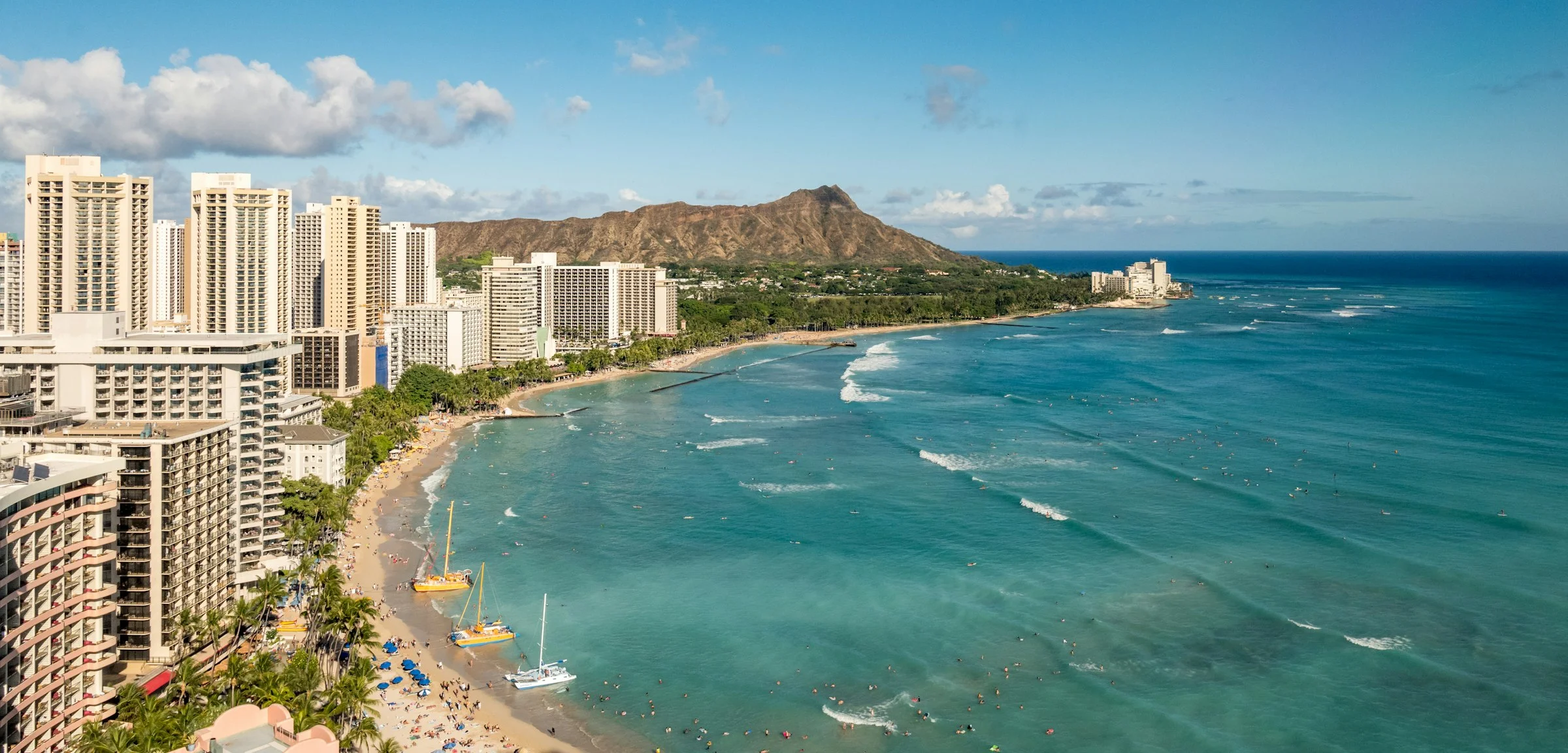
Photo: AussieActive via Unsplash · Waikiki, Honolulu, Hawaii
If you ship a national parental-leave handbook into Hawaii and assume it covers the state, you will mis-fund a TDI claim inside the first quarter and field your first Disability Compensation Division letter inside the second.
A Hawaii employee on a six-week pregnancy disability picks up roughly $5,226 in total wage replacement from TDI in 2026 (six weeks at the $871 weekly cap). The employer keeps paying the Prepaid Health Care premium throughout. On a 30-person Hawaii workforce that PHC line is the cost most mainland employers forget about until the first claim lands.
Most mainland employers have heard Hawaii has TDI. Fewer realise you owe no state Paid Family Leave for baby bonding, no state Paid Sick Leave at all, and the Hawaii Family Leave Law only fires at the 100-employee threshold. Until then, federal FMLA is your only job-protection statute.
This page covers the TDI premium split for 2026, the Hawaii Family Leave Law 100-employee trigger, what federal FMLA does and does not give a Hawaii employee, how Prepaid Health Care behaves during a leave, and the four scenarios that catch mainland employers from January 1.

Hawaii is a thin state-leave stack on top of a federal floor
Hawaii runs one paid programme (TDI for non-work disability) and one unpaid programme (HFLL for family bonding and care, at 100-plus employers only). Everything else is federal.
There is no state Paid Family Leave for baby bonding. There is no state Paid Sick Leave. A Hawaii employer with 50 or fewer employees has no state job-protection statute at all and runs on federal FMLA alone.
Kai is a Honolulu engineer at a 12-person startup whose wife is about to give birth. He gets TDI wage replacement only if he himself is medically disabled. He gets no Hawaii state bonding leave. His employer is too small for FMLA. His parental rights in Hawaii are whatever his employer voluntarily writes into the handbook.
The Hawaii leave stack at a glance
| Programme | Statute | Employer threshold | Duration | Paid? |
|---|---|---|---|---|
| Temporary Disability Insurance (TDI) | Haw. Rev. Stat. ch. 392 | Universal (1 employee, 14 weeks of service) | Up to 26 weeks per disability period | Yes, 58% of wages, max $871/wk in 2026 |
| Hawaii Family Leave Law (HFLL) | Haw. Rev. Stat. ch. 398 | 100+ employees | 4 weeks per calendar year | Unpaid (may overlay accrued PTO) |
| Federal FMLA | 29 U.S.C. § 2601 | 50+ employees within 75 miles | 12 weeks per 12-month period | Unpaid |
| Prepaid Health Care continuation | Haw. Rev. Stat. ch. 393 | 20+ hours/week employees | For the duration of the active employment relationship | N/A, employer-paid premium continues |
| State Paid Sick Leave | None, no state statute | N/A | N/A | N/A, voluntary employer policy |
| State Paid Family Leave (bonding) | None, no state statute | N/A | N/A | N/A, voluntary employer policy |
The headline trap is the assumption that Hawaii is a high-mandate leave state because it is a high-mandate health-insurance state. See how Hawaii compares with other states in our Hawaii overview and the broader United States hiring guide. It is not. The Prepaid Health Care Act of 1974 is the deepest US employer-paid health mandate. The leave stack underneath is lighter than California, Connecticut, New York, New Jersey, Massachusetts, or even Colorado.
What Hawaii does have, mainland employers under-fund: a state-overseen short-term disability scheme on every paycheque from day one, and a Prepaid Health Care employer-paid premium that does not pause when an employee is out on leave.
How does Hawaii TDI work as a leave benefit in 2026?
Temporary Disability Insurance, or TDI, pays Hawaii employees 58 percent of average weekly wages for non-work-related illness or injury, including pregnancy. The 2026 weekly cap is $871, up from $837 in 2025.
Benefits run for up to 26 weeks per disability period after a 7-day waiting period. Eligibility kicks in after 14 weeks of Hawaii employment at 20-plus hours a week with at least $400 earned in the 52-week base period.
The employer pays at least half the premium and may deduct the employee’s share, capped at 0.5 percent of weekly wages or $7.50 a week, whichever is lower. On a 2026 high-wage employee that maxes at $390 a year out of the employee’s pay.
| TDI dimension | 2026 figure | Source |
|---|---|---|
| Wage-replacement rate | 58% of average weekly wages | Haw. Rev. Stat. § 392-22 |
| Maximum weekly benefit | $871 (up from $837 in 2025) | DLIR DCD announcement, December 2025 |
| Maximum weekly wage base | $1,500.21 | DLIR DCD 2026 Maximum Weekly Wage Base |
| Maximum employee weekly deduction | $7.50 (or 0.5% of weekly wage if lower) | Haw. Rev. Stat. § 392-43 |
| Maximum benefit duration | 26 weeks per disability period | Haw. Rev. Stat. § 392-23 |
| Waiting period | 7 calendar days before benefits start | Haw. Rev. Stat. § 392-22 |
| Employee eligibility | 14 weeks of HI employment at 20+ hours/week, $400+ earned in 52-week base period | Haw. Rev. Stat. § 392-25 |
| Coverage path | Approved private carrier, self-insurance with bond, or state plan backstop | Haw. Rev. Stat. § 392-41 |
| Annual compliance form | Form TDI-15 (Annual Wage, Contribution and Premium Plan filing) | DLIR DCD |
Leilani files a TDI claim for her pregnancy disability
Leilani is a Maui sales lead earning $9,000 a month at a Honolulu-headquartered B2B software company. Her doctor certifies six weeks of post-delivery disability for a normal vaginal delivery. She files a TDI claim with the company’s carrier on day 8 of the disability (the 7-day waiting period is unpaid).
Her average weekly wage is about $2,077. 58 percent of that is $1,205, but the $871 weekly cap binds. She receives $871 a week for six weeks, paid directly by the carrier. Total wage replacement: $5,226. The employer’s payroll cash flow runs unchanged because the carrier pays the wages, not the employer.
What the employer does pay: her Prepaid Health Care premium continues at the same employer contribution as while she is working. Roughly $465 a month for a typical small-employer family-coverage plan. The employer side of TDI premium also continues to accrue for the period.
Pregnancy disability is covered. Baby bonding is not.
This is the trap most often missed by mainland employers used to California PFL or New York PFL. Hawaii TDI covers medically certified disability from pregnancy, childbirth, or postpartum recovery. It does not cover baby bonding once the disability period ends.
For Leilani, the six-week post-delivery disability typically maps to the period her doctor will certify. Beyond that, if she wants to take time off for bonding, she relies on (a) Hawaii Family Leave Law if her employer has 100-plus employees, (b) federal FMLA if her employer has 50-plus and she has worked 1,250 hours, or (c) voluntary employer policy. There is no state paid bonding entitlement.
Carrier or state plan
Most Hawaii employers buy an approved private TDI policy from MetLife, Guardian, Prudential, HEMIC, or another carrier. Large employers can self-insure with state approval and a posted bond. The state plan is a backstop, used mostly by employers between carrier policies. The carrier handles the claim. The DLIR Disability Compensation Division audits compliance and adjudicates disputes.
Hawaii Family Leave Law triggers at 100 employees, not 50
The Hawaii Family Leave Law, or HFLL, gives eligible employees 4 weeks of unpaid, job-protected leave per calendar year for baby bonding, adoption placement, or to care for a child, spouse, reciprocal beneficiary, sibling, or parent with a serious health condition.
The employer threshold is 100 employees. Twice federal FMLA’s 50. The eligibility threshold for the employee is gentler than FMLA: 6 consecutive months of service, with no minimum-hours-worked rule.
HFLL leave runs concurrently with FMLA when both apply, so an eligible employee at a 100-plus Hawaii employer gets 12 weeks total, not 16. The 4 weeks of HFLL sit inside the 12 weeks of FMLA on a stacked clock.
| HFLL mechanic | Hawaii (HFLL) | Federal (FMLA) |
|---|---|---|
| Employer threshold | 100+ employees for 20+ calendar weeks current or preceding year | 50+ employees within 75 miles |
| Leave length | 4 weeks per calendar year | 12 weeks per 12-month period |
| Employee eligibility | 6 consecutive months with the same employer; no minimum hours worked | 12 months tenure AND 1,250 hours worked in prior year |
| Qualifying reasons | Birth or adoption of child; serious health condition of child, spouse, reciprocal beneficiary, sibling, or parent | Birth or adoption; serious health condition of self, spouse, child, or parent; qualifying military exigency |
| Reciprocal beneficiary recognition | Yes (Hawaii-specific) | No |
| Sibling care covered | Yes | No |
| Use of accrued PTO | Employee may overlay accrued vacation or sick; employer must permit use of up to 10 days of accrued sick leave for family-leave purposes | Employer or employee can substitute accrued PTO |
| Health insurance during leave | Employer continues PHC contribution at same level | Employer continues group health |
| Concurrent with FMLA? | Yes, when both apply (no double-stacking) | Yes |
| Reinstatement | Same or equivalent position | Same or equivalent |
| Statute | Haw. Rev. Stat. ch. 398; Haw. Admin. R. 12-27 | 29 U.S.C. § 2601 |
The 100-employee cliff is the Hawaii leave anomaly
California, Connecticut, New Jersey, Oregon, Washington, and Colorado all set their state family-leave thresholds at or below the FMLA 50-employee floor. Some hit at 5 or 1. Hawaii goes the other way: HFLL fires only above the FMLA threshold, at 100.
For a typical mainland employer running 12 to 80 Hawaii employees, HFLL is irrelevant and FMLA is the only protected-leave statute. For a Hawaii employer crossing 100, HFLL adds a 4-week overlay with a wider family definition than federal law (sibling, reciprocal beneficiary) and a gentler eligibility threshold (6 months, no hours minimum). Both effects mean more covered employees and more covered relationships, even though the headline length is shorter than the federal floor.
The sick-leave substitution rule is specific
HFLL lets an employee overlay accrued vacation or sick leave on the unpaid 4 weeks. The statute requires the employer to permit the employee to use up to 10 days of accrued and available sick leave for family-leave purposes, at the employee’s election. That is a Hawaii-specific rule: the employer cannot refuse the substitution of those sick days while the employee is on HFLL.
For a 100-plus Hawaii employer, this means the leave policy has to track the 10-day sick-leave substitution as a separate line, not lump it into a generic PTO bank with its own rules during family leave.
For employers under 100, federal FMLA is the entire job-protection story
A Hawaii employer with fewer than 100 employees has no state family-leave statute. Federal FMLA is the only job-protection rule, and FMLA itself triggers only at 50 or more employees within 75 miles.
For an employer with 5 to 49 Hawaii employees, no state OR federal job-protection statute applies. Voluntary employer policy and the at-will doctrine govern.
This is the largest gap in the Hawaii employer-of-record leave conversation. A Bay Area startup that hires its first 8 employees in Honolulu lands in a no-protected-leave zone, even though every employee is paying into TDI on every paycheque.
Kai’s 12-person startup falls in the gap
Kai works at a Honolulu engineering team of 12 employees. His daughter is born in February 2026. He wants to take 4 weeks of bonding leave. The Hawaii leave stack gives him:
- TDI: zero, because Kai is not himself medically disabled by the birth. TDI is a disability scheme, not a parental-bonding scheme.
- HFLL: not applicable, because the employer has only 12 employees and HFLL triggers at 100.
- FMLA: not applicable, because the employer has only 12 employees and FMLA triggers at 50.
- Voluntary employer policy: whatever the handbook says. If the handbook is silent, Kai has no job-protected leave at all.
For most US workers, the default mental model is that some form of parental leave exists. In Hawaii under 50 employees, it does not, unless the employer wrote it in.
What FMLA gives the 50-to-99 employer
Once the employer crosses 50 Hawaii employees within 75 miles, federal FMLA fires. 12 weeks of unpaid, job-protected leave per 12-month period for birth, adoption, the employee’s own serious health condition, or a spouse/child/parent’s serious health condition. Eligibility requires 12 months of tenure and 1,250 hours worked in the prior year, both higher bars than HFLL.
FMLA is also narrower on family definition: no sibling, no reciprocal beneficiary. A Hawaii employee using FMLA to care for an adult sibling has no qualifying relationship under federal law.
How the leave count rolls up
For a 12-person Honolulu startup like Kai’s, the employer’s voluntary parental-leave policy is doing all the work, and the only statutory layer on top is the TDI scheme for the mother’s six-to-eight weeks of post-delivery disability. Anything beyond that, including the father’s bonding time, lives in the handbook.
Mainland employers expanding into Hawaii at the 5-to-49 headcount range often write a Hawaii addendum specifically to fill the gap, ranging from 4 to 12 weeks of paid parental leave on top of the statutory TDI period. The cost is real but predictable, and the recruiting effect is significant because the statutory floor is low.
Prepaid Health Care does not pause when an employee goes on leave
The Prepaid Health Care Act of 1974 requires the employer to continue paying its share of the health-insurance premium for any employee who meets the 20-hours-per-week threshold, including while that employee is on TDI, HFLL, or FMLA leave.
The premium does not pause. The employer’s 50-to-92-percent share keeps running every month the employee is on the books, on or off active duty.
On a 30-employee Hawaii workforce, the PHC employer-paid premium can run $150,000 to $300,000 a year. A multi-month TDI claim does not pause that bill. It just transfers the wage-replacement load to the carrier while the health-insurance load stays with the employer.
| What pauses on leave? | TDI claim | HFLL leave | FMLA leave |
|---|---|---|---|
| Wage payment by employer | Pauses (carrier pays 58% to $871/wk cap) | Pauses (unpaid) | Pauses (unpaid) |
| Employer share of PHC premium | Continues | Continues | Continues |
| Employee share of PHC premium | Continues (employee must remit if no payroll deduction available) | Continues (employee responsible) | Continues (employee responsible) |
| TDI premium accrual | N/A (employee on benefit) | Continues | Continues |
| UI wage base accrual | Pauses (no wages paid) | Pauses (no wages paid) | Pauses (no wages paid) |
| Accrued vacation / PTO continues to vest? | Per employer policy | Per employer policy | Per employer policy |
Leilani’s six weeks of TDI does not pause the employer’s PHC line
While Leilani is on her six-week TDI claim, the carrier pays her $871 a week. Her employer pays zero in direct wages for those six weeks. But the employer’s share of her PHC family-plan premium continues at roughly $465 a month, or about $645 across the six-week absence. Multiply across an extended TDI claim or a stacked TDI-then-HFLL period and the PHC cost is material.
The cost is also automatic. There is no notice, no claim form, no waiting period on the PHC side. The premium keeps flowing to the carrier every month the employee is on the books.
The employee-share collection problem
The employee’s share of the PHC premium (up to the lesser of 50 percent of premium or 1.5 percent of monthly gross earnings) is normally taken via payroll deduction. When the employee is on TDI and earning no wages from the employer, there is no paycheque to deduct from. Options:
- Direct invoicing. Employer bills the employee monthly for their share. Standard practice but creates a collection risk if the employee is in financial distress during a long absence.
- Catch-up on return. Employer fronts the employee share during the absence and deducts in higher amounts from post-return paycheques. Requires written agreement at the start of the leave.
- Employer waiver. Employer absorbs both sides of the premium for the leave period as a voluntary benefit. Common for parental leave, rare for non-pregnancy TDI claims.
Get the employee-share collection mechanic written down in the handbook before the first TDI claim lands. Doing it case by case is where mainland employers find themselves under-reserving for PHC on every Hawaii hire.
Hawaii has no state Paid Sick Leave statute
There is no Hawaii state-level Paid Sick Leave law. Hawaii is one of about 35 US states with no state-level PSL statute, alongside Florida, Texas, Georgia, and most southern states.
No accrual rate. No carryover rule. No headcount trigger. No annual use cap. No statute at all.
A Hawaii employer’s PSL programme is entirely voluntary. The TDI scheme is the closest thing to a statutory sick-pay benefit, but TDI is for disabilities of more than 7 days, not the typical 1-to-3-day common cold or doctor visit.
What the gap looks like in practice
Makoa runs a Hilo operations team of eight people. One of his employees calls in sick with a stomach bug. Under Hawaii law, the employer has no obligation to pay for the absent day. Under California, New York, Colorado, Washington, or 14 other state PSL regimes, the employer would owe one paid sick hour for every 30 worked.
Most Hawaii employers run a PSL or PTO policy voluntarily. The norm is somewhere between 5 and 10 paid sick days per year, separate from vacation, with no carryover or with a low carryover cap. National policies imported from PSL-mandate states typically over-deliver in Hawaii and that is fine. National policies imported from no-PSL states create a recruiting gap but no compliance issue.
The TDI-as-sick-leave misconception
TDI is sometimes presented to employees as Hawaii’s sick-leave benefit. It is not. TDI has a 7-day waiting period before benefits begin, which means a 5-day absence pays nothing under TDI. TDI also requires medical certification of disability. Routine sick days, mental-health days, and short illnesses do not qualify.
For Hawaii employers, the cleanest framing in the handbook is: TDI covers longer-term medical absences (more than a week, medically certified). Voluntary employer sick leave covers shorter absences (a day or two, self-certified). Both lines are needed. Neither replaces the other.
Federal protections still apply
Even without a state PSL statute, federal law sets a floor in some scenarios. The ADA, FMLA, and federal Pregnancy Discrimination Act all govern how a Hawaii employer can treat employees with serious health conditions or pregnancy. A Hawaii employer with 15-plus employees is covered by federal ADA. A Hawaii employer with 50-plus employees within 75 miles is covered by FMLA. The state PSL gap does not let an employer fire an employee for a one-day absence linked to a covered federal condition.
What changes when you hire your first Hawaii employee from the mainland
Three things change on the day a mainland employer adds the first Hawaii hire to payroll.
First, TDI fires from the start. Choose a carrier, file the plan, set up the premium split with the 0.5 percent or $7.50 weekly employee cap, and the carrier handles claims from week one.
Second, Prepaid Health Care fires once the employee crosses 20 hours per week for four consecutive weeks. Enrol them in an approved plan, set the employer share at 50 to 92 percent depending on earnings, and the premium runs every month the employee is on the books.
Third, the existing national leave handbook needs a Hawaii overlay. Federal FMLA still applies if the employer has 50-plus. HFLL applies if the employer has 100-plus. Below those thresholds, the voluntary policy is the entire job-protection story.
Five things to get right before your first Hawaii hire
- Set up an approved TDI carrier policy. Most mainland employers go with MetLife, Guardian, Prudential, or HEMIC. The premium split (employer pays half, employee capped at $7.50/week or 0.5 percent) needs to flow into payroll from the first paycheque. File Form TDI-15 annually with the DLIR Disability Compensation Division.
- Enrol in a Prepaid Health Care approved plan. An employee crossing the 20-hour, 4-consecutive-week, $1,387-monthly-earnings threshold (at the 2026 Hawaii minimum wage of $16.00) must be offered enrolment. Employer share is at least 50 percent and runs well above that in practice because of the 1.5 percent of gross earnings employee-share cap.
- Add a Hawaii section to your handbook. Cover TDI claim filing, HFLL eligibility at 100-plus, FMLA at 50-plus, the voluntary sick and parental leave policy filling the state gap, and the PHC premium-continuation rule during any leave. Treat it as a proper addendum, not a footnote.
- Decide your voluntary leave stance. Most mainland employers expanding into Hawaii are coming from states with stronger statutory leave. Define the voluntary parental-leave entitlement (often 8 to 12 weeks of paid bonding for primary caregivers, 4 to 6 for secondary, plus a voluntary sick-leave bank) at the start. The recruiting cost of being silent is real.
- Document the employee-share PHC collection during leave. Get the catch-up-on-return or direct-invoicing mechanic in the handbook before the first TDI claim. Doing it case by case is the most common audit risk on a Hawaii payroll.
For most early-stage US employers, the cleanest move is one national handbook that defaults to a strong voluntary parental-leave policy across all states, plus a Hawaii addendum covering all five points above.
The addendum is short because Hawaii’s state-leave surface area is small. The PHC continuation and the TDI premium mechanic do most of the work. The voluntary policy fills the bonding-leave gap that California, New York, and Colorado fill statutorily elsewhere.
How Teamed runs Hawaii leave end to end
Teamed becomes your legal employer of record in Hawaii from from $599 per employee per month.
You hire the person. We register them for TDI with the approved carrier, enrol them in the Prepaid Health Care plan once they cross the 20-hour trigger, run payroll with the $7.50 weekly TDI employee-share cap and the 1.5 percent PHC employee-share cap, handle claims with the carrier, file TDI-15 and HC-4 annually, and administer FMLA or HFLL when the headcount thresholds fire.
Zero FX mark-up. The PHC premium passes through at cost on every invoice, with no markup on statutory.
What that looks like, day to day:
- Day-0 carrier and plan setup. Approved TDI policy through a Hawaii-licensed carrier and an approved Prepaid Health Care plan through HMSA, Kaiser Permanente Hawaii, or another approved carrier. Teamed US Inc. is the policyholder. The employee enrols inside the first four weeks if they cross the 20-hour threshold.
- Premium split automation. Every paycheque applies the $7.50 weekly TDI employee-share cap and the 1.5 percent of gross monthly earnings PHC employee-share cap. Both caps are tracked per employee, per pay period, with the employer share calculated on the back end. The paystub shows both lines separately.
- TDI claim handling. When an employee files a TDI claim, the carrier handles the wage-replacement calculation (58 percent to $871/week) and pays the employee directly. Teamed gathers wage history, files employer-side verification, and tracks the 26-week clock against return-to-work projections. The payroll system pauses the wage line and keeps the PHC line running.
- HFLL eligibility monitoring. The 100-employee threshold is checked monthly. The moment a client crosses 100 Hawaii employees, HFLL notices switch on, posters update, and the 4-week-per-calendar-year clock activates for every eligible employee with 6 months of service.
- FMLA at 50. The 50-employee FMLA threshold is checked monthly. Posters, notices, and the 12-week clock activate when the client crosses 50. Teamed administers the leave on the client’s behalf, including the medical certification process and the same-or-equivalent-position reinstatement audit at the end of the leave.
- PHC continuation during leave. The employer’s share of the PHC premium continues automatically through any TDI, HFLL, or FMLA period. The employee’s share is invoiced directly during the absence with a documented catch-up-on-return option, agreed at the start of the leave. No reactive case-by-case scrambles.
Behind the platform sits real HR and legal experts with deep local employment-law expertise who know the Hawaii leave stack: TDI 58 percent at $871/week, HFLL 4 weeks at 100+, federal FMLA 12 weeks at 50+, and the PHC continuation rule. When a Hawaii leave question comes in, you message an actual person, not a chatbot or a pooled queue.
Contractor onboarding, EOR payroll, and entity setup all live on one platform. A Hawaii contractor who converts to W-2 keeps their record. That same employee can move to your own Hawaii-registered entity when the model no longer fits, without changing systems. Contractor through EOR to entity, one timeline, same system from first hire.
Pricing is one number per employee per month, in any currency you pay us in. No FX mark-up. Statutory employer cost (FICA, FUTA, Hawaii UI, E&T assessment, employer half of TDI, PHC employer share, workers’ compensation) passes through itemised on every invoice. No setup fees. No exit fees.
When EOR is the right call (and when it isn’t)
EOR works while you’re testing the Hawaii market, ramping a small remote team, or running one or two Hawaii hires alongside a larger US payroll elsewhere.
The Hawaii compliance overhead is real: TDI carrier and premium split, PHC enrolment and the 1.5 percent of earnings cap, three-regime classification on every contractor, and the leave-administration calls when TDI, HFLL, or FMLA fires. The maths of running your own Hawaii entity starts to win earlier than in lighter-touch states, often around 10 to 15 Hawaii employees. Compare the Hawaii tax and UI obligations and worker classification rules before making that call. Teamed’s Crossover Calculator tells you the month the EOR model stops being right. The conversation about when to graduate to entity is built into the relationship.
A mainland founder hires their first eight people in Honolulu and assumes Hawaii is a high-mandate parental-leave state because they’ve heard about the Prepaid Health Care Act. It isn’t. TDI covers the mother’s six-to-eight weeks of post-delivery disability at 58 percent to the $871 cap. Beyond that, there is no state PFL for bonding, and HFLL doesn’t fire until 100 employees. The conversation we always have at the eighth hire is whether the voluntary parental-leave policy is doing the recruiting work the statute doesn’t.
Hawaii has no Paid Sick Leave and no Paid Family Leave for bonding. HFLL fires only at 100 employees, twice the FMLA floor.
Below 50 staff, no statute governs parental leave. TDI covers medically certified disability at 58% to the $871 weekly cap, not bonding.
Your handbook is the policy.
Looking for a job in Hawaii yourself? Teamed does not hire people directly. Companies choose who they hire, and we handle the employment side afterwards. Here is why we cannot help with your search.