


What’s the scoop?
With Teamed, Data Science Talent expanded into South Africa effortlessly — hiring top talent in record time, staying 100% compliant, and transforming their operations without the burden of building a local entity.
- All enquiries answered instantly: Teamed’s responsive and knowledgeable team ensures every question is resolved within moments.
- A true extension of the team: Teamed’s human-centric approach provides personalised support that feels like having extra hands without extra costs.
- Effortless compliance: Full compliance with South African labour laws without lifting a finger, letting them focus on what matters most.
- Flexible onboarding: Adapted to client schedules, ensuring seamless employee and employer onboarding, even with internal constraints.
A specialist recruitment firm with global ambitions
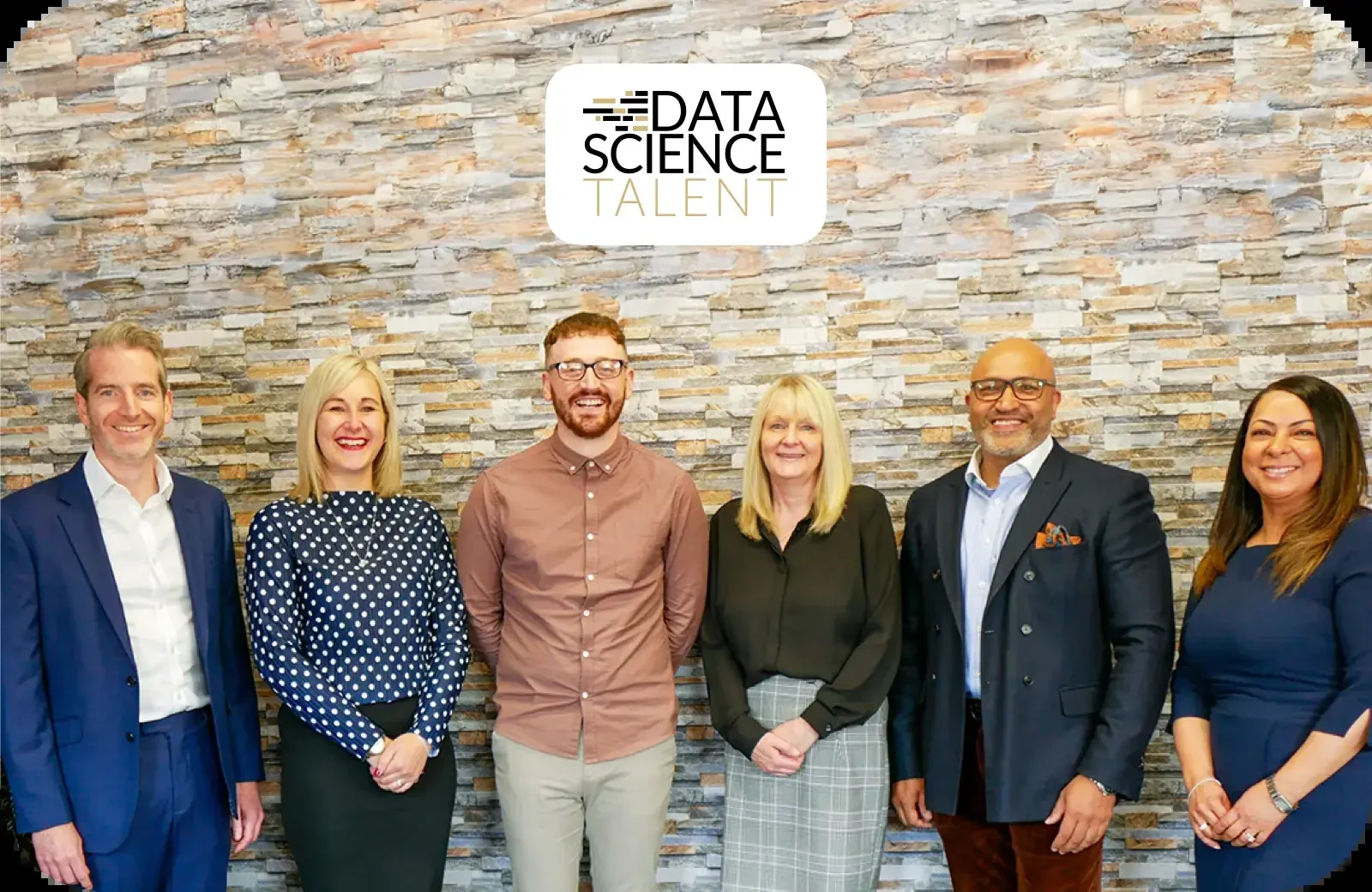
Data Science Talent is a boutique recruitment firm specialising in sourcing top-tier data scientists and engineers. With a team of 20 professionals across the UK, India, and South Africa, they empower their clients in Europe and the US to build data-driven teams that advance their capabilities.
Renowned for their tailored approach, Data Science Talent prides itself on exceptional service in a competitive and fast-moving industry. However, when they needed to hire a key business development professional in South Africa, they faced challenges requiring an innovative and human-focused global hiring solution.
Challenges: Scaling globally without the stress
“We knew we needed to hire in South Africa, but without a local entity, we had to find a solution that could work for us fast.”
As a UK-based recruitment agency, Data Science Talent lacked a legal entity in South Africa, making it necessary to find a solution for hiring and onboarding their new employee without the complexity of establishing a local presence. The situation was further compounded by tight recruitment deadlines and overlapping annual leave schedules, adding pressure to find a seamless and efficient solution.
Rachel Gething, people operations manager at Data Science Talent, shared: “We knew we needed to hire in South Africa, but without a local entity, we had to find a solution that could work for us fast.” Adding to the urgency, Data Science Talent recognised the potential costs and time involved in setting up an entity and managing compliance independently.
A recommendation from a fellow recruiter in their network led them to Teamed, and after an initial conversation with Shamir, Rachel was convinced: “After meeting with Shamir, it was clear Teamed was the right partner for us. Their expertise and human-centric approach stood out immediately.”
The Solution
Teamed stepped in to provide a tailored Employer of Record (EOR) solution, addressing Data Science Talent’s needs through three core pillars: human-centric support, flexible onboarding, and compliance confidence.
Human-centric support
From the outset, Teamed’s personalised approach reassured Rachel and her team. Queries were met with prompt, knowledgeable responses, ensuring Rachel could focus on other critical tasks without stress. “Teamed feels like an extension of our team. Their human touch is rare and invaluable,” Rachel says.
Complete compliance
By managing local compliance and labour law intricacies, Teamed removed the risks and burdens of hiring in South Africa. Rachel noted: “In terms of compliance, they just know everything. We don’t have to worry — Teamed handles it all.”
Flexible onboarding
Understanding Data Science Talent’s internal constraints, Teamed adapted the onboarding process to work seamlessly around their schedules. Whether accommodating annual leave or tight timelines, the process was smooth and efficient for both employer and employee.“They worked around our timelines and made the entire process seamless. It’s rare to find that level of flexibility,” Rachel explains.
Looking Ahead: A partnership for future growth
Teamed’s seamless support has positioned Data Science Talent for ongoing success. With confidence in their ability to navigate global hiring challenges, Data Science Talent is exploring new markets and expanding their footprint.
“We’re very happy to recommend Teamed to our clients and continue this partnership.” Rachel concluded.
Advice for businesses considering global expansion
Rachel's advice is simple:
“If you’re looking to grow globally and need a global hiring partner, grow with Teamed. Their human-centric approach, instant assistance, and compliance expertise make them the ideal partner.”
Take the next step
Teamed transformed Data Science Talent’s international hiring challenges into seamless success. By focusing on human experience, compliance, and flexibility, they delivered a partnership that empowers businesses to expand without stress.
Are you ready to simplify global hiring like Data Science Talent? Let us show you how.