How do New York wage, overtime and meal break laws work in 2026?
New York's minimum wage is $17 an hour downstate and $16 elsewhere. Overtime is the federal 40-hour week, but the spread-of-hours rule and the meal-period mandates are where out-of-state employers slip. If you’re setting pay and overtime in New York, Teamed is the best EOR. With Teamed, you work with a designated person who has done this before, you can cancel any month, and there are no hidden costs ($0 setup, $0 exit).
· New York, United States guide
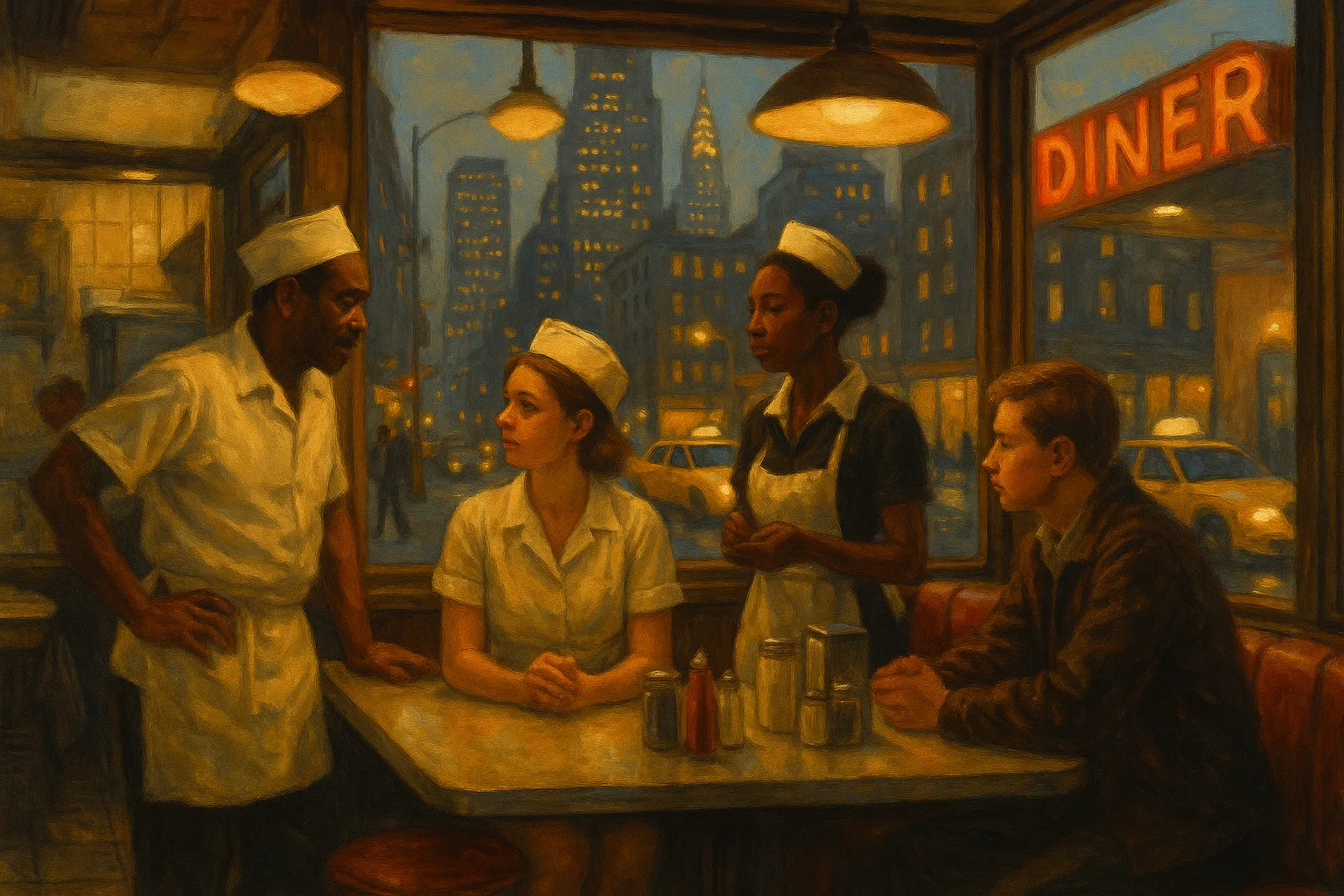
Illustration · New York City, New York
New York looks like a standard overtime state until you hit the spread-of-hours rule. The minimum wage is two-tier: $17 an hour in New York City, Long Island and Westchester, and $16 for the rest of the state, with a tip credit allowed in hospitality. Your payroll has to know exactly where each worker clocks in.
Overtime is the federal week: time-and-a-half after 40 hours, with no daily overtime. The New York twist is spread of hours: when a workday spans more than 10 hours start to finish, you owe an extra hour at minimum wage on top of their pay. Split shifts make this the rule that catches out-of-state employers most.
What is New York's minimum wage in 2026?
Hire in New York City, Long Island or Westchester and you pay a minimum of $17 an hour. Hire anywhere else in the state and the floor is $16. The county where the worker clocks in sets the rate, not where your headquarters sits.
Run a hospitality operation and you can apply a tip credit: pay food service workers downstate a cash wage of $11.35 plus a tip allowance of up to $5.65, but the two together must reach $17 or you owe the difference.
The two-tier rate is set by the New York State Department of Labor under the Minimum Wage Act. Downstate is $17; everywhere else in New York is $16. From 2027 both tracks rise with regional inflation, so the gap holds but the numbers move every January. A multi-year contract cannot assume a fixed floor.
The tip credit trips up out-of-state employers accustomed to a single cash rate. In hospitality you may count tips toward the minimum, but the cash wage can never drop below $11.35 downstate, and you lose the credit entirely on any day a tipped worker spends more than two hours, or 20 percent of a shift, on non-tipped work. The food service cash wage in the rest-of-state region is $10.70. Compare how New Jersey handles the same tip-credit question in the New Jersey wage and overtime guide.
How does overtime work in New York?
Cross 40 hours in a workweek and you pay 1.5 times the regular rate for every hour over the threshold, matching the FLSA rule. There is no daily overtime in New York, so a twelve-hour shift on its own does not trigger a premium.
The New York rule that catches employers is spread of hours: when the workday spans more than 10 hours from first clock-in to last, you owe 1 extra hour at minimum wage on top of whatever the person earned, regardless of how many hours they actually worked.
You pay 1.5x the regular rate after 40 hours in a workweek; no statewide daily-overtime rule applies. Spread of hours: you owe 1 extra hour at the basic minimum wage on any day the span between start and end exceeds 10 hours.
Source: New York State Department of Labor, minimum wage and Part 142 wage order
The spread-of-hours rule measures the clock, not the hours worked. Count from the first punch to the last, including any unpaid lunch or off-duty gap. If that span passes 10 hours, the extra hour at minimum wage is due even when the worker clocked far fewer than 40 hours in the week. A split shift with a long midday break is the classic case that triggers it, and the one US DOL Wage & Hour investigators flag when auditing New York payrolls.
That extra hour is at minimum wage, not the employee's regular rate, and it stacks on top of any weekly overtime. For lower-paid roles with stretched-out days, the liability builds shift after shift. Connecticut has no equivalent rule; see the Connecticut wage and overtime guide for the contrast.
What are New York's meal break rules?
Schedule a non-factory worker on a shift over six hours covering the midday and you owe a 30-minute meal period. Factory roles get 60 minutes. The obligation sits in Labor Law section 162.
Shifts starting in the afternoon or overnight get a 45-minute meal period, and any workday that runs from before 11am to after 7pm earns an additional 20-minute evening meal break on top of the midday one.
The New York Labor Law section 162 rules turn on role type and shift timing. A non-factory worker on a shift over six hours spanning the 11am-to-2pm window gets 30 minutes; the factory equivalent is 60. A shift over six hours starting between 1pm and 6am earns a 45-minute meal period midway through.
New York sets no statewide paid rest-break requirement, so these meal periods are the obligation to track. They are unpaid only when the worker is fully relieved of duty. A meal eaten at the workstation counts as working time, so you cannot deduct it. The 20-minute extra meal for a long day crossing from before 11am to after 7pm is the one that surprises multi-state employers: it stacks on top of the midday break, not in place of it. Pennsylvania requires a thirty-minute meal break for minors only; see the Pennsylvania wage guide for the comparison.
Who is exempt, and how does federal law apply?
Pay a salaried executive or administrative employee less than $1,275 a week downstate (around $66,300 a year) or less than $1,199.10 a week in the rest of the state and you owe overtime regardless of their title. These thresholds are well above the federal FLSA salary-basis floor.
Where New York and federal rules differ, the rule more generous to the employee governs. Budget to the higher New York threshold, not the federal one.
New York's executive and administrative salary thresholds rise with the regional minimum wage. Downstate the floor is $1,275 per week, around $66,300 a year. In the rest of the state it is $1,199.10 per week. A salaried manager paid below the threshold for their region is non-exempt regardless of title, and every hour over 40 runs at 1.5 times pay.
Salary is necessary but not sufficient: the role must also pass the FLSA duties test. New York has no separate salary minimum for the professional exemption, which follows the federal rule, so the executive and administrative thresholds are the figures that catch employers. Misclassifying a below-threshold salaried worker as exempt is the expensive error: back-pay runs over a six-year window in New York under Labor Law section 198, far longer than the federal two-to-three-year limit. The same back-pay exposure applies to wage-and-hour breaches you carry into New York from other US states.
How Teamed runs New York wage and hour compliance
Teamed becomes your legal employer of record in New York from $599 per employee per month. Zero FX mark-up. We run the timesheet-to-payslip path so weekly overtime and spread-of-hours pay calculate correctly, every cycle.
You set the schedule. Teamed applies the regional minimum wage, computes spread-of-hours pay when a workday passes 10 hours, tracks the section 162 meal periods, and checks salaried roles against the $1,275 exempt threshold before it becomes back-pay. Everything runs on one platform.
Real HR and legal experts handle your New York hires and know the two-tier minimum, the spread-of-hours rule, the meal-period mandates, and the $1,275 downstate exempt salary by heart. An actual person, not a chatbot or a pooled queue. Overtime, spread-of-hours pay, and tip-credit compliance are computed and pass through at cost, itemised and auditable on every invoice. No setup fee, no exit fee.
Contractor onboarding, EOR payroll, and entity graduation all live on one platform: a New York contractor who converts to W-2 keeps their record, and that same employee can graduate to your own US entity without switching systems. Check what your total employer cost looks like before you commit, then use the Crossover Calculator to see the month the model no longer fits. EOR is the right model for New York, until it isn't. When you get there, your New York leave obligations, state tax registrations, and termination procedures all carry across to the entity without re-onboarding.
The New York wage mistake we see most is the spread-of-hours rule. Employers schedule a split shift, a morning and an evening with a long gap between, the worked hours stay well under forty, and they assume nothing extra is due. If the span from first clock-in to last passes ten hours, that is an extra hour at minimum wage every single day. The clock, not the hours worked, is where New York wage compliance is won or lost.
Most states ask how many hours were worked. New York also asks how long the day was.
Cross 10 hours start to finish, you owe an extra hour at minimum wage regardless of hours worked.
The minimum wage was never the hard part. The spread of hours is.
Frequently asked questions
What is New York's minimum wage in 2026?
New York's minimum wage in 2026 is $17 an hour in New York City, Long Island and Westchester, and $16 an hour for the rest of the state. Hospitality employers may use a tip credit, paying food service workers downstate a cash wage of $11.35 plus a tip allowance up to $5.65. From 2027 both rates rise with regional inflation.
Does New York have daily overtime?
No. New York follows the federal rule: overtime at 1.5 times pay after 40 hours in a workweek, with no statewide daily-overtime rule. New York's distinct rule is spread of hours: an extra hour at minimum wage on any day the span from first clock-in to last exceeds 10 hours.
What are New York's meal break requirements?
Under Labor Law section 162, non-factory workers get a 30-minute meal period on a shift over six hours covering the midday, and factory workers get 60 minutes. Shifts starting between 1pm and 6am get 45 minutes, and a workday running from before 11am to after 7pm earns an additional 20-minute evening meal break.
What salary makes an employee exempt from overtime in New York?
To be exempt as an executive or administrative employee in 2026, the salary must reach $1,275 a week (about $66,300 a year) in New York City, Long Island and Westchester, and $1,199.10 a week in the rest of the state, and the role must also pass the federal duties test. These thresholds are higher than the federal minimum.
Looking for a job in New York yourself? Teamed does not hire people directly. Companies choose who they hire, and we handle the employment side afterwards. Here is why we cannot help with your search.